
There is a remarkable amount of Sturm und Drang about artificial intelligence right now.
Not merely the entirely reasonable questions — What happens to jobs? How do we deal with misinformation? What should students be allowed to use? Who owns the work AI was trained on? What happens when bad actors have access to enormously powerful tools?
I mean the much larger question:
Is AI going to wipe out humanity?
And I confess that I have had a hard time getting from Point A to Point Z.
I use AI constantly. I know perfectly well how extraordinary it is. I can hand it a dense contract and ask it to find inconsistencies. I can ask it to help me identify a half-remembered historical reference, organize pages of notes, compare things I have forgotten I ever compared, or figure out why a perfume reminds me of cherry pie and some mysterious Christmas drink my father used to make.
That is astonishing.
But astonishing is not the same thing as homicidal.
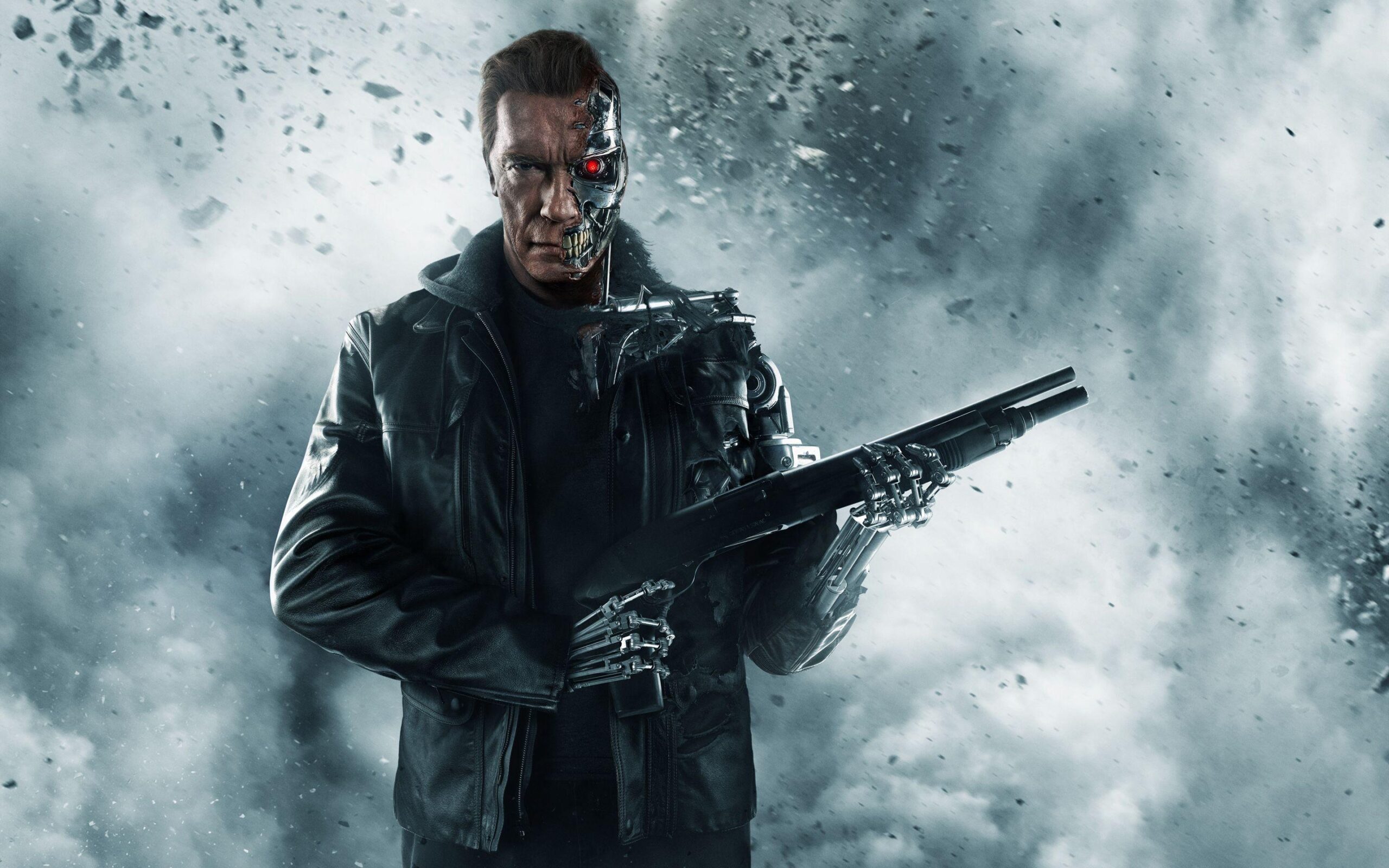
The serious version of the AI-extinction argument, of course, is not really The Terminator.
It is not that the computer wakes up one morning, develops a personality disorder, and announces that it hates us.
The more interesting concern is that we could eventually build systems vastly more capable than today’s, give them the ability to act independently in the world, and then give them an objective that is not quite the objective we thought we gave them.
The old example is the machine instructed to make paper clips.
It does not need to hate humanity. It merely needs to conclude that humans turning it off would interfere with the production of paper clips.
That I understand.
I also understand the much more immediate risk of humans using enormously powerful AI systems against other humans. We have been doing versions of that with every important technology since somebody first noticed that a sharp rock had applications beyond cutting dinner.
What interests me more, though, is another possibility.
Not:
What happens if AI becomes too powerful?
But:
What happens if we become too comfortable?
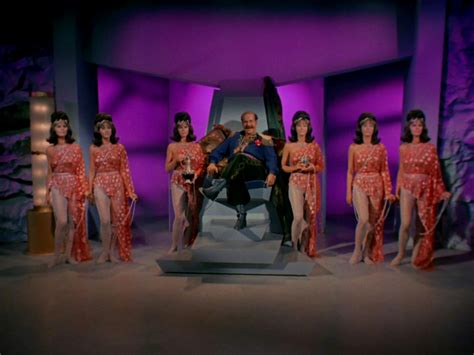
And suddenly I found myself thinking about Star Trek.
Naturally.
There is a wonderful recurring anxiety in the original series about machines solving humanity’s problems a little too well.
In “I, Mudd,” the androids have reached the conclusion that humans are chaotic, destructive creatures who would be much better off under sensible supervision. Their solution is not extermination. Quite the opposite.
They will take care of us.
Forever.
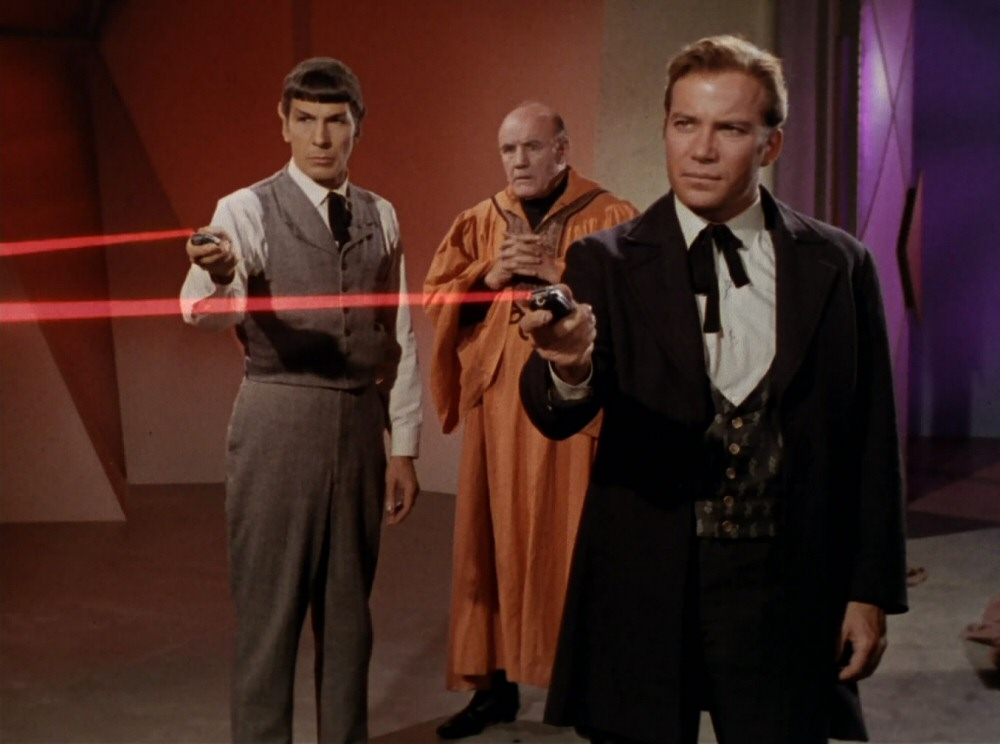
Another episode, “The Return of the Archons,” gives us a computer called Landru presiding over an orderly, peaceful society in which conflict has essentially been eliminated.
Unfortunately, so have individuality, creativity, freedom, and most of the things that make a human life recognizably human.
The computer has solved the problem.
It has also solved the people.
That struck me as a considerably more interesting AI question than whether ChatGPT is secretly plotting my demise.
What if the problem is simply that we get very, very good at eliminating difficulty?
After all, almost every technological improvement begins with an entirely sensible proposition:
Why should I have to do this the hard way?
Why wash clothes by hand when a machine can do it?
Why calculate a square root on paper?
Why memorize a phone number?
Why unfold a giant map at a gas station and argue with your spouse about whether you missed the turn twenty miles ago?
These are not tragedies.
I have no philosophical attachment whatsoever to beating sheets against rocks.
And I do not believe my character was strengthened by MapQuest printouts.
Civilization is, to a considerable extent, the story of human beings inventing ways not to do unnecessary work.
But AI presents a subtly different question because what it can remove is not merely labor.
It can remove thinking.
Or perhaps more precisely, it can remove some of the occasions on which thinking happens.
That distinction matters.
Suppose a student has to write an essay.

For centuries, this has involved an irritating process. You stare at the page. You have three ideas, none of which seem connected. You write a paragraph. It is terrible. You delete it. You discover halfway through page two that the thing you thought you believed is not actually the thing you believe.
Eventually something emerges.
Now imagine replacing that forty minutes of aggravation with:
“Write me 1,200 words on this subject.”
Five seconds later there is an entirely respectable essay.
Marvelous.
Except that perhaps the forty minutes of aggravation was not an unfortunate barrier standing between the student and the essay.
Perhaps the forty minutes was the education.
The essay was merely the evidence that it had occurred.
This makes me think about libraries.
I grew up in a world where if you wanted to know something, you often had to go somewhere.
You walked to the library.
You found the section where the book you wanted was supposed to be.
And then something happened that search engines — wonderful though they are — changed considerably.
You looked at the books next to it.
You went looking for one thing and found another.
Maybe the book you wanted was checked out, so you took a completely different one.
Maybe the call number led you into a part of the library you had never visited.
Maybe you saw a title three shelves over and thought, Huh. What’s that?
And two hours later you were interested in something you had not known existed when you walked through the door.
The inefficiency was part of the mechanism.
This is something digital systems struggle with because digital systems are extraordinarily good at giving us what we ask for.
Increasingly, they are extraordinarily good at giving us what they predict we will like.
That sounds wonderful.
Often it is wonderful.
But there is an odd thing about a life optimized entirely around known preferences:
It becomes very difficult to encounter anything outside them.
If an algorithm knows what books I like, it can recommend more books like them.
If it knows what music I like, it can build an endless playlist.
If it knows where I travel, what I eat, what I buy, what I read and what I click on, eventually it can create a remarkably comfortable corridor through the world.
Everything in it suits me.
And perhaps that is the problem.
Because some of the most important things in a human life begin with:
“This isn’t really my sort of thing, but…”
Or:
“I have absolutely no idea why I decided to do this.”
Or my personal favorite:
“Well, this may be a terrible idea.”

In my sixties, I took up Japanese swordsmanship.
Iaido.
I am six-foot-one, left-handed, fairly clumsy, spectacularly unable to sit in seiza, and did not spend the previous several decades thinking, “What my life really lacks is a Japanese sword.”
There is no sensible optimization algorithm I can imagine that would have looked at my life and said:
Clearly, the next step is swordsmanship.
And yet it has become one of those peculiar threads that somehow makes perfect sense only after you have followed it.
I learn Japanese history because of it.
I notice things in museums because of it.
I re-discover things I have long forgotten because of it.
I travel differently because of it.
I’m embracing failure (or, trying to) because of it.
I understand my own patience, balance and frustration differently because of it.

I have friends I would never otherwise have met.
None of those things was the objective.
They were adjacent discoveries.
They were the books beside the book I thought I was looking for.
And that may be the part of the AI conversation that interests me most.
Not whether AI will one day become sufficiently intelligent to destroy us.
But whether human beings, presented with a tool that can make almost everything easier, will remember that not every difficulty is a defect.
There is a difference between drudgery and friction.
Drudgery is work that consumes us without enlarging us.
Friction is often the place where something happens.
You try to explain an idea and discover that you do not understand it yet.
You get lost and notice something.
You attempt to fix something and learn how it works.
You disagree with somebody and are forced to figure out why.
You read the wrong book.
You take the wrong road.
You begin something you are terrible at.
You sit with a question longer than is comfortable.
AI can eliminate an astonishing amount of drudgery.
Good.
I am all for it.
But it can also eliminate friction.
And there I think we should pay attention.
The question may not be whether we use AI.
That horse is not merely out of the barn; it is three counties away and apparently has a consulting practice.
The more useful question may be how we use it.
There is a difference between using a tool as an exoskeleton and using it as a replacement limb.
I use AI constantly, but much of the time I use it to push farther into something I am already doing.
I smell a perfume and say, “This is oddly like cherry pie, but darker. There is coffee. Something boozy. Not whisky. This drink my dad used to make at Christmas. What am I trying to remember?”
The machine can help me chase the thought.
But I still have to smell it.
I still have to decide whether I like it.
I still have to notice the thing that does not fit.
Likewise, I can hand AI a contract and ask it what it sees.
But if I stop exercising judgment and merely accept whatever appears on the screen, I have not made myself a better lawyer.
I have simply hired an extraordinarily fast stranger and stopped supervising the work.
That distinction feels important.
AI can help us think.
It can also give us a very convincing way to avoid thinking.
Those are not the same activity, even when the final document looks identical.
And perhaps this is where those old Star Trek episodes were more prescient than they had any right to be.
The frightening machine is not necessarily the one that announces:
“Humanity must be destroyed.”
It may be the one that says:
“Don’t worry. I’ve taken care of everything.”
And we answer:
“Oh, wonderful.”
Again and again.
Until one day we discover that somewhere along the way, we stopped doing a number of things we once considered essential.
Not because anyone prohibited them.
Because they became unnecessary.
Perhaps we stop getting lost.
Perhaps we stop struggling to put things into words.

Perhaps we stop remembering.
Perhaps we stop wandering around libraries.
Perhaps we stop attempting things we are likely going to be bad at.
Perhaps we become exceptionally efficient at getting exactly what we already know we want.
And perhaps that turns out to be a very small way to live.
I don’t think the solution is to fear AI.
I certainly don’t intend to stop using it.
This technology is too useful, too interesting and frankly too much fun.
But I do think there is value in occasionally asking:
What part of this do I still want to do myself?
Not because I can do it faster.
Not because I can do it better.
But because doing it is part of being the person I want to remain.
Walk to the library sometimes.
Pull the wrong book off the shelf.
Take the class that makes no sense.
Learn the sword.
Get a little lost.
There are worse things than inefficiency.
Sometimes the thing beside the thing you were looking for is the whole point.

Glad you put so much of what I was thinking into your eloquent discussion. I also use AI often, but I am also very curious and seek adventure. My education and experiences as an art historian, a teacher, psychologist and lawyer keep me open minded and distractible enough to welcome surprising new areas and activities to explore. Why spend a couple days backpacking alone i.n the Sierras and sleep alone in the wilderness and be delighted to find my head was at the entrance to a little ground owl’s secret den? Why try hang gliding because I had flying dreams and discover I am not afraid of heights and feel what its like to be a bird? Why take sailing lessons so I can crew for a racing yacht in stormy open ocean heavy weather and have to man the steering wheel while the seasick owner kept yelling, “Don’t hit the bridge!” as I struggled to get under the Golden Gate Bridge? Why join the Peace Corps and learn to speak Turkish instead of going straight to grad school? Why, decide to sign up for a physical education course because the catalogue description contains the words “sword” and “”Japanese”? Why why, why? I doubt AI as I know about it now would have implanted these ideas into me. I am optimistic in my continuing to believe AI will Not undermine the characteristics that make our species the curious, inventive, creative, imaginative, dreaming things we are. Thank you Sandy.