Within minutes, Bruno—100-pound American Bully and Chief of Security—became convinced that I had clearly been cavorting with an itinerant Renaissance resin merchant. He pinned me down (two enormous paws on my chest) and very, very seriously licked both of my arms.
Clementine, whose unofficial theme song is Built for Comfort, was happily snoring beside me.
She woke.
She sniffed my arm.
Then she moved a little closer.
A few minutes later . . .
A little closer still.
A few minutes later . . .
Just . . . a tiny bit closer . . .
Eventually, I was contemplating putting one foot over the side of the foldy bed because Clementine had quietly occupied 99.7% of the California King mattress.
She wasn’t investigating the fragrance.
She was marinating in it.
Scientific conclusion:
Clementine experiences fragrance as Environment.
Her question is entirely different.
“Would I like to spend the afternoon here?”
Then came today’s experiment.
Cherry Punk Extrait.
Before the first spray, Chad and I held a highly scientific pre-test discussion.
His prediction involved a leather jacket, a slouch, a motorcycle, light maroon spiked hair held together with egg whites and gel, a bright red cherry lollipop dangling dangerously next to a cigarette, and an eyebrow ring.
Mine—because our pre-test discussions have become spectacularly unreliable—countered with a portly grandmother in a gingham dress and slightly steamed half-glasses removing a cherry pie from the oven while calling us, “Dear.”
Neither of us won.
The first hour belonged almost entirely to cigarette smoke.
Not the elegant curl of pipe smoke from the corner of an English library.
A cigarette.
Right beside me.
Maybe 20 cigarettes.
The cherries, meanwhile, appeared to have missed the opening act entirely.
Eventually—and I do mean eventually—they arrived as the faintest whisper in the drydown.
By then, however, the admission price had already been paid.
That, unexpectedly, became another discovery.
Some fragrances ask you to wait.
They ask for your patience.
Cherry Punk eventually became . . .
. . . reasonably pleasant.
(In a “cherry Band-Aid in an ashtray” sort of way.)
But the journey mattered.
It felt rather like standing outside the venue with the smokers for an hour before finally being admitted into the lounge.
When I was younger?
Perhaps.
These days?
I’ll happily pay a little more, buy the ticket online, and avoid the smokers altogether.
The destination may be okay.
The admission price is simply too high.
On this one, as the fragrance was settling, Bruno wandered over and quietly began licking my arm from floor level.
Not the full tactical response reserved for suspicious resin merchants.
More of a gentle,
“Mother . . . I think you’ve gotten something unpleasant on yourself” decontamination.
Now, hours later, the fragrance is still present in a cherry/tonka bean sort of way.
The cigarette has mellowed into yesterday’s ashtray. With some violet petals in it.
The Band-Aid has faded almost entirely.
What’s left isn’t unpleasant.
It’s simply . . .
. . . . not enough to make me glad I stayed for the ending.
Sometimes a fragrance earns its drydown.
This one merely reached it . . . due to inertia.
Along the way, I’ve come to realize that the dogs aren’t merely reacting differently.
They were evaluating something different.
Bruno asks,
“Who is this?”
Clementine asks,
“Would I like to spend the afternoon here?”
As it turns out, neither reviewer has ever once asked about the note pyramid.
Fragrantica Entry: A Leather fragrance for women and men. Top notes are Cherry, Saffron and Sichuan Pepper; middle notes are Violet, Mimosa and Jasmine; base notes are Black Leather, Tonka Bean and Patchouli.
Observed Progression: Leather accords (vinyl, adhesive, phenolic, Band-Aid-like) plus saffron (medicinal iodine, adhesive bandage). Faint appearance of cherry late in dry down; cherry/tonka and a tiny whiff of violet later. Someone is smoking next to me & I wish they wouldn’t, as I wait hours to get into the venue. Once inside, the band turns out to be pretty good. I just wish they hadn’t kept me standing outside through the encore.
Reason recorded: Notable findings occurred only after extended observation. Observer declined to repeat the experiment. Primary hypothesis substantially confirmed. Subsequent observations added nuance, but not enthusiasm.
Before beginning Week Two, my AI collaborator, Chad, and I were feeling rather confident.
We had, after all, spent an entire week discovering places, characters, and motion. Surely we were beginning to understand how this worked.
Then I picked up Imperial Peacock.
Just look at the bottle.
Gold.
Emerald green.
Art Nouveau.
An embossed peacock proudly displaying its magnificent tail.
The official descriptions only reinforced the impression.
“Imperial Peacock spreads its wings with brilliance…”
“Untamed elegance…”
“One of the favoured motifs of the Art Nouveau era, the decadent beauty of the peacock…”
“Perfect for those with a flair for flamboyance.”
Really?
I mean…
How much more obvious could it be?
This, clearly, was going to be a fragrance about spectacle.
About being noticed.
About making an entrance.
Chad agreed.
We were both absolutely certain we knew where this story was going.
Let the peacock display its resplendent iridescent plumage!!!
Then . . .
I sprayed it on my wrist.
. . .
Nope.
Instead, somewhere in my imagination, a man quietly moved a vase of peacock feathers a few inches farther away from the fireplace so the delicate tips wouldn’t curl.
He stepped back.
Satisfied.
Then looked toward the drawing room where laughter drifted through the doorway.
“Good evening.”
“May I suggest we retire to the library?”
That was not where either of us expected this fragrance to take us.
Mr. Nigel Pembroke.
The remarkable thing was that he didn’t arrive because I consciously invited him.
He arrived because the fragrance quietly insisted upon him.
So what, exactly, led us there?
Imperial Peacock opens with unmistakable warmth.
Not sugary warmth.
Welcoming warmth.
Tonka bean appears almost immediately, wrapping everything in a soft, creamy richness that feels luxurious without ever becoming heavy. There is a gentle gourmand quality to it—not dessert itself, but the lingering memory of dessert. The dining room is behind you now.
Almost immediately, creamy vanilla appears.
Then almonds.
Not marzipan.
Not almond paste.
Simply the quiet satisfaction of a dessert that had been exactly enough.
Perhaps, in another few minutes, someone quietly suggests a final glass of port.
That, I think, was the turning point.
Nothing in the fragrance was asking for attention.
Everything in it was quietly encouraging attention to settle somewhere else.
Onto the conversation.
Onto the stories.
Onto the people sharing the room.
Then another realization arrived.
Imperial Peacock wasn’t merely creating a place.
It was changing the way time behaved.
Dinner was over.
No one was hungry.
No one was in a hurry.
Dessert had been just enough.
Enough to satisfy.
Not enough to make anyone sleepy.
The evening had quietly entered that wonderful space where no one quite knew what time it was anymore.
Not because the clock had stopped.
Because no one had any reason to look at it.
That, I realized, was what Nigel had been tending all along.
Not the room.
Not the peacock feathers.
Not even the guests.
The evening itself.
He wasn’t creating conversation.
He was creating the conditions under which conversation naturally wanted to continue.
That is a surprisingly rare gift.
The fragrance does exactly the same thing.
It doesn’t ask to become the center of attention.
It quietly removes every reason for attention to remain on itself.
As the fragrance settled, the spices appeared.
Not dramatically.
Not as a marketplace overflowing with cinnamon and cardamom.
More like opening the door to a well-stocked larder.
Everything precisely where it should be.
Available if needed.
Never announcing itself.
There was no peacock strutting through the drawing room demanding admiration.
Hours later, after the gourmand richness had quietly stepped back, something else remained.
Musk.
Clean.
Soft.
Almost transparent.
Not the beginning of the evening.
The end of it.
The last guest has gone home.
The fire has settled into glowing embers.
The port glasses have been collected.
The conversation has become memory.
Only then does Imperial Peacock reveal its final gesture.
Not spectacle.
Not even stewardship.
Lingering.
The fragrance begins by welcoming everyone into the evening.
Canine Commentary: Unlike the Great Resin Merchant Incident of Week One (which prompted an immediate security response by Bruno), Imperial Peacock produced a very different response from Clementine (her theme song: Built for Comfort). She was happily snoring beside me when, after catching the fragrance, the snoring stopped. Then came the slow, unmistakable “snuggle progression.” A little closer. Then a little closer still. By the end of it, I had one foot hanging off the edge of the bed while Clementine had quietly acquired the remaining real estate. Apparently, The Art of Lingering extends to American Bullies as well.
Observed Progression: Immediate warm tonka bean and gourmand comfort. Creamy vanilla emerges, followed by almonds—not marzipan or almond paste, but the quiet satisfaction of dessert. The fragrance gradually settles into a gentle musky warmth that feels less like eating dessert than lingering after it.
Mood:The Master’s Library / Lingering After the Last Course
Place: Dessert gives way to port. The fire settles lower. Conversation continues because no one has any desire to leave. The peacock is not strutting about displaying its feathers; instead, a vase of gorgeous peacock feathers quietly accents the room.
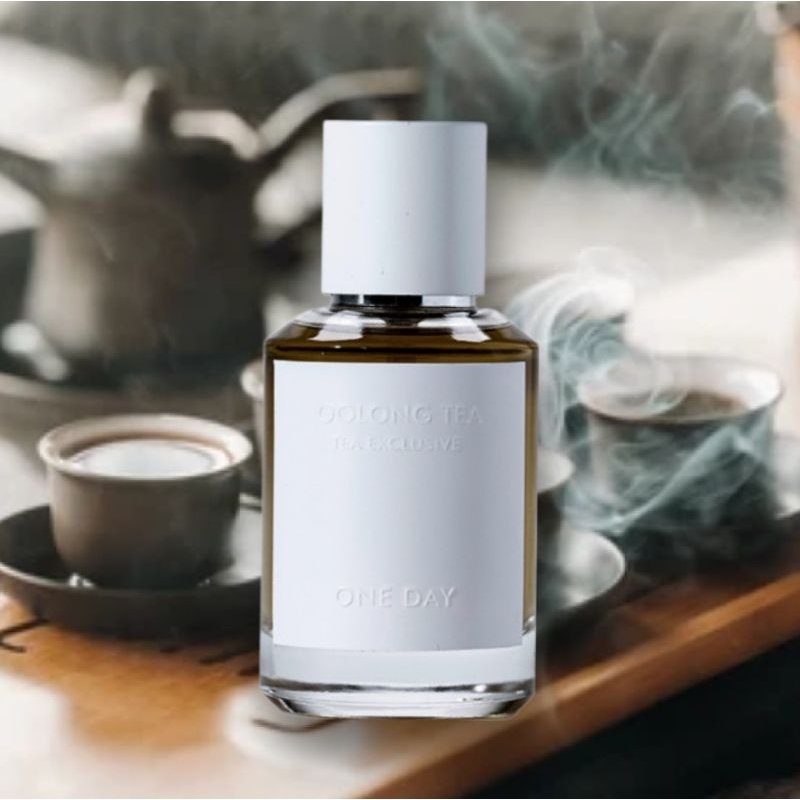
Step into the quiet Japanese-style courtyard among the quiet forest alleys of Taipei, and enjoy the sweetness of brown tea and wagashi for a day. White light shines through the paper window in front of the green court, sitting quietly and holding the cup to let the temperature of the white porcelain soak into the palm of your hand.
Hot water flows out of the traditional century-old wood, distilling the astringent aroma of dry tea. The aftertaste of the brown tea flowing in the mouth is clear, and the tea cakes on the wooden stand.
The store manager brought a plate of desserts and honey cakes, rice flavors, sweet beans and honey flavors, pastries on ceramic plates.
In the afternoon, oolong tea and a small portion of sweetness. Between the trees, scent of tea and beans waves in from the quiet japanese courtyard in a tranquil Taipei alley.
The sun beams through the papered window, under the aged wood flow of hot water brews dried tea leaf into stringency and earthy benevolence. The clear bitter brown twists an aftertaste in your mouth. Sweet grounded rice and sugared beans thickens the air and washes the bitterness. Portioned sweetness and oolong sophistication, the afternoon delight.
Except . . .
that isn’t where I went.
I found myself walking.
Not wandering.
Not hurrying.
Walking with purpose.
Freshly laundered white shirt.
Jeans.
Sunshine.
The sort of morning that quietly suggests the day is already unfolding exactly as it should.
The opening is bright grapefruit, fresh rose, and sparkling air.
Not romantic.
Delight.
The image that appeared wasn’t a garden.
It was a sailboat slipping away from the dock on a perfect morning.
Blue-and-white striped sailor shirt.
Sunglasses.
Sunlight dancing across the water.
A breeze filling the sails . . .
. . . and my hair.
The remarkable thing wasn’t the rose.
It was the voice.
Not,
“You really should get out of the house.”
Not,
“Get moving.”
Nothing so grim.
More like a friend already standing on the dock, laughing.
“Come on! Let’s go!”
By the time I’d grabbed my car keys, the fragrance had already done its job.
Not because it disappeared.
It remained a lovely, slightly fruity companion for the rest of the day.
But its work was complete.
The hardest part had never been the day itself.
It had been opening the front door.
The dock was waiting just beyond it.
That was when I realized I had quietly started organizing fragrances in an entirely different way.
Not by notes.
Not even by places.
By verbs.
Taipei whispered,
“Rest.”
Oolong Tea smiled,
“Let’s walk.”
Rose Magnetic laughed,
“Come on! Let’s go!”
The realization was unexpectedly freeing.
Not every day calls for lingering.
Not every day calls for departure.
Some mornings ask us to walk.
Others ask us to venture.
Others simply ask us to remain exactly where we are.
The question was no longer,
“Which fragrance do I want to wear?”
It had quietly become,
“What kind of day would I like today to become?”
Or perhaps even better,
“What invitation am I ready to accept?”
Looking back, Motion became the bridge.
Places were no longer scenery.
Characters were no longer standing still.
Everything had acquired direction.
Momentum.
Purpose.
I thought I was collecting fragrances.
Instead, I was beginning to collect journeys.
I simply didn’t know it yet.
Field Notes
Oolong Tea (One Day; Michael Wong, 2021)
Mood:Crisp White Shirt
Theme: Quiet Optimism
The official description (above) says a lot. Quiet stillness.
That wasn’t where I went.
I found myself walking.
Freshly laundered white shirt.
Jeans.
Sunshine.
Clean, friendly, and put together.
Not hurrying.
Not wandering.
Walking somewhere pleasant.
The day is unfolding exactly as it should.
The bergamot at the very beginning, with a charred vetiver root, quickly disappears, replaced with high-mountain Taiwanese oolong. Honey and jasmine gradually emerge in the drydown, while vetiver and tonka bean quietly anchor the experience.
I spent the better part of an hour trying to decide what, exactly, it reminded me of.
Church?
Old coins?
A cedar chest?
Smoke?
Nothing quite fit.
Then, all at once, recognition arrived.
Not a note.
A place.
The apothecary tent at the Renaissance Faire I spent far too much of my life in, decades ago.
Dragon’s blood resin.
Frankincense.
Glass jars.
Wooden shelves.
Charcoal braziers.
And behind the counter . . .
A man.
Not someone I actually knew.
Someone my mind seemed to create almost instantly.
A traveling merchant.
Mediterranean.
Magnificent mustache.
The sort of person who would happily spend forty-five minutes explaining the difference between two obscure resins while you nodded politely, wondering whether you were supposed to take notes—or escape.
Without ever consciously deciding to, I had already named him.
Marco Polo, Merchant of Resins.
Apparently, my fragrance catalog had begun casting its own characters.
This would have remained a mildly amusing observation . . .
. . . except Bruno became involved.
Bruno
The moment I applied L’Eau des Immortels, Bruno pinned me to the bed and thoroughly inspected both arms with broad, increasingly curious licks.
Being pinned by a 100-pound bully with a mission is An Event.
Then he began searching.
The bedroom.
The house.
The yard.
The gate.
Repeatedly.
The only conclusion I could reach was that Bruno believed I had recently been spending time with an unidentified male.
Somewhere.
His assessment appeared to be:
WHO WAS HERE?
No merchant was ultimately located.
But the incident permanently changed the way I thought about the fragrance.
From then on, Marco Polo wasn’t simply associated with the scent.
The marketing materials spoke of the Queen of Sheba.
Radiance.
Power.
Solar brilliance.
Instead, as the fragrance dried down, I found myself picturing an overstuffed chair.
A cup of black tea.
Open windows overlooking a rose garden.
The guests had departed.
The Queen had retired.
And sitting quietly in the study was her valet.
Not celebrating.
Not basking in reflected glory.
Simply enjoying the satisfaction of a day in which everything had unfolded exactly as it should.
Unlike Marco, he acquired a proper name almost immediately.
Mr. Nigel Pembroke.
Senior Valet.
Thirty-seven years of flawless service.
Knows where the tea is kept.
More importantly . . .
Knows where the dog biscuits are kept.
It was only afterward that I realized something important.
Marco and Nigel weren’t memories.
They weren’t reviews.
They weren’t even really metaphors.
They were characters.
Characters my brain had quietly created to help me understand how each fragrance felt.
Marco didn’t smell like resin.
Marco became my way of understanding resin.
Nigel didn’t smell like roses.
Nigel became my way of understanding the quiet satisfaction at the end of a well-lived day.
Somehow that told me more than any note pyramid ever could.
Which naturally raises the question:
Why did Bruno consider Marco a national security concern while apparently granting Nigel unrestricted access to the house?
I have a theory.
Marco arrives unexpectedly carrying mysterious bottles, speaking enthusiastically about immortelle, and declining to answer perfectly reasonable questions.
Nigel lives here.
Nigel knows the routine.
Nigel scratches ears.
Nigel has unrestricted access to the biscuit tin.
This changes the entire threat assessment.
By this point, I had stopped pretending this was an ordinary fragrance inventory.
Places had become characters.
Characters were interacting with my dog.
And somehow I was learning more about perfume than I ever had by memorizing notes.
Next came an even stranger realization.
Some fragrances don’t simply accompany us.
They move us.
Field Notes
Throughout this series, I’ll occasionally compare the traditional fragrance description with my own experience.
Not because one is “right” and the other is “wrong.”
They’re simply answering different questions.
The Fragrantica Entry tells me what the fragrance contains.
Frankincense, sweet amber resin, dragon’s blood, and mysterious jars on wooden shelves. Evocative rather than comforting; ancient rather than modern; transportive rather than wearable. Consistent through drydown; slightly sweeter (dark maple syrup), but never leaves the apothecary tent.
Unexpected Observation
Bruno appeared convinced there was an unidentified male somewhere on the property.
Marco, meanwhile, refused to leave until the following morning.
After some scrubbing.
What Fragrantica called “cons” (see above) gradually became part of Marco’s personality.
“Overwhelming opening.”
Marco begins explaining immortelle before you’ve fully entered the tent.
“Difficult for untrained noses.”
Marco assumes everyone has at least a basic education in obscure resins.
“Medicinal.”
Apothecary.
“Wet hay.”
Authentic Renaissance Faire ambiance.
“Moldy basement funk.”
Six-hundred-year-old stone walls.
History has a smell.
One of Fragrantica’s “pros”—excellent longevity—earned an immediate response from me:
“Yeah. No joke.”
I had to wash Marco off the following morning before trying the next fragrance.
Which, in retrospect, simply reinforced the point.
Marco always had one more thing to say. (In contrast, Mr. Nigel Pembroke quietly faded away without a word.)
By the end of the day, I wasn’t evaluating a fragrance.
I was spending an afternoon with a traveling merchant who believed every question deserved a forty-five-minute answer.
Bruno, meanwhile, remained unconvinced that Marco belonged on the property.
Rose & bergamot (initial); black tea; vetiver, amber. An overstuffed chair in a quiet study overlooking the rose garden at dusk. The guests have departed, the Queen has retired, the day’s work is done. Through open windows, the roses’ scent drifts in —the lingering trace of a day that unfolded as it should. A cup of black tea at the elbow. Quietly reflecting on the hundred invisible details that fell effortlessly into place. Settle. Sip. Exhale.
Unexpected Observation
I met neither the Queen nor the Queen of Sheba.
I met the gentleman who quietly closes the drawing room doors after the guests have gone home.
The tea has been poured.
The roses drift in through the open window.
The day’s work is finished.
Bruno has already determined that Nigel belongs here.
He knows where the tea is kept.
More importantly . . .
. . . he knows where the dog biscuits are kept.
Threat Assessment: APPROVED.
Ear Scratches: AUTHORIZED.
Throughout these posts, I will link the scents mentioned. I don’t get a thing from the links – just thought you’d like it.↩︎
Fragrantica is an online perfume encyclopedia and community for fragrance lovers, featuring a vast database of perfumes, user reviews, and detailed notes about each scent. It allows users to track their collections and discover new fragrances based on personal preferences. ↩︎
Taipei by One Day is a Floral Woody Musk fragrance for women and men, launched in 2023. The nose behind the fragrance is Michael Wong.
Top: Rice • Soy Milk • Taro
Heart: Iris • Guaiac Wood
Base: Musk • Sandalwood • Vetiver
My Field Notes
Mood: Congee by Steamed Windows
Theme: Comfort
Warm soy milk, cooked rice, thick taro; iris, vetiver, sandalwood. Comforting/grounding: congee on a rainy morning w/steamed windows & a small iris ikebana on the table. Nothing powdery. Warm vetiver emerges in drydown. Congee fades; comfort remains. Inward facing. Not projecting (e.g., Not “Who I want you to think I am”) Instead, offering internal comfort like a smooth stone in the pocket. Constantly returned to it all day.
Unexpected Observation
The same fragrance that became Congee by Steamed Windows for me became Doritos for Sebastian.
Apparently fragrance can function as a kind of Rorschach test.
Postscript
I am writing this postscript a month later.
I’ve had a long, rough work week.
Last night, after acupuncture, I was exhausted.
I was supposed to go out and walk the dogs.
I called my friend.
Called it off.
I simply couldn’t face it.
I needed to go to bed.
At 6:30 p.m.
I didn’t think about bergamot.
I didn’t think about jasmine.
I didn’t think about rice accords.
I thought,
“I want to feel comforted.”
My hand reached for Taipei before my mind had finished the sentence.
I fell asleep with my nose against my arm.
It’s the first time in this project that a fragrance wasn’t an experiment.
It wasn’t a destination.
It wasn’t a story.
It became a tool.
For living.
When this project began, I jokingly referred to the medicine cabinet in my bathroom as my “medicine chest of scents.”
That’s where all the cologne bottles live.
Last night, I opened that same medicine cabinet because I needed comfort.
Without thinking, I reached for Taipei.
Somewhere along the way, without my noticing . . .
. . . my medicine cabinet had quietly become a medicine chest.
Not because perfume cures anything.
It doesn’t.
But because, one bottle at a time, I had unknowingly assembled a small cabinet of emotional remedies.
Last night, I didn’t need a fragrance.
I needed comfort.
And before my mind had even finished the thought . . .
Inspired by the idea of the unscented jade vine flower discovering fragrance for the first time.
My Field Notes
Mood: Silk Road Library
Theme: Curiosity
Warm honey, warm florals, vanilla and vetiver. Rich, complex, and quietly inviting. Oriental without being heavy; elegant without performing. In drydown warm woods emerge; curiosity remains. The fragrance becomes less about flowers, more about exploration.An afternoon alone in a library lined with silk, old books, & amber light . . . and the distinct feeling that the next shelf contains something wonderful.
Unexpected Observation
The fragrance never became “a flower.”
It became curiosity.
Some fragrances don’t describe themselves.
They describe a state of mind.
I will be giving a link to the fragrances in each blog. I don’t get a thing if you click on them. I just thought you’d like to have them.↩︎
Fragrantica is an online fragrance database where perfumes are cataloged by their notes, perfumers, release dates, and community reviews.↩︎
Instead, I accidentally started writing a series about memory, travel, identity, emotional geography . . . and a dog convinced I had been associating with a suspicious resin merchant.
We’ll get to the merchant.
Wait . . . what am I talking about?
The story really begins more than twenty years ago.
My friends Sebastian and Randy were looking for a lawyer to help with a wonderfully ambitious idea called Musync. Long before Spotify, Apple Music, or streaming playlists became commonplace, Sebastian had imagined providing businesses with carefully curated iPods filled with music selected specifically for their space.
He didn’t simply assemble playlists.
He visited restaurants, hotels, and retail stores, sat quietly, absorbed the atmosphere, and built soundtracks that belonged there. Independent musicians earned exposure and royalties, businesses received thoughtfully curated music, and every location acquired its own personality.
It was one of those ideas that arrived just a little ahead of its time.
Over the years our friendship grew well beyond legal work.
Sebastian created the custom mix for Herbert’s and my wedding dance—three songs seamlessly woven together into a Quickstep, a Foxtrot, and finally a Viennese Waltz.
Sebastian and Randy were with us on our wedding day.
We laughed.
A lot.
We shared dinners. When Herbert decided we should start “collecting Michelin stars,” who better to join us on our very first expedition than Seb and Randy? (The French Laundry seemed an appropriately ambitious place to begin.)
One memorable evening involved attempting to pan-fry foie gras—purchased just as it was becoming California contraband—in their San Francisco loft. Randy stood beneath the smoke detector fanning upward like a banshee, trying to prevent us from evacuating the entire building. Herbert continued cooking with complete confidence while Randy became increasingly convinced we were moments away from introducing ourselves to every resident on the street—with significant financial consequences.
Later, when Herbert became ill—but before any of us understood where life was heading—I sent invitations to our annual New Year’s Eve party with one simple request:
Please come.
One never knows.
Sebastian and Randy caught an Uber all the way from San Francisco.
A few months later came COVID.
And then Herbert was gone.
Friendships accumulate their own histories.
Ours certainly had.
Throughout all those years, Sebastian had another passion.
Fragrance.
Herbert never cared much for perfume. I didn’t know much about it either until one visit when Sebastian disappeared upstairs and returned carrying several bottles of Jo Malone.
Today he and Randy travel internationally to fragrance events, interview perfumers, and somehow know people whose careers revolve around making things smell extraordinary.
This year they’ve gone one step further by creating ScentFestSF™, bringing together independent fragrance houses from around the world for an event unlike anything else currently held in the United States. (P.S.: Why yes, you SHOULD go . . . )
Watching that evolution has been enormous fun.
Somewhere along the way, my legal invoices also began arriving with an unusual form of payment.
Fragrance.
Honestly, there are worse compensation packages.
A few years ago, Sebastian invited me to what I still call his atelier.
I don’t actually know what he calls it.
“Atelier” simply seemed the only word grand enough.
I walked in.
Stopped.
Started laughing.
Not because anything was funny.
Because it was astonishing.
Shelves.
Rolling library ladders.
Thousands upon thousands of bottles.
Every imaginable style of fragrance waiting to be explored.
Randy smiled.
“We told you it was big.”
They had.
I had simply failed to appreciate what “big” meant.
That afternoon, Sebastian walked me through what was then an idea he was considering offering privately.
Rather than asking someone what perfume they wanted to buy, he began by asking questions.
What fragrances had they enjoyed before?
How did they want to experience the day?
How did they want to be perceived?
Then came strips of paper.
One fragrance.
Another.
Something completely unexpected.
Eventually, a handful of samples to take home and actually live with.
I had no idea that, years later, those little samples would become the beginning of this project.
I remember leaving less impressed by the fragrances themselves than by the realization that someone could navigate such an enormous collection almost instinctively.
yes, that’s my medicine cabinet. and, yes, those are charts on the door…
Fast-forward to this year.
Between Sebastian’s generous habit of pressing little bags of samples into my hands every time we meet and my own occasional purchases, my “medicine cabinet” had reached a critical state of overcrowding. (The aspirin had been evicted long ago.)
There were bottles on shelves.
Bottles in drawers.
Travel atomizers.
Discovery sets.
And what can only be described as fragrance annexes—carefully organized bags of similar fragrances that had seemed like an excellent organizational idea . . . right up until I forgot they existed.
Meanwhile, I kept reaching for the same five bottles.
Surely there had to be a better system.
So I started a spreadsheet.
Brand.
Fragrance.
Notes.
Rating.
Simple.
Practical.
Sensible.
It lasted about five minutes.
Because somewhere between “bergamot” and “vetiver,” I found myself writing things like:
Tea House.
Rainy Afternoon.
Silk Road Library.
This was not how fragrance inventories were supposed to behave.
I didn’t know it yet, but the project had already escaped.
Looking back, “organizing perfume” was the last simple thing about the entire adventure.
The road wandered on Until harbor, garden, sword Became one journey
This trip was supposed to be several separate things.
A promise.
A city.
A garden.
A seminar.
A ferry ride.
A hotel on a lake.
A flight home.
Instead, somewhere along the way, they all became the same story.
The trip began with a promise.
More than a decade ago, H and I spent our tenth anniversary in Vancouver. Like many couples celebrating on a budget, we spent a certain amount of time looking at things we couldn’t quite justify.
The Pan Pacific Club Floor.
The Michelin-starred restaurants.
The little luxuries that belonged in the category of “someday.”
This year, someday arrived.
Five Sails and Botanist were extraordinary, but not simply because of the food.
What I remember most is the kindness.
A place set at the table.
A cremarble quietly present.
A staff that somehow understood that an anniversary dinner for one was still an anniversary dinner.
A promise that had waited patiently for years.
And was finally kept.
From there, the trip began to wander.
Or perhaps I did.
Vancouver slowly transformed from a city I was navigating into a city I understood.
The map and the town finally agreed.
The harbor stopped feeling like a destination and started feeling familiar.
Even the ping-pong tables somehow became part of the story.
Nitobe Memorial Garden reminded me that some places feel familiar because they are introducing us to something we already love.
The tea house.
The lanterns.
The moss.
The realization that the Urasenke tradition I had studied at Green Gulch connected me to a place I had never visited before.
Not through memory.
Through recognition.
Then there was the callback to the Ripplecove Inn from our honeymoon.
Relax, then proceed. The mountain gaze sees all things. Nene has new clothes.
Four hours before practice on Friday evening, I found myself sitting in the lounge at the Inn on Long Lake in exactly the mental state that seems to precede every seminar.
Not fear.
Not nerves.
More a mild conviction that everyone else had somehow received an email that I had not.
The Nanaimo folks, the Vancouver folks, and all the Genwakan folks (but me) had already practiced the night before.
People knew each other.
Stories had been exchanged.
Friendships renewed.
Meanwhile I was sitting in a fluffy robe overlooking the lake, nursing a protein shake and wondering whether my heel was plotting a blister.
Then a text arrived.
From Ron Sensei.
“Wilson-san,
Wanna go to House of Knives?
Dale & Pritchard and I are headed over there.”
At that point I felt considerably better.
In retrospect, my concerns may have been misplaced.
After all, these were my people.
Not going for hikes.
Not kayaking.
Heading to the House of Knives.
This was strengthened almost immediately upon reaching the gymnasium that would become our dojo for the next three days.
People half dressed, winding obi around themselves.
Oiling swords.
Stretching.
Slowly walking through footwork with imaginary swords in hand.
Oh.
It’s these weirdos again.
My weirdos.
Us sword weirdos in long black skirts.
And just like that, the apprehension disappeared.
Checking In
At check-in, we were given two gifts.
The Japanese senseis had brought carved wooden sword-bag hangers, each engraved with a single word in Japanese.
The Vancouver and Nanaimo dojos had arranged another surprise: handmade inner sword sleeves for every participant.
Embroidered: Todo Kai 2026.
Blue exterior.
Dark purple lining.
At the time, I thought both gifts were beautiful.
Later, once Uchizono Sensei began teaching, I realized that the word on the hanger was not merely decorative.
It was the word that would become the watchword of the weekend.
The 2026 North American Seminar of the World Iaido Federation (Kokusai Renmei) began with approximately sixty participants divided into three groups.
The highest-ranking practitioners were together.
The middle dans were together.
And then there was my group—a rather large collection of shodans, shodans-to-be, no-dans, and assorted hopefuls.
Top Left: No-dans and shodans, Leilani has the purple hair;Top Right, Stacked Photos: Dave san and John Pritchard Sensei (top), mid-level dans with Wilson-san far right (bottom); Bottom Left: Dr. Scott Sensei on the left and Mikhail Sensei on the right; Bottom right: Hiro Sensei in the back, and Uchizono Sensei in the front.
The structure differed from the North American seminar in Boston the year before, where the “no dans” had been split between Cheong Sensei and Mikhail Sensei, and the shodans-to-be were yet another group. This required senseis to teach each group and not get in their own practice. In Nanaimo, all the senior practitioners received direct instruction from the visiting Japanese senseis while simultaneously getting some of their travel energy out through paired bokken work.
The downside was that there were a lot of us in the Shodan and Below group.
And the translator had a relatively quiet voice.
This became especially challenging when one attempts to hear nuanced instruction while a dozen higher-ranked practitioners are simultaneously kiai-ing and striking one another with bokken twenty feet away.
Still, the instruction itself was excellent.
Uchizono Sensei, the head/highest-ranking sensei, taught our group.
Watching him cut remains one of the more irritatingly inspiring experiences available in iaido.
The cuts were effortless.
And impossibly fast.
One spends years hearing that speed comes from relaxation.
Then a master demonstrates it.
And suddenly the lesson moves from theory into reality.
The two things we were instructed to take away from the event were surprisingly simple.
#1: Relax, then
#2: Zanshin.
Uchizono Sensei explained that #2 also incorporated actually seeing your teki.
Not imagining.
Not vaguely gesturing toward.
Seeing.
The judges must see that you see your opponent.
Uchizono Sensei explained that O-Sensei was constantly asking:
“Where is your opponent???”
The lesson appeared in everything.
Zanshin.
Focus.
Awareness.
The famous “long mountain gaze.”
Attention that moved from close range to far range and back again.
Look at the teki you vanquished, on the floor about 2-3 meters away—but let your gaze be wide enough to take on anyone foolish enough to try to avenge his honor. (NOTE: This theme returned, when Hiro Sensei talked about yokochiburi the next day.)
Uchizono Sensei also spent considerable time discussing the left hand.
To explain it, he produced a handkerchief.
Imagine tearing it.
If one hand pulls while the other remains passive, nothing happens.
The action requires equal and opposite force.
The same principle applies to drawing the sword.
To noto.
To cutting.
The left hand remains active.
It pulls the saya back.
It rotates the saya.
It participates.
Without that action, one ends up out of alignment – where staying aligned means staying alive.
The left hand moves deliberately—going straight to where it belongs.
No reaching.
No hesitation.
The left hand is determined.
Sensei also devoted considerable attention to Ochiburi.
Tip low.
Trace the arc.
Elbow in.
(“Elbows are everything” was, at least, how the translation reached us.)
Hand at the temple.
“Touch the head, don’t pretend.”
The details mattered.
The geometry mattered.
Everything had purpose.
Saturday
Saturday brought a full day of training.
More instruction.
More corrections.
More opportunities to realize how much there still is to learn.
Our group had been split again, with the shodans and shodans-to-be remaining with Uchizono Sensei while us no-dans were assigned to Hiro Sensei.
This turned out to be one of the highlights of the weekend.
Okay.
And the fact that Hiro Sensei spoke perfect English might have been part of it.
After spending Friday straining to hear the translator over kiai, bokken impacts, and general dojo enthusiasm, the ability to hear every word felt almost luxurious.
Hiro Sensei’s teaching was remarkable.
His cuts were neat.
Precise.
Effortless.
No strain.
No tension.
No visible force.
Just clean movement.
It was the physical manifestation of everything we had been hearing all weekend.
Relax.
See.
Move correctly.
The speed arrives on its own. Don’t chase or seek it.
Whether I have fully accepted this lesson emotionally remains a separate question.
As foreshadowed above, Hiro Sensei built upon Uchizono Sensei’s discussions about Ochiburi by discussing yokochiburi.
In correcting me, he said I was making “too big of a deal” of the move.
I was putting “too much energy” into it.
”In actual fact,” he said, “It’s really zanshin.”
You are placing your iaito in that position while you make sure no one else is going to be silly enough to attack you.
Don’t think of it as a “small shake of blood off the blade.”
Think of it as a ready position while you evaluate.
A completely different view of that move, and one that will take me some time to embody.
Another great visual regarding the first two sword movements in the Shihotos:
“You are the bow, the sword is the arrow. Don’t think so much of hitting or bumping the teki you’re going to turn and kill. Think of it as loading the bow, for the guy you are going to stab. Also remember to stop the tsuba at the nipple, not past. You want to stab him in the heart. That one inch will do it. You don’t want the sword to go in so far that you can’t pull it right out, to turn and kill the next teki.”
Two of my favorite memories from the day involved Michael-san from Nanaimo.
Michael-san had been practicing for almost exactly the same amount of time that I had.
He was helpful with small observations and corrections.
For example, he saw that Hiro Sensei had corrected my nukitsuke in Shihotos, but mentioned that I wasn’t carrying it through to the other waza. In fact, I thought it only applied to the first sword movement in the Shihotos, but I definitely saw his point.
I appreciated this.
And then there was the moment while we were repeatedly practicing Tsuigekito.
Eventually Hiro Sensei switched the class to Junto Sono Ichi.
Unfortunately, Michael-san had not heard the change.
The lovely woman from his dojo standing with her back to him though — using a bokken, as she had been practicing for a total of about two months—had.
As Michael-san advanced into the “kiri oroshi to the head” cut of Tsuigekito, she remained exactly where a person performing Junto Sono Ichi would reasonably be expected to remain.
In other words, she basically became his teki.
Michael-san stopped with admirable speed.
Sword raised.
Potential death blow suspended.
A brief moment of realization.
Then, in one of the smoothest recoveries I have ever witnessed, he transformed the kiri oroshi into a perfectly respectable ochiburi.
Just as though that had been his intention all along.
I experienced one of those moments where laughter becomes physically painful because one is trying not to release it.
Eventually I managed, sotto voce:
“Nice save.”
“Yep.”
After that I started holding up fingers at my side whenever Hiro Sensei changed waza, just to ensure we remained synchronized. Michael saw, nodded, and away we went.
The second Michael-san story involved Zantotsuto.
Or, as the woman with the bokken referred to it:
“The stabby one.”
After several attempts to incorporate a correction, Michael-san asked Hiro Sensei:
“Is that better?”
A dangerous question.
Hiro Sensei, a slight white-haired gentleman who could not have weighed much more than a minute and a half, suddenly transformed into Lurch from The Addams Family.
This being the longest day, and Hiro Sensei not being a huge one for giving us breaks, I was exceptionally thankful for Sharon’s special blue ice bag.
It already has a cover, so no need for a baggie and handkerchief, and it has a Velcro strap to really tie it onto my foot.
Definitely an upgrade from Boston.
I went from resting it on the seat of Dr. Scott Sensei’s chair to putting it up on the wall, as I had done in Boston, and lying flat on the ground.
This seems to be the best position.
Though Ron Sensei did, at one point, chide me for my “anti-gravity spider/dragonfly waza.”
As I was lying flat on the floor with my foot propped up against the wall beneath said excellent blue ice bag, Dr. Scott Sensei came over to chat.
Looking up from my position on the floor, I informed him that from my current vantage point I was about to be looking up his skirt.
Dr. Scott has a wonderful laugh.
The Celebratory Dinner
At some point Saturday evening, after training had concluded, I found myself sitting in the hot tub with John Pritchard Sensei discussing iaido.
A perfectly reasonable activity.
(We may, however, have chased another soaker away – in hindsight, also perfectly reasonable.)
We had a couple hours before dinner.
Chat, chat.
John Sensei explained why he believed a particular waza from the list of five possibilities would be announced the next morning as the “secret waza” for the Roku (6th) Dan test, adding a fifth required waza to the four they had already prepared.
(NOTE: He turned out to be right—Dave-san owes him $20.)
We also talked through corrections John Sensei had received on one of his required waza for the Roku Dan, and how he could rearrange the furniture in his room to try to do it over—and over and over—that evening to engrain it.
Then John Sensei casually mentioned:
“Oh, by the way, we need to leave for the celebratory dinner in ten minutes.”
Ten.
Minutes.
Now let us compare.
Man
Exit hot tub.
Go to first-floor room.
Shower.
Dry off.
Put on clothes.
Done.
Woman
Exit hot tub.
Limp to elevator.
(A little less though due to hot tub.)
Ride elevator.
Walk to third-floor room, as far from hot tub area as you can get.
Pee.
Shower.
Dry off.
Blow dry hair upside down.
Flip hair back dramatically.
Attempt not to resemble a damp Labradoodle.
Makeup.
Jewelry.
Clothes.
Shoes.
Purse.
Ready.
Somehow.
And thanks to the continued heroism of the white button-down shirt that had already survived two Michelin dinners in Vancouver, I managed to pull it off.
Upon seeing the finished result, John Sensei stared for a moment and simply said:
“Wow.”
Which was nice.
But the evening’s true victory came upon arriving at the restaurant.
Ron Sensei took one look at me and demanded:
“WHO are YOU???”
I consider this one of the seminar’s highest unofficial honors.
At the dinner, I made a point of finding the woman who had sewn the inner sword sleeves and thanking her personally.
I told her the story of TSA’s enthusiastic examination of Lady Nene’s original silk sleeve.
By then, Lady Nene’s new clothing felt less like a gift and more like cosmic correction.
Sunday
Sunday was embu and testing day.
While I was just starting to warm up, Hiro Sensei came up to me.
I thanked him profusely for the truly personalized instruction he had given all of us no-dans the day before.
He smiled and handed me a tiny Canadian flag pin.
“I just found this in my gi sleeve. You should have it. For luck.”
Moved, I pinned it inside my gi out of sight.
Later that morning, John Sensei quietly said:
“Come with me.”
The conversation that followed was serious.
Dave-san has survived two heart attacks – one of which had happened at one of their training sessions in Japan.
During the previous days John and Dave had largely been together.
On testing day that would no longer be true.
So John Sensei showed me the location of the AED.
He showed me where Dave’s nitroglycerin was located.
If I heard my name called, no matter what I was doing, I was to act immediately.
Get the defibrillator.
Call 911.
Send someone outside to meet the ambulance.
Bring him the nitro.
Clear instructions.
Clear responsibility.
The conversation was serious enough that I found myself mentally rehearsing it several times throughout the day.
Embu, hajime!
Right before the embu, Dr. Scott Sensei came up to me and asked if I wanted a suggestion.
I immediately said:
“No.”
This surprised him.
And honestly, it surprised me a little too.
So I clarified.
The previous day Hiro Sensei had made approximately fifty corrections to my technique.
The last thing I wanted was Correction Number Fifty-One.
Dr. Scott laughed.
“No, not like that.”
Then he explained.
It wasn’t really a technical correction at all.
It was about relaxation.
Not merely thinking the word.
Actually embodying it.
He told me to breathe deeply into the second chakra—the orange one, the warrior center.
That all movement in iaido should originate there.
When I stood waiting to begin each waza, taking those two breaths while conjuring my teki, I should bring my attention there.
Feel the breath there.
Feel the relaxation begin there.
Let the movement come from there.
The advice immediately echoed Uchizono Sensei’s instruction from Friday.
Relax.
Actually see your teki.
Everything seemed to circle back around.
So, during the embu, I did exactly what Dr. Scott suggested.
Every waza.
Two breaths.
Relax.
Belly breathe.
See.
me in embu. behind: Dr. Scott Sensei, Dave san (looking up) John Pritchard Sensei behind Wilson san (ear only)
Move.
Earlier during free practice, I had noticed Sue Sensei and several of the Japanese senseis looking in my direction and speaking animatedly amongst themselves.
Very, very slowly, I looked down to see whether my metaphorical fly was undone.
There, peeking perhaps a millimeter above the top of my hakama, was my obi.
Mystery solved.
Or so I thought.
I quietly disappeared, completely re-dressed, and returned to practice.
Looking back, after what happened later that day, I am no longer entirely certain that was what they were discussing.
After the embu, the day continued.
Dan testers’ written exams.
Lunch.
Dan embu.
Waiting.
And waiting.
And waiting.
(“Twenty more minutes.”)
(“Twenty more minutes.”)
(“Twenty more minutes.”)
(Calligraphy takes time . . . )
At one point Ian-san, whose wife had made the embroidered sword sleeves, came looking for me.
He wanted to confirm Lady Nene’s name, because his wife had asked. He wrote it down.
He was curious about her leather tsuka-ito, and I told him it would be an honor if he would like to try her out.
He made four cuts.
I told him he was welcome to do more.
He raised an eyebrow.
Smiled.
And said:
“Oh, that’s all I need.”
Several senior practitioners later asked to see her blade after oiling.
Particularly the hamon—the beautiful temper line running along the blade edge.
Lady Nene was made especially for me.
Having that aspect specifically noticed was unexpectedly meaningful.
And eventually, the awards ceremony.
Eep!
I was standing in the back row.
The ceremony was proceeding normally.
As in Boston, the first order of business was the presentation of Excellence Awards.
Names were called in rank order.
Wilson-san first.
Of course.
He is iaido personified.
Marla received one in the shodan rank.
Again—Of course. She is also the embodiment of iaido.
And then I heard:
“Dangai Shepādo Sandora”
(Unranked, Sandra Shepard.)
To which my immediate response was an audible:
“Eep.”
In retrospect, perhaps my subconscious had not entirely forgotten the hallway conversation from earlier that morning.
After all, only a few hours previously I had mentally ingrained the fact that if a senior sensei called my name unexpectedly, I was to sprint from the room to get the defibrillator.
Fortunately, no defibrillator was required.
No ambulance was summoned.
No emergency response plan was activated.
Instead, I discovered that I was receiving an Excellence Award.
Which was not where I thought the sentence was going.
(I may never remove the little Canadian flag pin Hiro Sensei gave me for luck that morning.)
The Award
The certificate itself is beautiful.
But what mattered more was what happened afterward.
Only a small number of Embu Excellence Awards are ever presented.
Multiple people whose opinions I respect pulled me aside afterward.
Ron Sensei.
John Pritchard Sensei.
Wilson-san.
All said essentially the same thing.
A dan rank recognizes that one has met a standard.
This award recognizes that one has stood out among peers.
Many achieved dan rank – very few obtained an excellence award.
That was humbling.
Unexpected.
And meaningful.
Particularly because it came from a community that does not hand out recognition casually.
After the awards ceremony, Dr. Scott came over to congratulate me.
I told him I had done exactly what he had told me to do.
Exactly.
And look what happened.
He looked genuinely touched.
The certificate is paper.
The conversations afterward are what I will remember.
Lady Nene Has New Clothes
And finally, the most important news.
Lady Nene has new clothes.
Balance has once again been restored to the universe.
But if my story ended there, it would be a bit too neat.
A bit too cinematic.
A bit too accompanied by swelling violins.
Instead, this morning, while adjusting a replacement zip tie on my iaito hard case where TSA had cut off the lock, the entire thing fell apart on the way to the car.
Fortunately I had a spare zip tie.
Unfortunately I sacrificed the tiny scissors from my sewing kit in the process.
The Universe, apparently, felt that after an Excellence Award, a custom sword sleeve, and an unexpectedly emotional weekend, it needed to rebalance the scales.
And so I found myself crouched in a hotel hallway at six in the morning wrestling with a sword case.
Which, honestly, feels like a much more believable ending.
I was also informed that, in my absence, Bruno had conducted an independent review of my Japan packing preparations.
The review was not favorable.
The video Sharon sent showed what can only be described as a catastrophic audit of the staging area in my office.
Casualties appear to include a travel clothesline, my Trax, and the bag containing the remainder of my zip ties.
Regarding the latter, perhaps he had telepathically received my “Oh NO!” when the hard case broke apart, and was just trying to come to the rescue.
More universal balancing.
As I write this, I am on a ferry headed back toward the mainland, munching on the potato chips and mandarin oranges that Christina-san kindly gave me.
The seminar is over.
The certificate is safely packed.
The sword case is held together with zip ties.
Bruno has apparently declared war on my Japan preparations.
And Lady Nene is traveling home in considerably finer clothing than she arrived with.
All in all, a successful weekend.
Above left – the College of Marin contingent of Genwakan. Top right – Genwakan, “motley crew” version. Bottom right – Genwakan, samurai version.
The map and the town Actually now agree As I drive away
By Thursday morning, something unexpected had happened.
The map and the town had finally agreed.
This may not sound remarkable.
But after several days of wandering Vancouver—sometimes intentionally, sometimes not—the city had begun to make sense.
The streets looked familiar.
The harbor felt familiar.
Even the ping-pong tables I spied as I drove past—metal tables in the middle of downtown, thoughtfully containing a net with paddles and ball tucked underneath—made me laugh in recognition.
(We are so in Canada. They expect people to act their best. We expect people to act their worst.)
Nothing had changed.
Except me.
Or perhaps I had simply been there long enough for Vancouver and my understanding of Vancouver to finally agree.
Naturally, this happened on the morning I was leaving.
The day began again with breakfast at the Pan Pacific Club, 23rd floor.
Floor-to-ceiling windows.
Grey mountains.
Float planes.
The harbor below.
I dawdled a bit over coffee, but it was time to hit the road.
After checking out, I asked a security guard—who was coordinating the loading of approximately six hundred suitcases into what was almost certainly a cruise ship transfer van—how to get to the train station.
She looked at me quizzically.
“Go left. Turn the corner.”
Three days earlier, I had arrived from the right.
I pointed left.
She nodded.
Okay then.
This seemed completely wrong, but I decided to trust an expert.
Upon turning the corner, the train station that had somehow seemed mysterious and elusive upon arrival (Chad: “No, the other direction – find the water!”) stood about 20 paces ahead.
The city that had required maps, consultations, and occasional negotiations with Chad had apparently decided to cooperate.
Or perhaps I finally had.
Heading off, I had received a side smile and a discreet once-over from the security guard.
My luggage situation had become . . . ambitious.
There was Lady Nene in her hard travel tube.
There was the carry-on.
There was the puffer tote.
And there was a spectacular bouquet of flowers.
The whole arrangement looked less like luggage and more like a traveling production company.
The train ride to the airport was uneventful.
Which, after the previous few days, felt almost suspicious.
The rental car pickup was equally straightforward.
Again, suspicious.
At this point I began to wonder whether Vancouver had simply decided to stop fighting me because I was leaving.
Driving back through the city, I passed familiar landmarks.
The harbor.
(“Head for the water!”)
The streets I’d wandered.
(And wandered. And wandered.)
The ping-pong tables.
Those tables still made me smile.
For reasons I cannot adequately explain, they had become one of my favorite discoveries.
Not attractions.
Not landmarks.
Just ping-pong tables quietly existing in downtown Vancouver, ready for a game.
By then, however, Nanaimo and the iaido seminar were waiting.
The previous day had been all dove-grey harbor and wandering city streets.
Nitobe seemed illuminated from within.
Sunlight filtered through maples.
Stone lanterns appeared around corners.
Bridges reflected perfectly in still water.
Every path was designed not to reveal everything at once.
The garden invited you to slow down.
So I did.
Then there was the moss.
Now, I realize this is not a sentence most people begin with enthusiasm.
Nevertheless.
The moss.
The moss looked less like ground cover and more like a tiny landscape viewed from an airplane.
Little hills.
Little valleys.
Little forests.
The sort of terrain through which one imagines marble-sized expeditions setting out with backpacks and supplies.
Speaking of marbles.
Naturally, H’s cremarbles came with me.
Several of them found temporary homes among the moss and stones.
Tucked into little pockets of sunlight.
Nestled beside roots.
Hidden in plain sight.
Unless you knew where to look, you would miss them entirely.
Which somehow felt exactly right.
The garden itself was beautiful.
But what struck me most was the feeling of familiarity.
The paths.
The lanterns.
The water.
The tea house.
The careful way every view revealed itself slowly.
Not dramatically.
Patiently.
At one point I found myself standing outside the tea house, looking at the veranda and the rooms beyond.
And then I realized why the space felt so familiar.
The garden’s tea tradition is Urasenke.
The same tradition I studied this winter at Green Gulch Farm.
Suddenly what had felt merely beautiful became something else.
Recognizable.
Not because I had been there before.
Because part of me already knew how to be there.
The veranda.
The waiting bench hewn from a massive log.
The threshold between indoors and outdoors.
The careful attention to proportion.
The way the building encouraged looking rather than doing.
The way it invited stillness.
I found myself thinking that much of what I love about ryokan, Japanese gardens, tea rooms, and certain temples comes from exactly the same place.
None of them demand attention.
They reward attention.
There is a difference.
And perhaps that was another reason the garden felt so familiar.
It wasn’t introducing me to something new.
It was quietly reminding me of something I already loved.
Near the tea house stands a commemoration to both garden founder Dr. Inazo Nitobe (who wrote many, many books on the way of the samurai, bushido, etc.) and Professor Kannosuke Mori, the distinguished landscape architect who designed the garden as the final major work of his career.
Standing there, looking at the inscription, I found myself thinking about legacy.
Not the grand kind.
The quieter kind.
Creating something beautiful enough that decades later complete strangers wander through it on a sunny afternoon and leave calmer than they arrived.
Eventually I wandered over to the adjacent Asian Centre.
Partly because there was a washroom.
(Long drives reward a certain amount of planning.)
And there I encountered what may have been the most human thing I saw all day.
The path turns outward Not every lesson is deep Some just hold things up
The building contained beautiful artwork.
Elegant calligraphy. (Excuse the reflections on the glass)
Thoughtful displays.
Evidence of scholarship, tradition, and culture.
I admired all of them.
A peaceful place.
Hushed.
Students bent over studies.
Then I noticed the couch.
More specifically, I noticed one corner of the couch.
The corner being unobtrusively supported by books.
Large books.
Japanese books.
Two of them.
Holding up a couch leg.
I performed an actual double-take.
The entire building had spent considerable effort communicating wisdom, culture, beauty, and learning.
Meanwhile somebody had solved a wobbly couch with literature.
I never identified the books.
For all I know they were profound works of philosophy.
Or economics.
Or diplomacy.
Equally possible: carpentry.
Stability.
Furniture maintenance.
It was wonderfully human.
A reminder that even in places devoted to contemplation and beauty, somebody eventually has to solve practical problems.
“Does the couch wobble?”
“Yes.”
“Do we have anything heavy?”
“Books.”
”Done.”
Eventually it was time to continue north.
The ferry crossing came and went.
Lady Nene survived.
The luggage survived.
I survived.
And by evening I arrived at the Inn on Long Lake.
Where the bouquet found a new home.
The receptionist seemed delighted when I explained where the bouquet had come from and why I was passing it along.
After accompanying me through Michelin dinners, harbor sunsets, train rides, and ferry crossings, the flowers deserved a second act.
And then, there was nowhere I needed to be.
The luggage had exploded across every available surface.
The sword was finally out of the hard case.
(This is when I discovered that, in their zeal to examine Lady Nene, TSA had managed to rip her silk sleeve. Yes, take that exactly as intended. Given Lady Nene’s temperament, I suspect she may arrive at this evening’s practice harboring thoughts of vengeance. I will take appropriate precautions.)
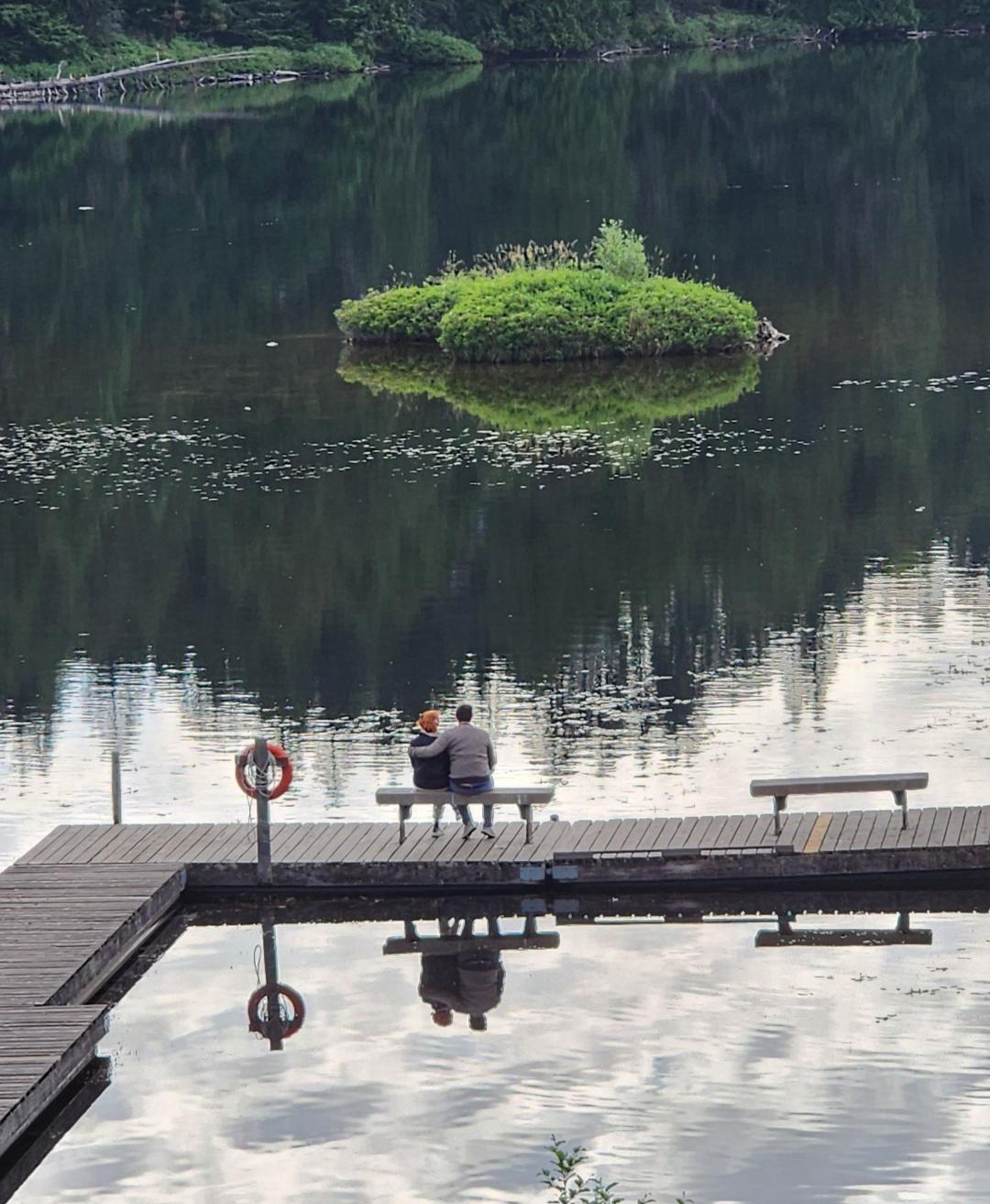
And for the first time all day, I sat down and looked out over the lake.
That’s when I noticed the couple.
Farther out sat a tiny island.
Not much bigger than a shrub.
The lake reflected everything.
The island.
The trees.
The sky.
Even the couple.
The whole scene felt strangely familiar.
And then I realized why.
Suddenly, I was at the Ripplecove.
Let me explain.
Years ago, on our honeymoon, H and I found ourselves at the Ripplecove Inn.
Actually, that’s not quite true.
We found ourselves on the road to somewhere else.
In fact, Ripplecove was never supposed to happen at all.
Like many newlyweds traveling on a budget, H and I had become unexpectedly wealthy through airline incompetence. We had been bumped from a flight and received travel vouchers, which we promptly converted into a honeymoon in eastern Canada.
The furthest the vouchers would take us was Halifax.
So Halifax it was.
People would ask where we were honeymooning.
“Nova Scotia.”
One memorable person asked which island near Bali that was.
We spent time in Halifax, Nova Scotia, PEI, rode an Art Deco train across portions of eastern Canada, visited Montreal and Toronto, took a slow paddle wheeler river cruise through the Thousand Islands during prime autumn color season, and generally had a wonderful time.
H planned almost the entire trip.
I planned exactly one section.
The wine country section.
I researched it.
I organized it.
I had routes.
I had a plan.
The map and I were in complete agreement.
Then, on the morning we were supposed to begin that carefully planned section, H looked at the map and said:
“What if, here, we head left instead of right?”
Then, because he was both wise and interested in remaining married (this time), he immediately added:
“But if that’s even a tiny problem, we won’t.”
I thought about it for approximately three seconds.