
For a long time, I thought learning about fragrance meant learning ingredients.
The notes.
The perfumer.
The concentration.
The history.
Where the rose came from.
Whether the oud had been sustainably harvested by moonlight from trees that had only whispered to passing monks.
(Fragrance marketing can get wonderfully imaginative.)
While those things are interesting, they’re no longer the questions that matter most to me.
Somewhere along the way, without really noticing it happening, the question changed.
Instead of asking:
What’s in this fragrance?
I started asking:
What does this fragrance do?
That turns out to be an entirely different way of smelling.
A fragrance’s marketing may tout saffron gathered from ancient crocuses in the Caucasus and gold leaf inspired by Byzantine mosaics.
That’s lovely.
But it tells me almost nothing about whether I’ll reach for it on an ordinary Thursday . . . or in preparation for a night on the town.
The notes are just words.
The fragrance is a story.
From Notes to Work
When I began this project, I thought I was interviewing fragrances so I could understand what they smelled like.
That was certainly part of it.
But somewhere during all those interviews, I stopped cataloguing the cologne’s notes, and started cataloguing its work.
One fragrance says:
“You’re home now.”
Another says:
“Here’s your blankie.”
Another makes a shared moment just a little warmer.
One belongs on the shelf in the shower because it has become part of beginning the day.
Another seems to belong at the desk, in case something difficult needs to be untangled.
And one may come out only for those rare ceremonial moments when I want to acknowledge that I am stepping into a Current that was flowing long before I arrived and will continue flowing long after I leave.
None of those jobs could be discovered from a note pyramid.
They had to be discovered by paying attention.
That, I think, is one of the things that changed when I began interviewing fragrances before deciding what I thought of them.
The Collector’s question had been:
“Do I like you?”
And – if so – Great! I’ll keep you!
The Librarian began asking:
“Who are you?”
And eventually that produced another question:
“What work do you do?”
The Chair Is Not the Prize
That question makes the next one considerably harder:
Is there another fragrance that does that work better?
A perfectly beautiful vanilla may not earn a permanent place in the Cabinet if another fragrance already fills that moment more faithfully.
Not because one is objectively better.
Not because there is only room for one vanilla.
Because every shelf has a carrying capacity.
Not of space.
Of moments.
Fragrances aren’t really competing for inches on a shelf.
They’re competing for occasions in a life.
Some begin my morning.
Some welcome me home.
Some accompany a book at the end of the day.
Some belong to travel.
Some to thought.
Some to memory.
Some to ceremony.
And some teach me something extraordinary without ever becoming something I particularly want to wear.
That distinction has become increasingly important.
Some fragrances enlarge the Library. Others expand it.
A fragrance expands the Library when it introduces a conversation that wasn’t possible before.
Rêve d’Ossian did that.
L’Instant de Guerlain Pour Homme did that.
Even Chypre Mousse, which I have absolutely no desire to smell like, did that . . .
It showed me a landscape I hadn’t encountered.
Fennel.
Moss.
Undergrowth.
Thank you very much for the tour.
I’ll return to the path now.
The Atlas and the Cabinet
This also helped me understand something I hadn’t yet fully appreciated.
The Atlas and the Fragrance Cabinet are not the same thing.
The Cabinet contains fragrances that still have work to do in my life.
The Atlas contains what I’ve learned from all of them.
A bottle can leave.
The conversation doesn’t.
Divine Vanille taught me the smell of cured tobacco leaf hanging in a warm North Carolina barn.
That changed my olfactory vocabulary.
It didn’t mean I needed to keep the bottle.
Chypre Mousse showed me the forest floor.
That experience belongs permanently in the Atlas.
The fragrance itself can travel safely to someone who has always dreamed of smelling like moss.
Perhaps even someone who considers “mushroom soap” a selling point.
There is a Library for everyone.
And that is part of what I was beginning to understand in Hospitality, Not Ownership: sometimes the next best use of a perfectly wonderful fragrance is another Library.
The Collector was attached to bottles.
The Librarian is becoming attached to where the bottles take her.
Then Real Life Tested the Theory
For a while, all of this remained a rather lovely philosophy.
Then an ordinary Thursday came along.
Earlier that day, I had been interviewing another fragrance. Later, after a shower, I needed to leave for the East Bay.
Car.
Client lunch.
Kids’ iaido class.
Iaido.
Ordinary life.
I opened the fragrance Cabinet.
Before this project, I probably would have reached automatically for one of my familiar Jo Malone combinations.
Instead, I noticed a remarkably nondescript little white bottle.
During its interview, we’d identified something unusual about it.
Of all the fragrances in the Library, Almeria seemed capable of doing perhaps the least glamorous job of all:
Everyday.
So I looked at the bottle and essentially thought:
Okay. Prove it.
I put it on.
And almost immediately thought:
Oh, I love this stuff.
Nothing dramatic happened.
That was the point.
Almeria didn’t reveal a mysterious new note.
It didn’t transform the afternoon.
It didn’t turn the drive across the bridge into an occasion.
It simply came along.
And suddenly I understood that “everyday fragrance” may be a much harder role to earn than I’d realized.
An everyday fragrance doesn’t require an occasion because it doesn’t need to transform the occasion.
It doesn’t say:
Welcome home.
Or:
Let’s think clearly.
Or:
May this moment last a little longer.
Or:
Step into the Current.
It asks:
Where are we going?
And off we go.
The Map Became Useful
That ordinary little moment may have been one of the strongest validations of this entire project.
Almeria had been sitting in the Cabinet before we interviewed it.

It was physically available to me.
For years.
But in a meaningful sense, it wasn’t accessible.
I didn’t know what it was for.
The interview didn’t change Almeria.
It changed my ability to reach for it.
That’s different.
Had I chosen one of my familiar Jo Malone combinations, I would have been composing something appropriate for the day.
Almeria required no composition.
It offered companionship.
I just put it on.
And suddenly this elaborate system of interviews, roles, rooms, chairs and conversations proved that it could do something besides produce prettier descriptions of perfume.
It could change my behavior.
The Collector owned Almeria.
The Librarian learned what to do with it.
Which seems especially appropriate for something I’ve been calling an Atlas.
An atlas doesn’t create the terrain.
It doesn’t decide where you should go.
It simply helps you understand where things are in relation to one another so that, when you decide where you’re going, you can find your way.
Almeria was always capable of being my everyday fragrance.
We just hadn’t been properly introduced yet.
What I’m Actually Collecting
That experience changed the way I think about the entire project.
The bottles are wonderful.
I love the bottles.
But the real collection isn’t glass.
It’s understanding.
The Atlas is where the tobacco-curing barn lives.
Where ancient reverence became something I could smell.
Where anise became a protagonist.
Where a fragrance revealed jasmine while I was walking down the front steps before sunrise, and briefly convinced me that the vines beside the door had bloomed unusually early.
I remember thinking:
The garden has given me a gift this morning.
Sniff.
Wait.
Sniff sleeve.
Oh, for Heaven’s sake. The gift is ME.
(Apparently attention occasionally requires eliminating the Investigator as a possible variable.)
But that ridiculous little episode also contains something important.
I wasn’t thinking about a list of ingredients.
I was experiencing what the fragrance did.
It made itself part of the morning.
And then made me laugh.
Perhaps that’s why the original question no longer seems sufficient.
I still want to know what’s in a fragrance.
I still want to know who made it.
I still want to know its history.
But those are no longer the destination.
They’re part of the map.
The question that matters most now is:
What do you do?
Do you welcome?
Comfort?
Accompany?
Help me think?
Help me remember?
Prepare me to notice?
Do you introduce me to something I’ve never encountered before?
Do you have work that only you can do?
Sometimes the answer earns a fragrance a permanent chair.
Sometimes it earns only a page in the Atlas.
Both matter.
I began this project thinking I was collecting fragrances.
It turns out . . .
I’ve been collecting ways of paying attention.
And perhaps that’s the biggest change of all.
It was never really about smelling more.
It was about noticing better.
Field Notes
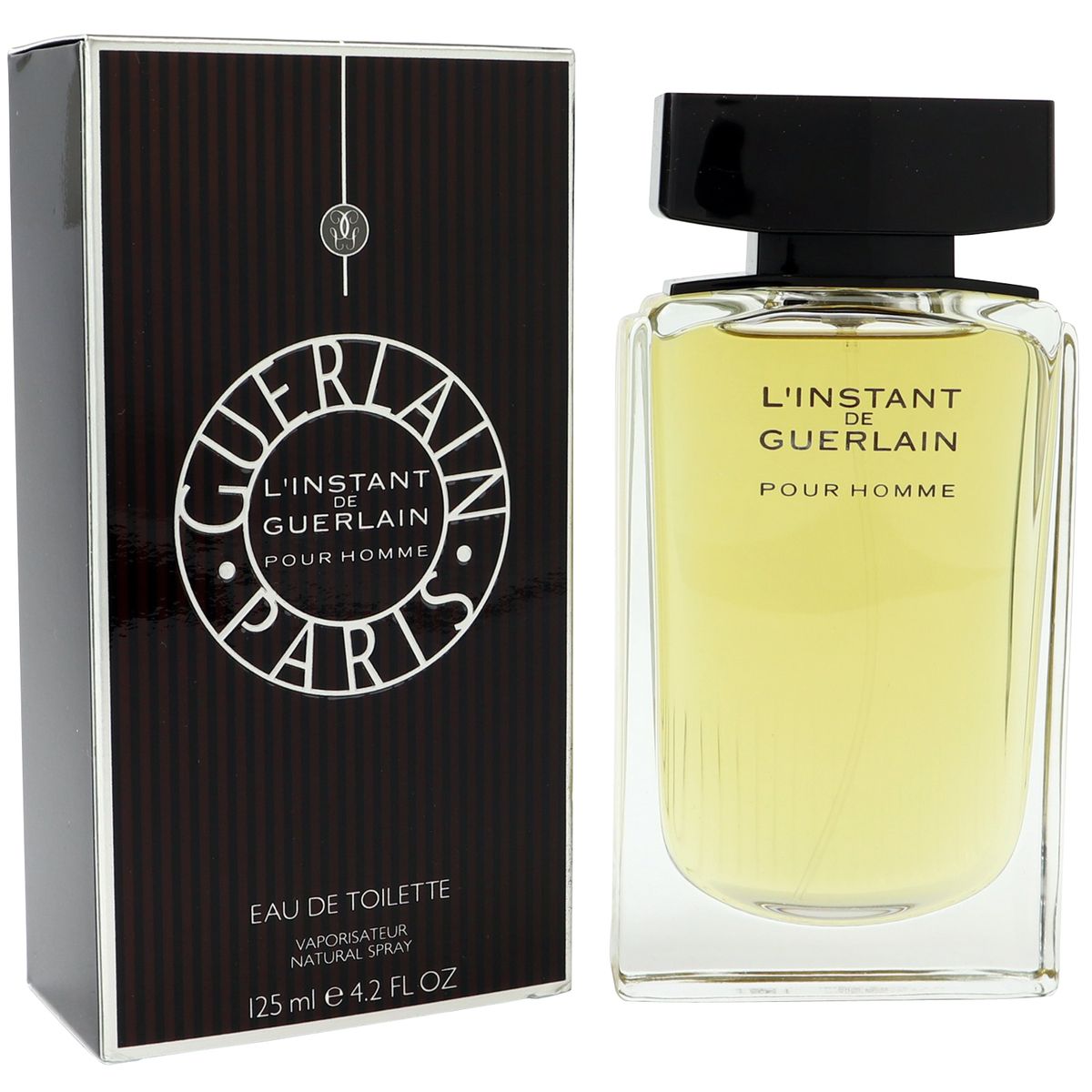
L’Instant de Guerlain Pour Homme by Guerlain (2004, Béatrice Piquet)
OFFICIAL NOTES: Woody Spicy fragrance. Top: Lemon, Anise, Bergamot, Grapefruit and Jasmine; middle: Cacao, Patchouli, Sandalwood, Tea, Cedar and Lavender; base: Natural Musk, Hibiscus Seed and Elemi Resin.
Provenance: A full bottle gifted to me by Seb many years ago.
Interview: The fragrance announced itself with complete confidence.
Anise.
Not absinthe. Not fennel. Not tarragon.
Simply the unmistakable smell of wild anise growing on a hot California hillside.
Bright lemon and grapefruit lifted it further, creating something unexpectedly clear and alert.
Not refreshing.
Not energetic.
Focused.
Evolution: As the fragrance warmed on skin, something delightful happened. Walking down the front stairs early one morning, I suddenly thought:
I can’t believe I can smell the jasmine outside this early.
Then I stopped.
It wasn’t the garden.
It was me.
Movement and warmth had revealed a jasmine note that hadn’t been obvious during the desk interview. The fragrance continued settling into a dry cocoa accord – not chocolate, but unsweetened cocoa powder – supported by a light, clean musk.
Personality: Clear-headed.
Rather than drawing attention to itself, this fragrance seems to sharpen attention toward everything else.
It feels less like a fragrance for conversation . . . and more like one for concentration.
The Conversation: The most important question became:
When would I wear anise and citrus?
Surprisingly, the answer wasn’t “summer.”
Or “casual.”
Or “fresh.”
Instead, the fragrance suggested moments that require discernment.
Writing.
Thinking.
Untangling complicated ideas.
Approaching work that asks for clarity.
This may be the first fragrance in the Library whose primary role is cognitive rather than emotional.
It doesn’t comfort.
It doesn’t celebrate.
It helps create the mental atmosphere for careful thought.
Place in the Library: This interview reinforced another principle. Some fragrances are historically significant. Some are personally significant. Neither automatically earns a permanent place.
The question remains:
What work does this fragrance do?
L’Instant answered that question.
It occupies a role that none of the other fragrances currently fill.
Not because of its rarity.
Because of its purpose.
Assessment: ★
This fragrance expanded the Atlas in several ways. It introduced anise as a true protagonist rather than a supporting note. It demonstrated how movement and warmth can reveal entirely new dimensions of a composition.
And perhaps most importantly, it suggested an entirely different category of fragrance.
One worn not for comfort.
Not for hospitality.
Not for ceremony.
But for thought.
Some fragrances accompany conversations.
Some accompany journeys.
L’Instant accompanies concentration.
It simply says:
Let’s think clearly.
Rêve d’Ossian by Oriza L. Legrand (1900)

OFFICIAL NOTES: Oriental Woody fragrance. Top: Incense and Pine Tree; middle: Opoponax, Cinnamon, Elemi, Benzoin, Tonka Bean and Guaiac Wood; base: Frankincense, Myrrh and Tolu Balsam.
The fragrance was inspired by Ossianism and the Romantic fascination with the epic poems attributed to Ossian.
Interview: Some fragrances introduce notes.
Some introduce characters.
Rêve d’Ossian introduced an experience.
From the first moments, I wasn’t thinking about ingredients.
I was thinking about Time.
Not ordinary time.
Consecrated time.
The fragrance immediately suggested pine, ancient incense, beeswax, warm wood and the glow of candles. Yet none of those individual elements felt like the story.
Instead, they seemed to point toward something larger.
Evolution: As the fragrance settled, it changed very little. A gentle powderiness appeared, softening the composition without fundamentally altering it.
The incense remained light rather than dense.
The pine remained warm rather than forest-like.
The fragrance didn’t unfold into new chapters.
It simply continued being itself.
That constancy turned out to be one of its greatest strengths.
Personality: The images arrived almost immediately.
A cathedral.
Then . . . No.
A centuries-old Russian church surrounded by pines.
Then . . . No.
A Buddhist temple.
Then . . . No.
Well – all – Yes, but No.
What I was actually imagining was a place where generations of people have prayed, hoped, grieved, celebrated and returned for so long that the building itself seems saturated with reverence.
It wasn’t Christianity.
Or Buddhism.
Or medieval Europe.
Or Japan.
Every tradition seemed to point toward the same invisible thing:
A place that has held sacred attention for centuries.
The Conversation: Eventually I realized what I thought I was smelling.
Not incense.
Not wood.
Not beeswax.
Not history.
The accumulation of faithful attention.
Thousands of ordinary ceremonies.
One candle.
Then another.
One prayer.
Then another.
One waft of an incense censer.
Then another.
Generation upon generation.
Until the place itself begins to remember.
The fragrance doesn’t smell like a cathedral.
It smells like what faithful time leaves behind.
The Current: We have talked about the Library – and rooms – for so long that the natural question was what sort of “room” I was describing.
But this wasn’t a room.
It was a Current.
Standing within it felt less like entering a building than stepping into a stream where past, present and future coexist.
The stream didn’t begin with me.
It won’t end with me.
The fragrance doesn’t invite me to possess that stream.
Or preserve it.
Only to step into it for a while.
Place in the Library: This may be the first fragrance whose role is neither daily companionship nor special occasion.
It belongs to an entirely different category:
Ceremonial Fragrance.
The fragrance that comes out before beginning the Kiso Road.
Before a pilgrimage.
Before entering a place where attention itself becomes an act of reverence.
Not because it makes the experience sacred.
Because it reminds me that it already is.
Consecration is not creating sacredness. It is recognizing it.
Assessment: ❤️
After dozens of interviews, I did not expect to discover an entirely new chair in the Library.
Rêve d’Ossian occupied one I didn’t know existed.
It expanded the Atlas by teaching me that fragrance can express something I had never imagined possible:
The scent of Time itself.
Not old things.
Not history.
But the accumulation of reverence left after generations of ordinary people have shown up with hope, gratitude, grief, love, candles, silence, prayers, bows and presence.
It simply whispers:
Others have come this way before you.
Now . . . step into the stream for a little while.
And it introduced another posture within the Atlas.
From Collector . . . to Librarian . . . to Pilgrim.
The Collector asks:
What can I acquire?
The Librarian asks:
Where does this belong?
The Pilgrim asks:
How do I enter well?
Perhaps that is the greatest gift this fragrance has given me.
Not another beautiful bottle.
Another way of walking.
Chypre Mousse by Oriza L. Legrand (1914)
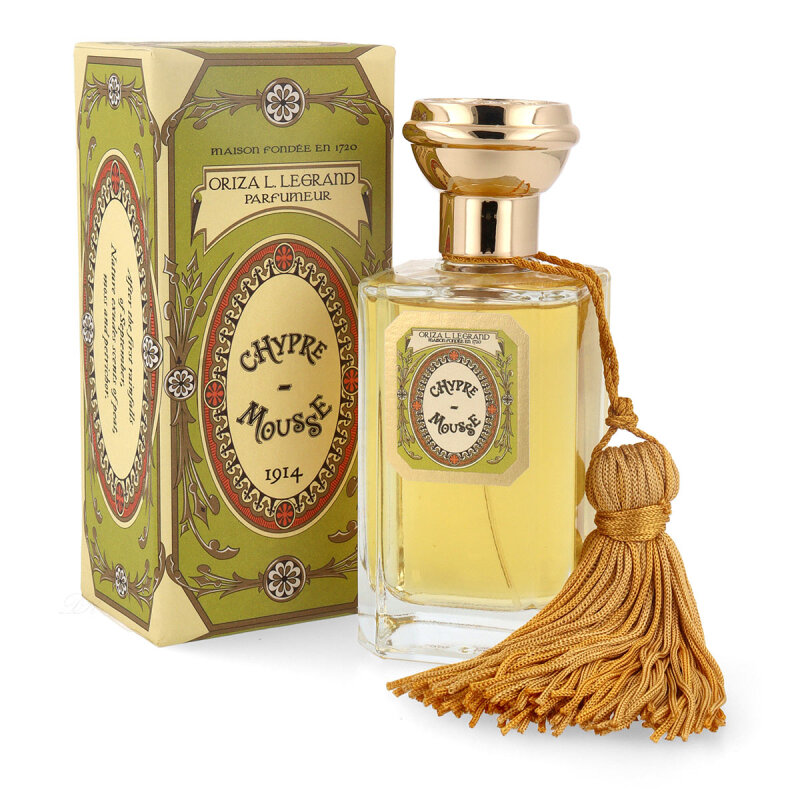
OFFICIAL NOTES: Green Chypre. Wild Mint, Fennel, Green Sprouts, Oak Moss, Galbanum, Angelica, Fern, Vetiver and Pine Needles. The house describes a landscape of damp autumn forest, rain-soaked moss, earth, fallen leaves, weathered bark and roasted chestnuts.
Interview: At first, I genuinely had no idea what I was smelling.
Then it became unmistakable:
Fennel.
Not anise – the bright, bracing note I had learned from L’Instant.
This was fennel.
From there, the fragrance settled into something green, but not the cheerful green of grass, leaves or spring growth.
It smelled like undergrowth.
Moss.
Low vegetation.
The green layer beneath the more obvious green things.
Not rotten.
Not unpleasant.
Just deeply, persistently . . . mossy.
Evolution: Very little changed. The fennel gradually became less of a solitary note and more integrated into the darker green, mossy whole.
Given how other Oriza fragrances had developed during their drydown with little surprises, I remained hopeful.
But no woodland fairies arrived with cocktails.
Drats.
(Chad suggested they were elsewhere, eating the above-referenced but never appearance roasted chestnuts.)
The Conversation: The most interesting part of this interview may actually be the old black-font ❤️.
I can’t reconstruct exactly why I originally gave Chypre Mousse a heart, but I suspect the answer may have been:
Wow. I’ve never smelled anything like this before.
And that remains absolutely true.
What has changed is that I no longer consider originality and attachment to be the same thing.
A fragrance can show me something entirely new without making me want to live with it.
Chypre Mousse did exactly that.
Previous Assessment: ❤️ Current Assessment: < / Drawer
The old ❤️ wasn’t wrong.
It may simply have been answering an earlier question:
Did you show me something extraordinary?
Yes.
The Librarian now asks another:
Do I want you accompanying my life?
No.
And that’s an important distinction.
A fragrance can expand the Atlas without winding up in the Cabinet.
Chypre Mousse showed me a new landscape.
I simply don’t particularly want to smell like that landscape.
Or, more succinctly:
Not really my cup of . . . moss.
Thank you for showing me the forest floor.
I’ll return to the path now.
Travel safely.
