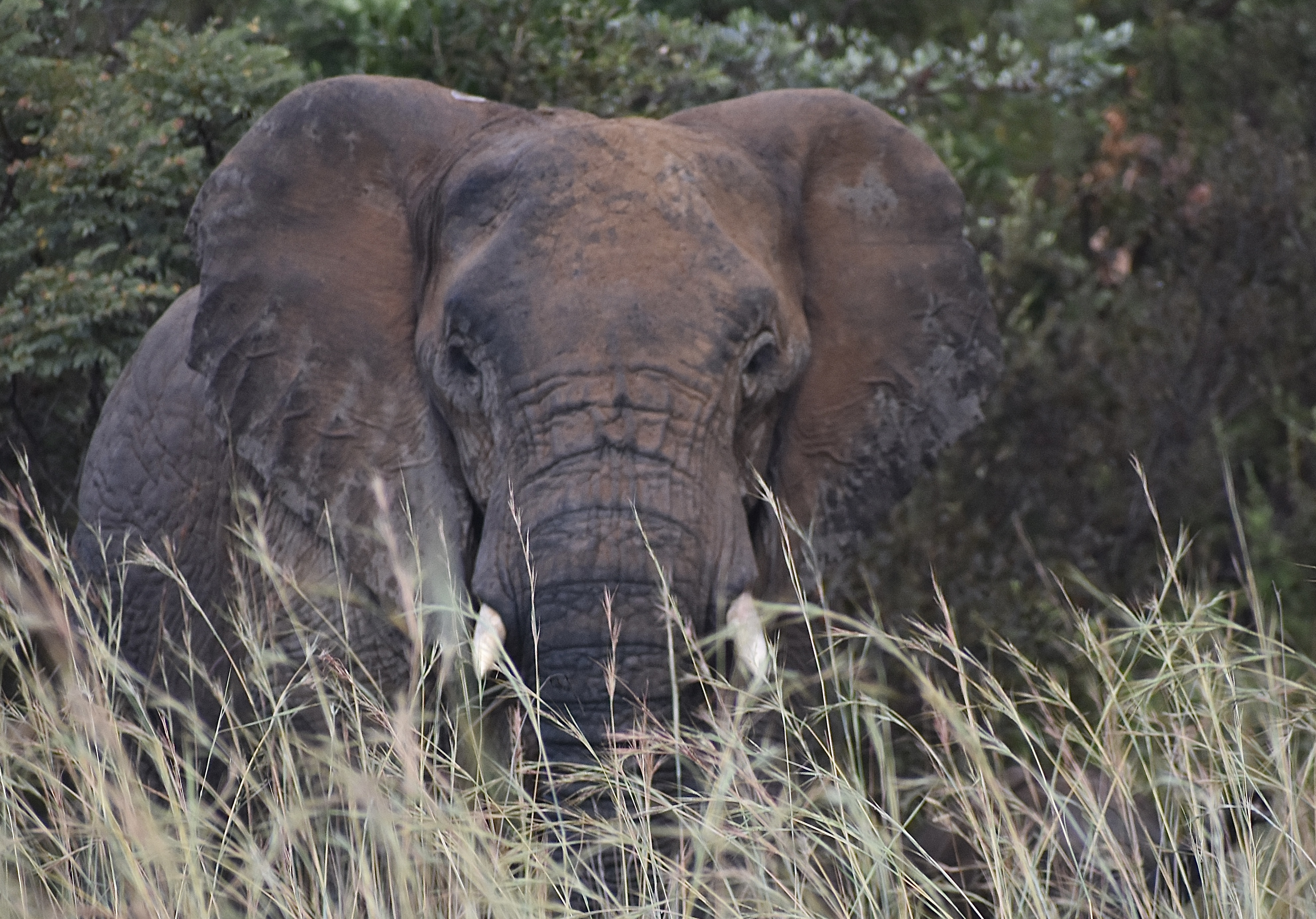
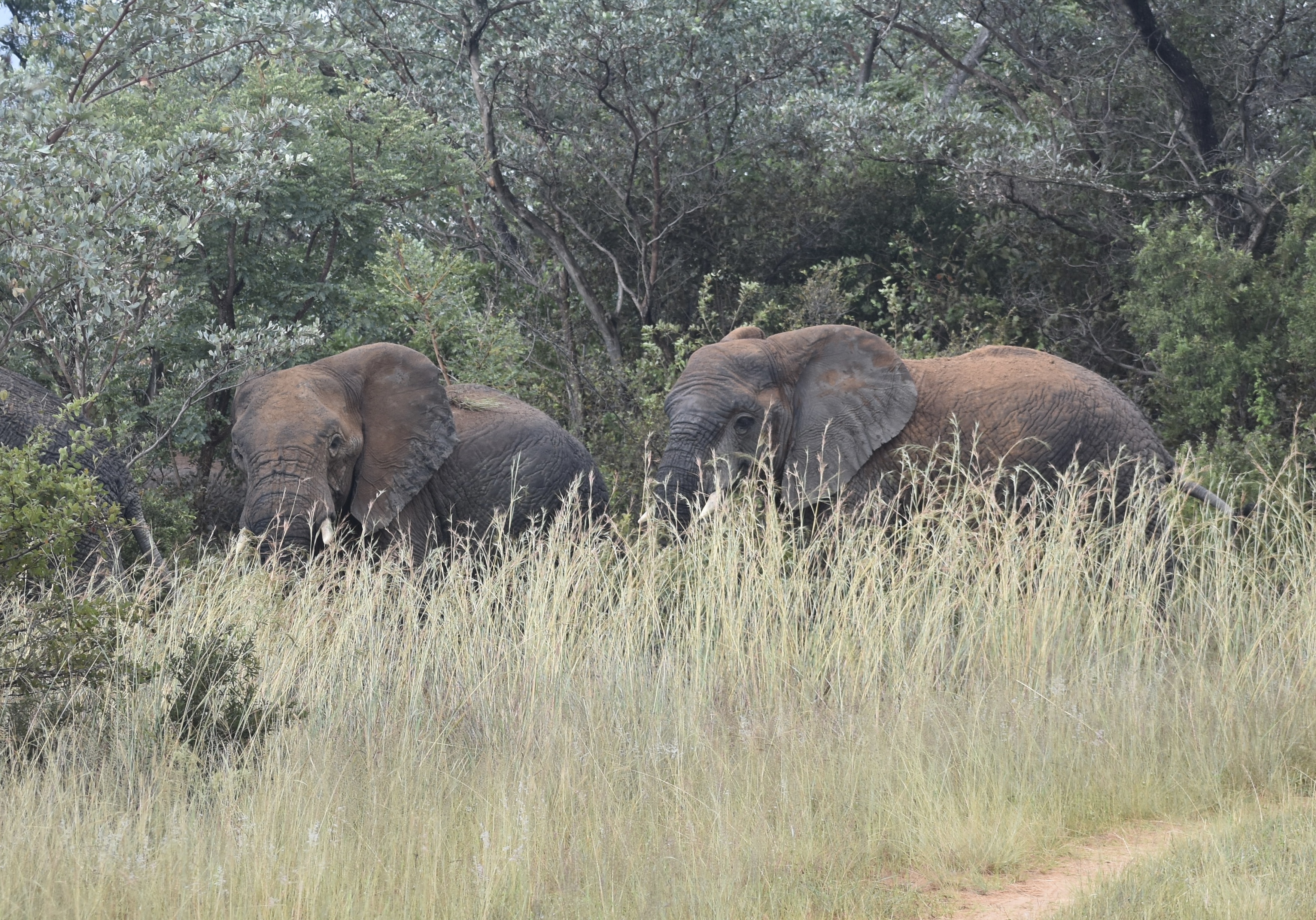
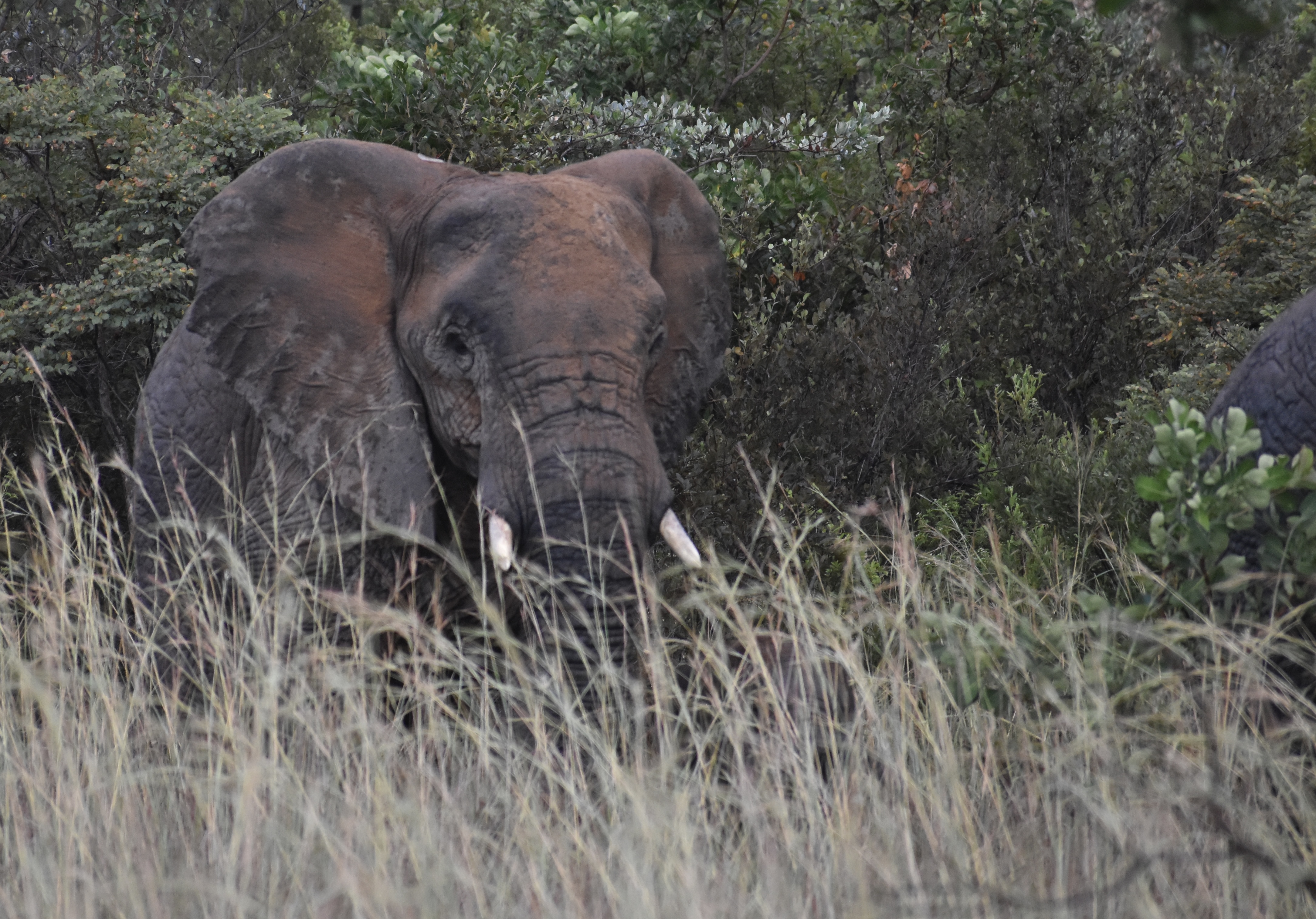
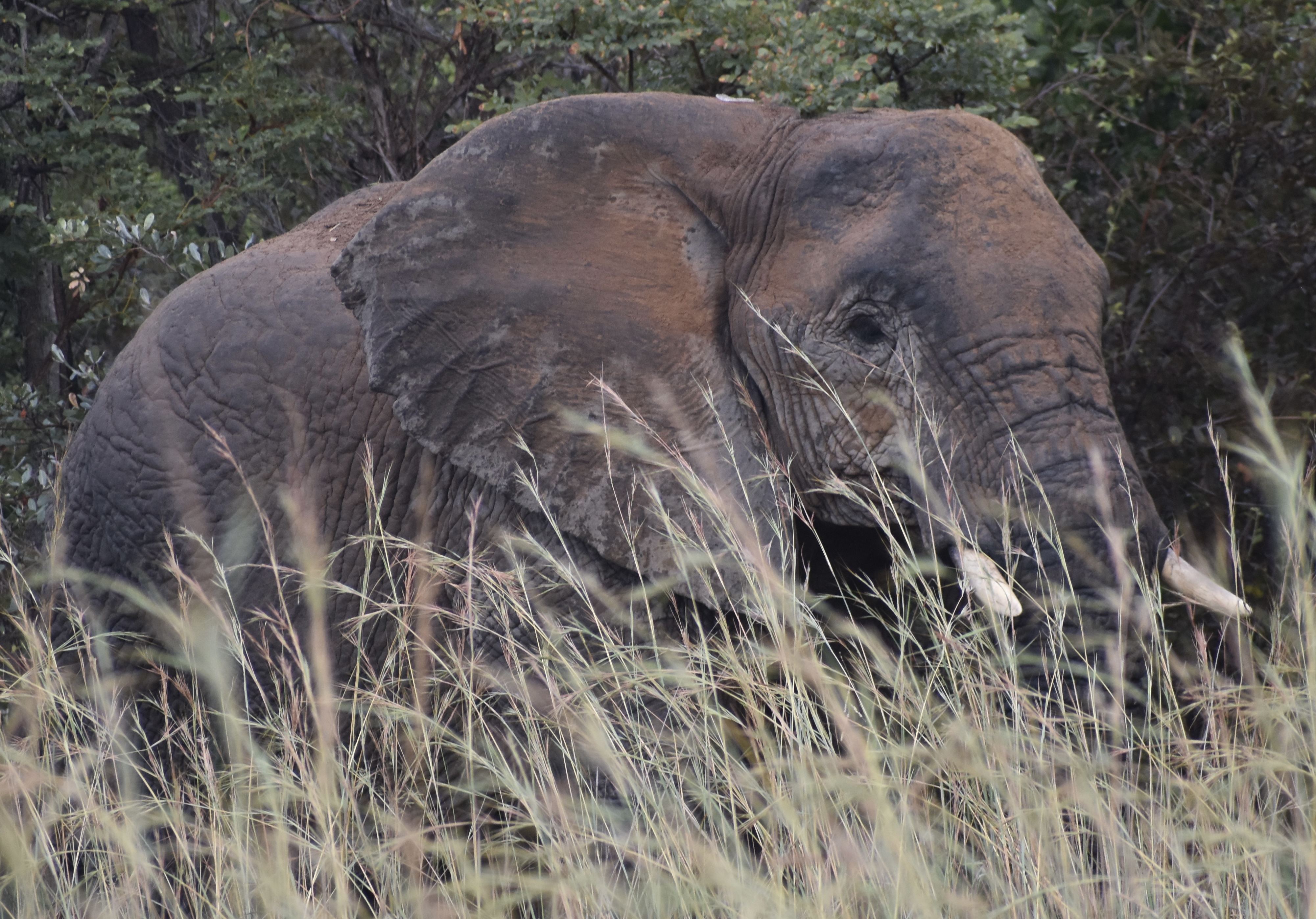
Day 6 was fairly short — and we got to sleep in (yay!).
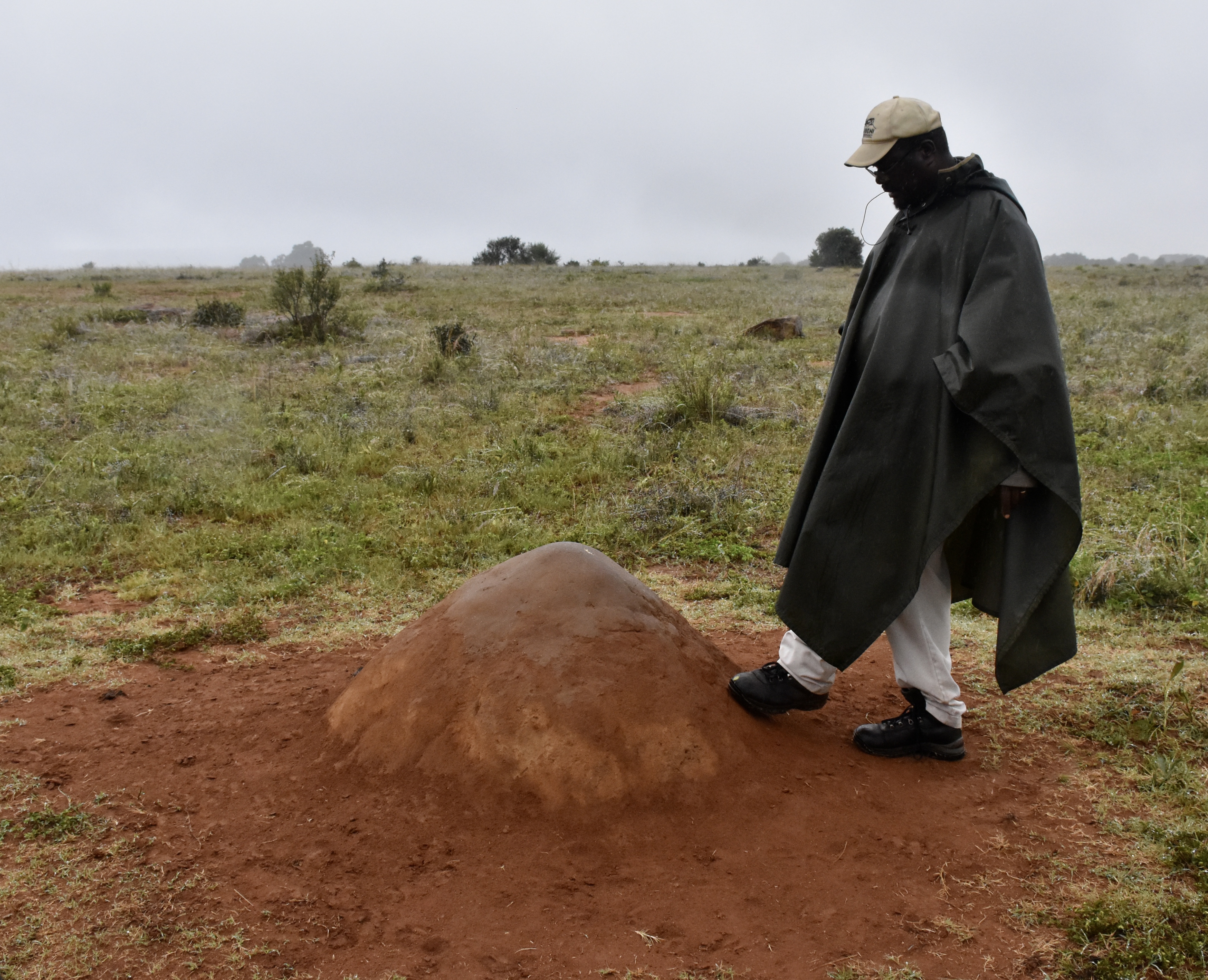
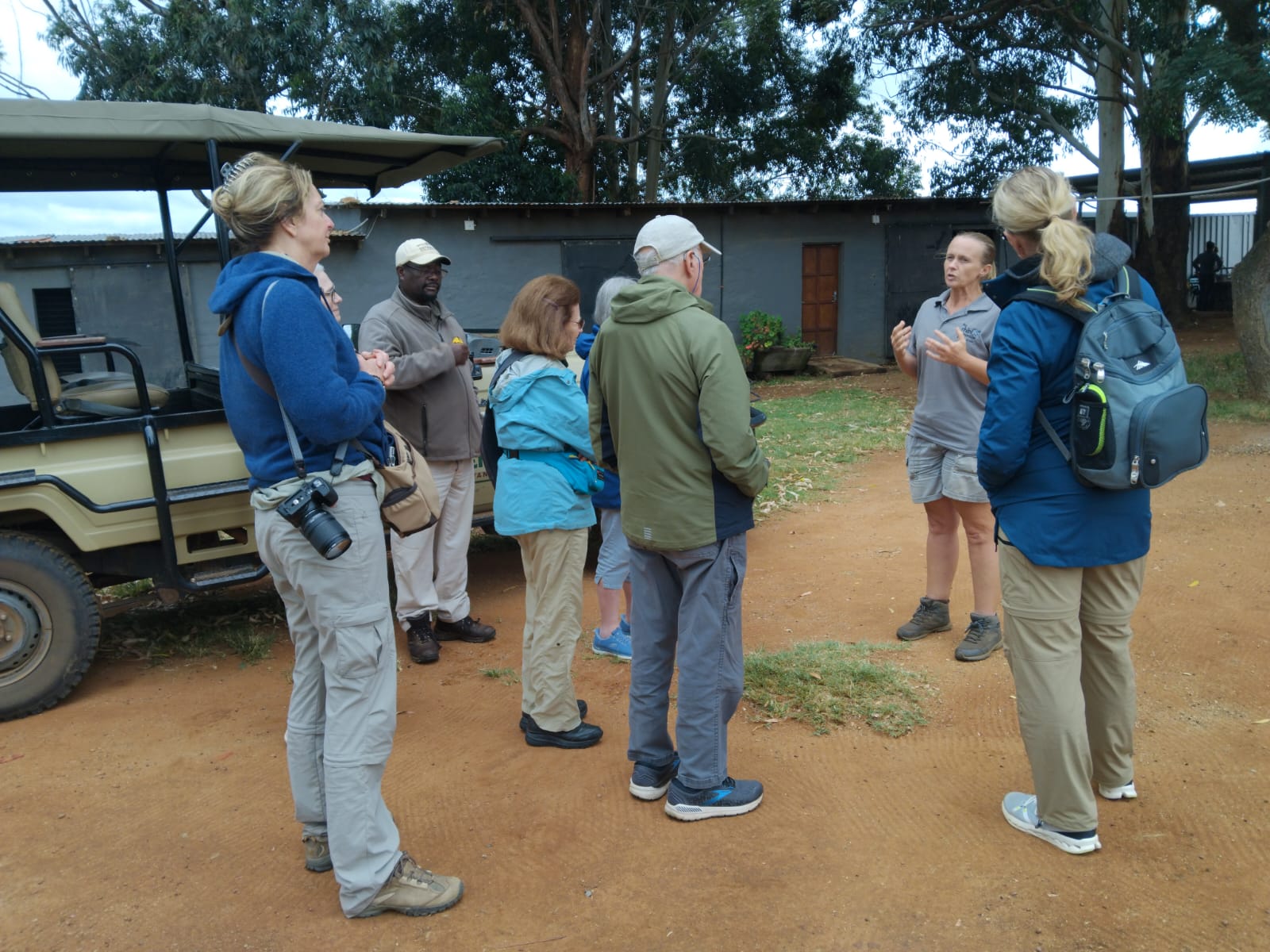
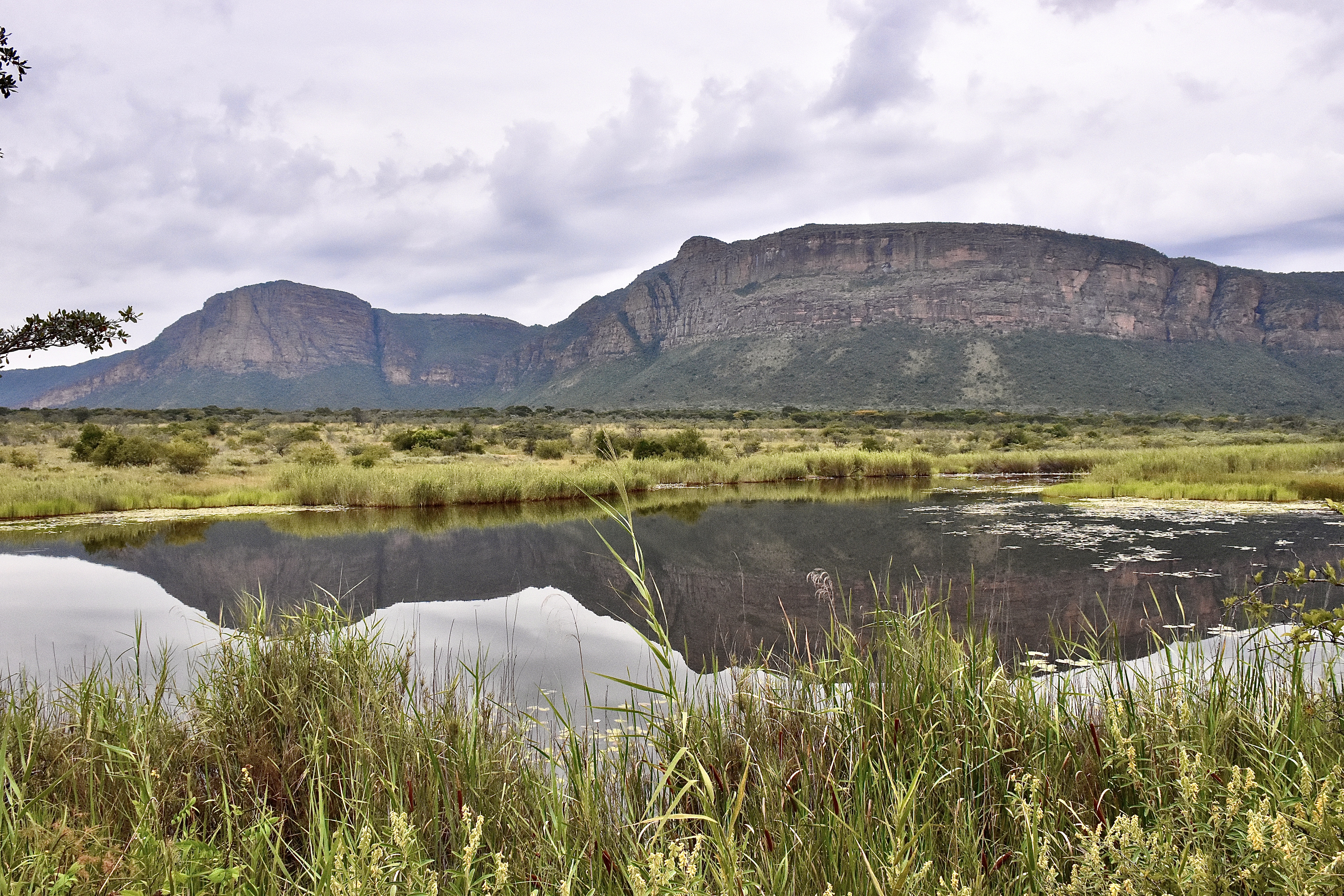
We headed out in misty-to-rainy weather for a bush walk. We drove out to the main grassland at the foot of the big butte and spent the morning learning the kind of safari facts that make you feel like you’re suddenly in Nature’s graduate seminar.
We learned about the Resurrection Plant — you can let it completely dry out, and then put it in water any time later, and it will spring back to life as if nothing happened.
We learned about aardvarks and termite mounds.
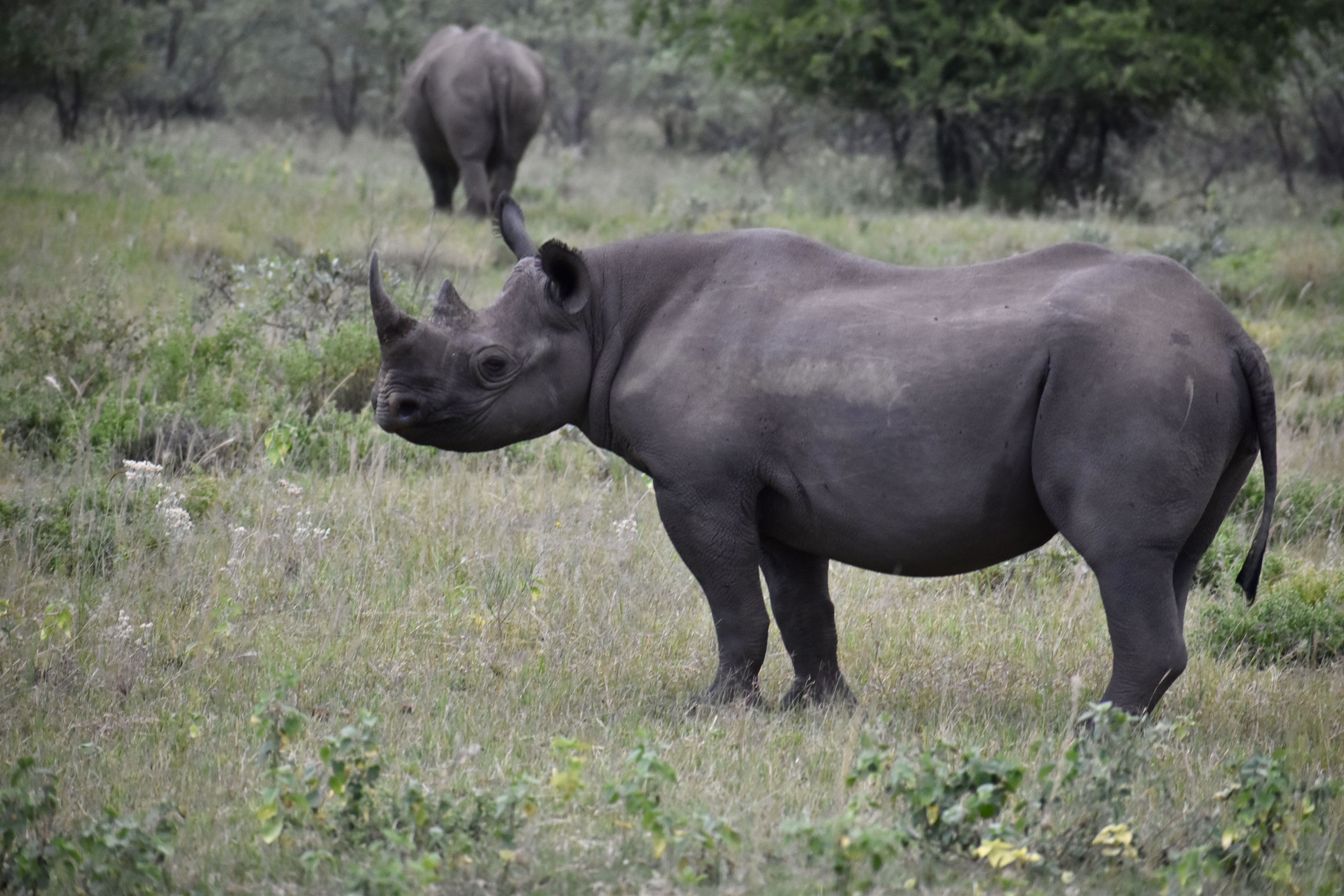
We learned that rhinos basically use one section of a field the way a cat uses a litter box: all poo in one place.
And that this is not just gross trivia — it’s information. If a new male comes into an area, he will search out that spot and “read” it: is there another male here? Is a female in estrus?
But similarly, if the old male smells a new male’s scent on the pile, he will search him down and kill him.
Nature is… not subtle.
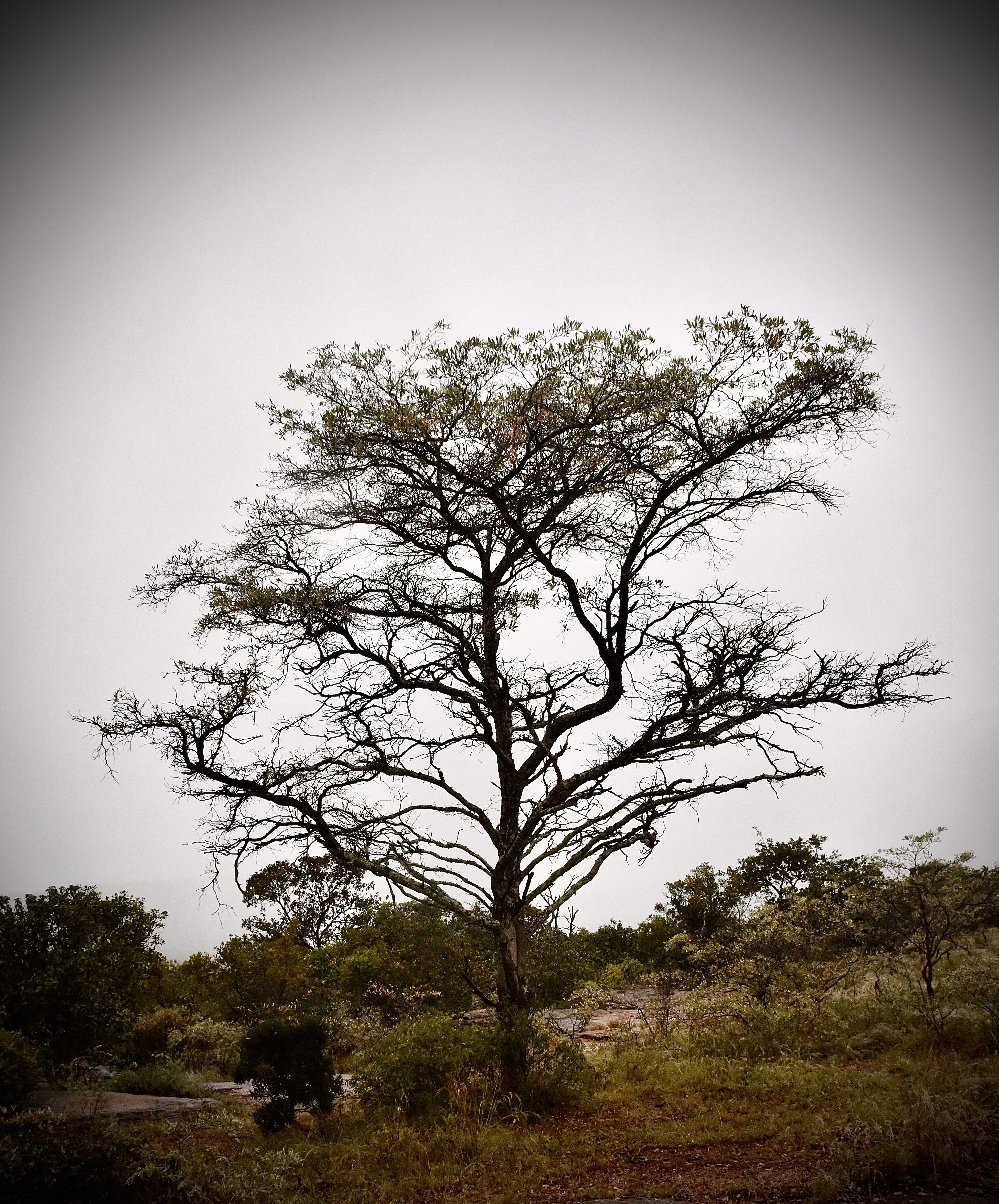
Isaac broke off a branch from a tree that lions use to scent themselves so prey can’t smell them. It had a strong, herbal smell — a bit like a “cowboy cologne” plant from home.
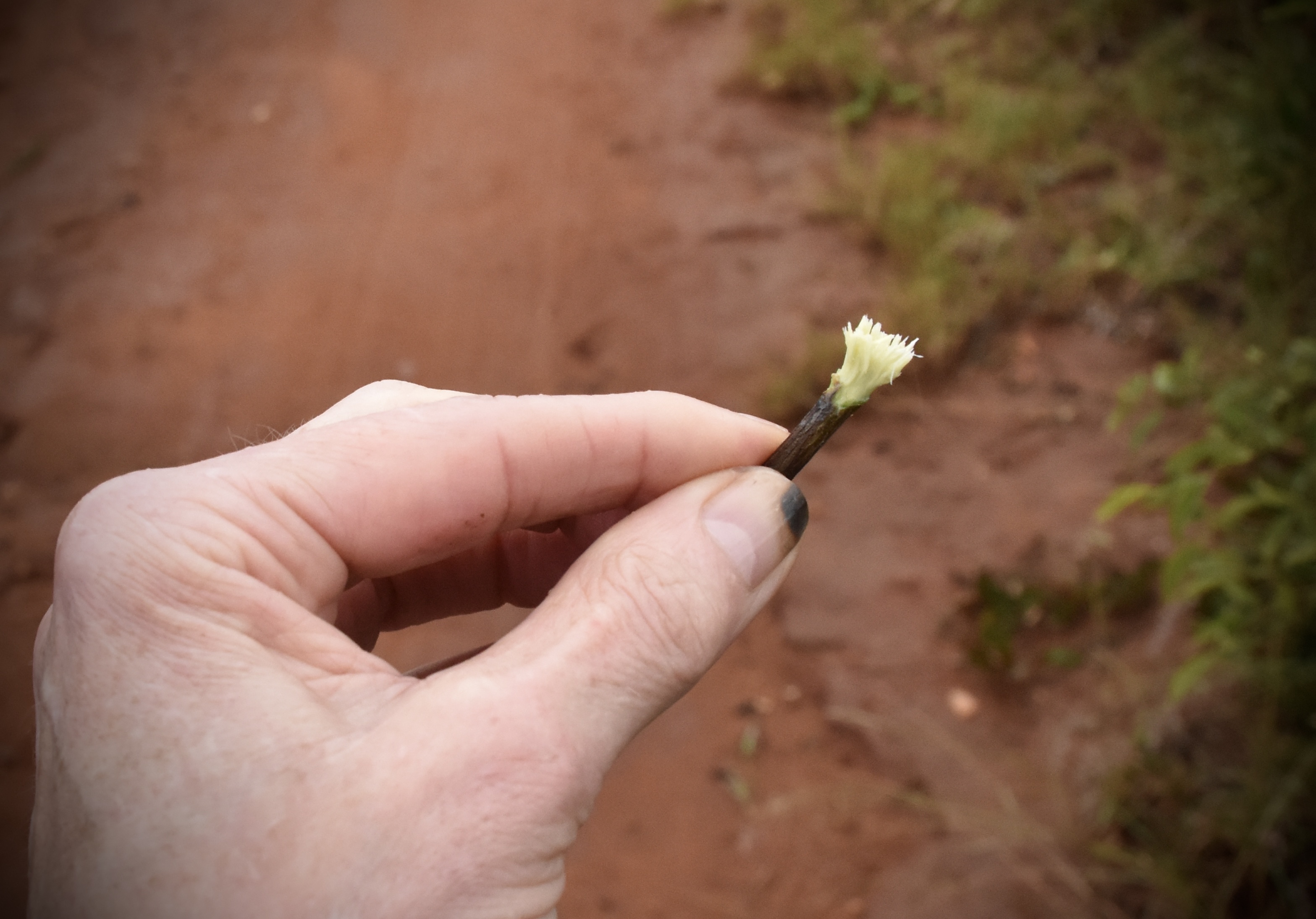
We also made a toothbrush out of the inside of another branch. It even had a slightly numbing, acidic taste, which Isaac said was basically the toothpaste.
Unfortunately, we all discovered that the “rain ponchos” from the vehicle used the term rain in the most aspirational sense possible — as in, they looked like ponchos, but the rain came straight through and soaked you anyway.
At this moment, we’re back at the ANEW Hotel Pretoria, and we’ve met up with the rest of the group.
Abe treated us to a round of champagne for minor introductions (the main ones will happen tomorrow when we are in Zimbabwe, on a cruise on the Zambezi River).
Janice, Mary, Lynn, and I headed over to the attached mall to get some money at the ATM, and for Janice to pick up a few items she’d forgotten to pack.
We wandered around a bit, and finally found…
A Woolworth’s!
Mary mentioned she thought that brand had basically gone extinct a decade ago. Apparently not here.
Abe had told us that malls are booming in South Africa now that there is a rising Black middle class. Most people don’t buy online — it reminded me a bit of how integral malls were in the U.S. back in the 1960s. We got gelato (“Lotus” flavor for Mary and Janice), and headed back to the hotel.
My one regret so far is that on the drive back from Entabeni, I saw a monkey to the side of the road — a vervet monkey, grey with a black face and (yes) a blue bum.
As we passed it by, I looked up and saw there were at least twenty monkeys hanging all over the tree.
Abe was asleep in the passenger seat, but I was in the front row. What I should have done is tapped Andrew, the driver, on the sleeve and asked him to pull over.
(We were still on the dirt road.)
I just couldn’t think that fast.
A bit of regret. They were so cute.
A completely separate thought: “Wide Load” vehicles here are marked as “Abnormal.”
Shades of Young Frankenstein (“Abby Normal”)…
Ate at the buffet here at the hotel for dinner, and it was TERRIBLE. All the meat was dry and overcooked, there was sand in the spinach, etc.
The last straw was that the buffet cost far more than Lynn’s meal (chicken curry) — and a glass of wine! — ordered off the menu.
Ah well.
We have an early morning. Lynn and I have been weighing and packing and re-weighing and shifting and packing things.
We are really hoping Abe was right that we can have a “sling bag,” because my sling bag currently contains the full camera rig, all my tech, and now — in order to get the check-in bag under 44 pounds — the home-host present of two pounds of Ghirardelli chocolates.
Priorities.
Tomorrow: Zimbabwe, The Zambezi, and hopefully a buffet redemption arc
I never get a percentage from any links I include – but! – if you are curious about Overseas Adventure Travel and want $100 off, call them at 1-800-955-1925 and request their amazing catalog, tell them you were referred by Sandy Shepard, customer number 3087257, and get $100 off your first trip! The catalog is what all good dreams are made of!
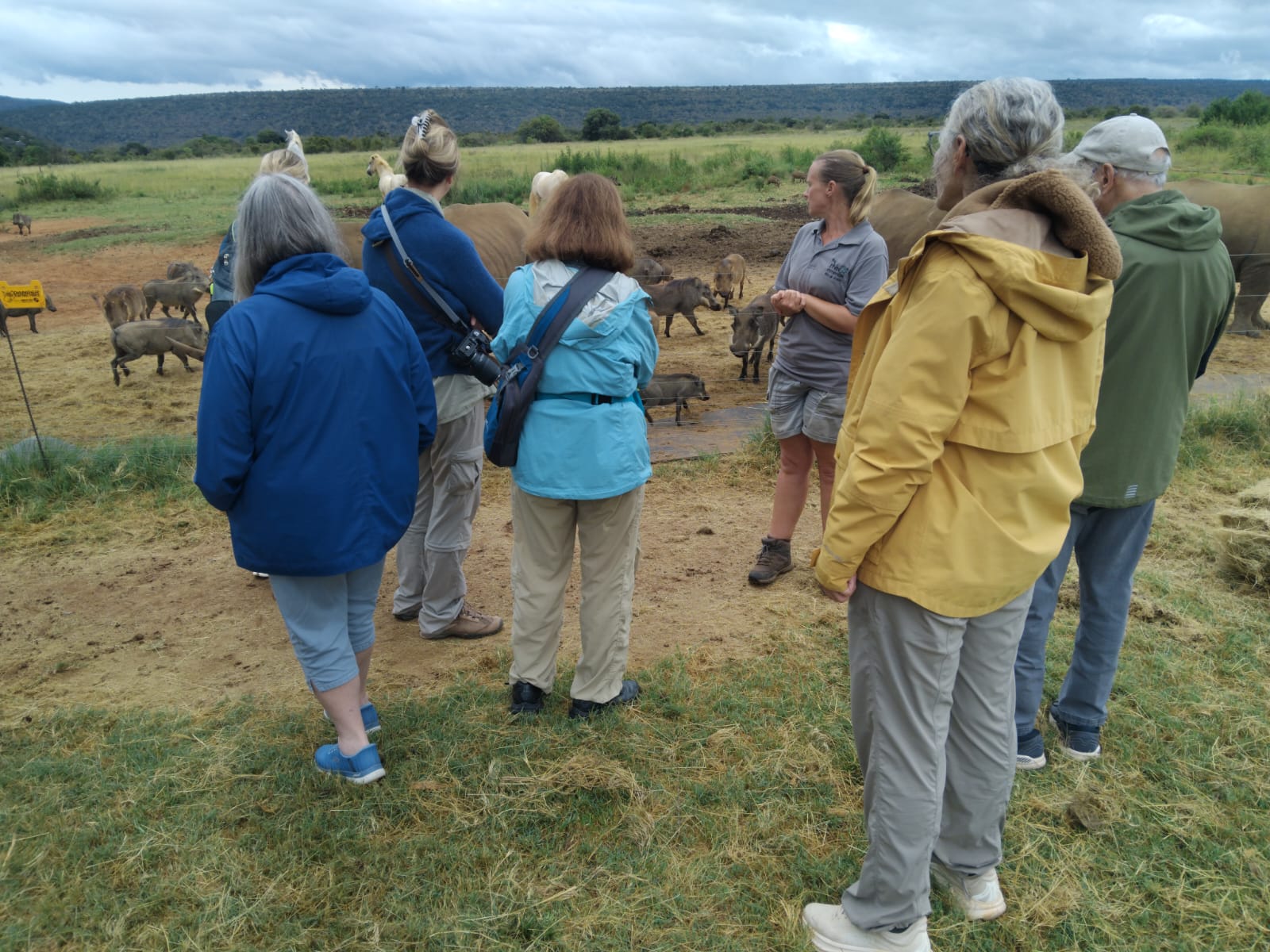
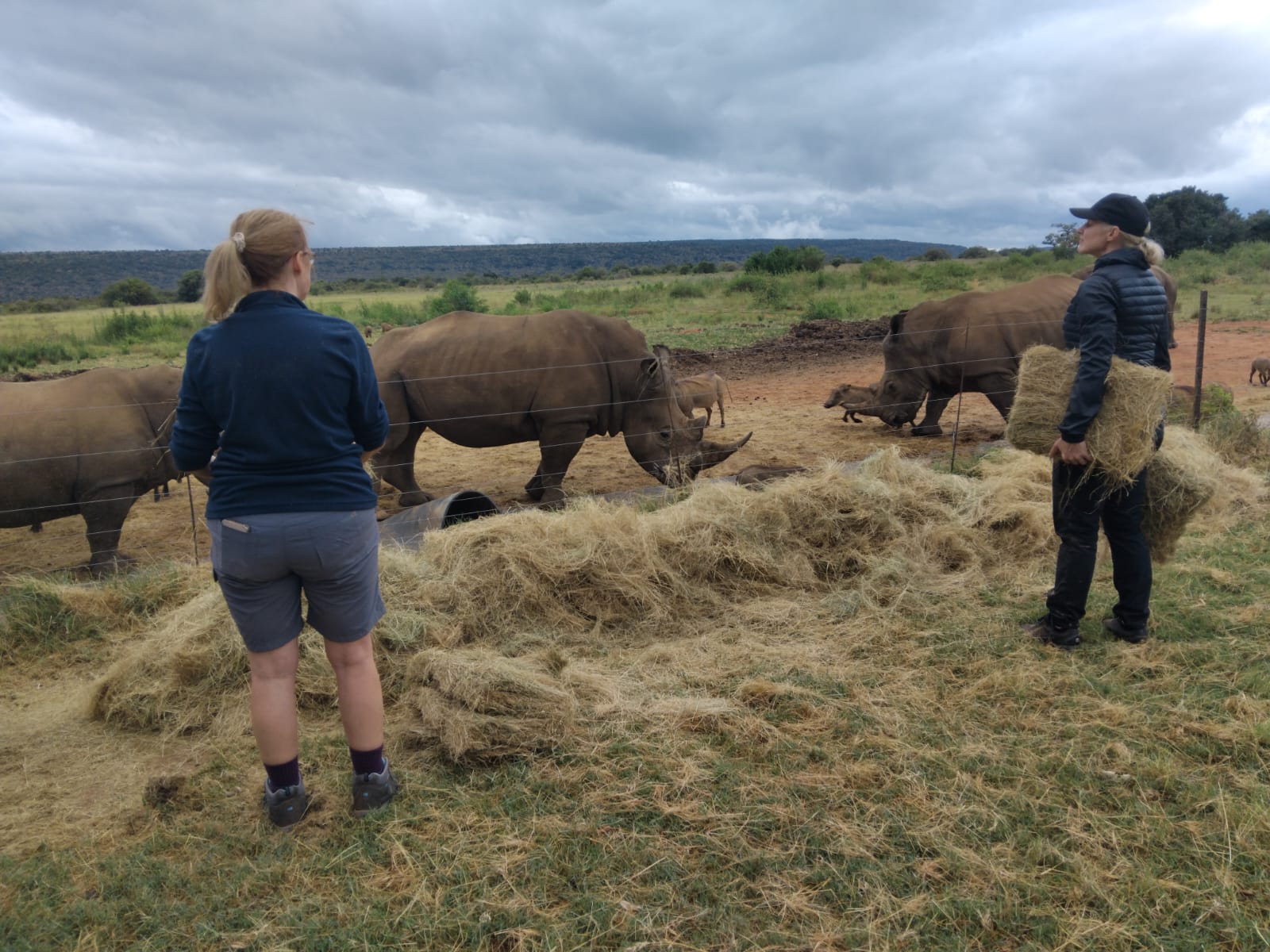
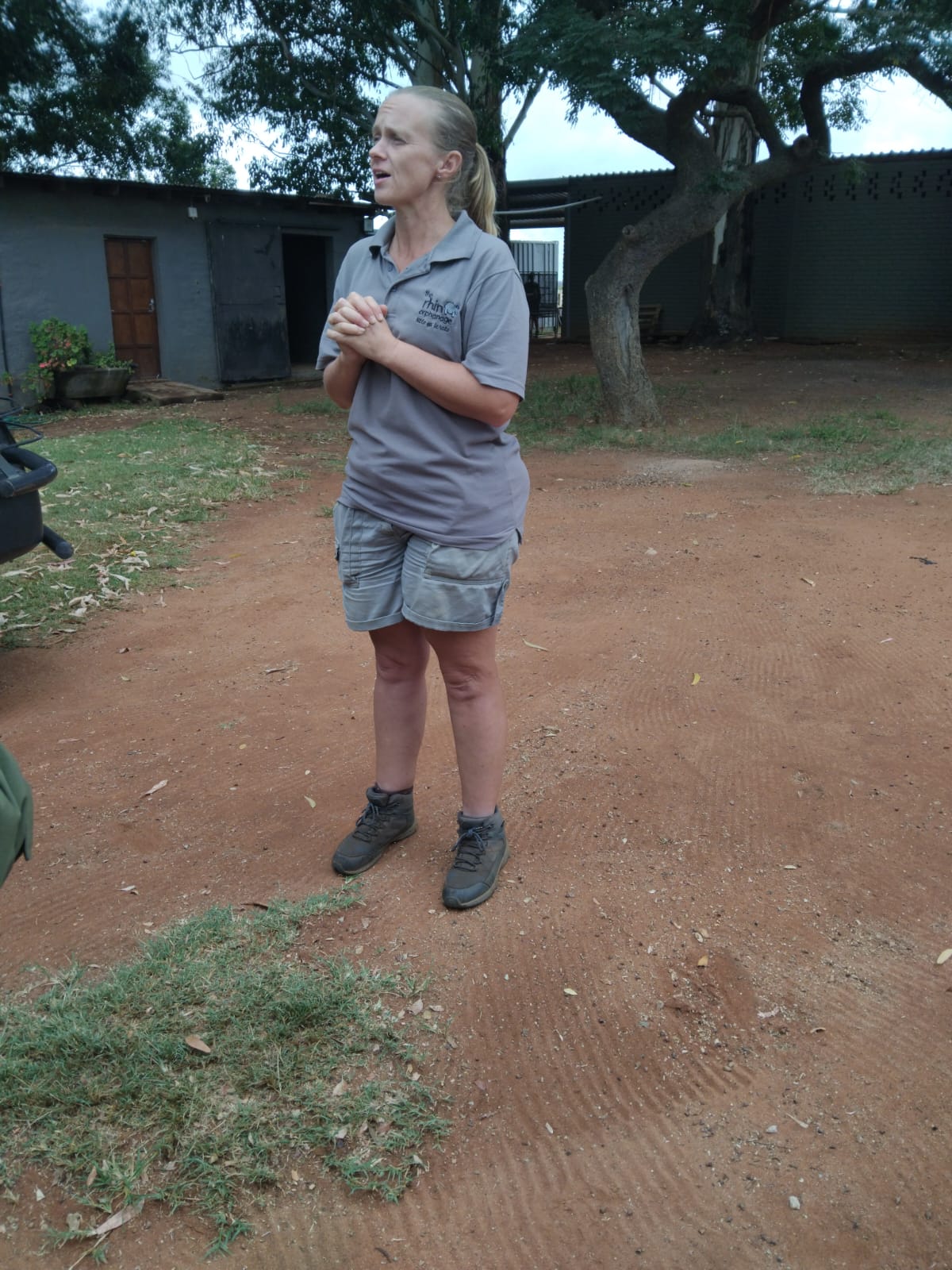
This afternoon we drove to the Rhino Orphanage, where we learned a great deal about South Africa’s long and heartbreaking history with poaching.
Through the 1960s, the numbers were going down, down, down — to roughly 370 rhinos killed in a year. But then, decades later, the crisis surged again after a very specific spark: in the late 2000s, a high-profile Vietnamese politician publicly claimed — on television and in the press — that rhinoceros horn had cured his cancer. The story spread far and wide, and the demand exploded.
It cannot.
Rhino horn is keratin — the same substance as human fingernails — but the belief, and the money behind it, has driven an absolutely devastating trade. We heard some disheartening and sickening stories that I won’t repeat here.
What I will say is that the orphanage is doing extraordinary work.
We were able to see several rhinos that cannot be released, including one that showed up with a “10% chance” because his skull was hacked through and he had 30 machete cuts. Another, as a tiny baby, had survived a shotgun attack that killed her mother while shooting out both her eyes in the process. As an adult, she has taken on the role of “mothering” the newly rescued, traumatized babies — a quiet kind of resilience that was almost impossible to witness without feeling undone.
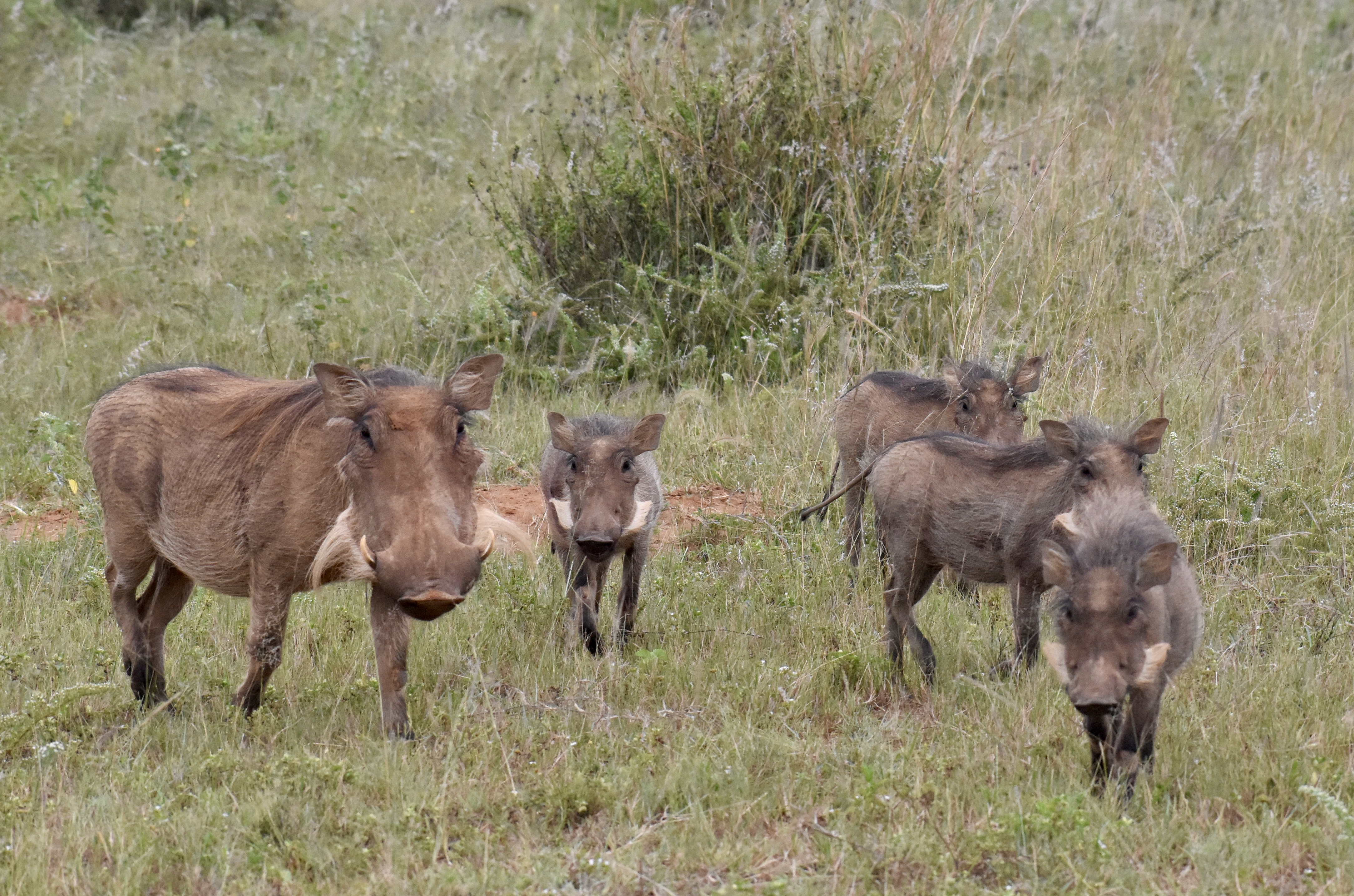
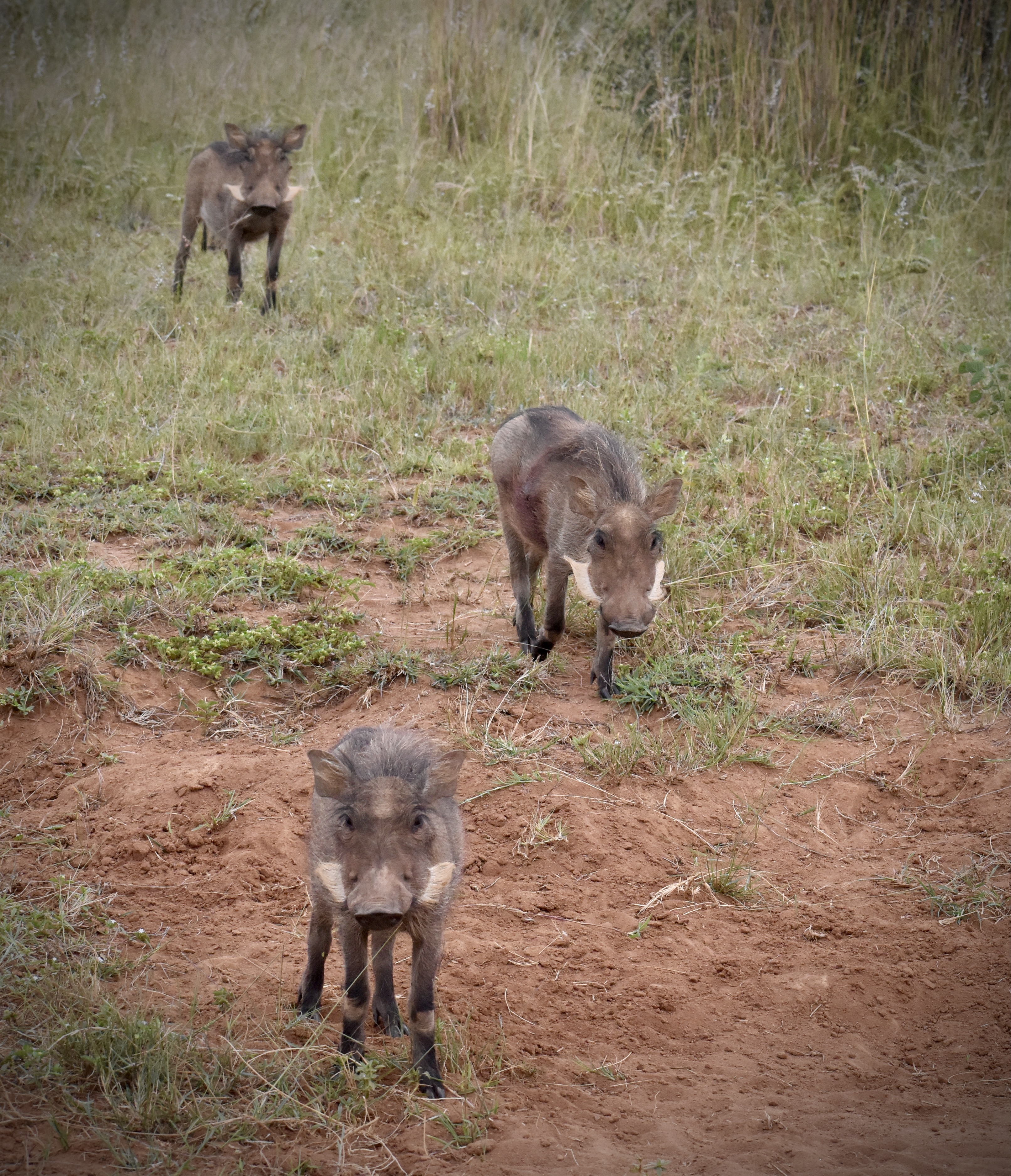
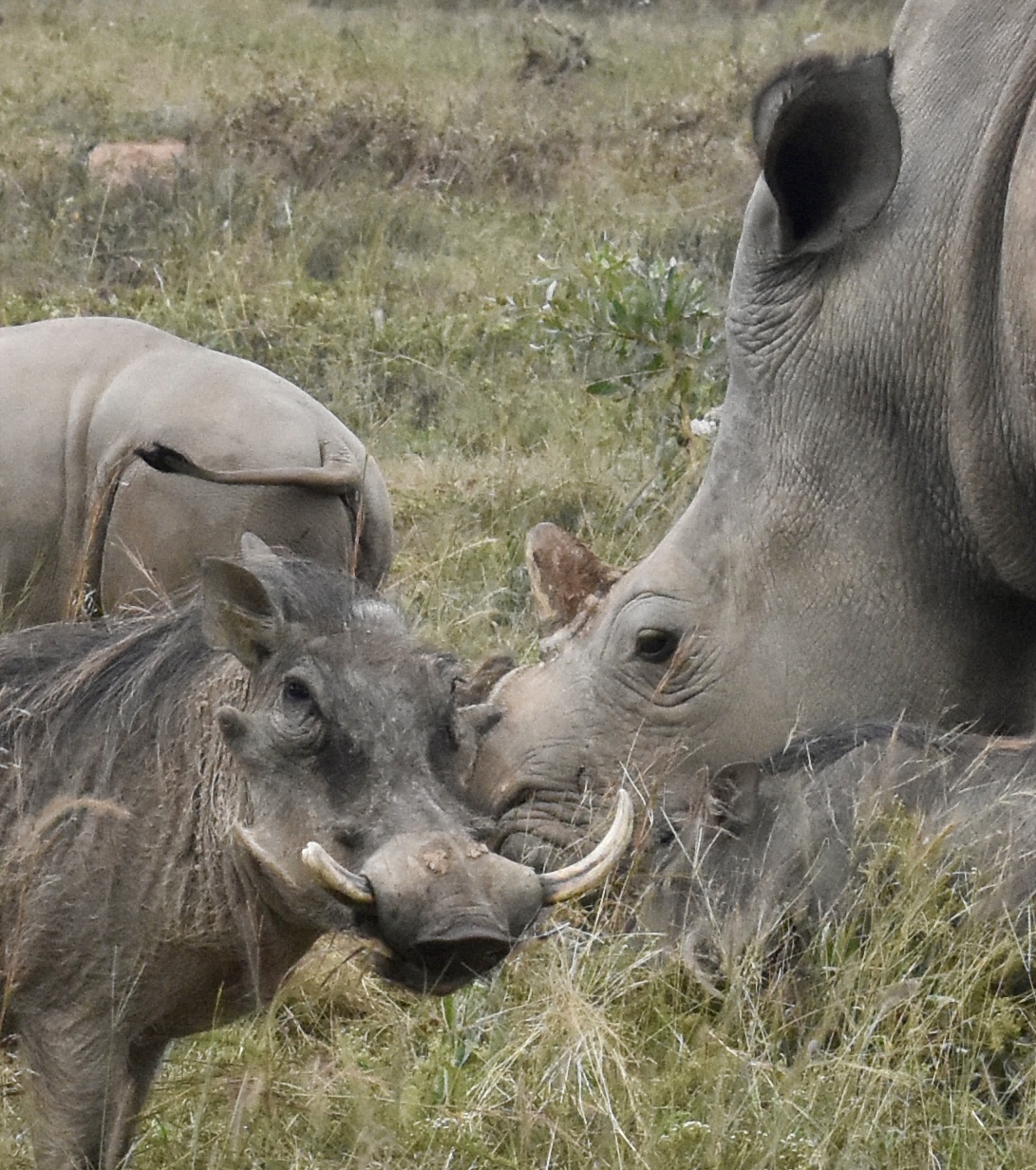
They feed the rhinos hay and pellets . . . and of course the warthogs horn in (yes, I did that on purpose) and try their best to pretend they are also rhinos and deserve pellets too.
We were allowed only limited photos, because nothing can be shared that would give away the location. There is a large crash of rhinos there — and the poachers would absolutely come.
The economics are part of the horror: once rhino horn is trafficked out of South Africa and reaches the end consumer market, it has been reported to sell for tens of thousands of dollars per kilogram — sometimes quoted as rivaling the price of gold. And it isn’t simply a matter of “cutting off a horn”: poachers often take both horns and even hack away the tissue and bone between them — essentially scalping the rhino’s face.
And the corruption runs deep: this is not just greedy individuals on the ground, but organized networks, bribery, and graft at very high levels.
Abe even told us a story from a couple of years ago, when he was asked (while working with a different tour company) to guide a group of “Vietnamese businessmen.” Only later did he realize he had unwittingly been adjacent to this vile trade — the court visits, the politician meetings . . . the wheels being greased.
It was sobering, in the truest sense of the word.
Our guide told us that a documentary had been made about the whole rhino horn trade/etc. called “Stroop” – two women documentarians had spent more time than they’d expected (isn’t that the way) and wound up basically doing an “expose.” She said that it’s winning all sorts of film awards.
After the orphanage, we headed out for our final jeep safari at Entabeni.
Isaac somehow spotted a crocodile lying perfectly still in long grass near a stream full of sugar-cane-looking reeds — the photo above doesn’t quite capture how enormous this creature was. (Also, I’ll never quite look at the “innocent” sugar-cane-looking reeds again.)
We saw a lone male giraffe eating the tops of a tree, and, because I was on the other side of the vehicle, handed Janice H’s camera to try to capture that incredible tongue.
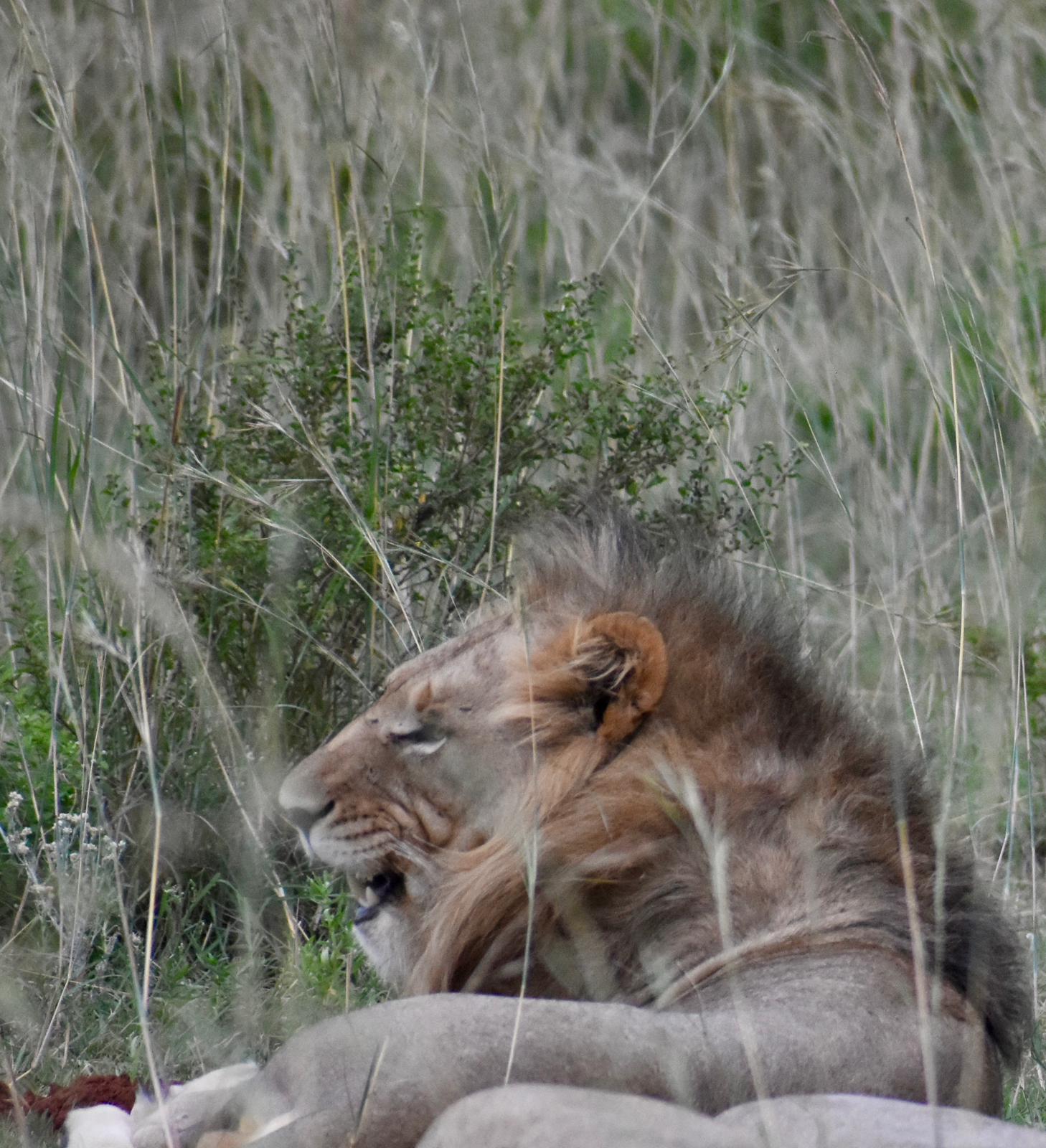
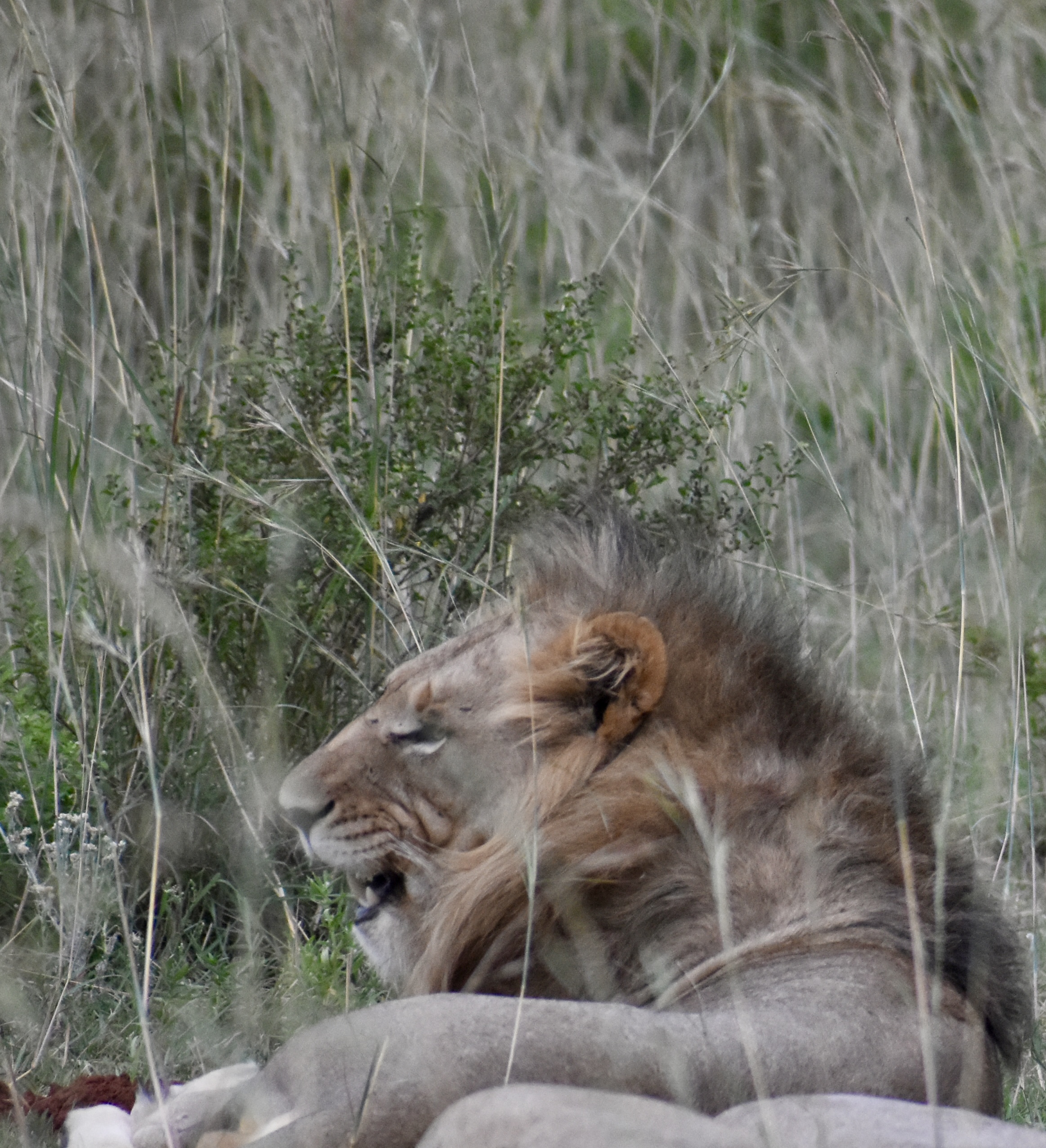
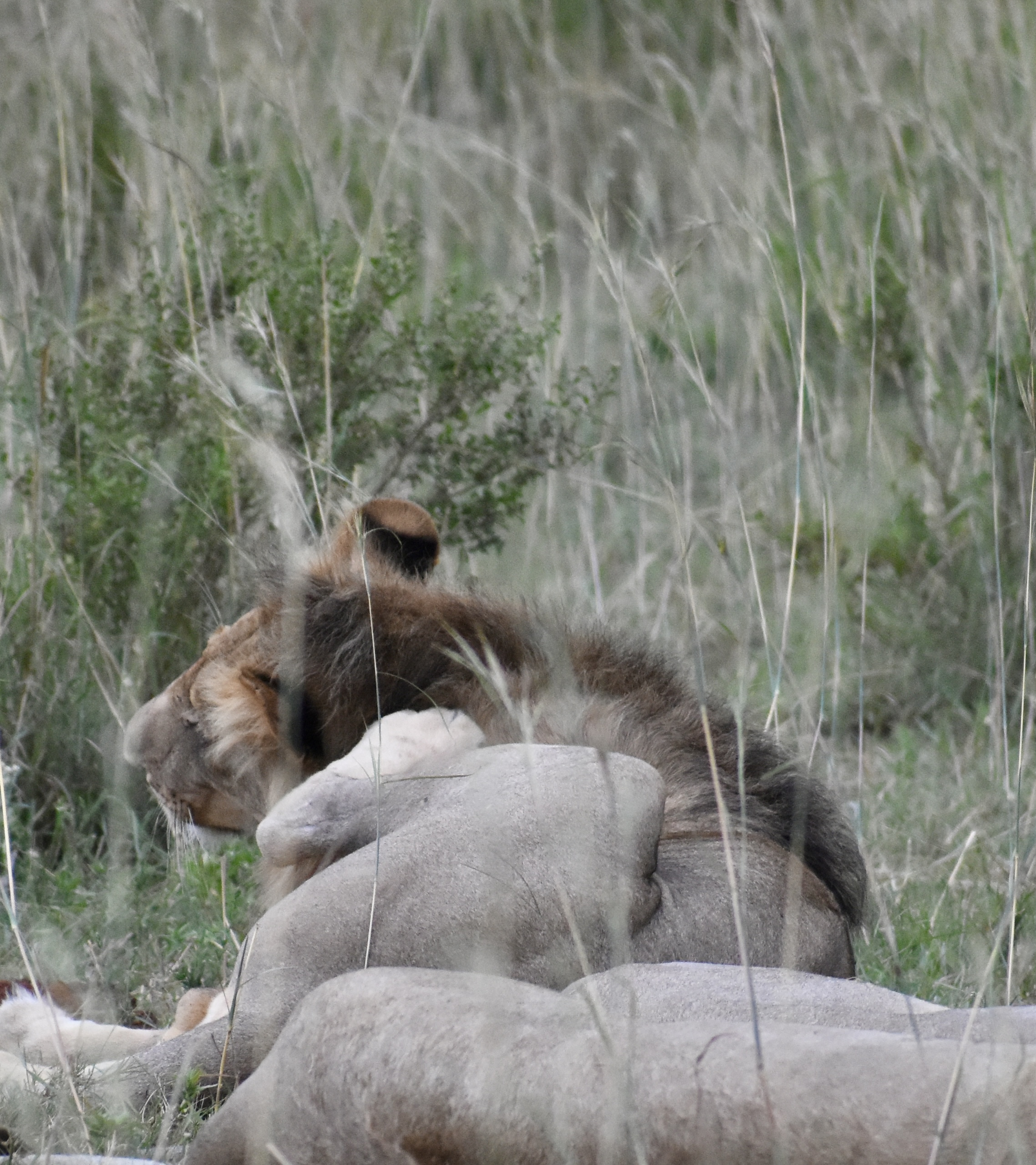
We also found the pride of lions — the mother and her four boys — all absolutely stuffed and sleeping in the satisfied way that suggested Mom definitely caught something the night before.
And then, last but certainly not least…
As we were about 2/3 of the way home, a very large male rhino decided to mosey down the “alley” of the road, away from us, and directly toward two other safari vehicles full of tourists. (Cue Sir Mixalot “Baby Got Back”)
A group of rhinos is called a crash. . .This one nearly caused the crash all by himself.
For a few minutes, all of us were politely inching forward (us) or inching backward (them), as if we were commuters dealing with a slow-moving tank who had the unquestioned right of way. The rhino, meanwhile, spent his time spreading “Pmail” about every yard in firehose-like fashion.
In an attempt to let the rhino pass, then let us pass, and ultimately to get around us (it was not a wide path!), one of the vehicles heading towards us backed cautiously into a field surrounded by trees.
The rhino started looking like he would “mosey right past” the vehicle that was basically in a cul-de-sac – changed its mind, wheeled, and headed into the cul-de-sac.
We couldn’t see the rhino (or the look on the guide’s face – obviously one of “Oh THIS was a mistake of epic proportions….”), so the other vehicle facing us, and our vehicle, just had to sit there. We didn’t want to disturb any thoughts that were going through that rhino’s oh-so-thick pate.
Finally, the rhino snorted, backed back out, and started to mosey back down the road. As we crawled along behind it, we ultimately could see into the cul-de-sac. The visitors still looked a little shell shocked. The young guide still had a bit of a ghostly pallor. We suck – we burst out laughing at what had happened. Once we passed the cul-de-sac, they were able to get “around” behind us and down the road.
The other vehicle that was facing us had backed up to a cross road, but we were still a good 40 yards away. The tank (I mean rhino), of course, didn’t mosey on up to the cross road; instead, he walked into a little field to the left of the path. Again – ringed by trees, so we couldn’t see what he was doing.
We could just barely see his eyes and horn through the bush that separated us. He put his head down, then back up, then back down, back up, and ultimately down. Isaac, our driver, waited a tic, driving OH SO SLOWLY up so that he could see the rhino “for sure.” The rhino was in fact grazing (facing us), so Isaac put the jeep into high gear and SPED out to the crossroad.
He said that if the rhino’s head had stayed up, he couldn’t have risked it – but if its head stayed down, the “balancing act” for it to bring that big head up to get a bead on us to charge, then charge, took too long and (as Isaac had surmised), the rhino just decided he’d played the game long enough.
We wondered what the rhino would tell the “boys” that evening. Probably something like:
“You should have seen me today. I held off three giant metal beasts full of squishy tourists. Absolute dominance. Peeing all the way. I win.”
Back at the lodge, it was our last dinner here: a braai — South African barbecue — though we had to eat indoors instead of in the Boma because it had turned chilly and a bit misty.
There was singing from the staff, a warm chat from Abe, and then, finally, bed.
It’s not even 10 p.m. as I type this, which tells you everything you need to know.
The Wi-Fi hotspot isn’t working, and typing in the reception area holds absolutely no appeal.
Tomorrow: a bush walk in the mist, and then back to Pretoria to meet up with the rest of the group.
For now: goodnight from Entabeni.
I never get a percentage from any links I include – but! – if you are curious about Overseas Adventure Travel and want $100 off, call them at 1-800-955-1925 and request their amazing catalog, tell them you were referred by Sandy Shepard, customer number 3087257, and get $100 off your first trip! The catalog is what all good dreams are made of!
For some reason my alarm didn’t go off — but thank goodness this lodge operates on the very practical system of knocking firmly on your door until you rejoin the living.
I was especially tired today. I haven’t been sleeping particularly well, and I’ve been battling a growing frustration with trying to upload photos into the blog.
At this point I’ve decided I will revisit the whole “proper photo upload” situation either at a hotel . . . or, more realistically, once I’m back home with real Wi-Fi and fewer early-morning safaris.
In the meantime, you are all being subjected to the iPhotos slideshow method — which does create lovely “artistic” combinations of images, except that it often decides the most compelling way to show a giraffe is . . . an artistic close-up of its kneecap.
Still: it’s better than nothing; you can find the slideshow for this morning HERE.
Wind Tunnel Safari Fashion
It still isn’t particularly cold, but the wind in the jeep funnels straight through like nature’s own leaf blower.
I did use my gloves today: a mismatched set, both black, but one proudly touting The California International Marathon on the back, while the other represents some entirely different race where cotton backed gloves for cold weather nose wiping was a Thing.
And I am absolutely using the warm headband (thank you, Marin Rowing). My ears salute you.
Speed Sightings and Shy Antelope
Our first “it still counts as a sighting even if it races across the road at a million miles an hour” animal was a duiker.
Abe told us these are quite unusual to spot — and the name comes from the Afrikaans word describing their habit of “diving” straight into the bush the moment they sense anything vaguely carnivorous nearby.
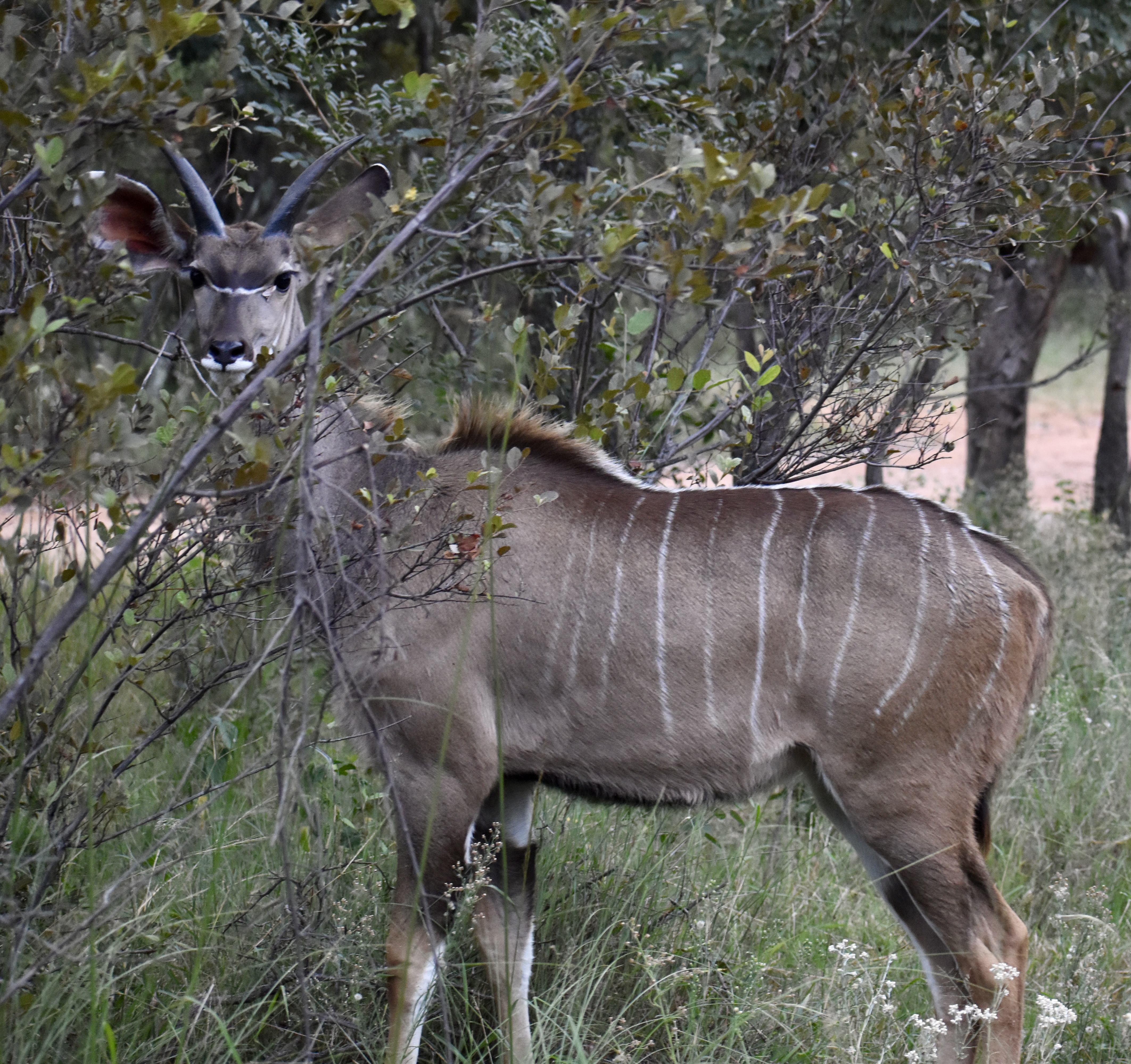
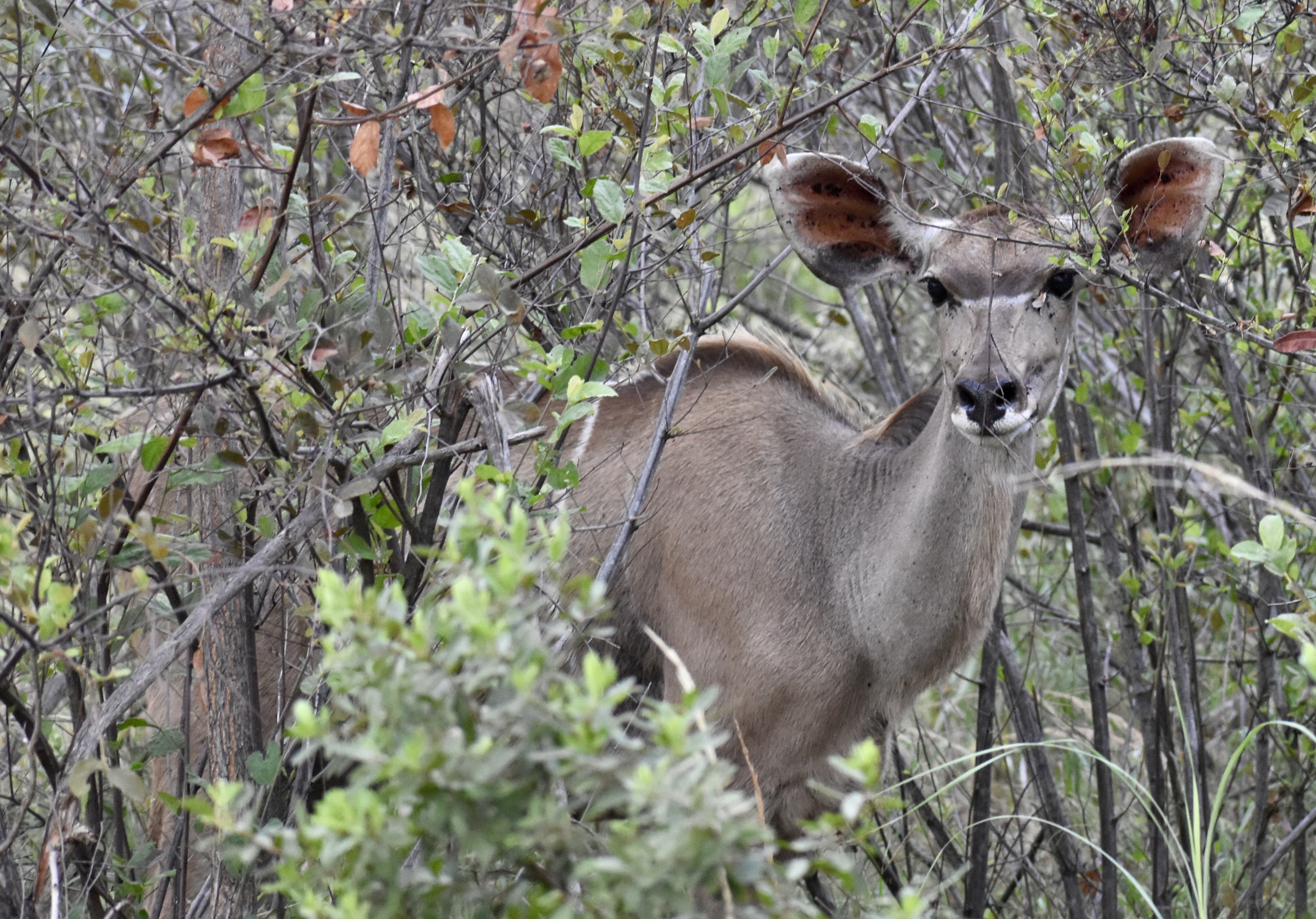
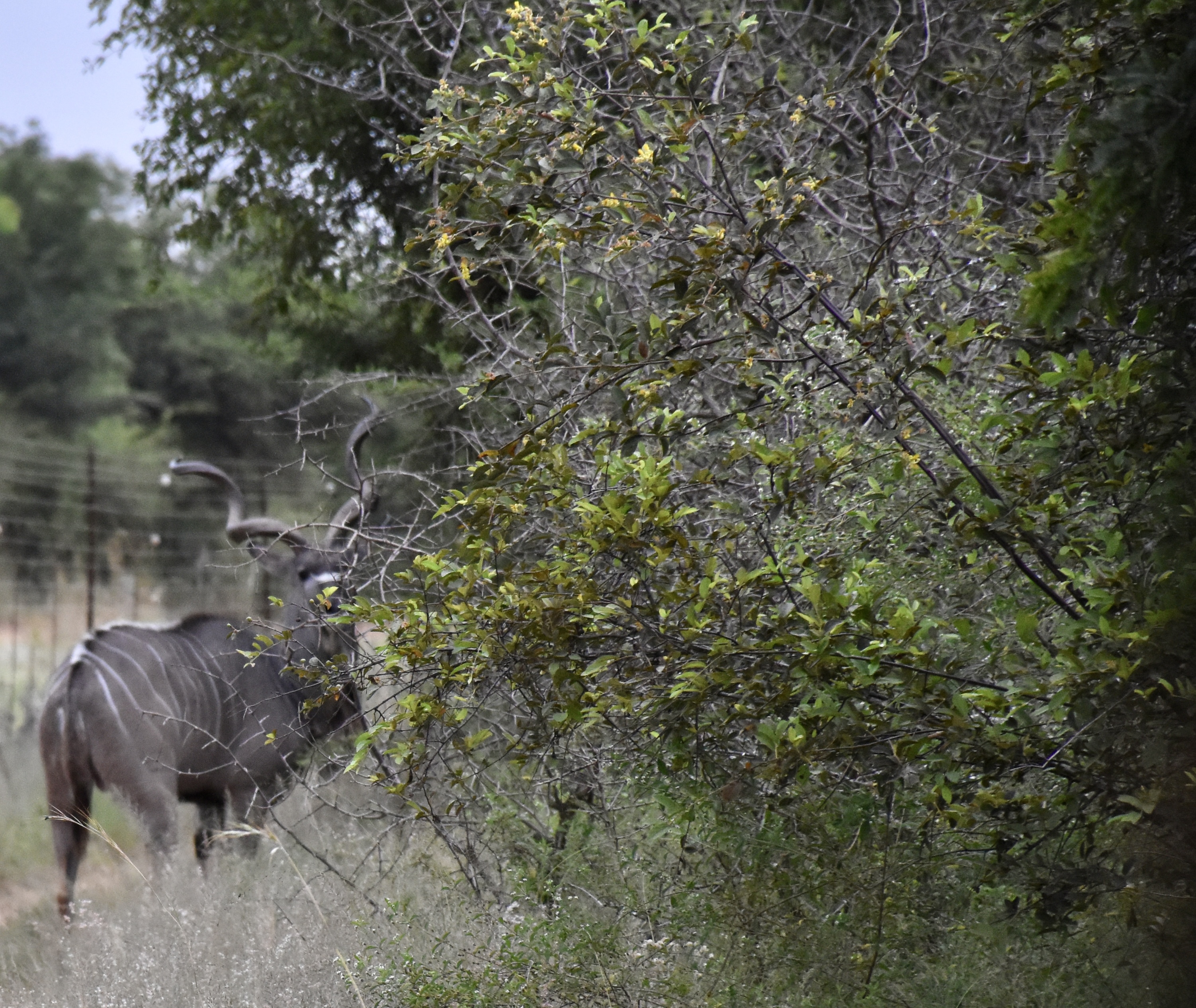
We also came around a corner to a pair of kudu, calm and elegant.
A black-backed jackal ran alongside the vehicle as well — basically a fox wearing coyote-colored outerwear.
The Cheetah Brothers (and One Very Satisfied Spray)
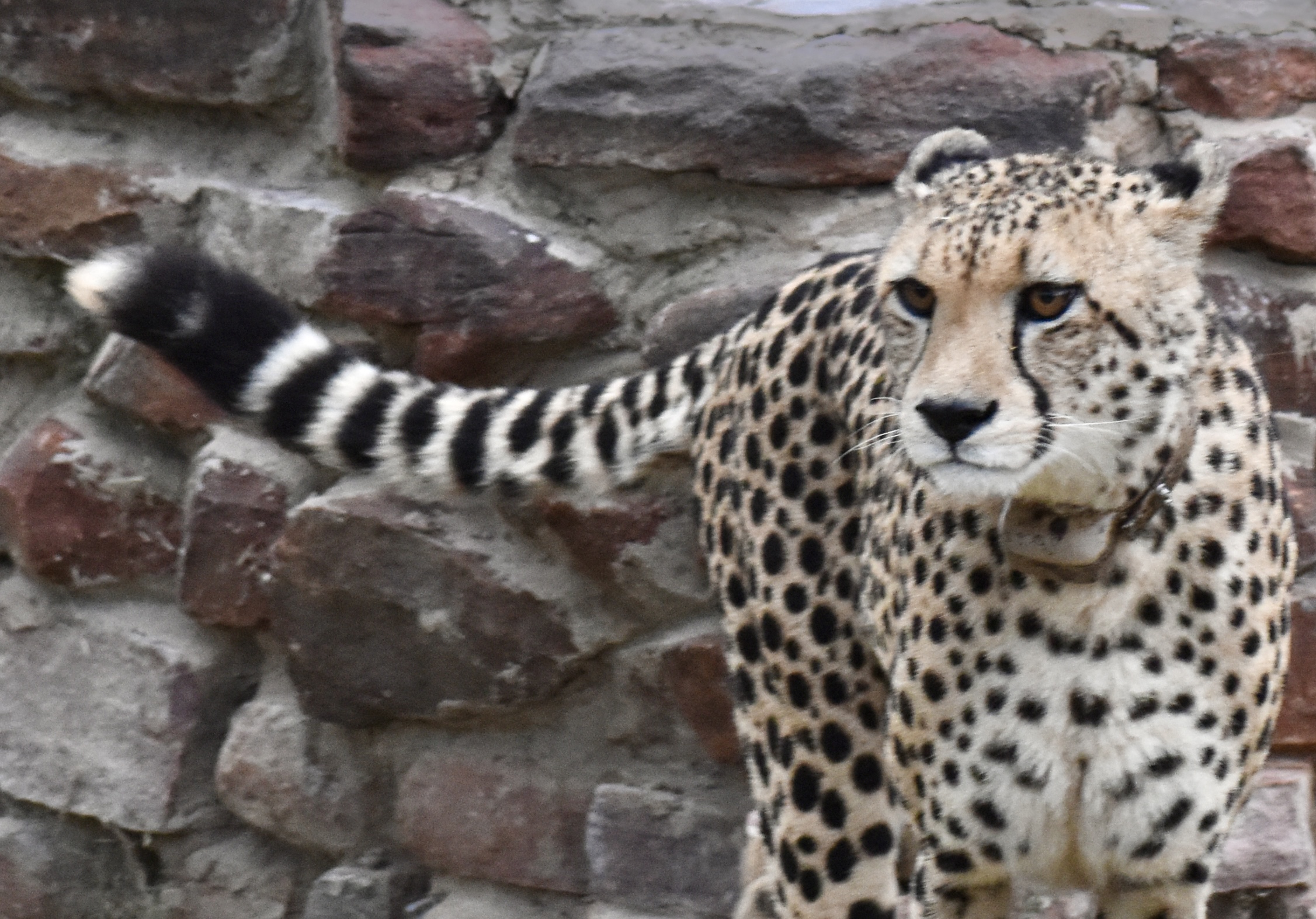
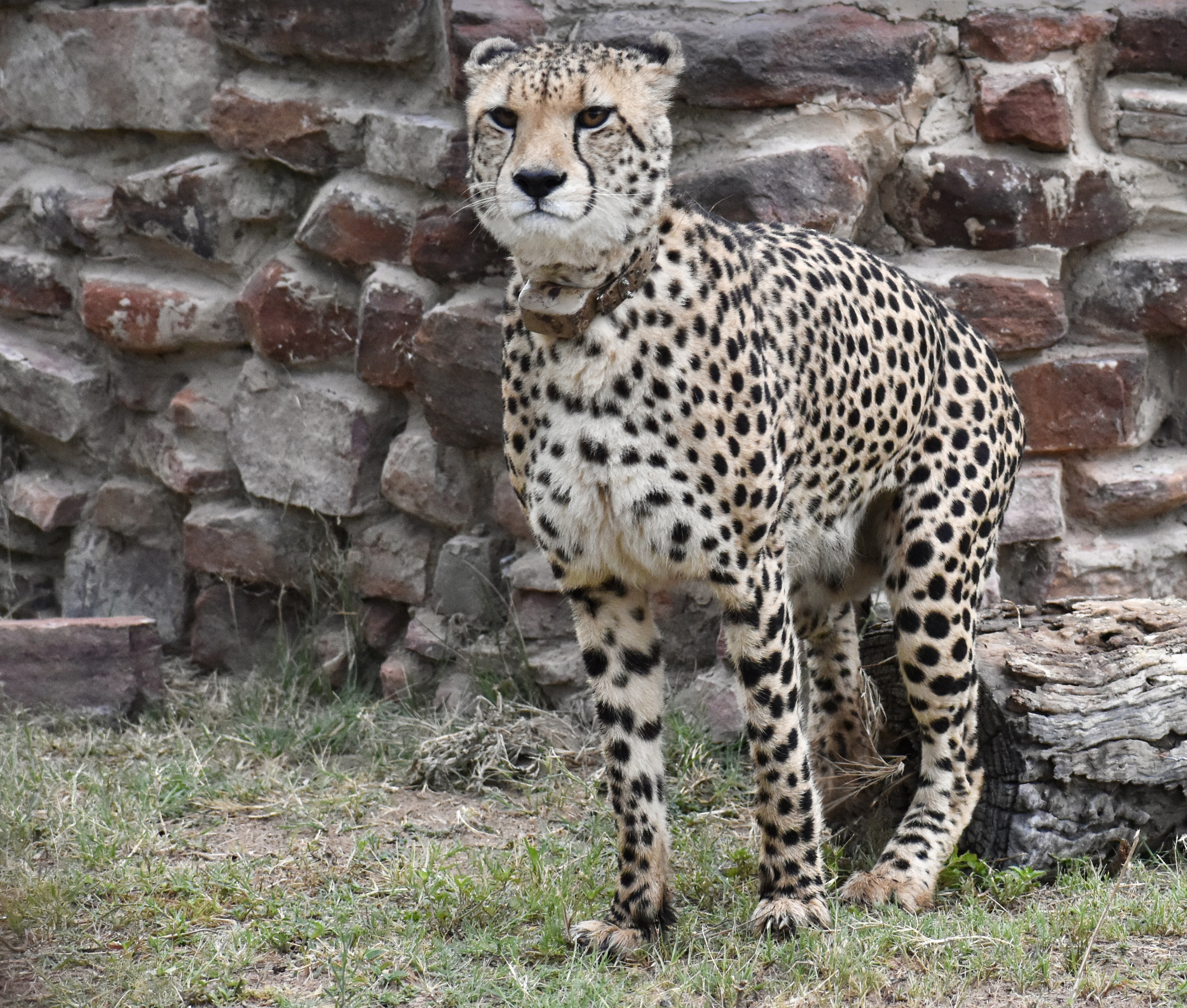
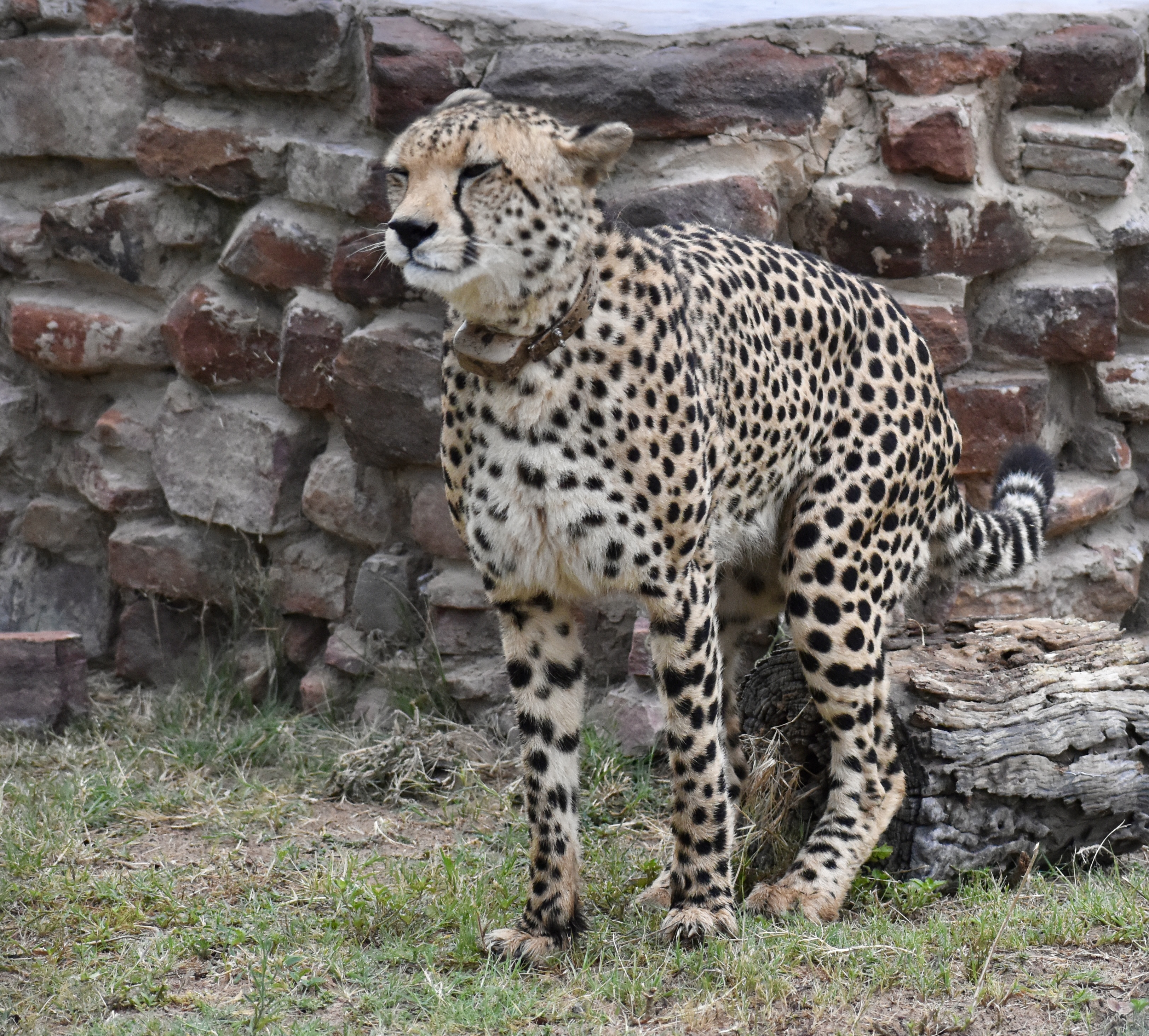
We were treated to something not often seen: the cheetah brothers were up and walking around in coalition (the name for a cheetah “gang”).
Most photos of cheetahs involve them lying in the sun looking like they are professionally relaxing. But today they were active — and they came so close to the jeep that you truly could have reached down and touched them.
Obviously, we did not. But the proximity was . . . thrilling. Mary held her hand over her mouth when one came right up to her side of the jeep. Isaac gleefully told us that sometimes they climb up on the warm car hood, or jump up to the roof. Eep!
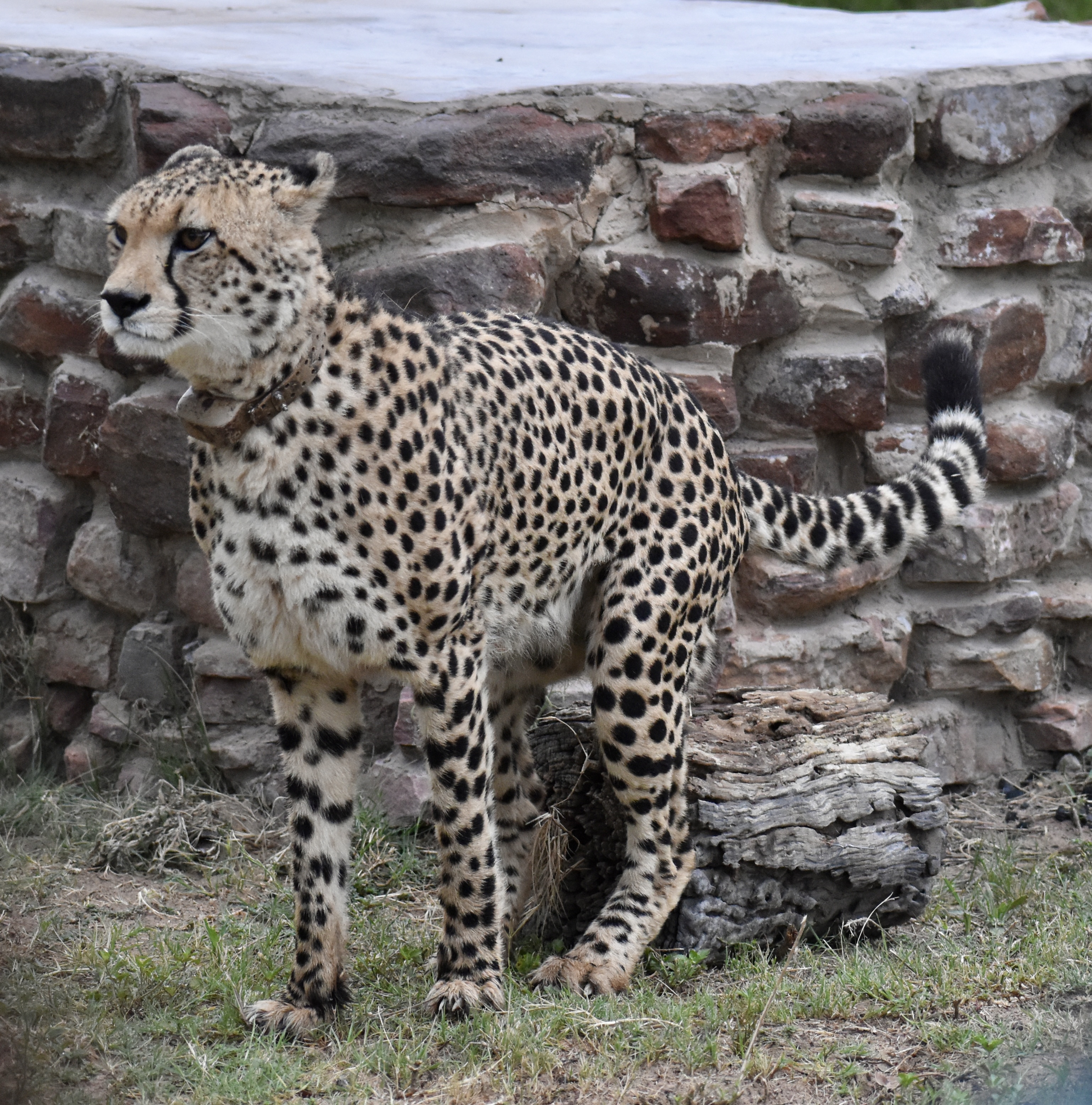
One of the brothers — likely the older one, slightly bigger — did what all cat owners fear when dealing with a male:
He sprayed everything.
When I took a couple of photos, the satisfied expression on his face made me chuckle – while rolling my eyes in remembrance at seeing that expression on a male cat I once owned.
I also caught his brother doing what can only be described as a morning stretch . . .
Downward Cheetah.
Elephants: Dirt Baths, Q-Tips, and a Tiny Charge
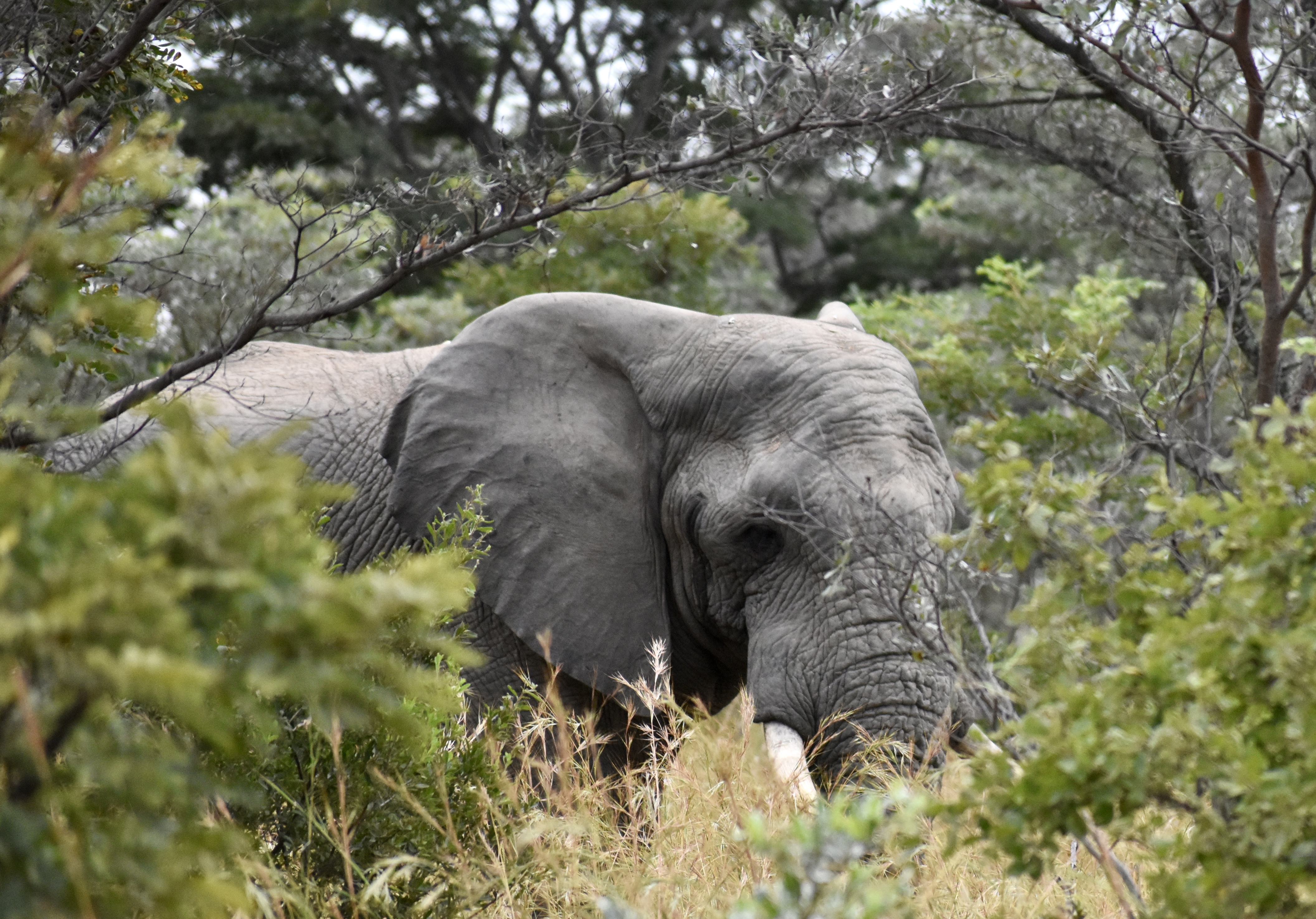
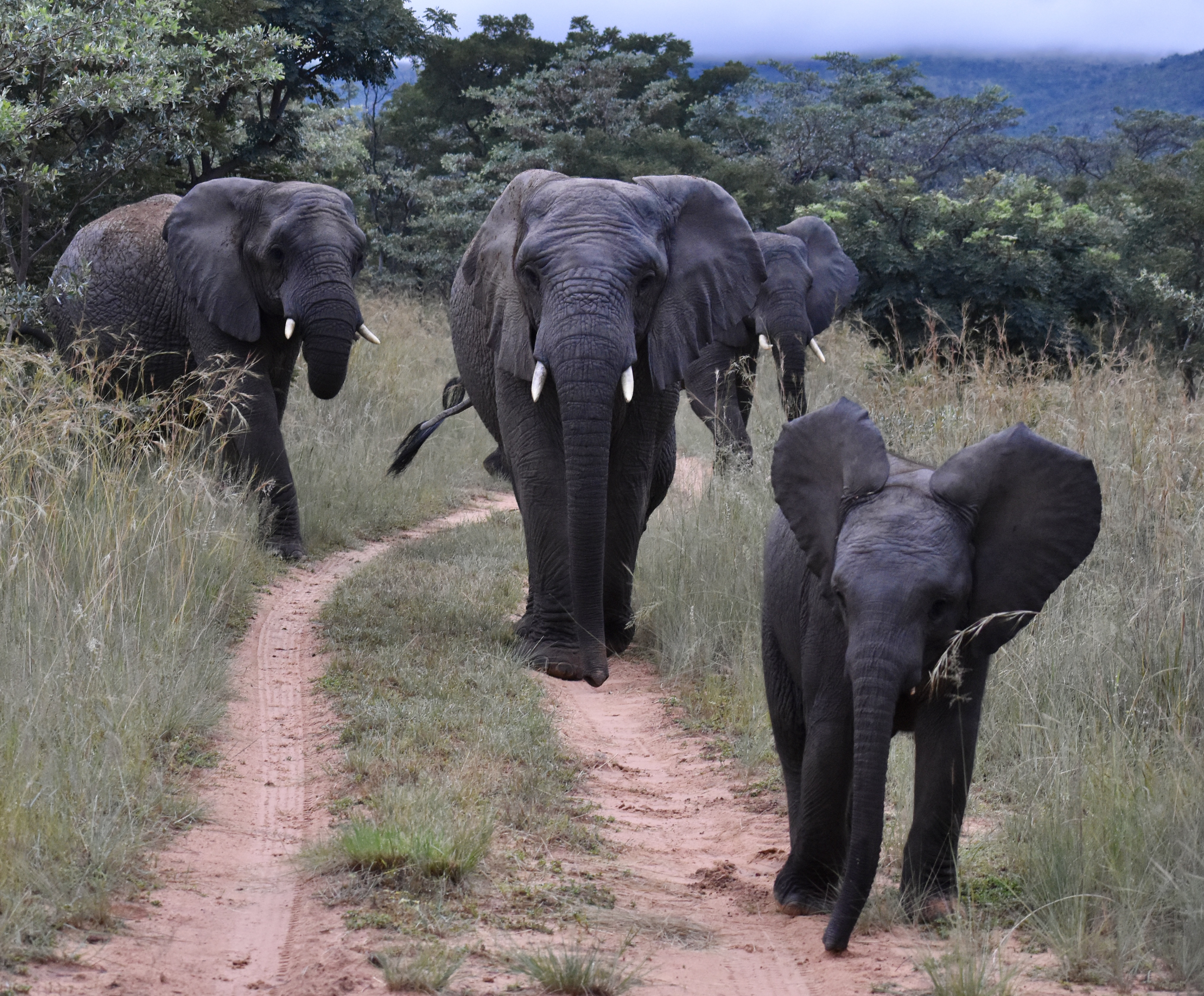
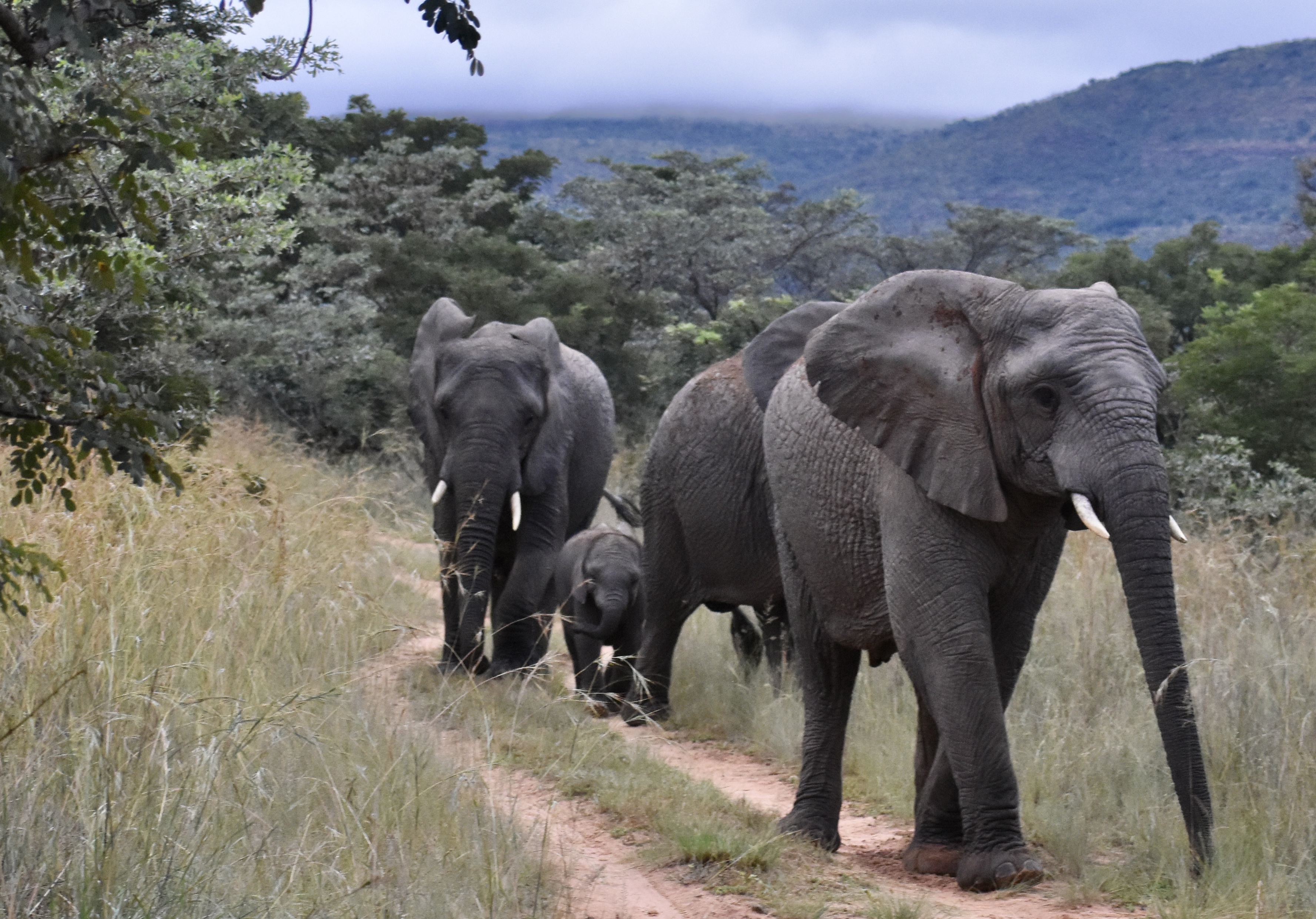
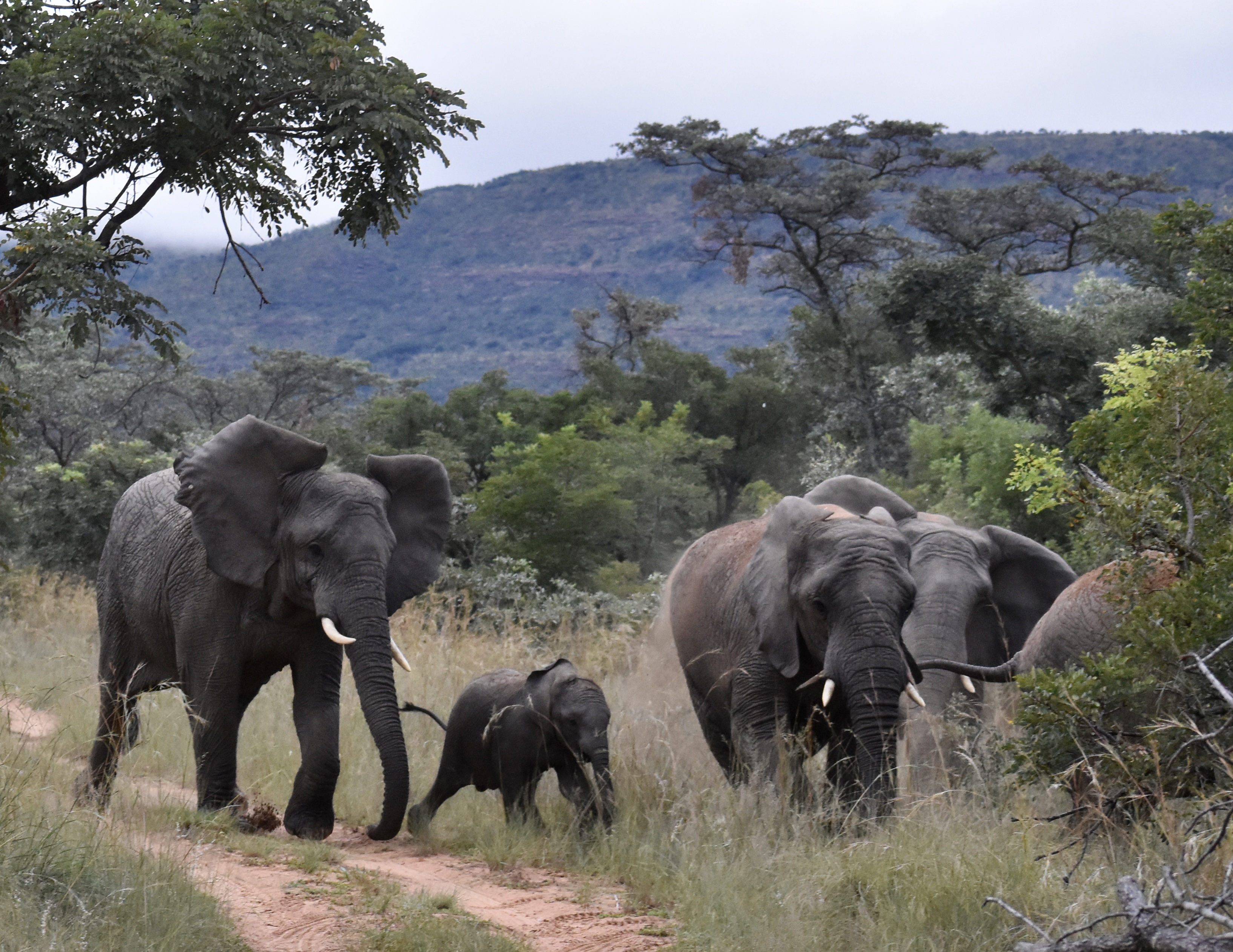
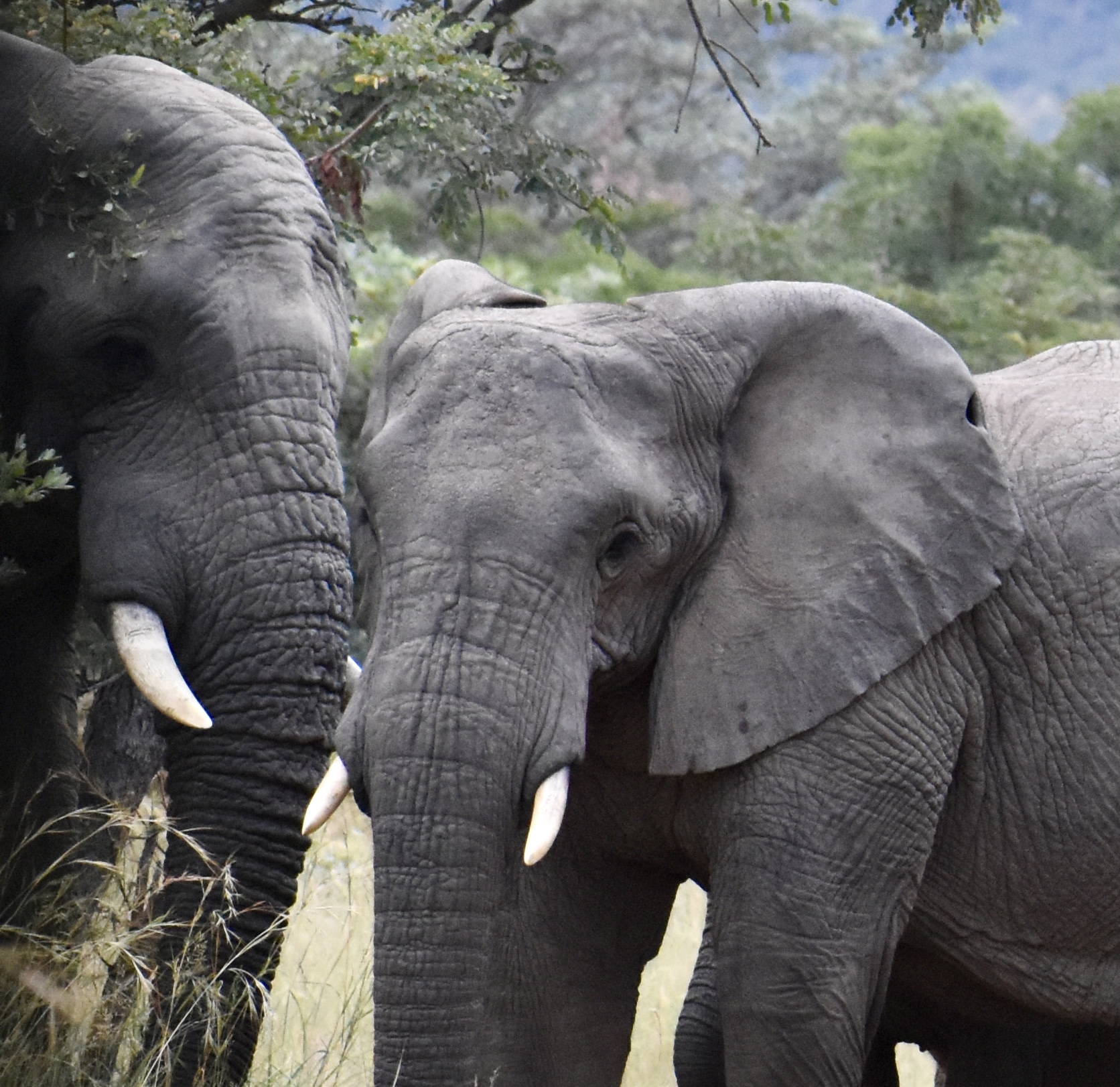
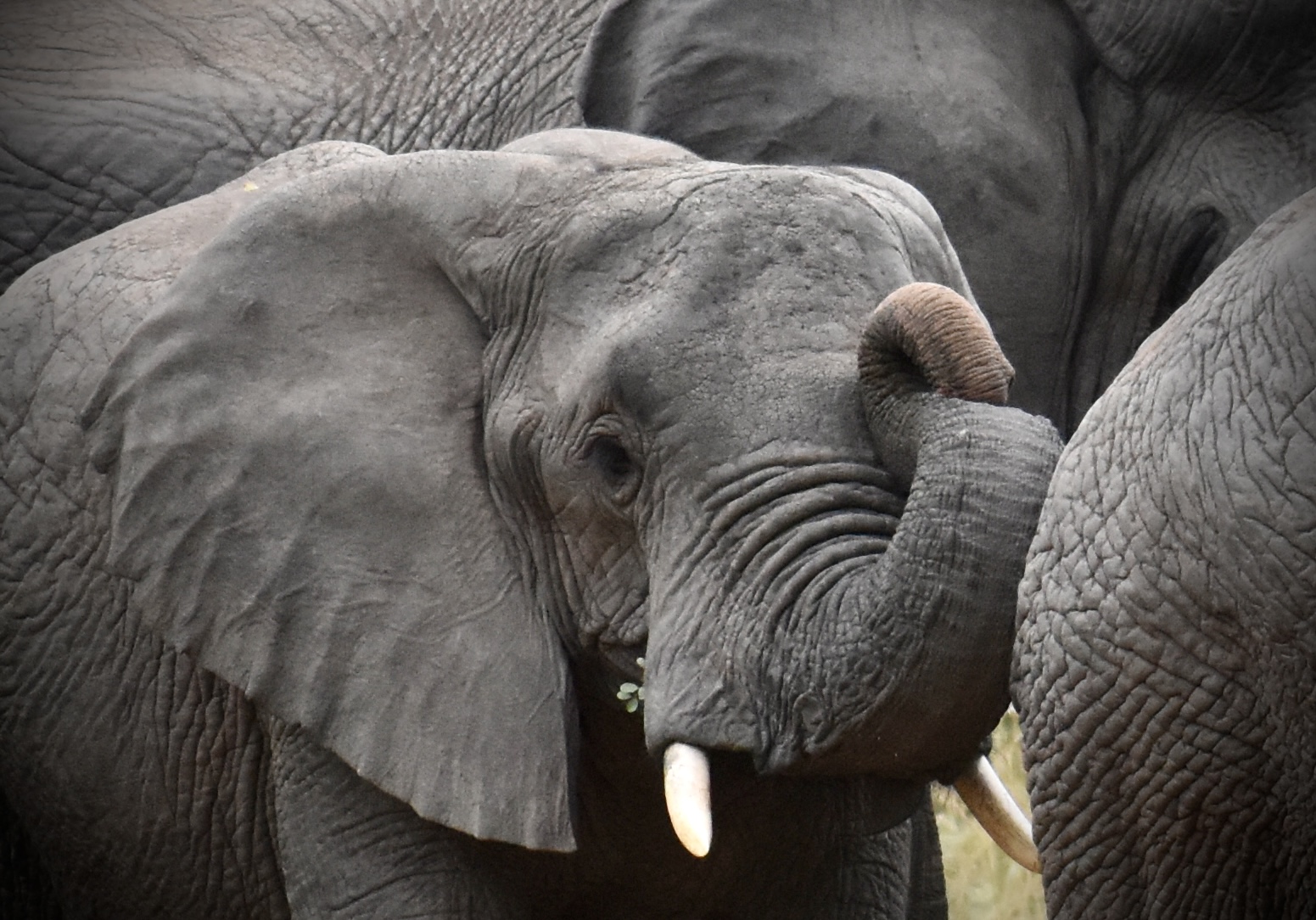
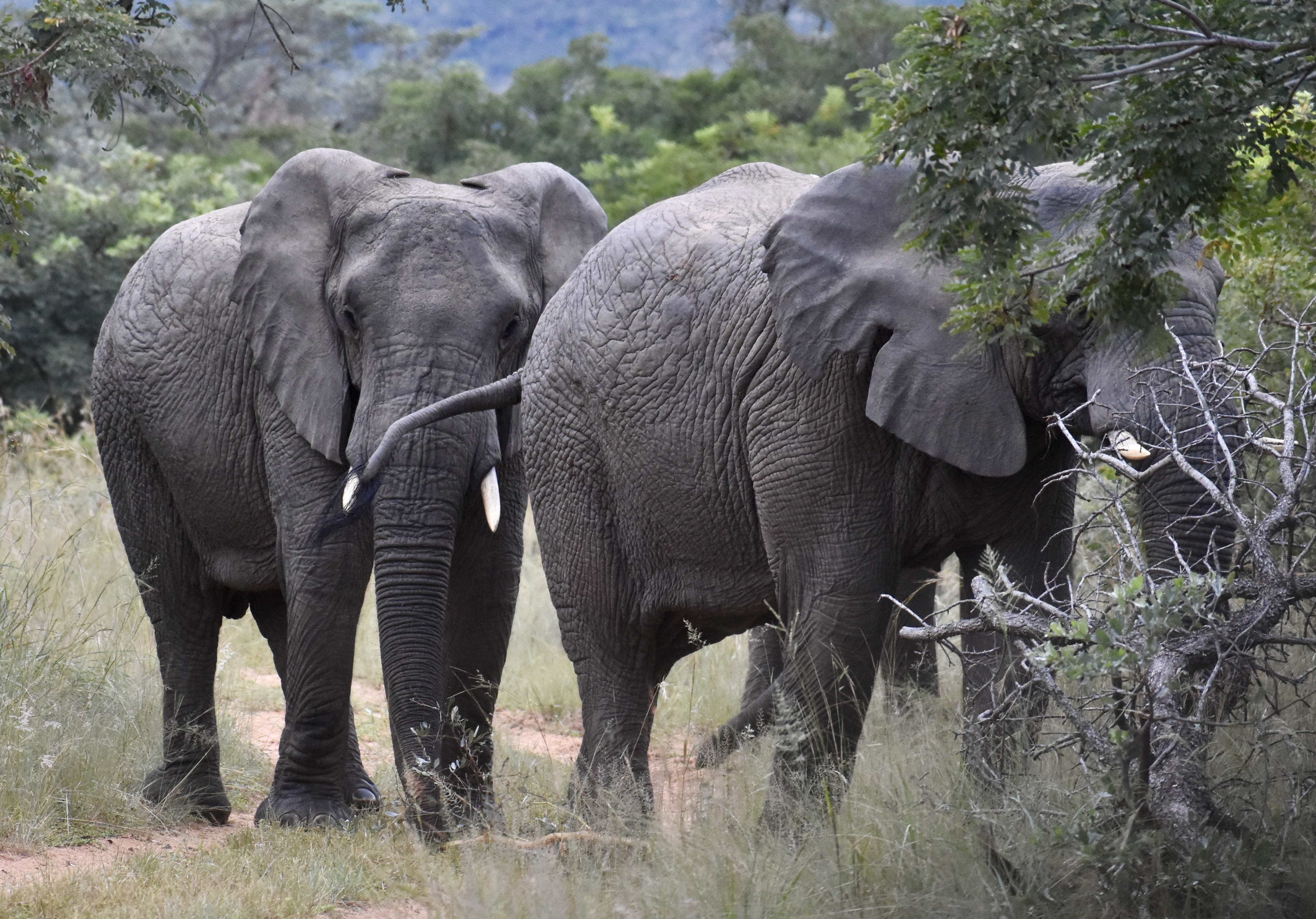
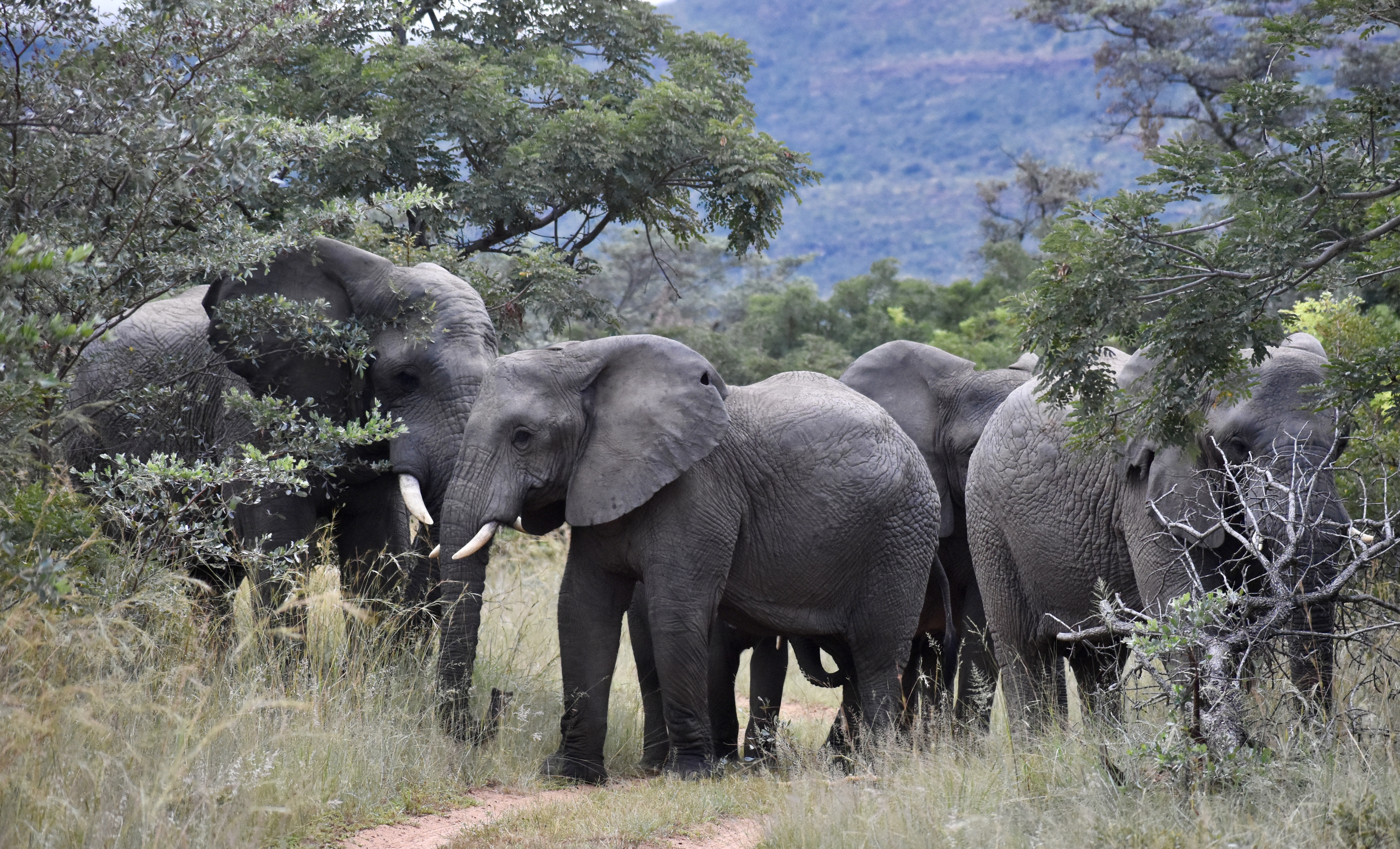
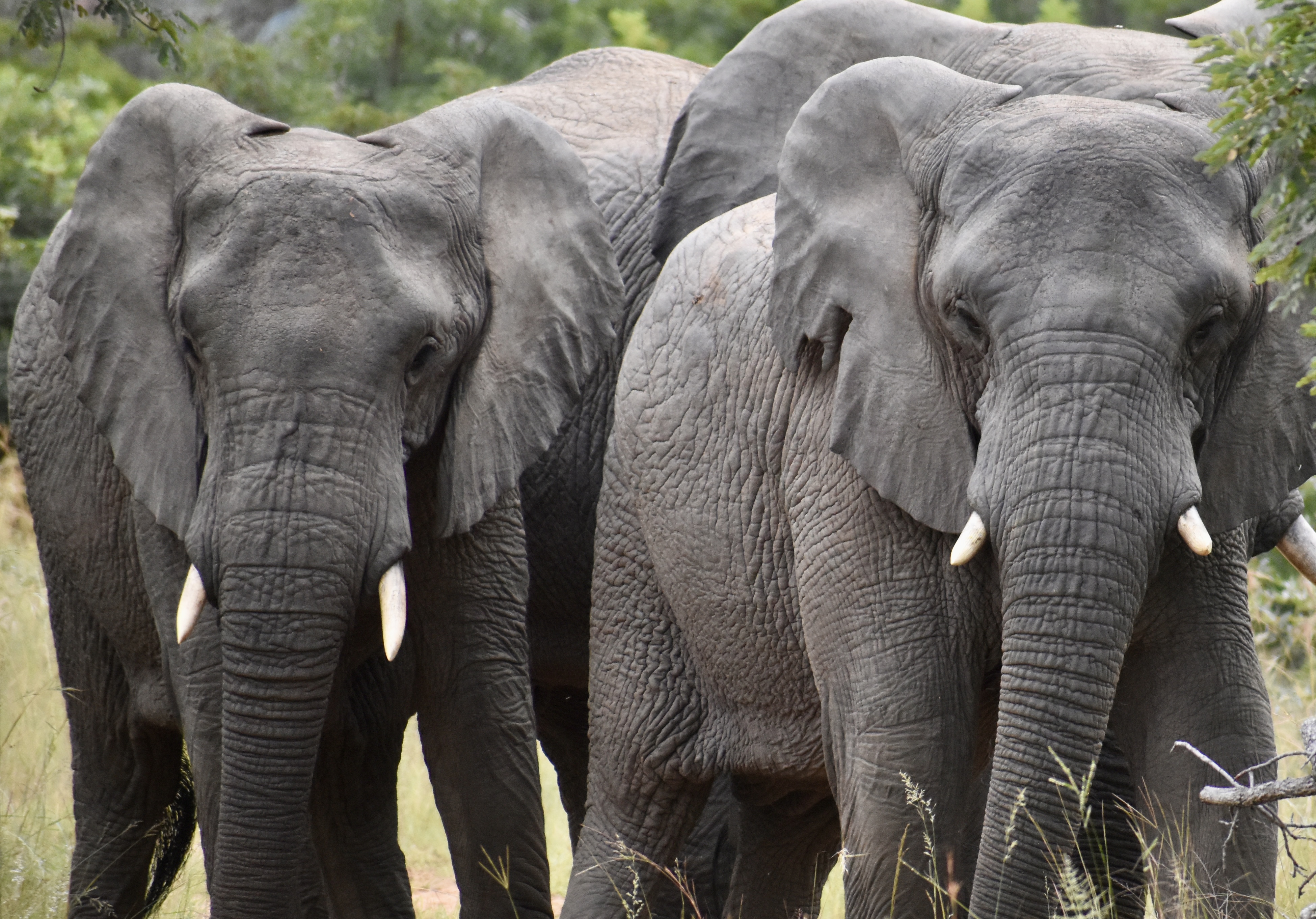
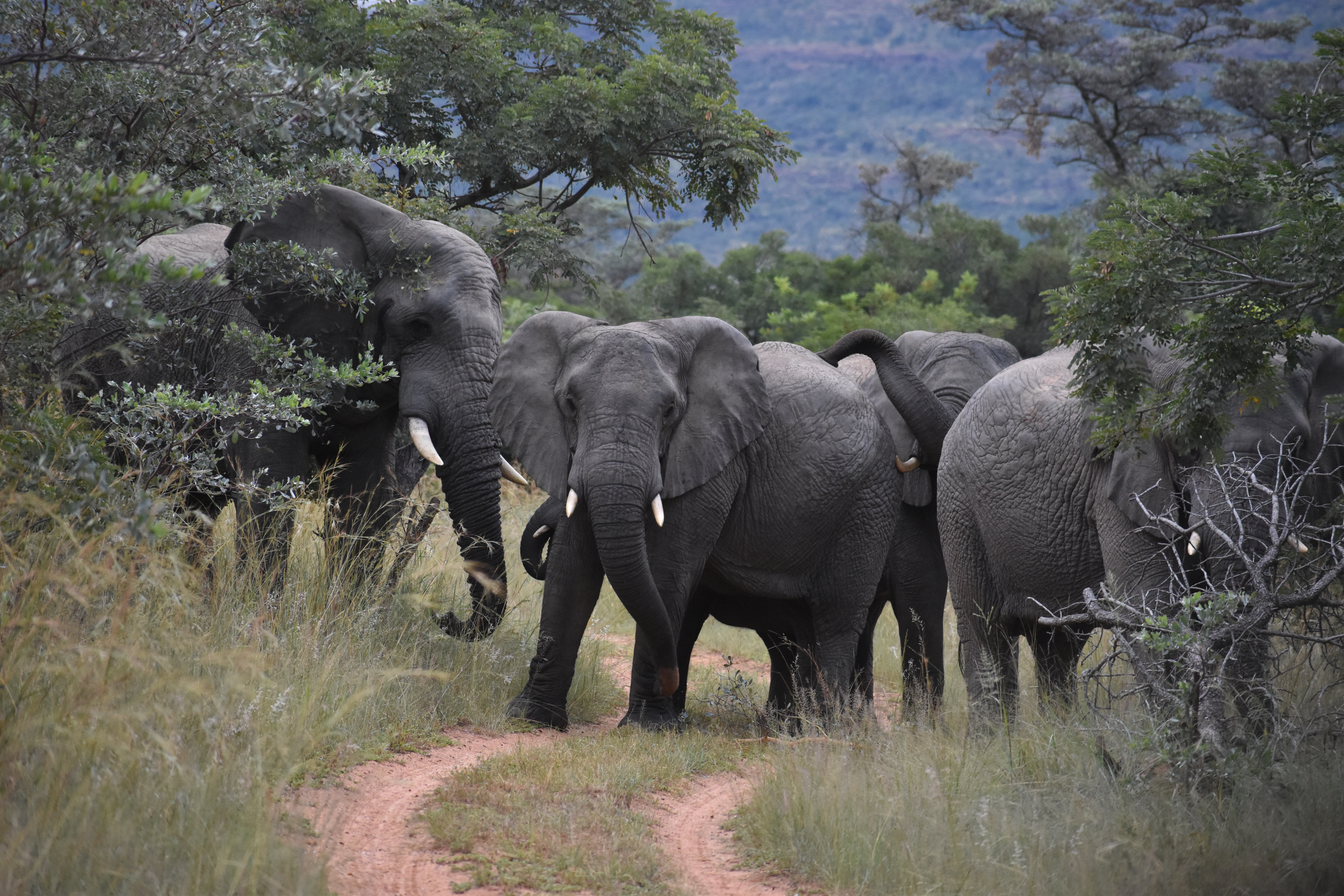
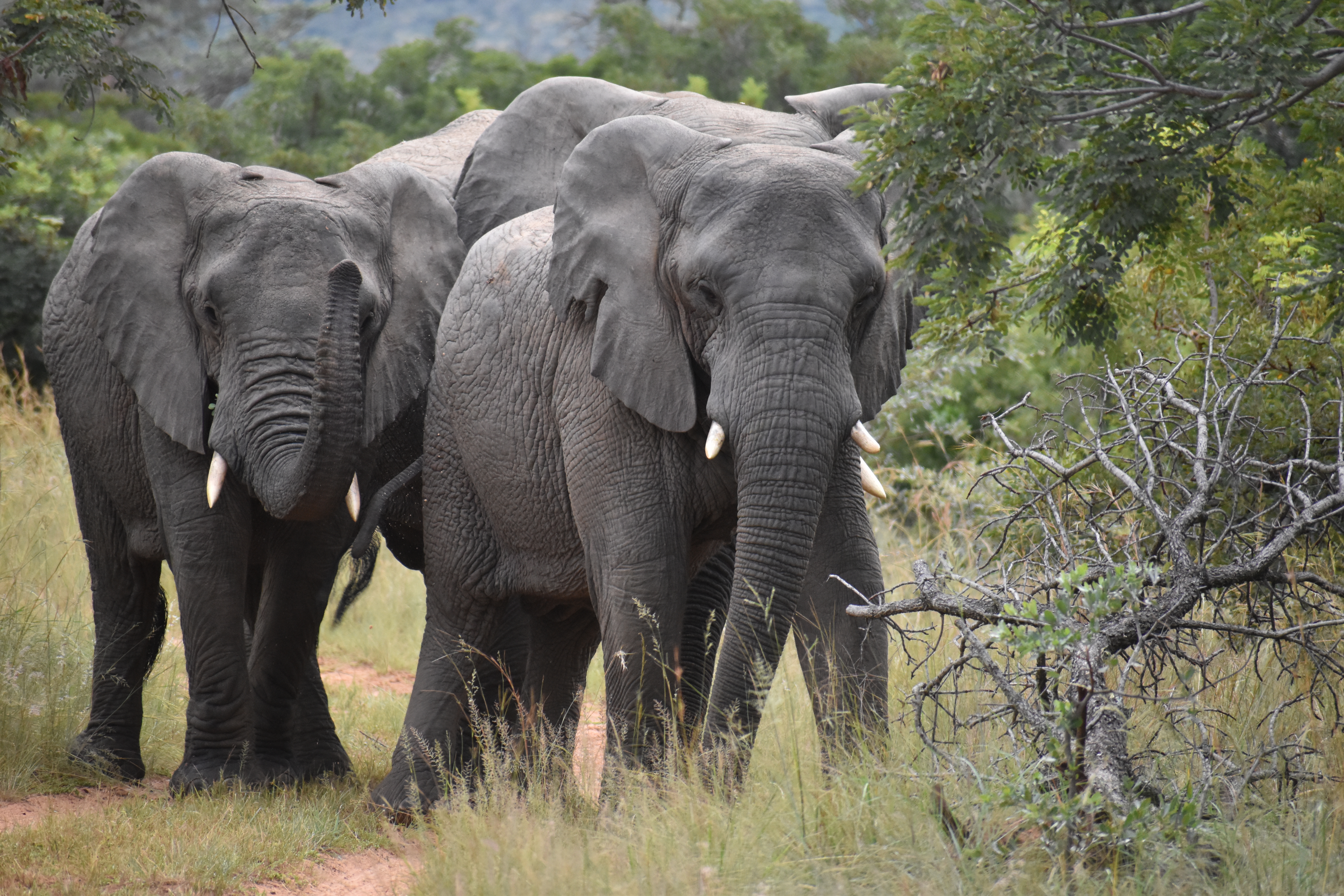
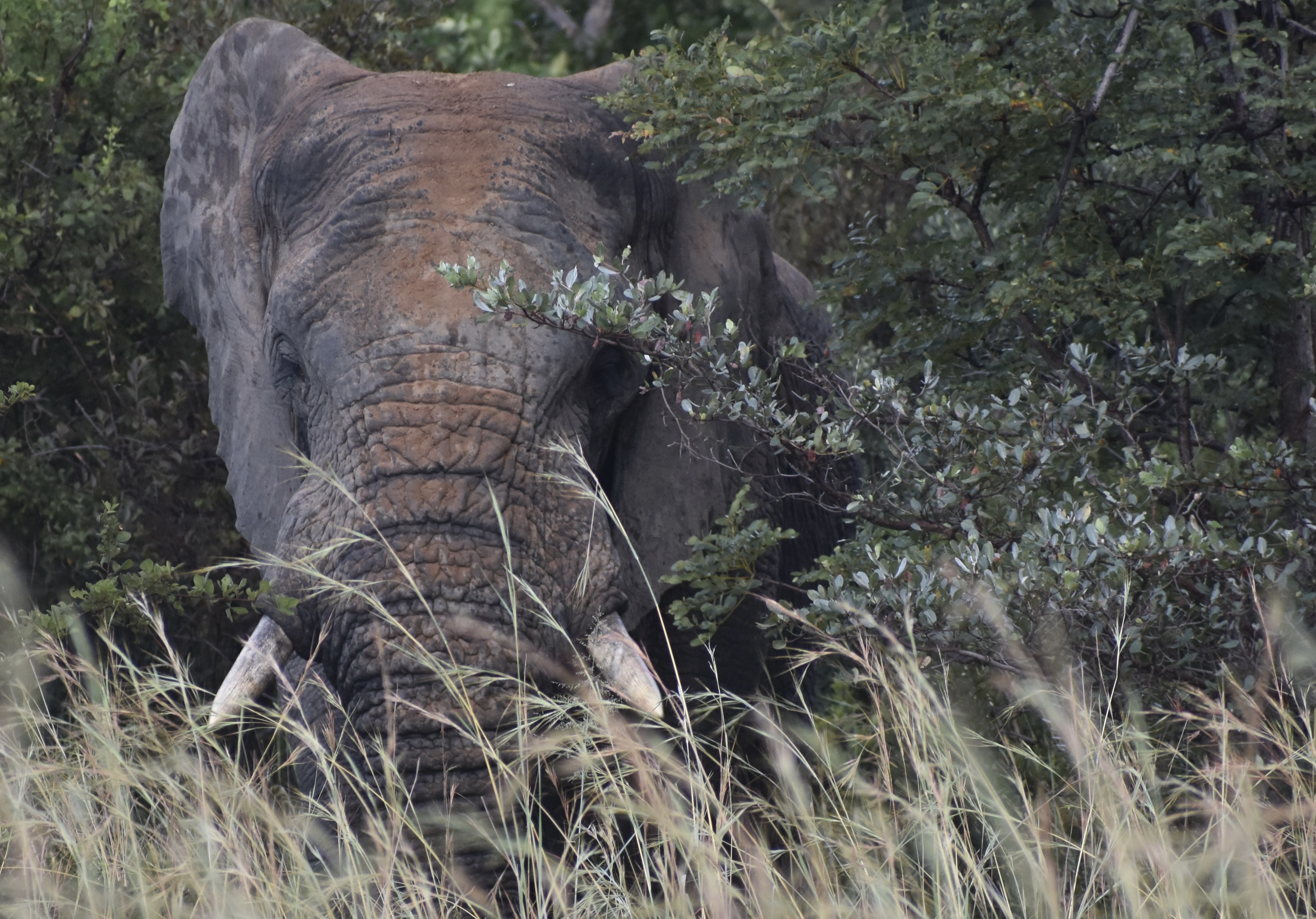
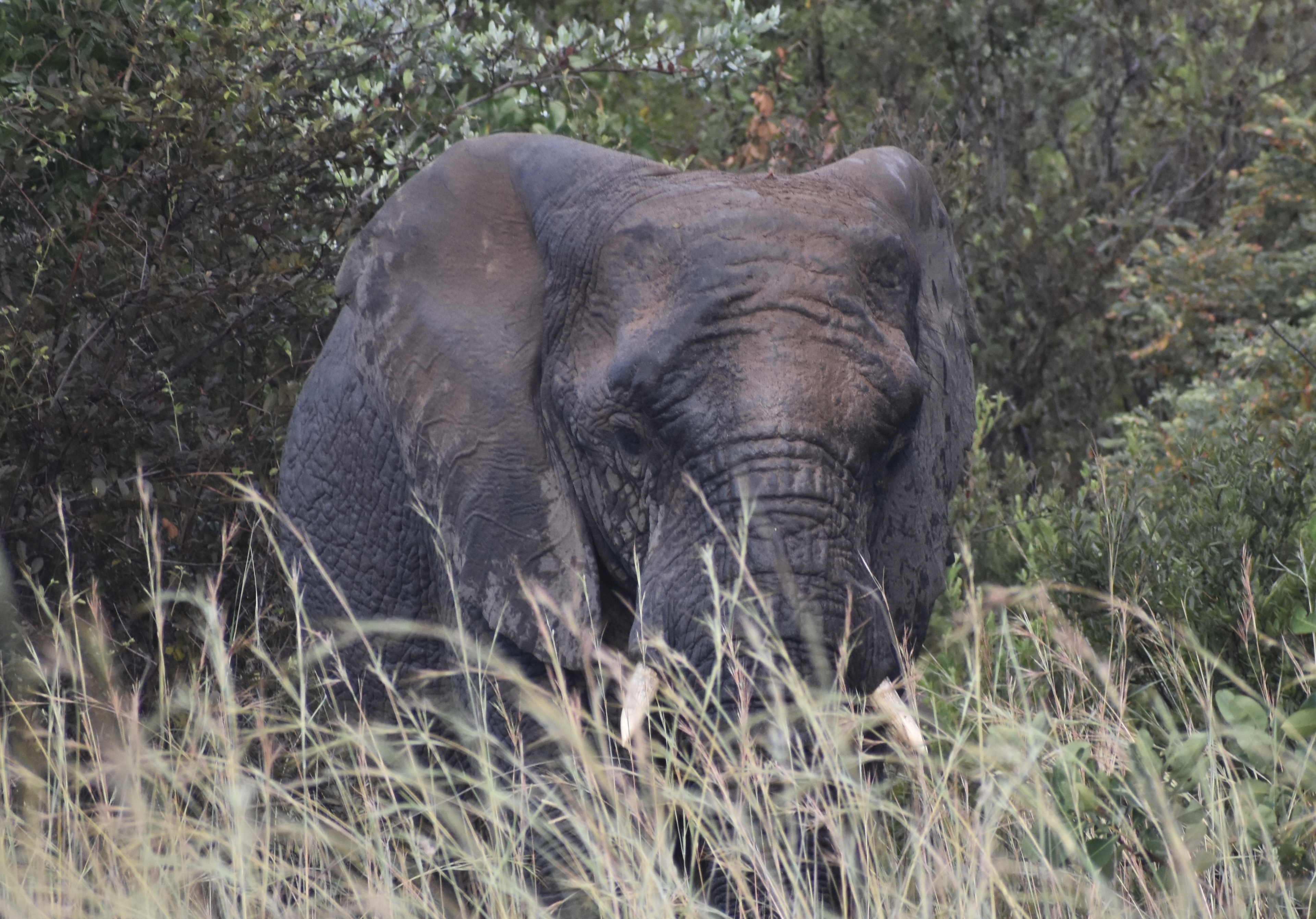
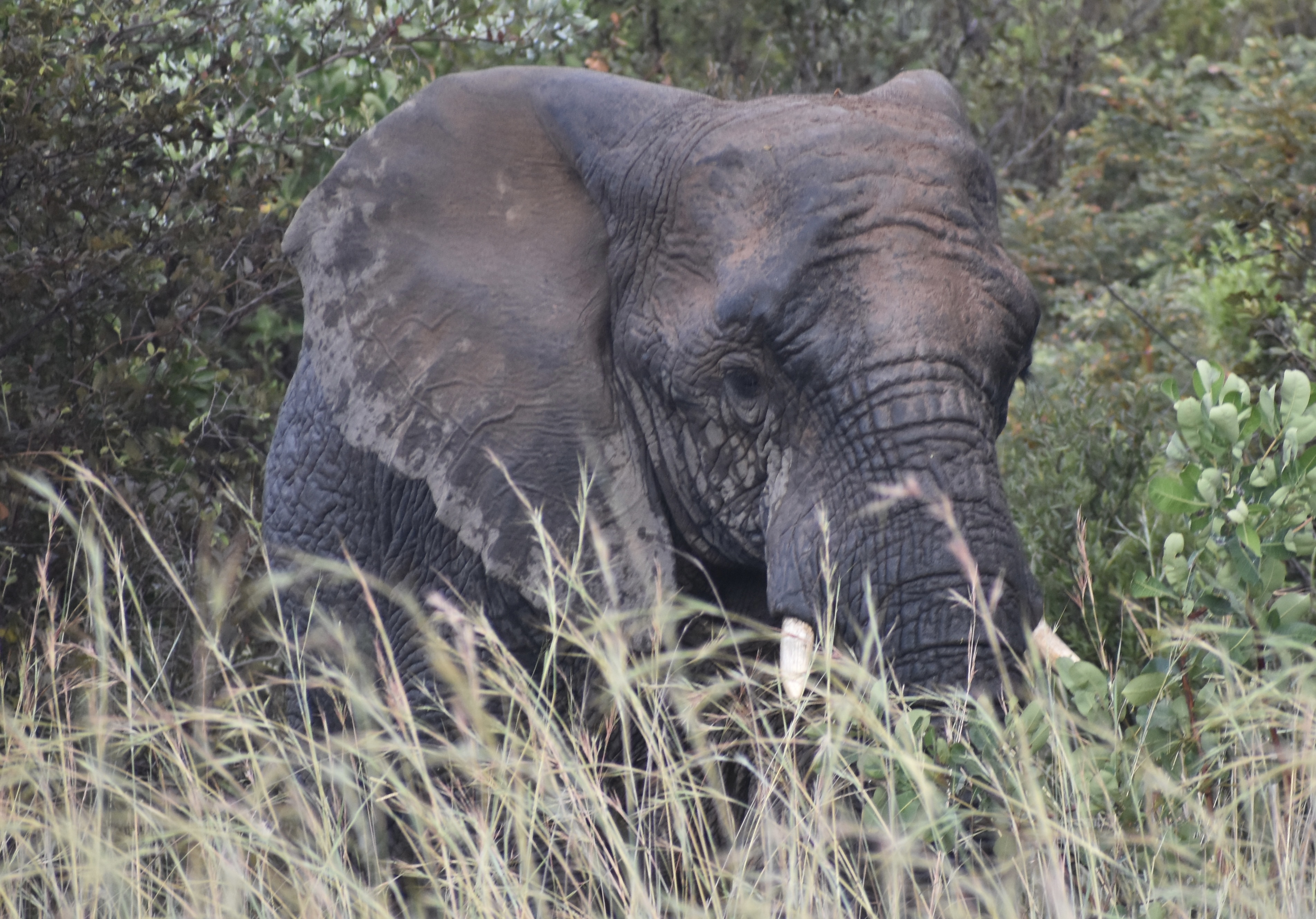
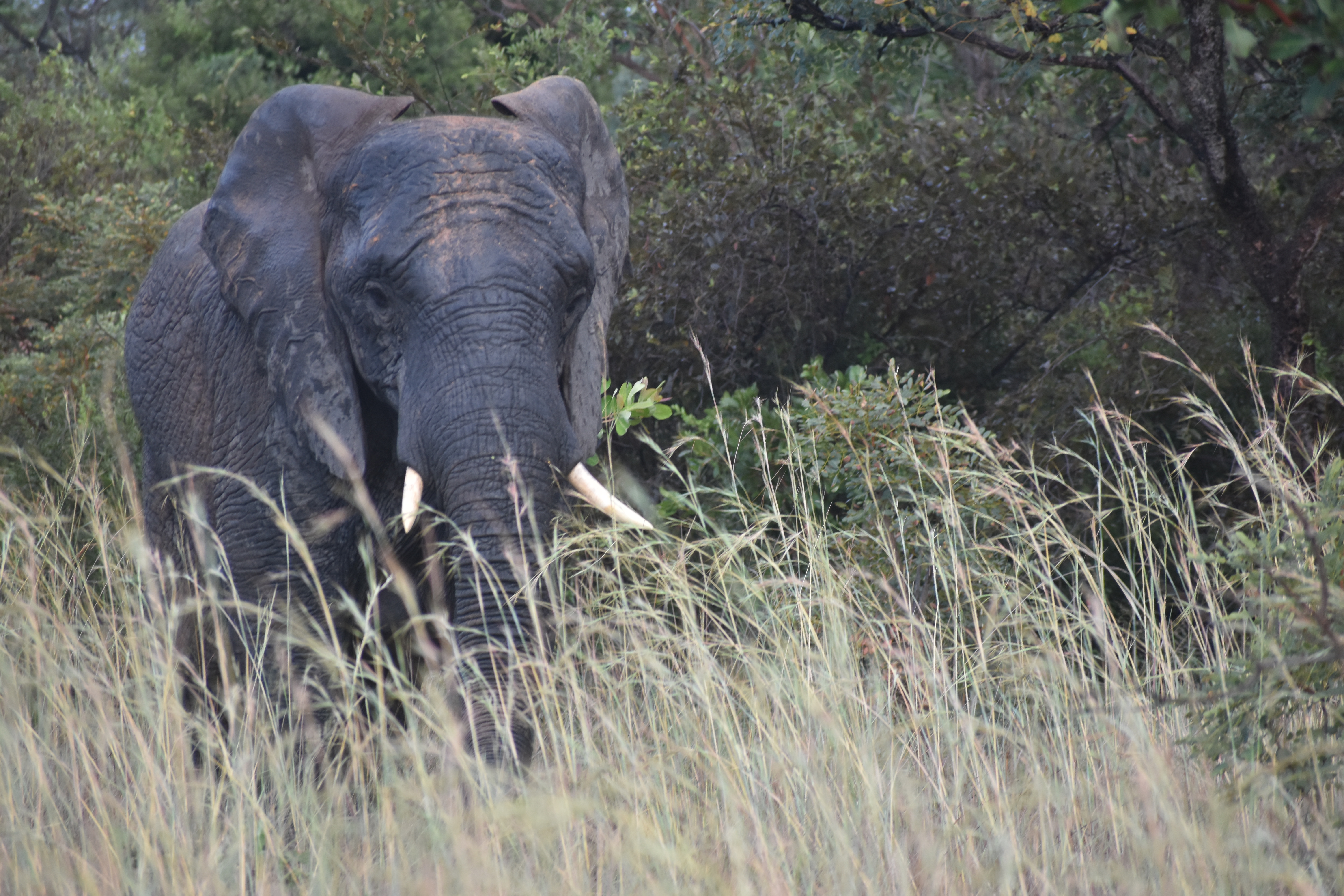
Our biggest wow of the day was encountering the elephant herd again.
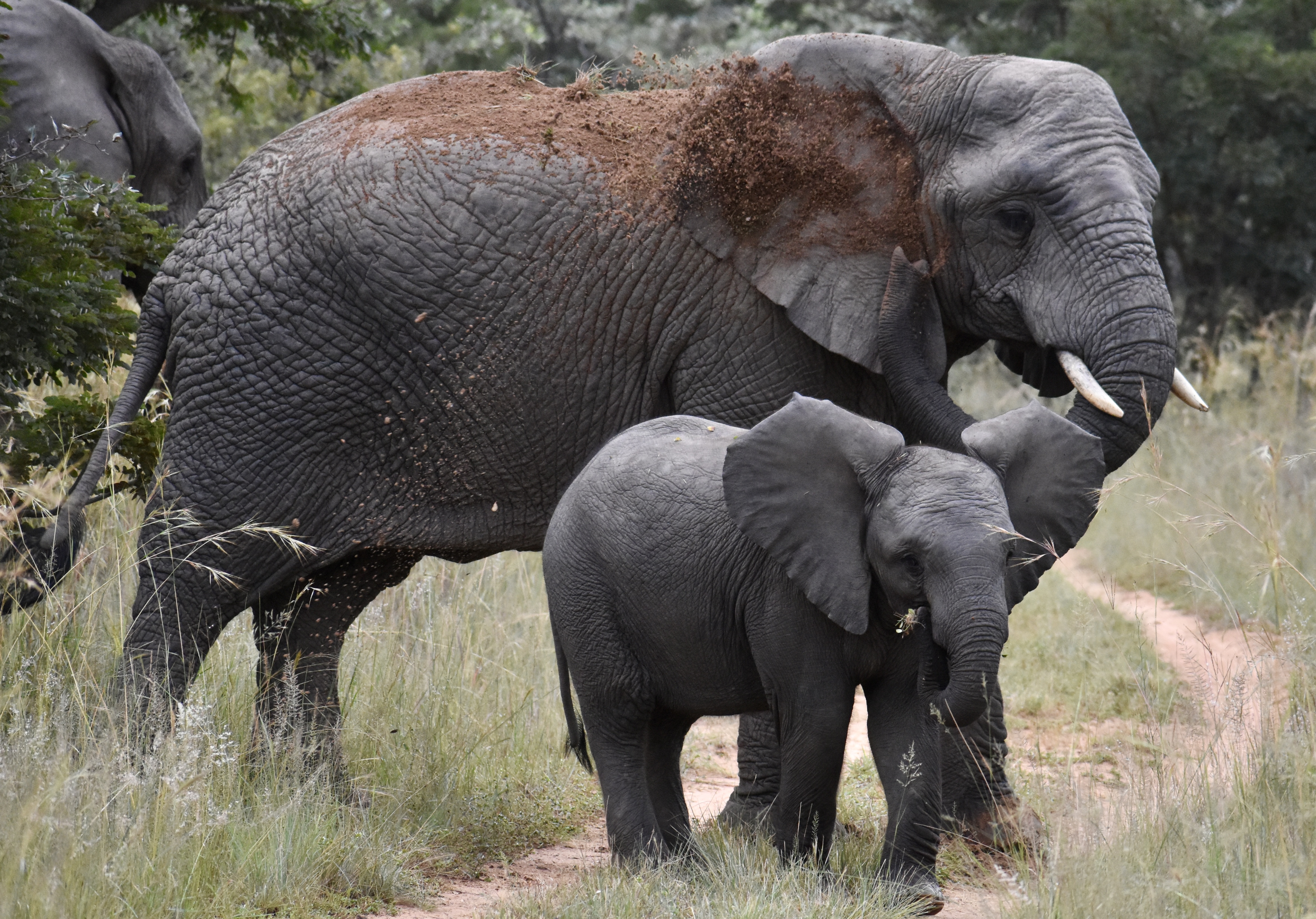
I am loving H’s camera — I was able to catch one female mid–dirt bath, with the dust literally suspended in the air . .
. . . and another using her trunk as a Q-tip in her ear, which felt both majestic and deeply relatable.
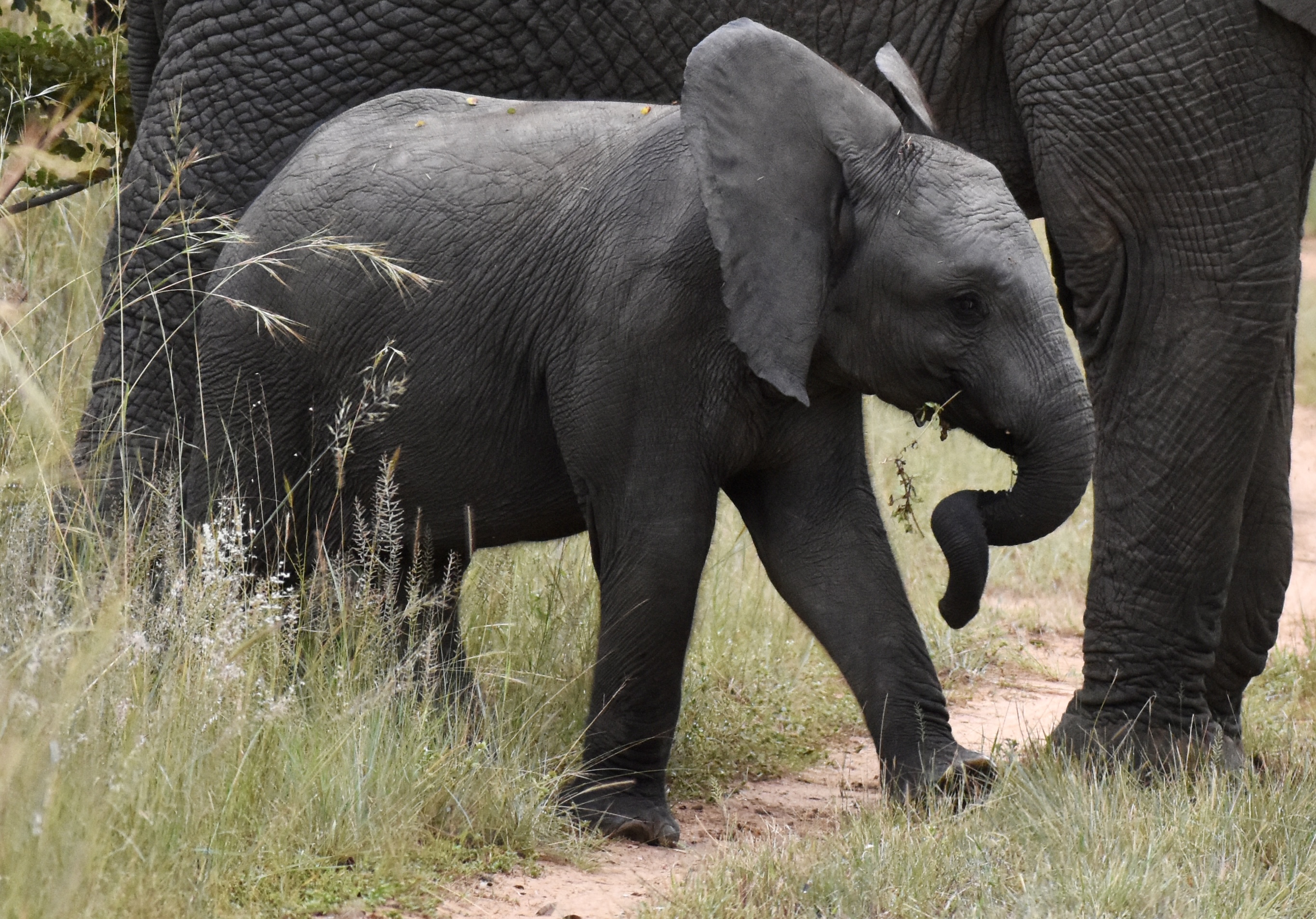
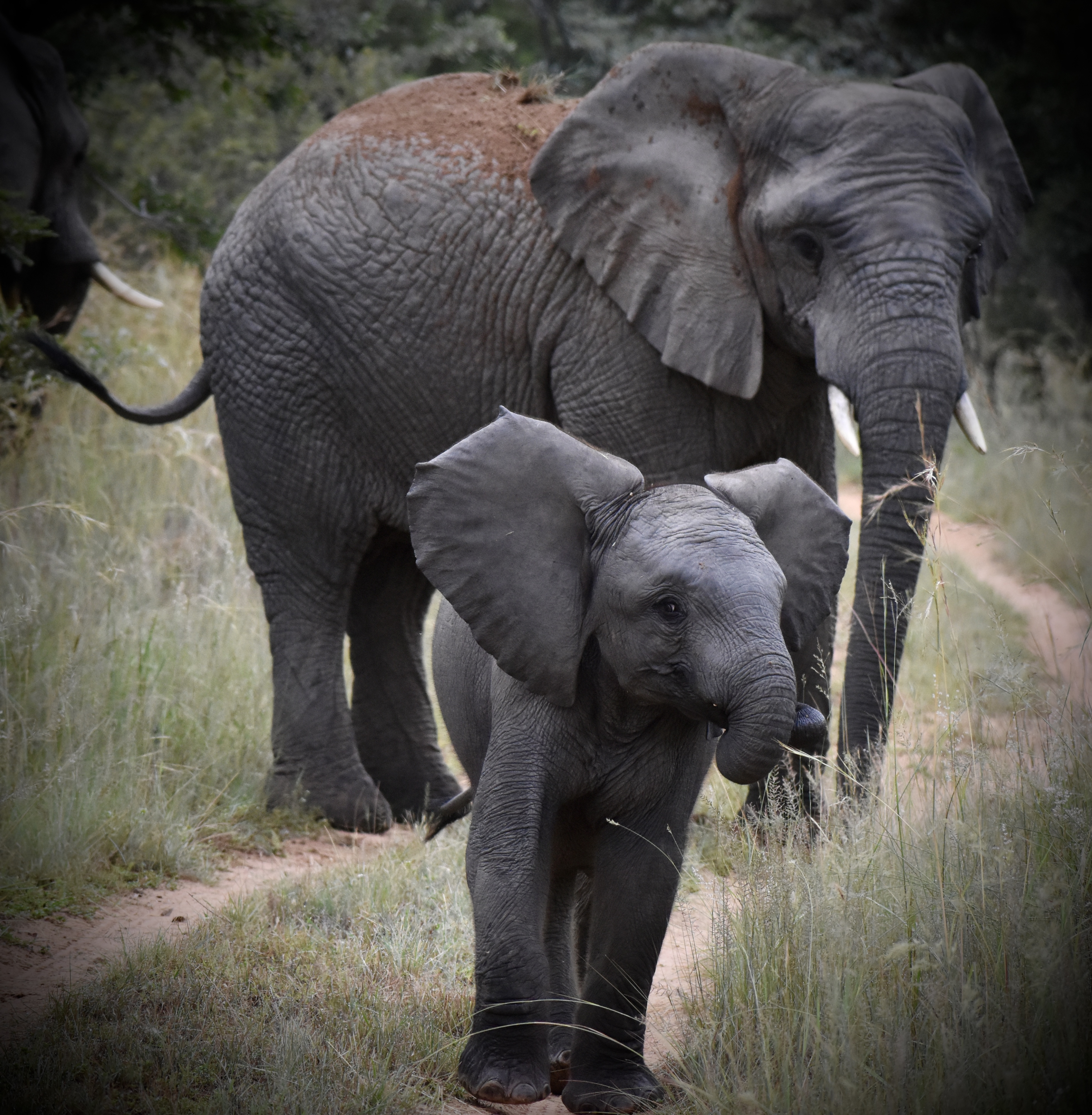
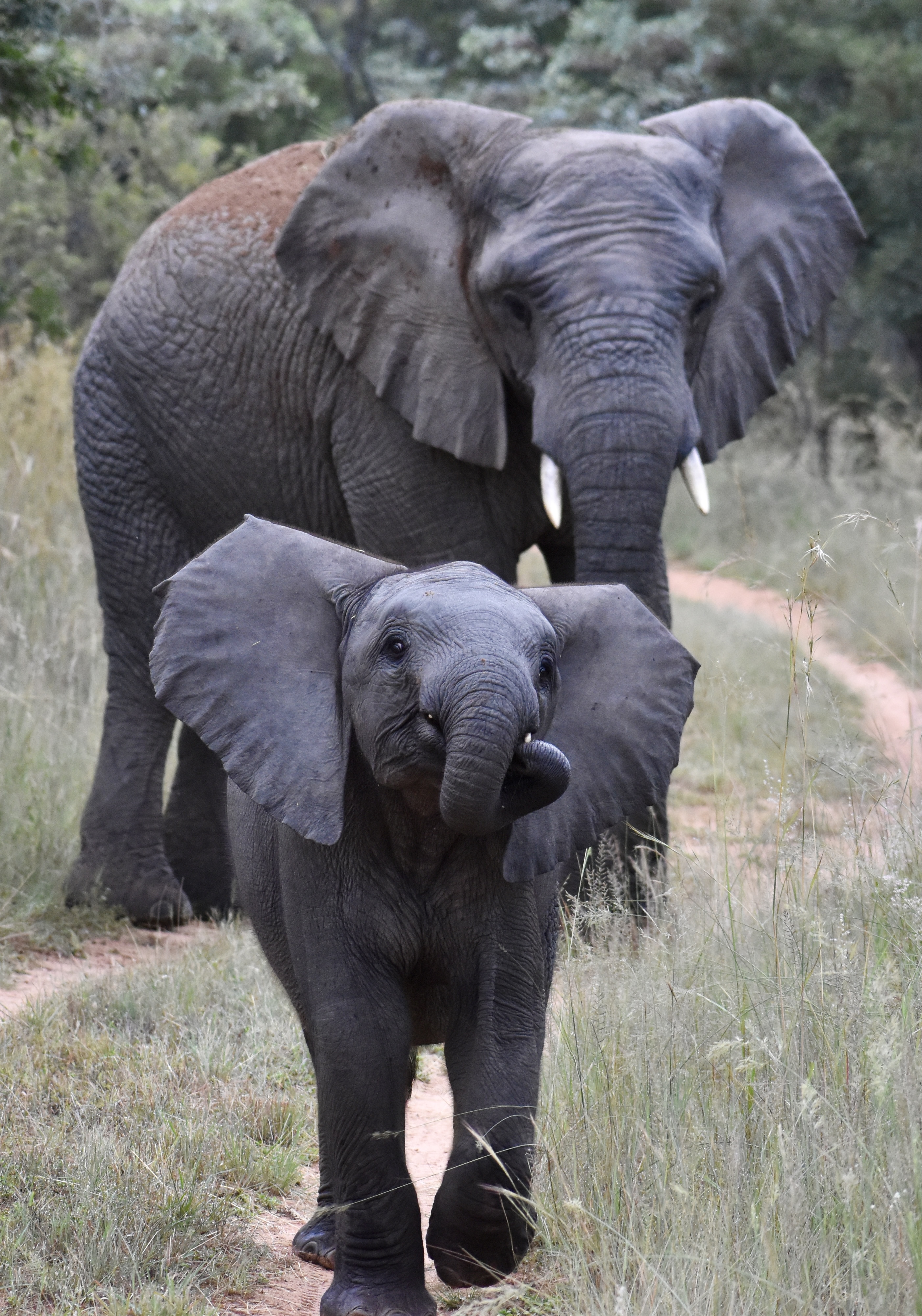
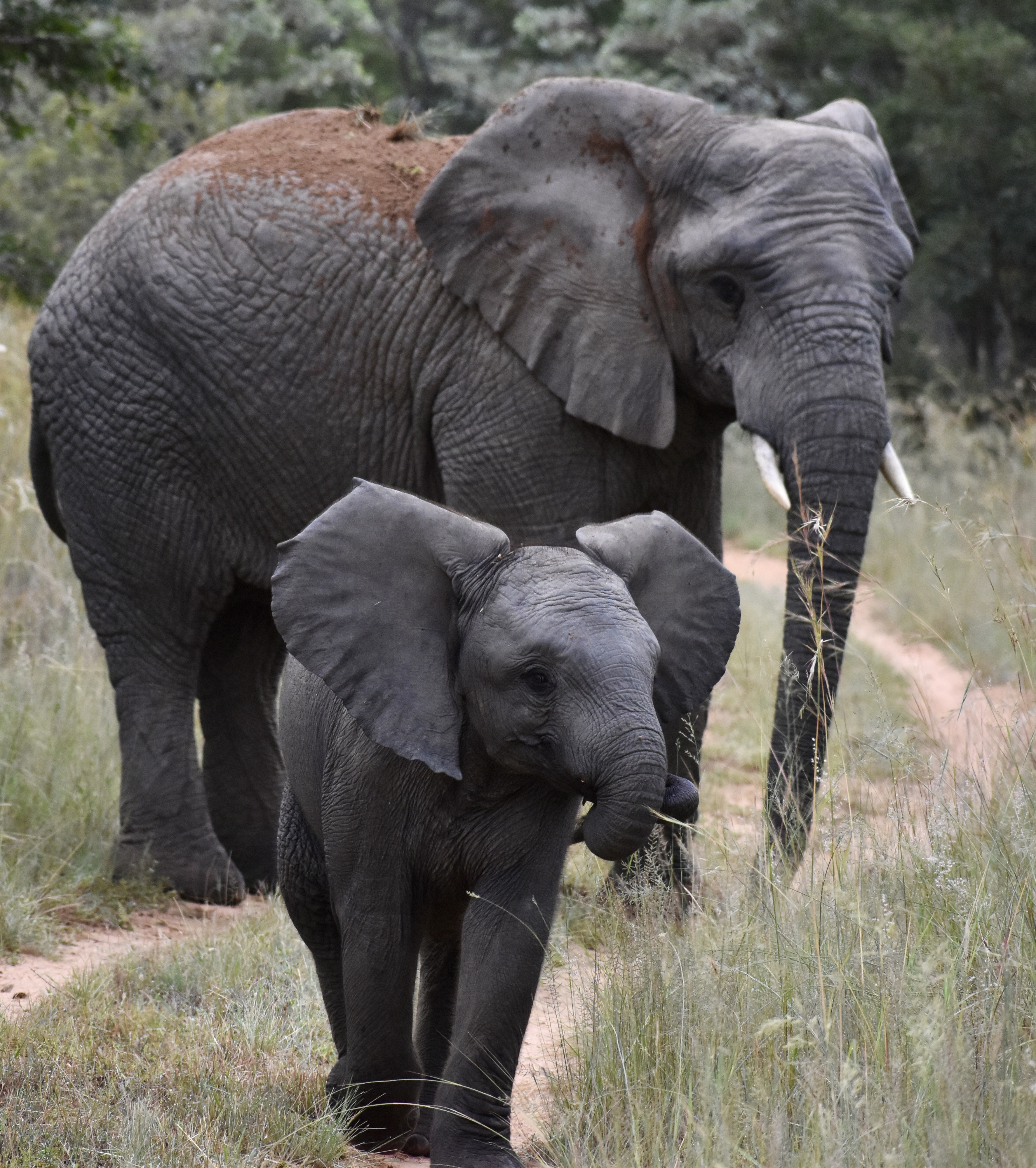
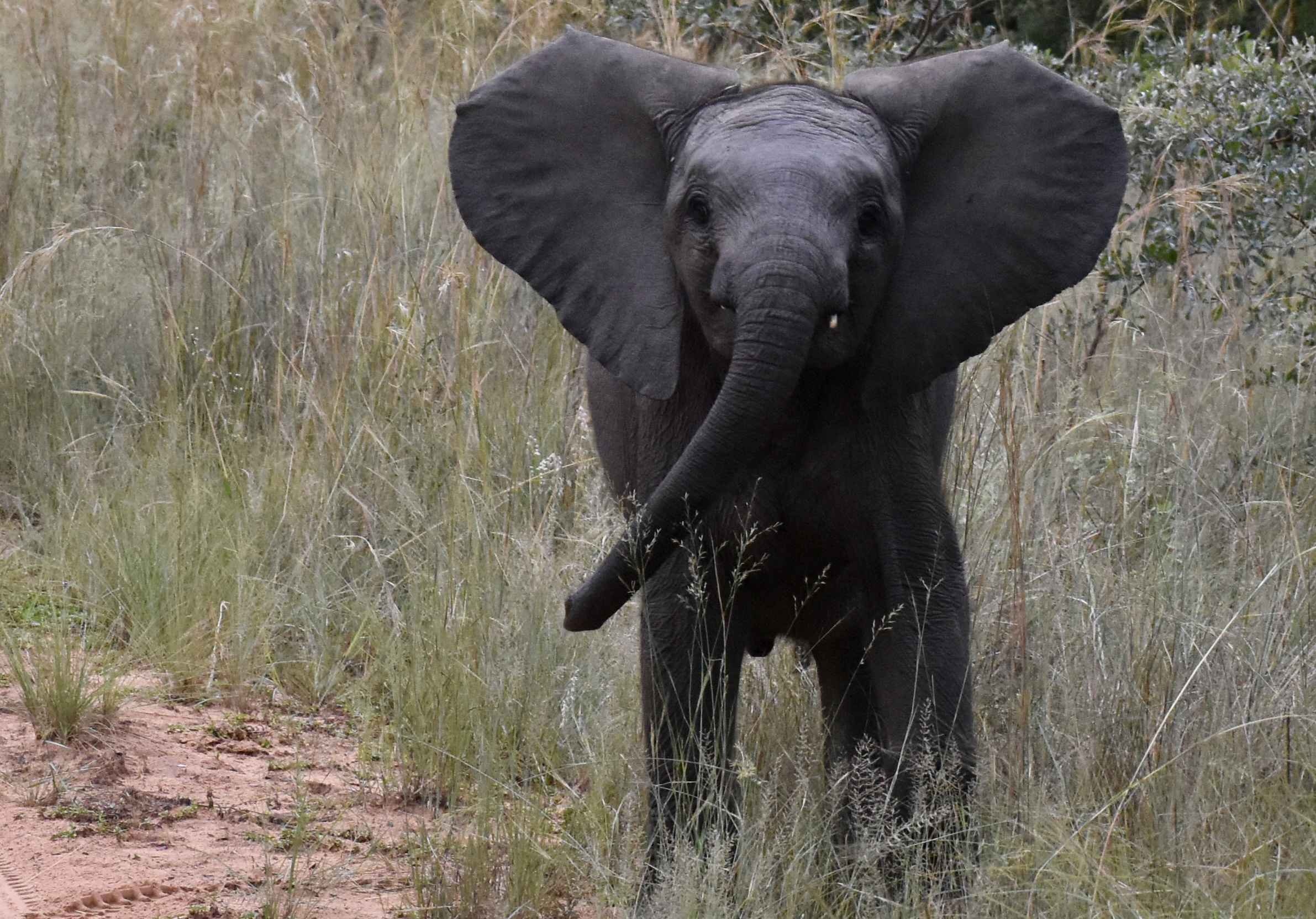
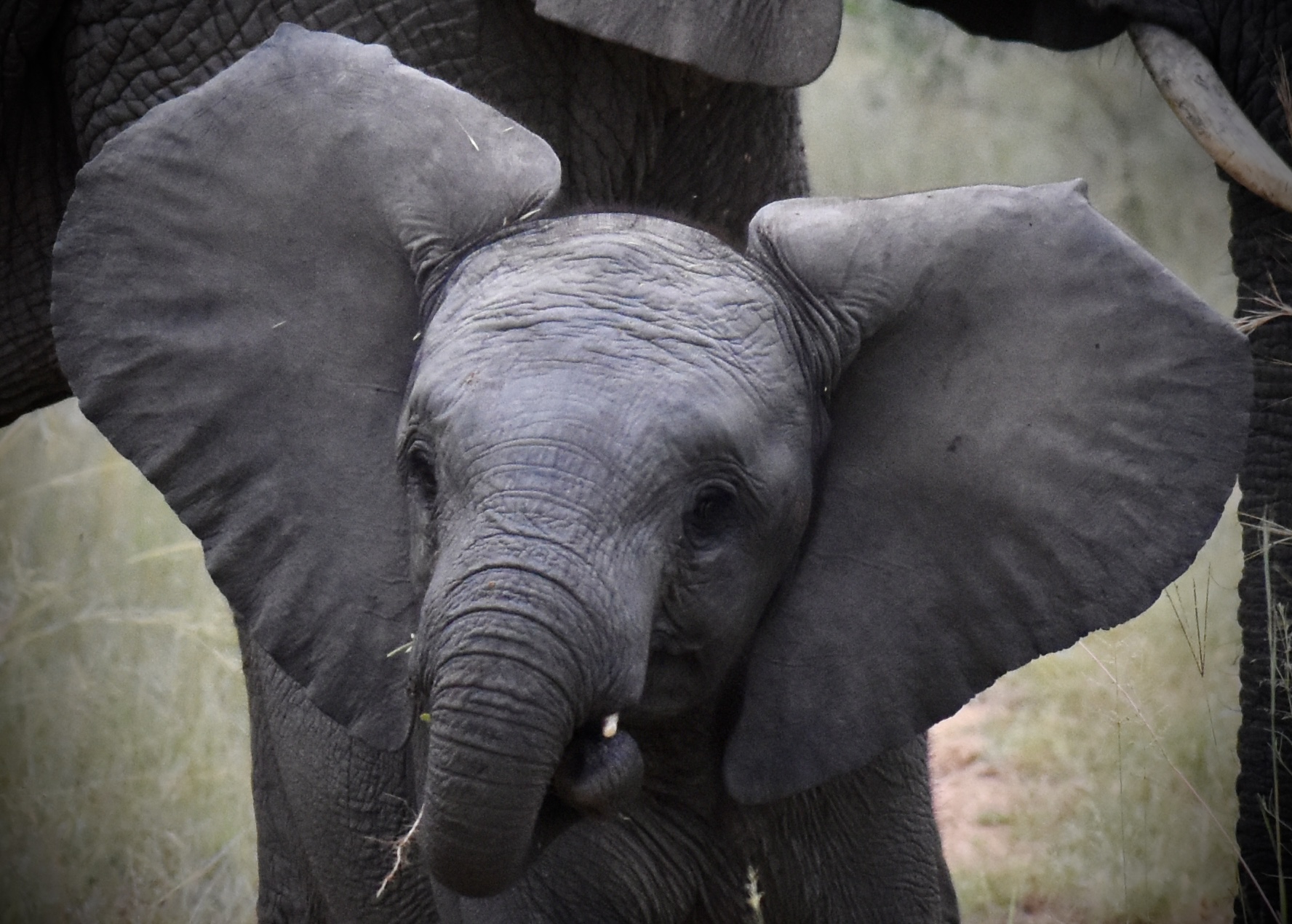
The excitement came when the little one got curious and decided to charge our vehicle.
Isaac beat on the side of the jeep and shouted, reversing as fast as he could. The photos can’t capture the ruckus – elephants scolding, Isaac hollering, little “beep beep” trumpets from young Mr. “I’m Gunna Kick Yer @ss” trying to trumpet but . . . ”beep . . .”
The little one’s mom finally convinced him back into the fold — and once we were safely away, the whole thing reminded me so much of any young boy testing his limits with his parents.
Wildlife, but also: parenting.
Giraffes, Buttes, and the Language of Group Names
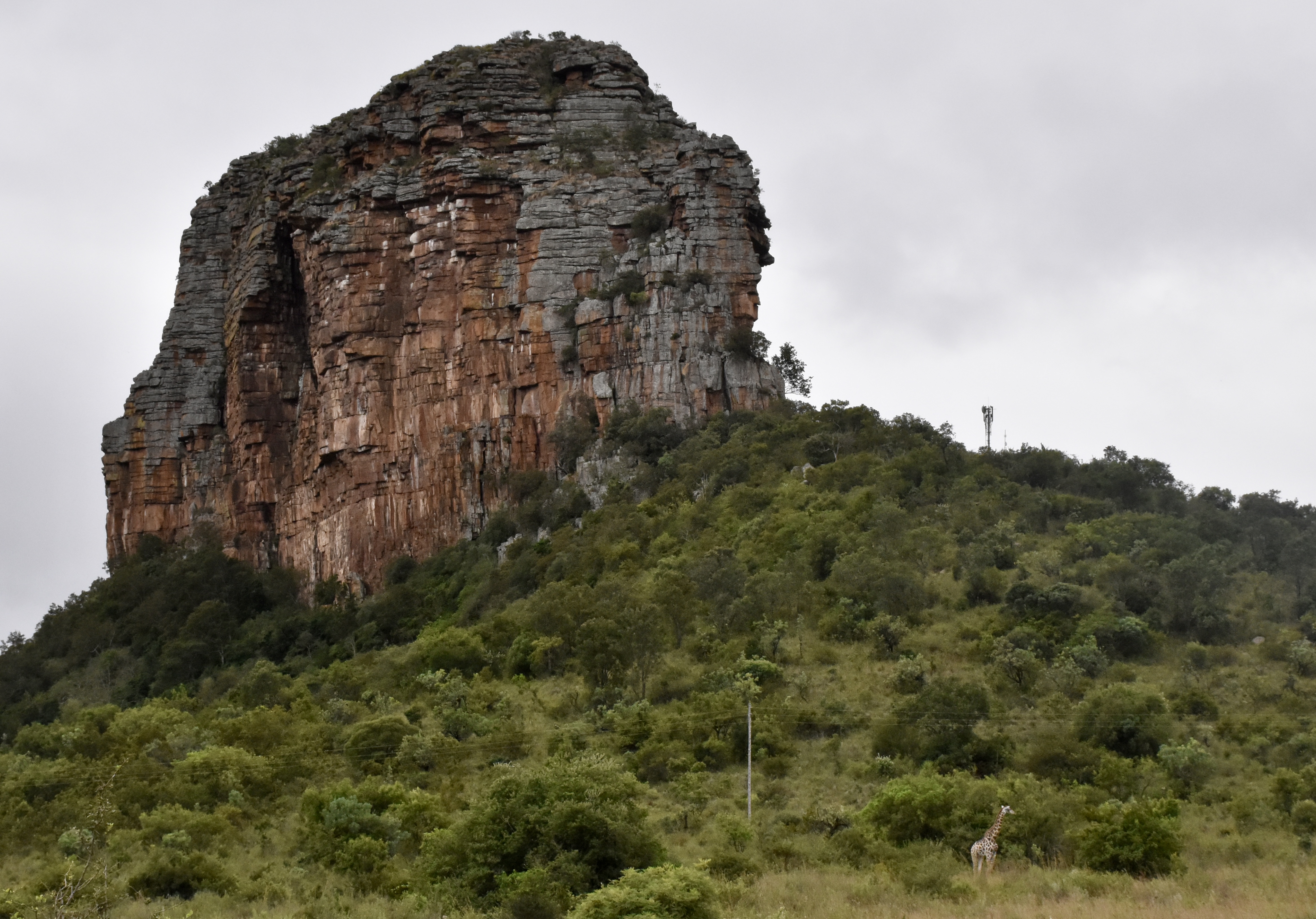
On our way back to the lodge, we caught a giraffe at the base of the butte. Look down in the scrub at the right of the photo – that caramel colored, “tall thing” is Ze Giraffe.
We’d been talking about animal group names, and apparently:
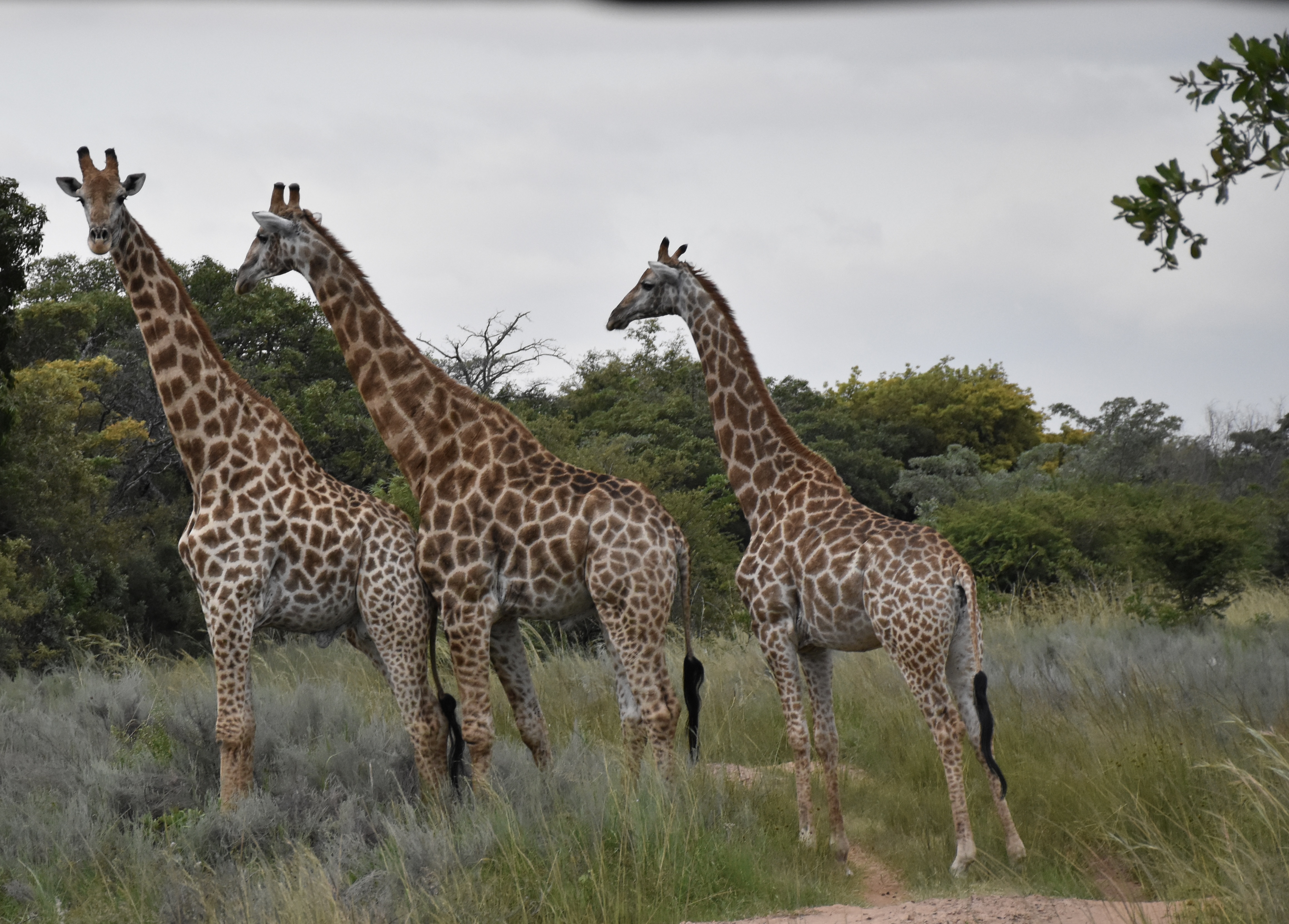
A tower of giraffes is what you call them standing still
A journey of giraffes is what you call them moving
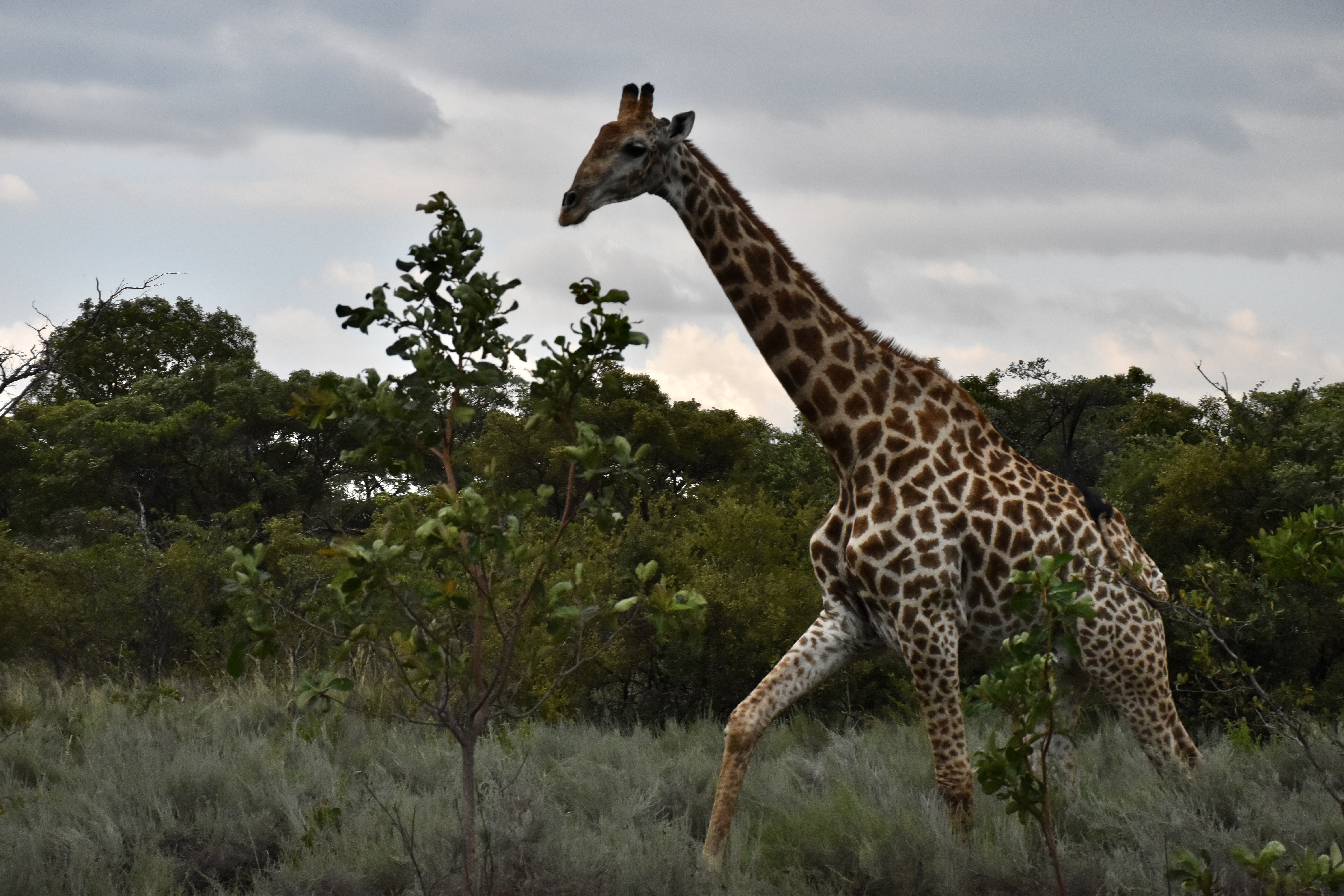
Isaac also mentioned that giraffes are one of the few animals whose gait moves the front and back legs on the same side together — called pacing — rather than the diagonal pairing of a trot, which is why they have that slow-motion sway.
As Tom from our group put it: the difference between a pacer and a trotter.
(Yes, Safari meets horse-racing trivia.)
Pancakes, Packing, and a Rhino Orphanage Ahead
After breakfast — including very fluffy pancakes — it was time to download photos. This batch is the largest number of “keepers” so far . . . perhaps I’m finally getting used to the camera.
Lunch is at 12:30, and at 1:45 we’re heading to a rhino orphanage. Today was supposed to be a “bush lunch,” but unfortunately it’s supposed to rain – the hope is that it won’t rain out our “boma” dinner outside tonight.
I will try to send a Marco Polo to Mom from the orphanage.
We go straight from the orphanage out to our last jeep safari of this lodge stay.
Tomorrow morning is a walk up on the escarpment.
I should be packing.
But since I’ve decided to skip lunch . . .
I think I will instead take a wee nap.
And honestly?
That also counts as a sighting. I’m sure dream animals count.
Next up: orphan rhinos, and whatever wildlife wanders our way.
I never get a percentage from any links I include – but! – if you are curious about Overseas Adventure Travel and want $100 off, call them at 1-800-955-1925 and request their amazing catalog, tell them you were referred by Sandy Shepard, customer number 3087257, and get $100 off your first trip! The catalog is what all good dreams are made of!
We are eating too much and moving too little — though today, due to the colossal amount of jostling in the jeep, Mary’s smartwatch went off – with fireworks – telling her:
GREAT JOB! You have completed your workout by 9:00 a.m.
My smartwatch, on the other hand, chose the exact moment we were taking photos of the VERY VERY CLOSE Cape buffalo to buzz gently and suggest:
Time for a Walk?
(Um, thanks, but NO.)
We were woken up at 5:00 a.m. for coffee and a “rusk” (think Zwieback), and then it was straight into the jeep. Mary took the middle seat, I swapped to the right side, and Janice was on the left in the back row. (We were middle row yesterday — the Great Seat Circulation continues.)
It was significantly less cold than I had anticipated, so I wound up loaning my coat and my cashmere circle scarf to Ilana (a mathematician-turned-software engineer originally from Israel; her husband is a physics professor, also originally from Israel). Safari camaraderie begins early.
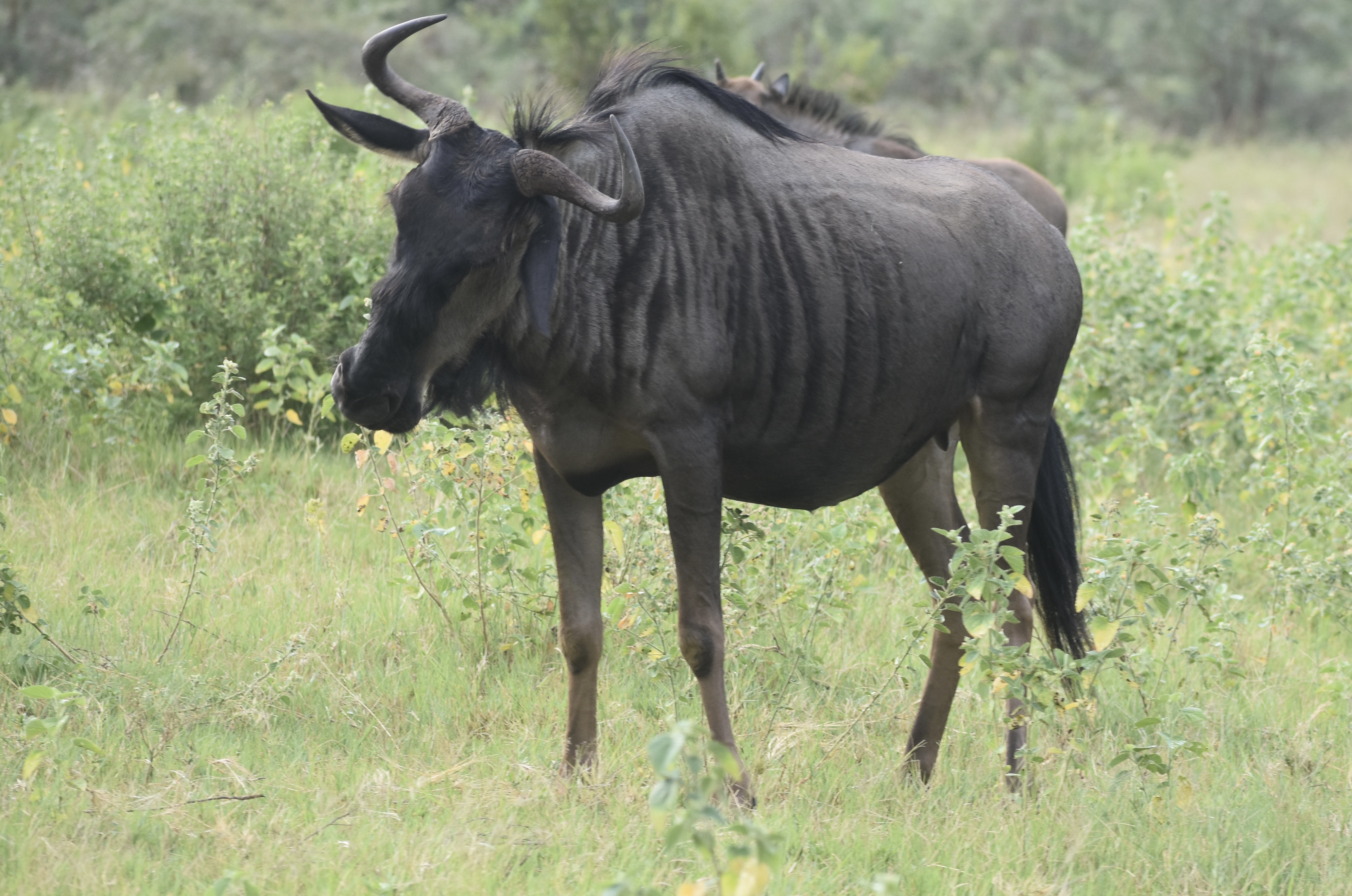
We headed out and saw rhino, gazelle, gnu (gnus?), and then — new this time around — Cape buffalo (wow, they’re big) and cheetahs. We’ve actually been tracking the cheetahs for a couple of days now, and today I even got a photo of their tracks on the road.
We came back up for breakfast, had an hour’s rest (which for me is basically code for cleaning up photos), and then… lunch.
Too much food, I’m telling you. Delish – but for a gal who just has a protein breakfast and then one meal around 3:00 daily – too, too much.
I think we have a pretty big gap now before the evening game drive and dinner, so I’m trying to pace myself. (Buffet, for the Win.)
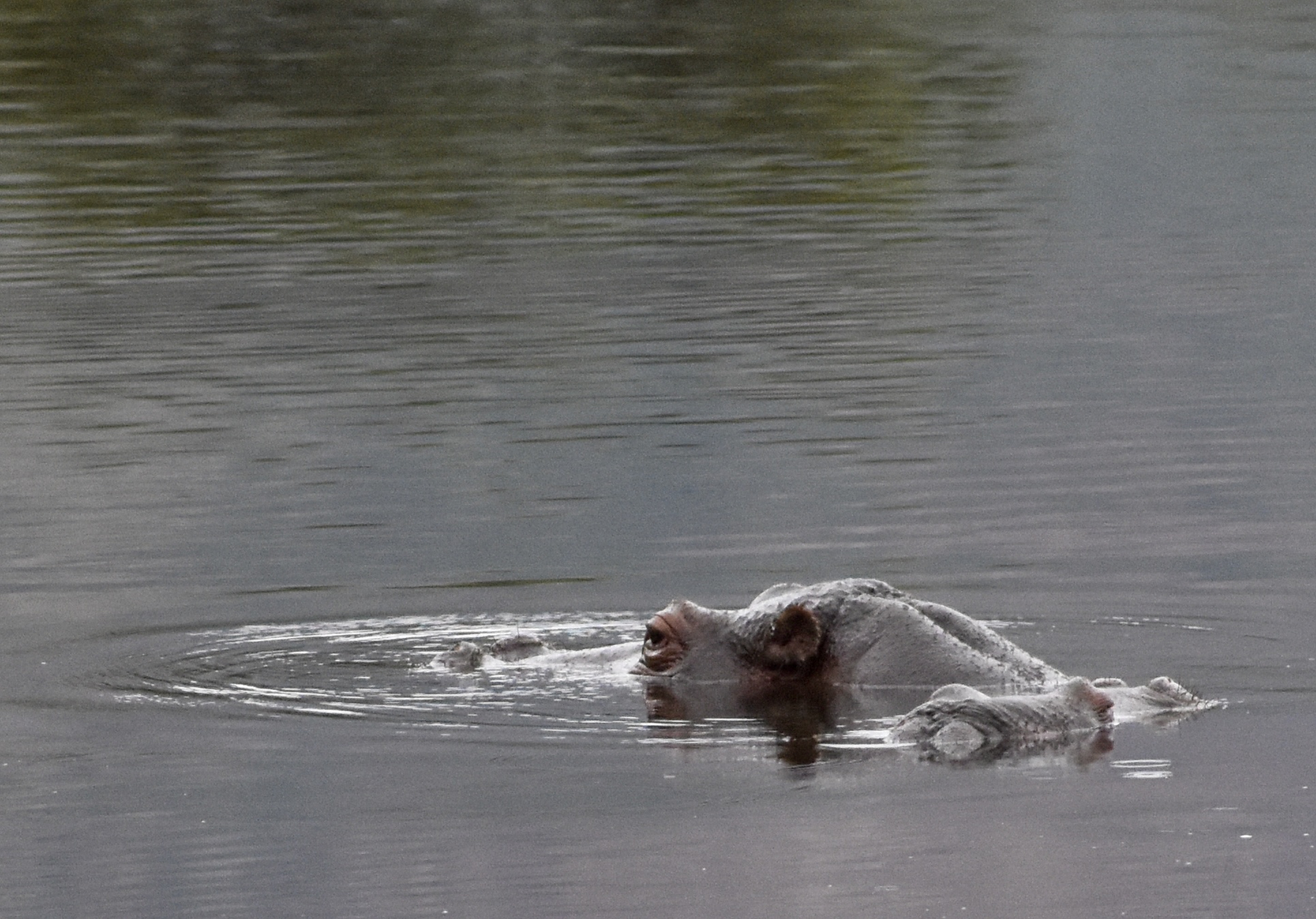
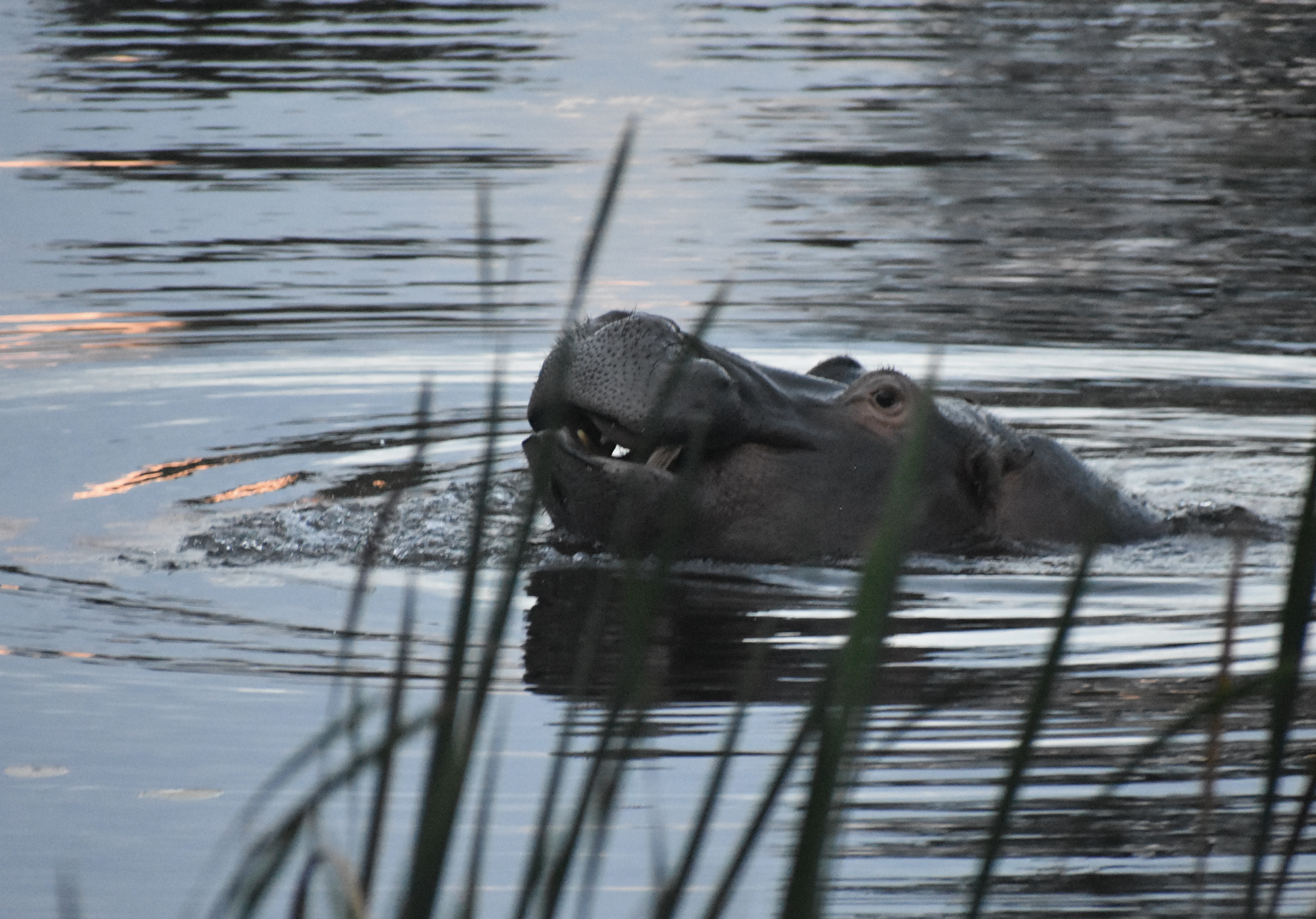
Today I was particularly proud of getting a couple of shots of the hippos. They can hold their breath for around five minutes (sometimes longer), so if you miss them coming up — for example, because your camera is sitting innocently in your lap — you may find yourself staring very intently at a completely calm pond waiting for a nostril.
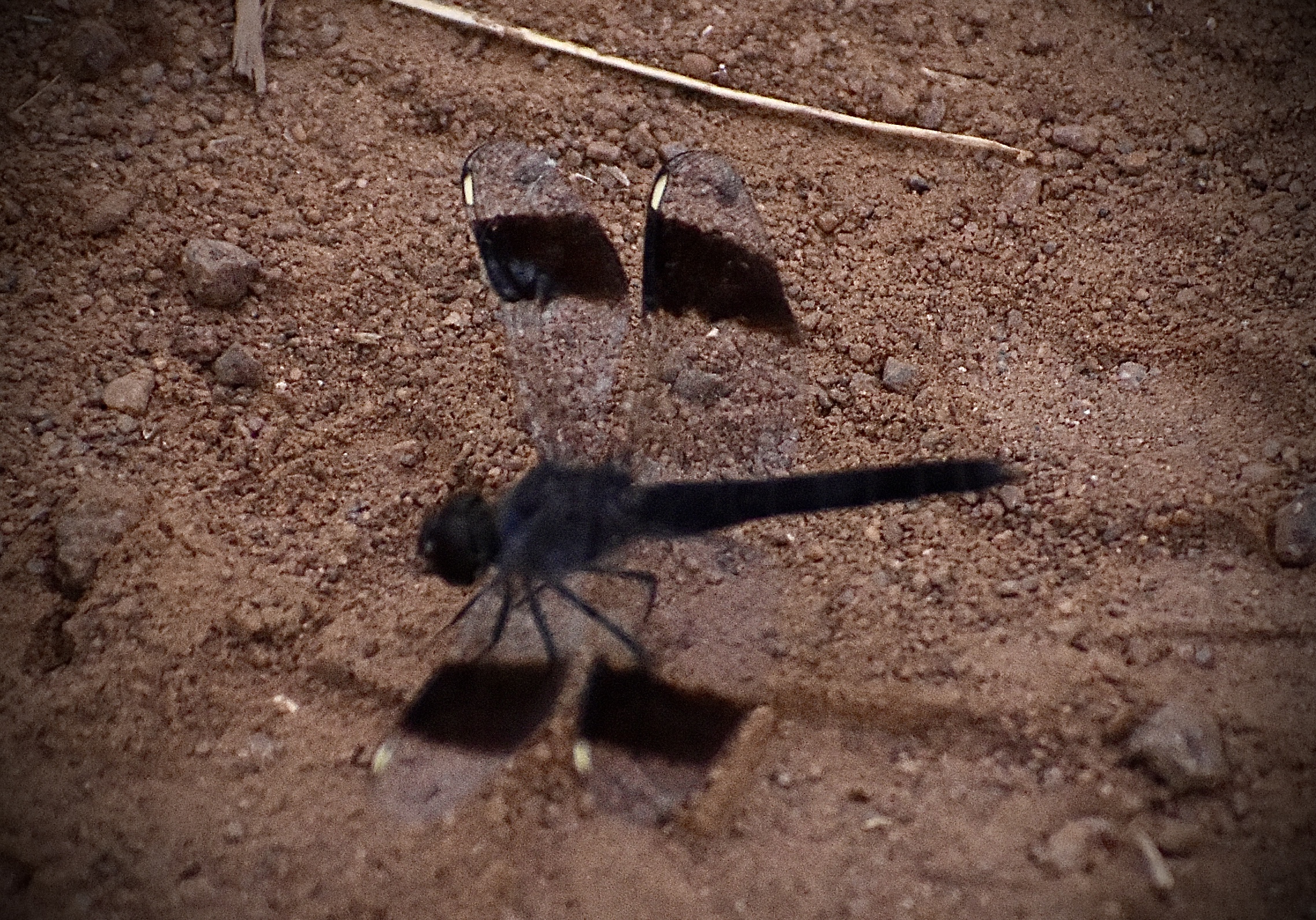
We had “refreshments” out at one of the small lake/pond stops, and I was able to take a photo of the jeep (and Mary). I also managed to capture the most interesting dragonfly — completely clear wings with little black squares, like nature decided to add graphic design.
The photo is a bit blurry, mainly because the dragonfly was quite small and the wings were moving… and also because I am, technically, in a bouncing vehicle half the day so there’s a bit of a “sea legs” (?Jeep legs? issue).
We are also coalescing as a group. Janice, Mary, and I already have all sorts of private jokes, and I even have one with Ilana’s husband Ari, who spent nearly the entirety of our refreshments break chasing a butterfly.
Every time he’d get close and raise his cell phone, the butterfly would flit off.
It became unbelievably funny.
In recompense, Ari got these great photos of “assassin beetles”(Called that because if you touch them, they spray you with boiling hot water!)
At this point, I believe the only animal we’re really missing (since leopards are basically mythical) is the elephant. We did have a giraffe suddenly run out of the side bush and across the road right next to us today — super startling.
I nearly wound up in Mary’s lap.
It’s a bit like when a cat runs across the road…
…but about a ton larger and three stories taller. 😉
I’ll make a separate blog post for the evening game drive later today
Note to future safari-ers: Bring a pair of clear glasses if you do not already wear glasses. Sunglasses aren’t particularly necessary when you’re in a jeep with a cover (neither is a sunhat, which btw gets in the way of the folks behind you); more importantly, the cover “funnels” air through so even if there isn’t a whisper of wind, you get a fairly strong “wind” blowing on your face the entire time. It dries the heck out of your eyes.
Evening: Elephants, Ecology, and a Twist at the Bar
At lunch we had a couple of women from a local university come chat with us. One is doing her PhD lab right here at Entabeni; the other is her sponsor. Her thesis involves the two types of tortoises found on the reserve: the leopard tortoise (which I photographed the other day), and the hinged tortoise — so called because it can actually pull its back opening closed like a drawbridge if attacked. Evolution doesn’t play around.
We also learned two South African conversational “sayings” from the PhD student:
“Nah-NOW” — meaning later (not now… but emphasis on the “now,” which apparently causes endless confusion for visitors)
“Yoh’r” (with a little flip of the tongue) — an all-purpose sound meaning um… wow… let me think… oh dear…
Armed with new vocabulary, we gathered up our things and climbed back into the towering jeep.
This time, Janice, Mary, and I were in the front seat.
Not a fan.
The leg room is smaller, and there isn’t the comforting “cage” of the seat in front of you to hold onto. We rolled down into the valley basically suspended by our seatbelts, with nothing to grip except the underside of the seat and our own dignity.
We saw the usual complement of gnu, pumbas, zebras, black and white rhino… and even a tawny owl and a civet. (No photos of the last 2, but as Abe said: “Just because you didn’t capture it on film doesn’t mean it didn’t happen.”)
And then: elephants.
We chased their broken branches and poo (60% undigested plant matter, used for all sorts of things, from fuel to medicine – in the theory that they eat so many plants, there’s got to be one for what ails you in there). After quite a while we found them — or rather, found three of the full group of twelve — with another jeep rather too close for comfort. Isaac (our driver) didn’t want to drive farther forward, because you are supposed to keep a respectful distance. The three elephants seemed agitated, and after a few tense moments they ran off into the forest.
We thought: well, that was it.
We drove slowly around the dense trees and brush, scanning… when I suddenly saw it:
A tusk.
“There!” I called, and Isaac stopped on a dime.
What came next was a Moment.
All the elephants came running.
The other jeep — the one that had been too close — came around the corner again, and suddenly they were really too close, with elephants surrounding them.
(A small note here: our guides were very clear afterward about how important it is to keep distance and give animals space. Elephants are magnificent, but they are also powerful, unpredictable, and absolutely not to be trifled with.)
The herd crossed the track, and a couple even ran up behind our jeep — not close enough to be dangerous, but close enough that both Abe and Isaac later gave us a serious lesson on what should have been done correctly from the beginning.
We definitely got shots. You can see them in the slideshow linked The slideshow is HERE.
Later we learned a bit of ecology too:
Mutualism is when both species benefit — like tick birds and rhinos.
Commensalism is when one benefits and the other doesn’t really care — like the nightjar that flies in front of the jeep, using our headlights to spot insects, while we get… nothing.
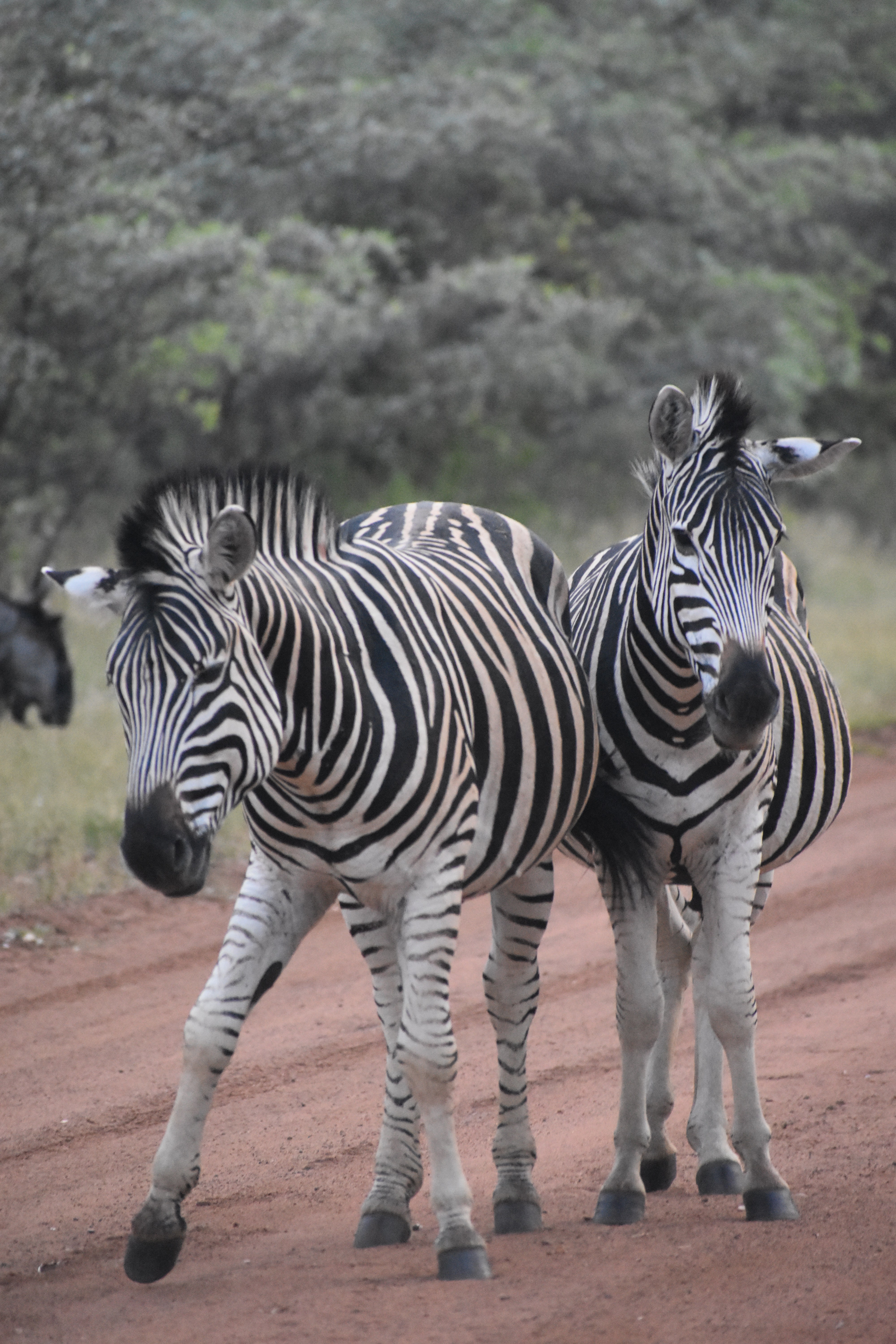
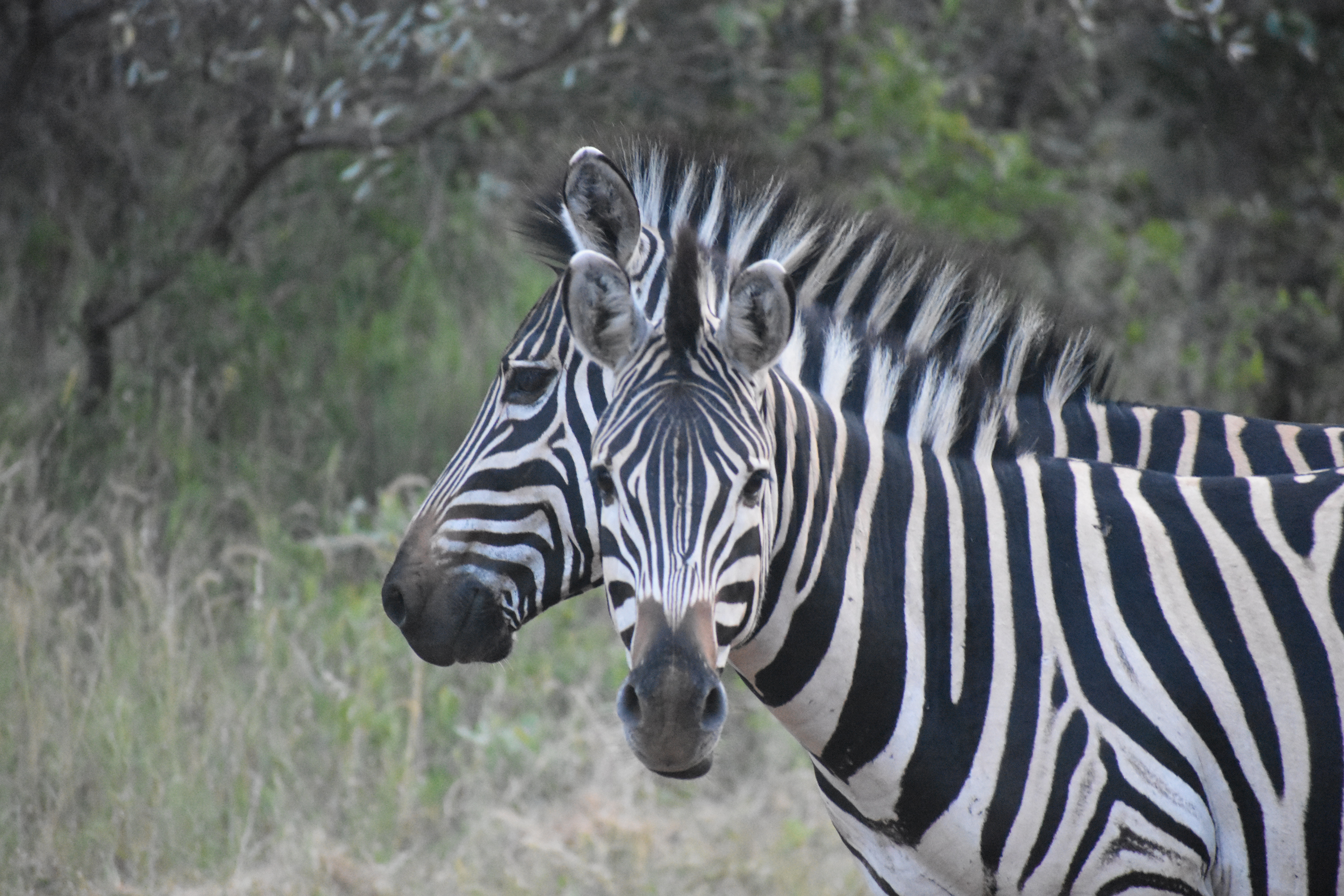
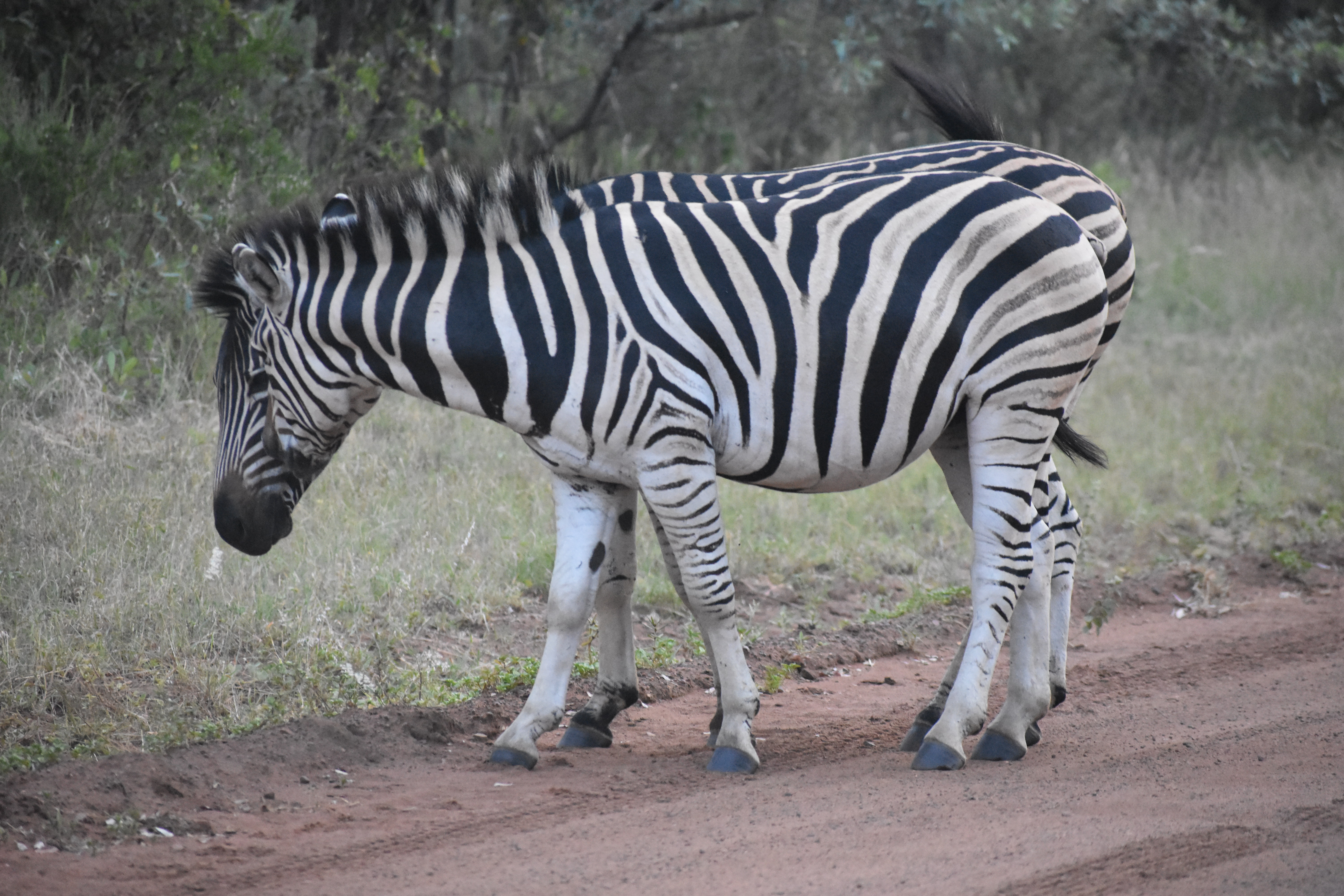
We saw our cheetahs again, some “Doublemint” twin zebras, and three male gazelles “play fighting” like guys at the gym. Two were clashing horns so hard their feet were literally off the ground, while the third looked on like:
Why am I required to be here for this?
During our refreshments break, we also did a proper group photo — the kind of thing that makes you realize we are starting to feel like a real safari unit. I’ll have one to post with Isaac, and another with Abe, which feels exactly right: the people steering this entire wild, dusty, astonishing experience.
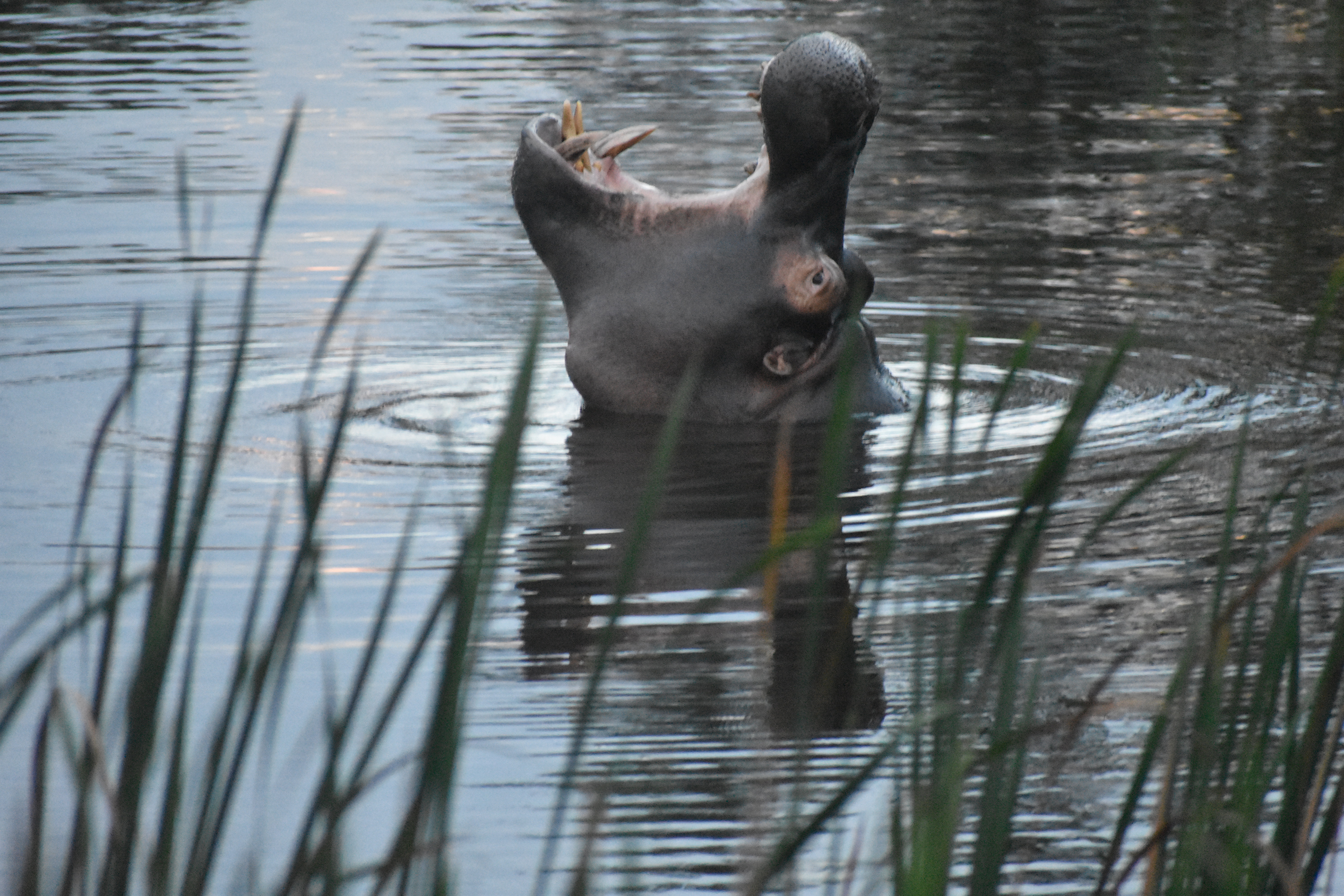
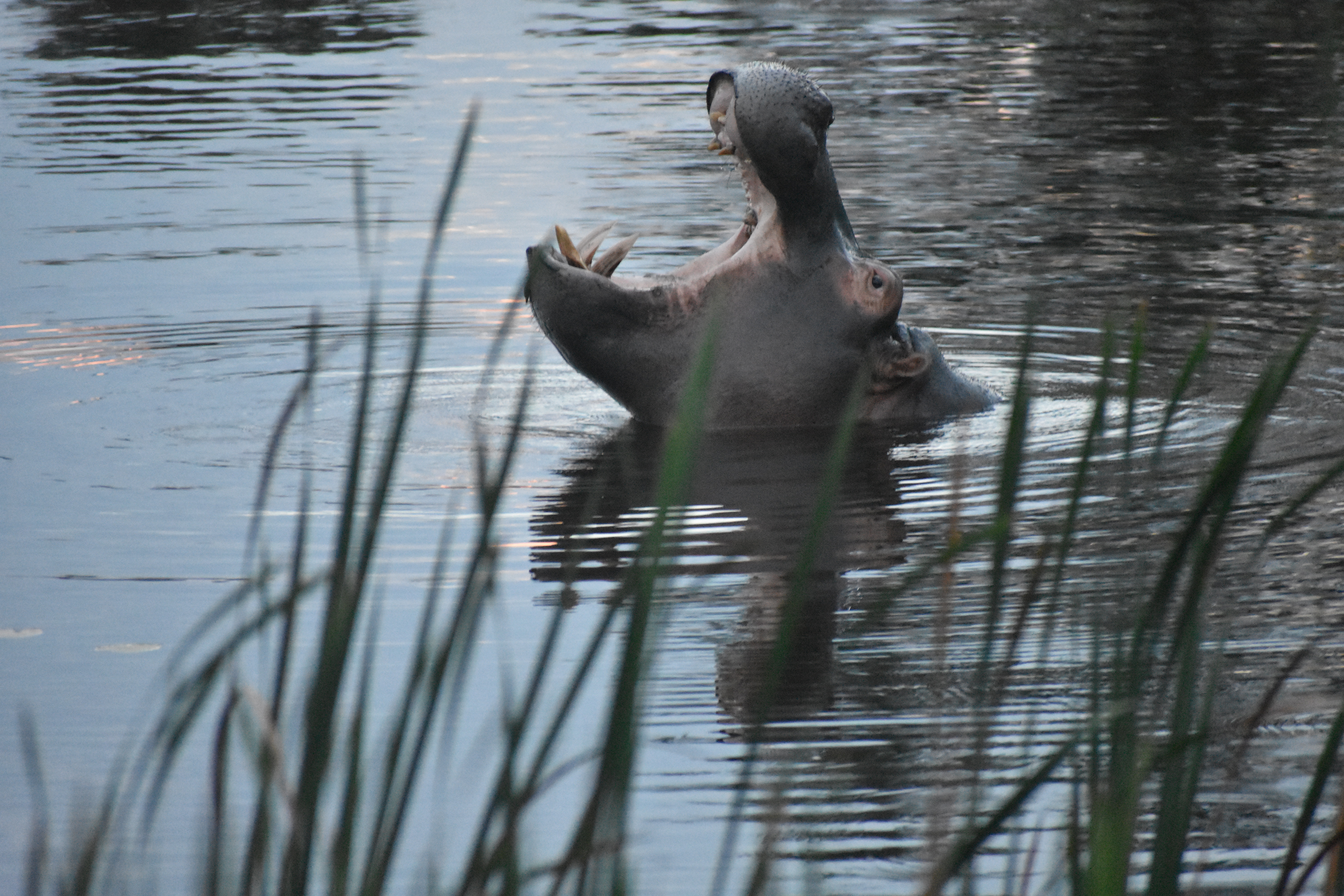
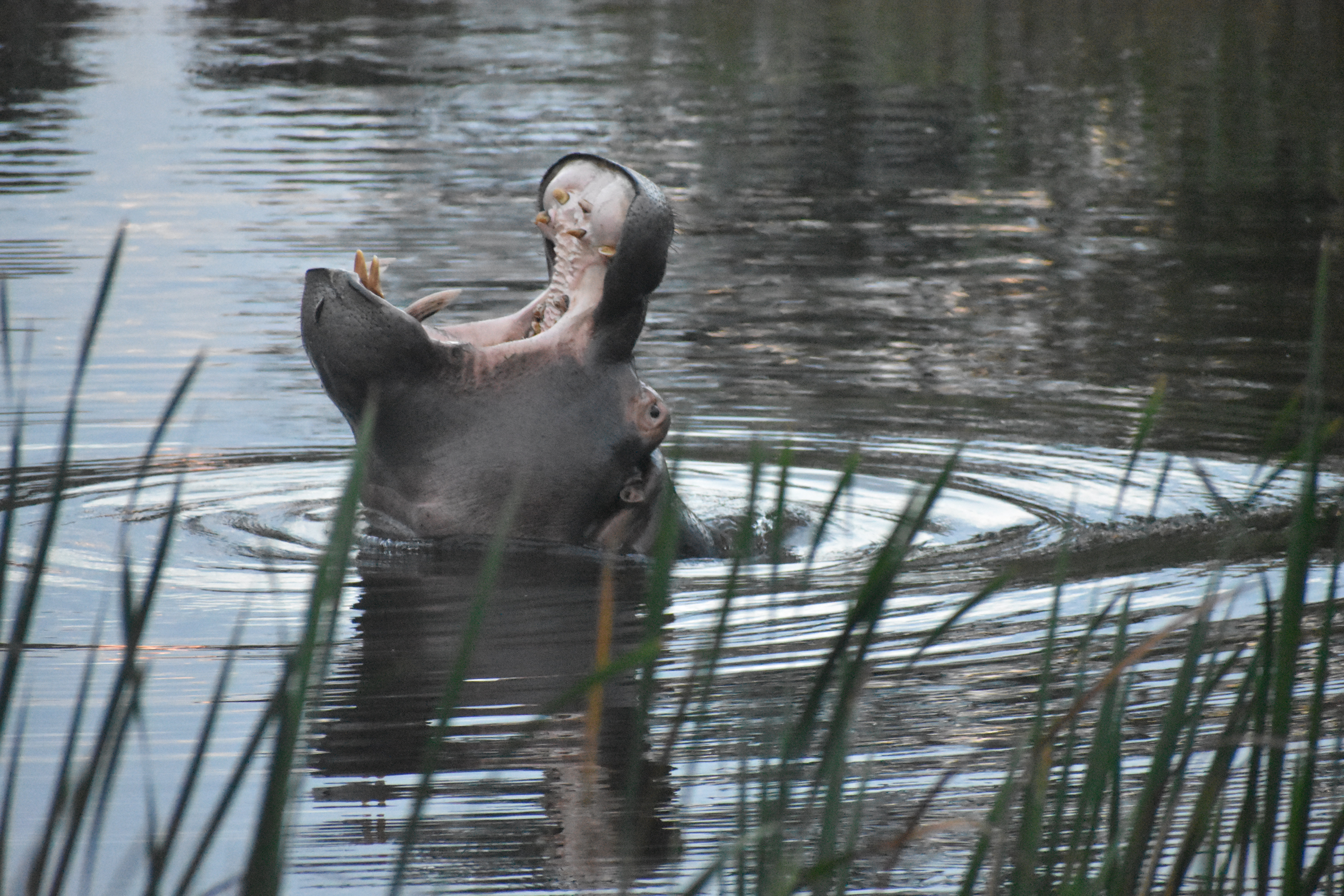
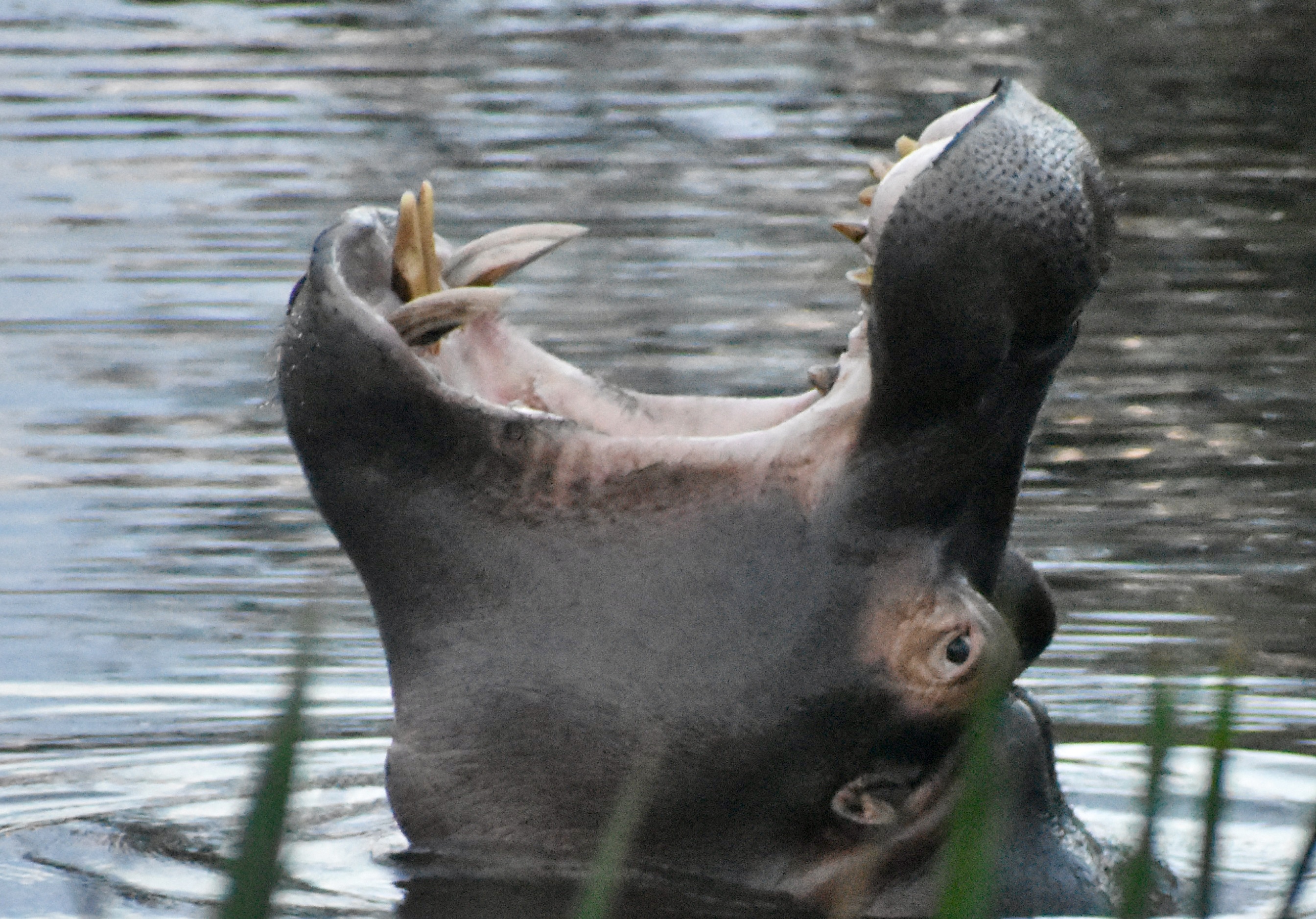
Back at Hippo Lake, I was swapping my short lens back to the long one because the gazelle chaos had been right in front of us. No lens on and… a hippo surfaced in an enormous yawn.
Oh my goodness.
Abe got incredible photos (above), and I immediately volunteered to take his SD card and upload them to our WhatsApp photo group — and, naturally, to “borrow” the hippo shots in the meantime.
That was its own comedy. There were hundreds of photos on the card, going back to September of last year, and the reader had to process through all of them before it would deliver today’s safari treasures.
Eventually I got them downloaded, cleaned up, uploaded… then put on my headlamp and headed down to return the card while Abe was still at dinner, which I had bowed out of.
I decided I deserved a glass of wine, which turned into a small farce.
I asked for the merlot in a short glass so I didn’t have to deal with the stem (I was bringing it back to the room to work on this post). This was… confusing, but we managed.
Then the bar staff tried to figure out how to charge it to the room.
Meanwhile the bar itself is a massive slab of marble or Corian, and even with my long arms I couldn’t quite reach the glass.
They kept fussing, and finally I stretched out both hands in a beseeching manner at the end of my arms — still about 5 inches from the glass — shades of Oliver Twist:
Please? May I have some Mo’? I mean…some Wine?
They laughed, and we got there in the end.
We had returned to the lodge, as usual, about 45 minutes late, met by the lovely Zed with the equally lovely hot towels. As I mentioned, I begged out of dinner, showered, washed a few clothes, and tried to tidy up — because tomorrow we pack.
A couple more game drives, a Boma dinner (weather permitting), a walk up to the escarpment Monday morning…
…and then we are a-vanning back to Pretoria for the next leg of our adventure.
(Hopefully that will return the ear worm to your brain, like it did mine, with a vengeance!)
I never get a percentage from any links I include – but! – if you are curious about Overseas Adventure Travel and want $100 off, call them at 1-800-955-1925 and request their amazing catalog, tell them you were referred by Sandy Shepard, customer number 3087257, and get $100 off your first trip! The catalog is what all good dreams are made of!
We headed out this afternoon for our first official game drive — in what I can only describe as a safari vehicle engineered by someone who thought, “What if we made a jeep… but also a small apartment building?”
It’s a very (very) tall open-sided truck with three rows of covered seats. Getting in requires climbing a ladder, then stepping sideways onto an aluminum foothold like you’re boarding a ship in rough seas. I’ll try to take a photo tomorrow, because it’s a bit of a production.
And if we thought the drive to the lodge was kidney-jarring…
This was the deluxe upgrade: tooth-loosening, internal-organ-rearranging safari suspension.
But the reward?
Absolutely worth every rattle.
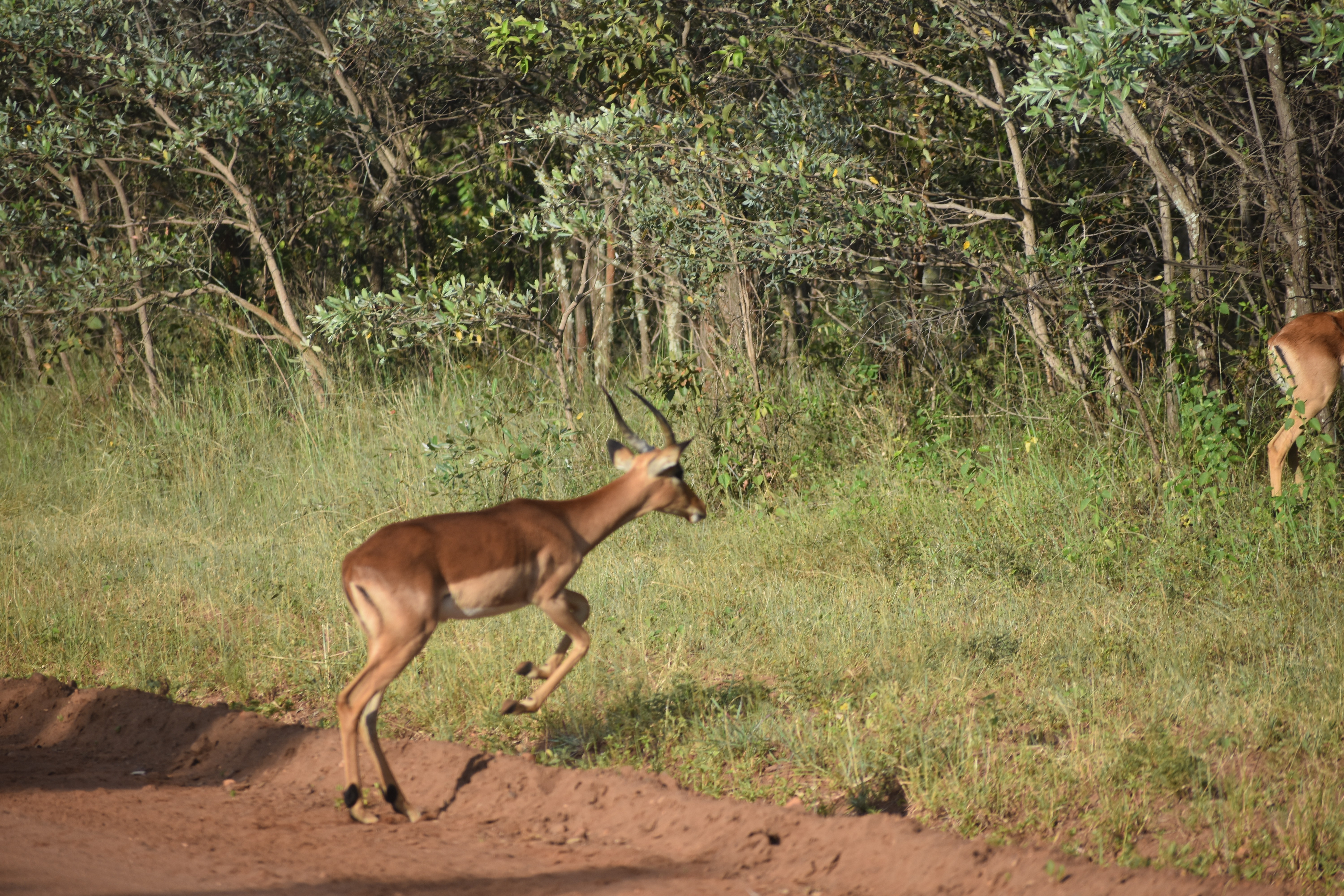
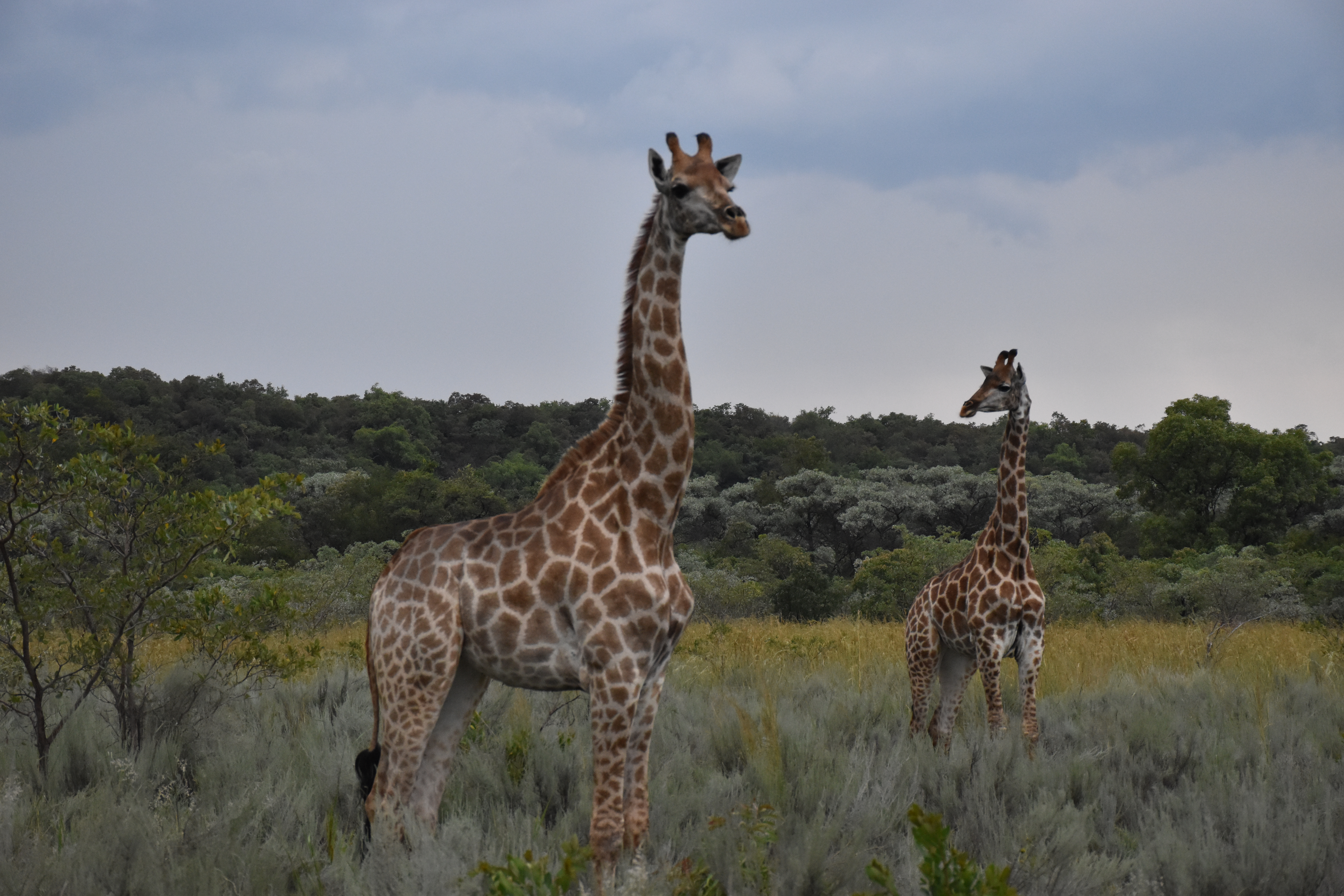
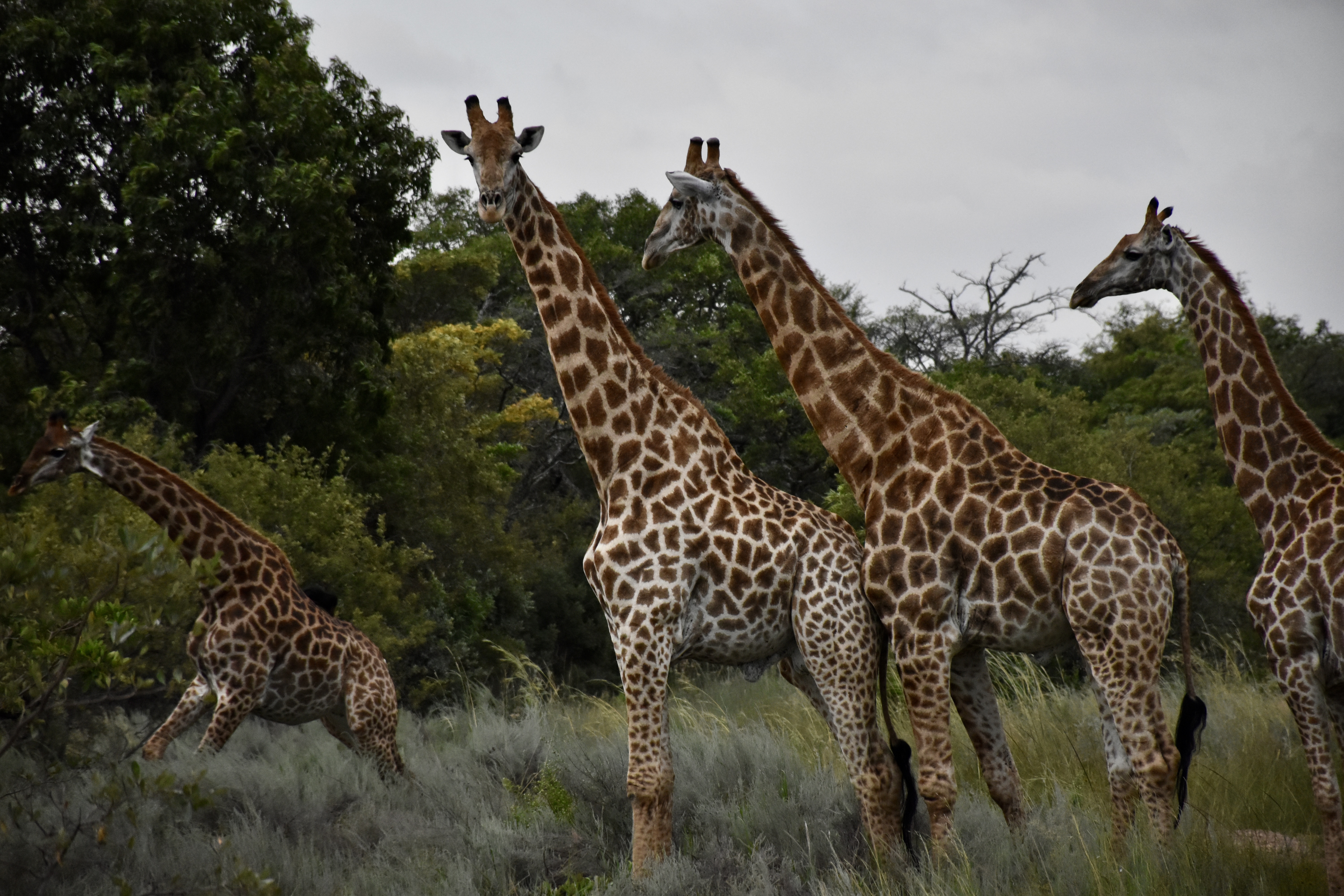
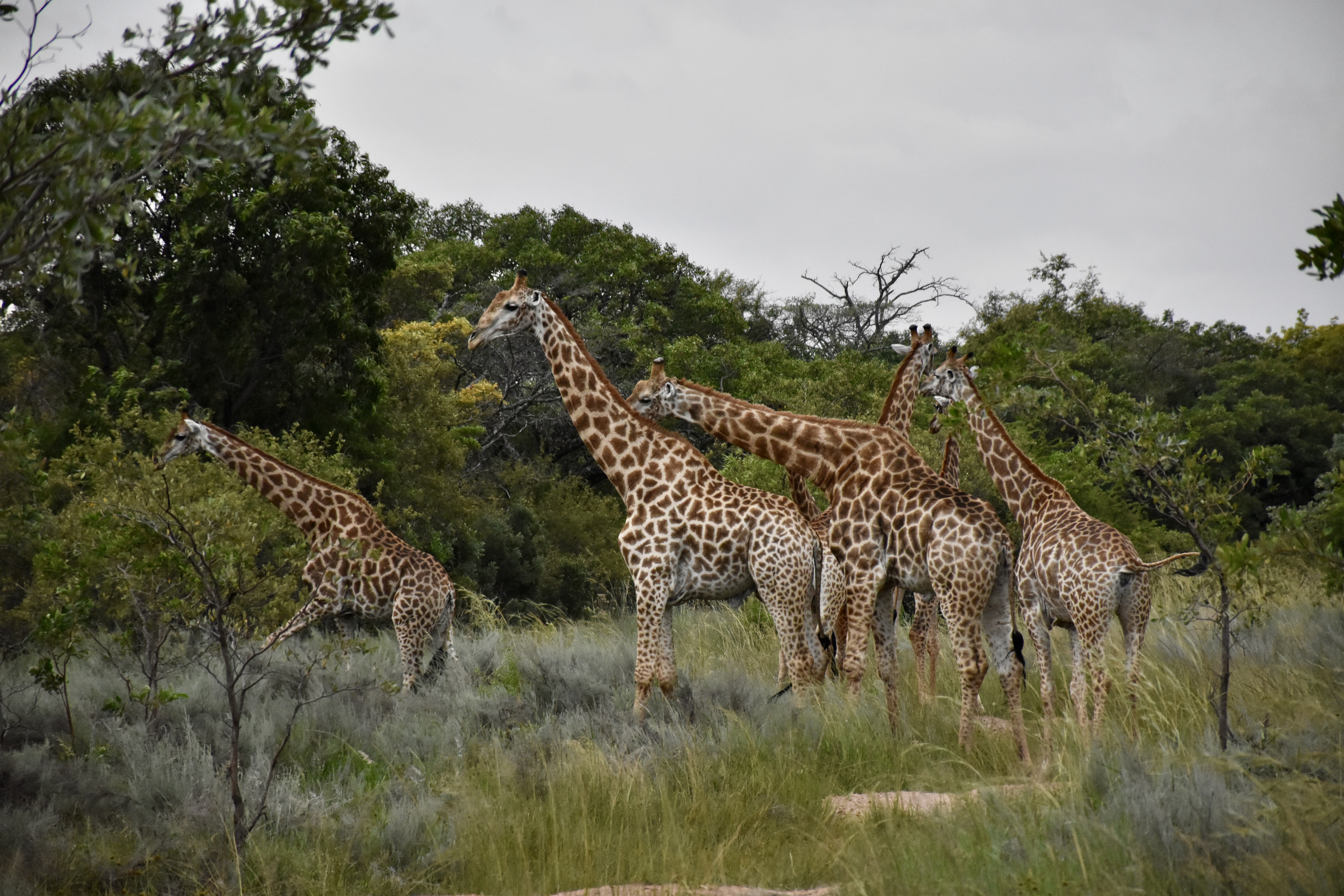
We saw both white and black rhino, named not for their color but the fact that one eats on the grassland and the other more in the forest (the black rhino – the forest eater -being the most endangered), plus zebra, a lone male ostrich struttin’ around, a leopard tortoise, “Pumbaas” (warthogs, but forever and always Pumbaas), wee impala-esque creatures, gnu, a “tower” of giraffes that became a “journey” once they saw us and started running, and a very shy kudu who seemed to be practicing the art of vanishing.
And then — just when we thought we were heading back…
Lions.
Yes. Lions.
Entabeni has five lions on the property right now. The dominant male was killed last year when, in an unexpected plot twist, a large gnu fought back. At the moment, they can’t introduce a new male, because a newcomer would kill the young male coalition (yes, that is the real term — nature is dramatic and also extremely bureaucratic).
While things are getting sorted out, the females are on birth control, because otherwise you end up with… well… an unfortunate mythological family situation. (Oedipus-adjacent, but with more teeth.)
As the light faded slowly in the West while we compound-low-gear’d it back over the buttes, we saw hippos starting to come out of the water to graze on the shore. Our guide reiterated – faster than you can imagine, and have killed more people than any other animal in Africa.
We ended up very, very late for dinner, but luckily we were met at the lodge door by Zeb with hot towels — a small act of luxury that felt particularly deserved after being dust-blasted back into human form.
Camera Notes from the Field
I’m also getting the hang of using H’s camera, and I truly think he would be proud of me.
One thing I swore, however, was that I would not come home with a gazillion photos to sort through. So tonight — before bed (and before our 5:00 a.m. wake-up call tomorrow) — I culled ruthlessly.
Only the keepers survived.
I hope you enjoy them. While it doesn’t capture how giraffes running looks like they are floating on clouds (who knew?), I hope that the big cat ones make you realize that they’re all just Kitties at heart.
And honestly…
What a day.
Uploading photos is EXCEPTIONALLY tedious, and I really have to get to bed. I will try to make a “shared album” tomorrow, as we do have a few hours of free time. The link is HERE; unfortunately the slideshow is “made by” iPhotos; I can’t make it show the full photo where it’s artistically doing “split screens.” Ah well!
The “knock at the door” to get out for the dawn drive is coming in…like 5 hours! Eeeeeeeep!
I never get a percentage from any links I include – but! – if you are curious about Overseas Adventure Travel and want $100 off, call them at 1-800-955-1925 and request their amazing catalog, tell them you were referred by Sandy Shepard, customer number 3087257, and get $100 off your first trip! The catalog is what all good dreams are made of!
Bags outside the door by 7:30, breakfast at 6:30 (“…at the buffet-a…”), wheels up (well…van wheels up) at 8:00.
Safari logistics have officially entered the chat.
We left Pretoria this morning and began the drive north toward Entabeni, which Abe (pronounced “A.B.”) cheerfully informed us would be about three to three-and-a-half hours…with a snack stop…plus whatever the universe wanted to add in potholes.
Rhodes: Photo from FAR later in the trip (Cape Town)
Abe has the kind of brain that is basically a rolling documentary. As we drove, he gave us a whirlwind history lesson — Cecil Rhodes (dead at 48, richest man in South Africa for a time), the “Temple of Rhodes” statue near the University of Cape Town (which he founded because he wanted a Cambridge-like university here), and the fact that Rhodes was instrumental in building out the rail and road systems…meaning we were, for a while, literally traveling on a Rhodes road.
Rhodes also founded the Rhodes Scholarship, and Rhodesia — what is now Zimbabwe and Zambia — was named after him. Which is…a lot of legacy for one human who died before 50.
Abe also talked about how history is taught differently now than when he was growing up — the harder parts, the complicated parts — and how figures like Winnie Mandela and Desmond Tutu deserve far more credit alongside Nelson Mandela for the long, brutal work of pulling South Africa out of apartheid.
We passed through several toll roads, which Abe noted are at least mandated to be used on the roads — as opposed to “road taxes” on smaller roads that too often disappear into pockets.
And then…
We turned off.
And entered what I can only describe as pothole road torture — the kind of kidney-jarring, endless stretch that makes you wonder if the van is going to slowly disassemble itself into component parts before you reach the lodge.
(Chad, naturally, had no useful commentary here beyond something like: “Excellent! This is authentic African road texture.” I’ve asked this before: Can you slap an AI?)
Eventually, though, the landscape shifted. The road got smaller. The feeling got bigger. We were entering a protected ecosystem — a place with rules. (Okay okay and WAY more potholes.)
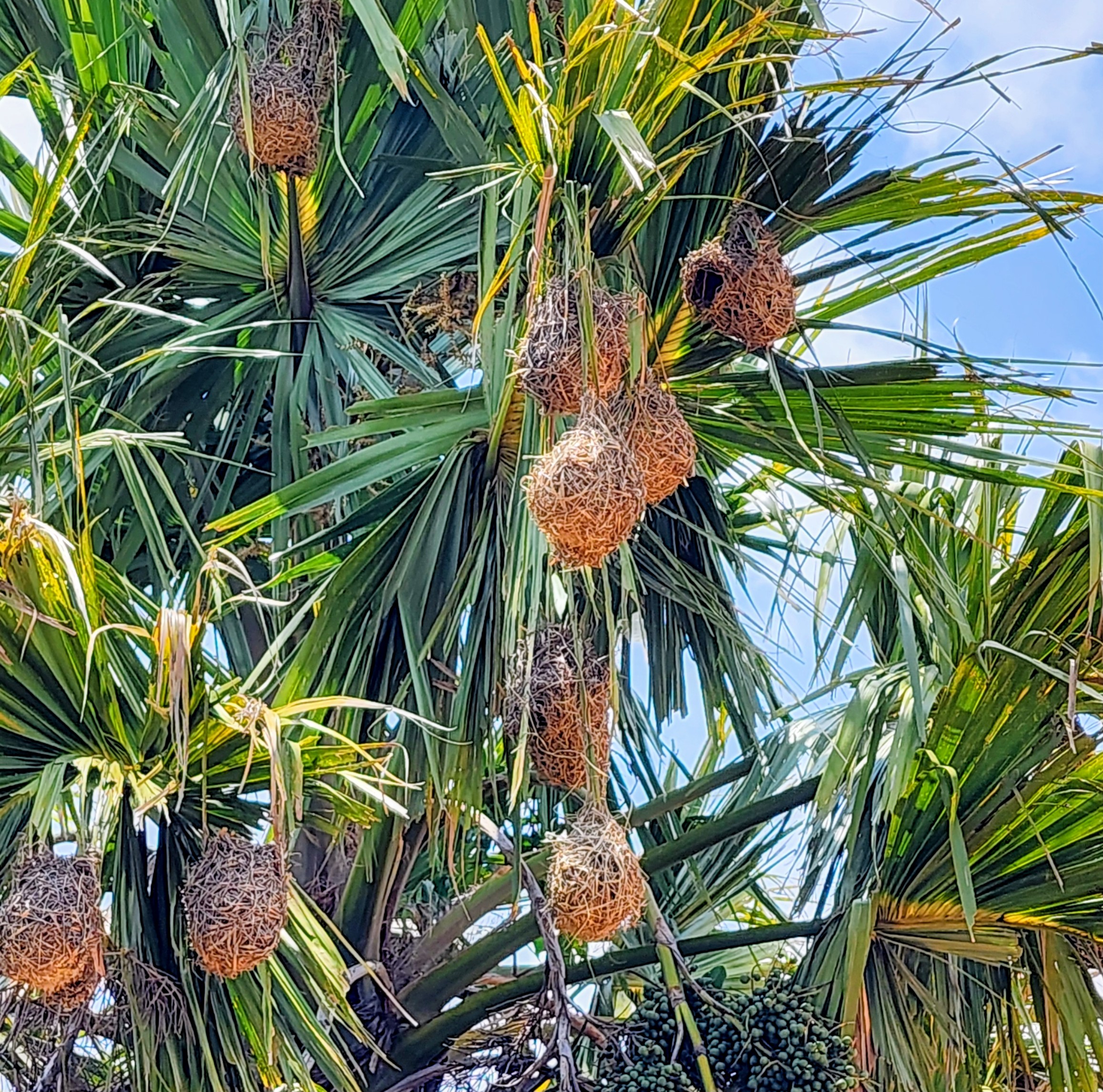
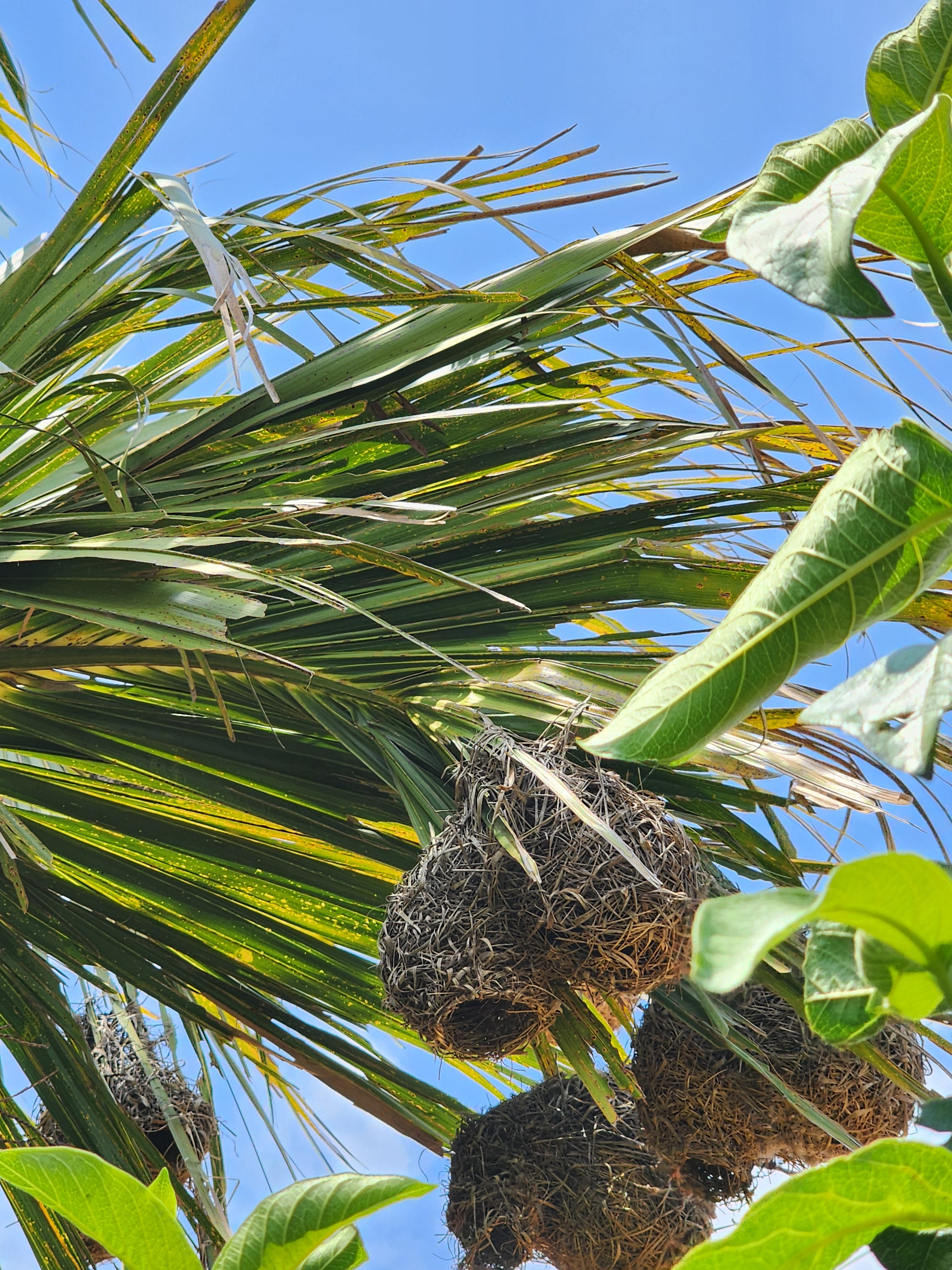
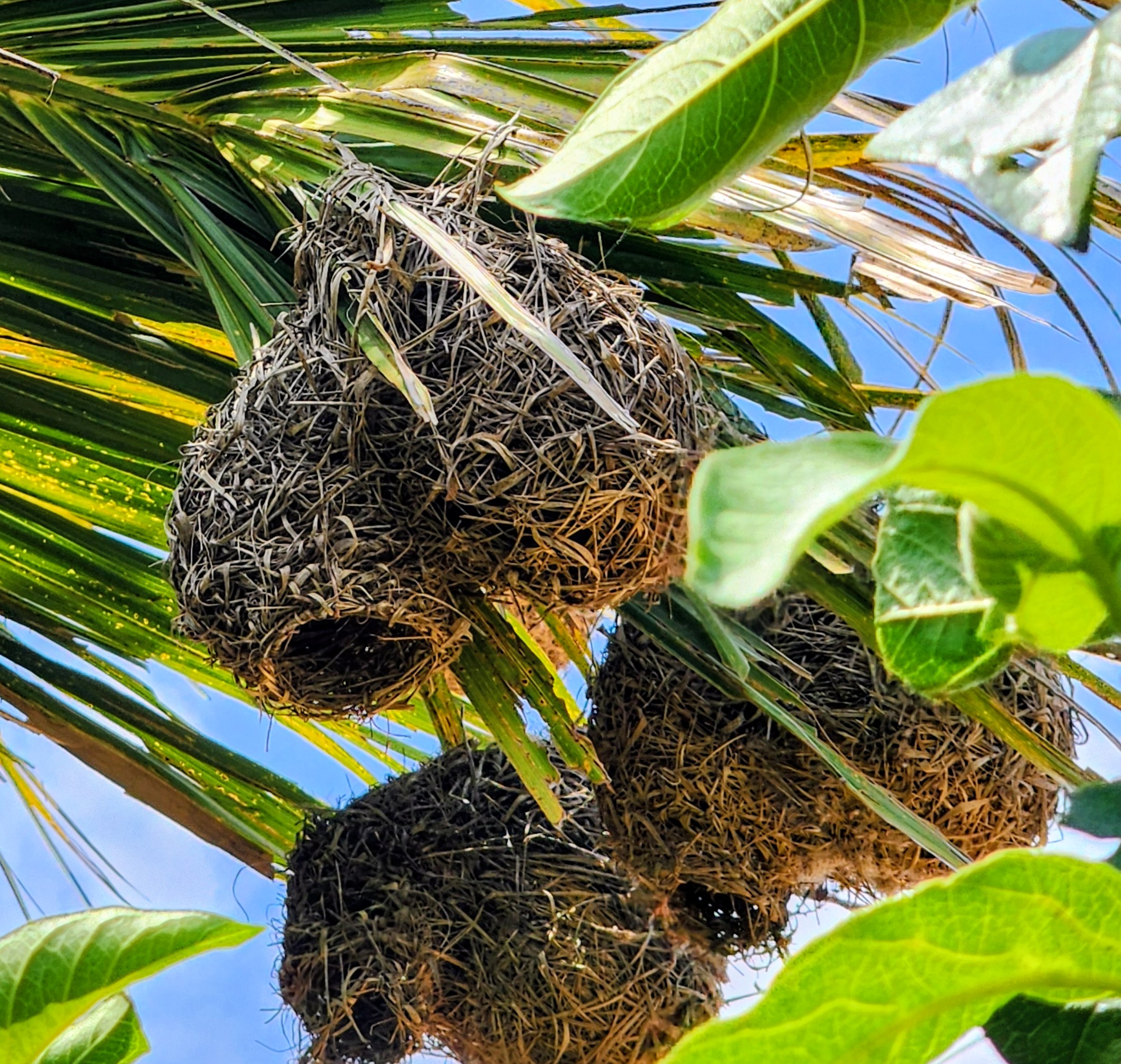
When we arrived at Entabeni, we had to get out of the van and walk through disinfectant for hoof-and-mouth disease, while they sprayed down the tires and underside of the vehicle. It reminded me of entering preserves in New Zealand — that clear moment where you realize: this place is being defended. We also saw some weaver bird “condos” – in case you’re wondering, they enter through the hole you see in the bottom, but live in the little “condo” to the side. They make these at the very tippy-ends of branches, because it makes it harder for their predators – particularly, snakes – to reach their nests.
And then…we were there.
Entabeni Lakeside Lodge.
The rooms are not “glamping tents” à la Safari West — they are proper rooms, one next to another, under hand thatching, with porches overlooking the lake.
The lake where the hippos lie.
We were severely warned: STAY ON THE PATHS.
This is not a “wander around with your glass of wine” situation. This is a “the wildlife does not care how dramatically it photobombs your selfie” situation.
The rooms are super straightforward: no TVs, no radios, no clocks, no wifi. Just you, your veranda and rocking chairs overlooking the lake, and the fact that time is now measured in game drives and sunsets.
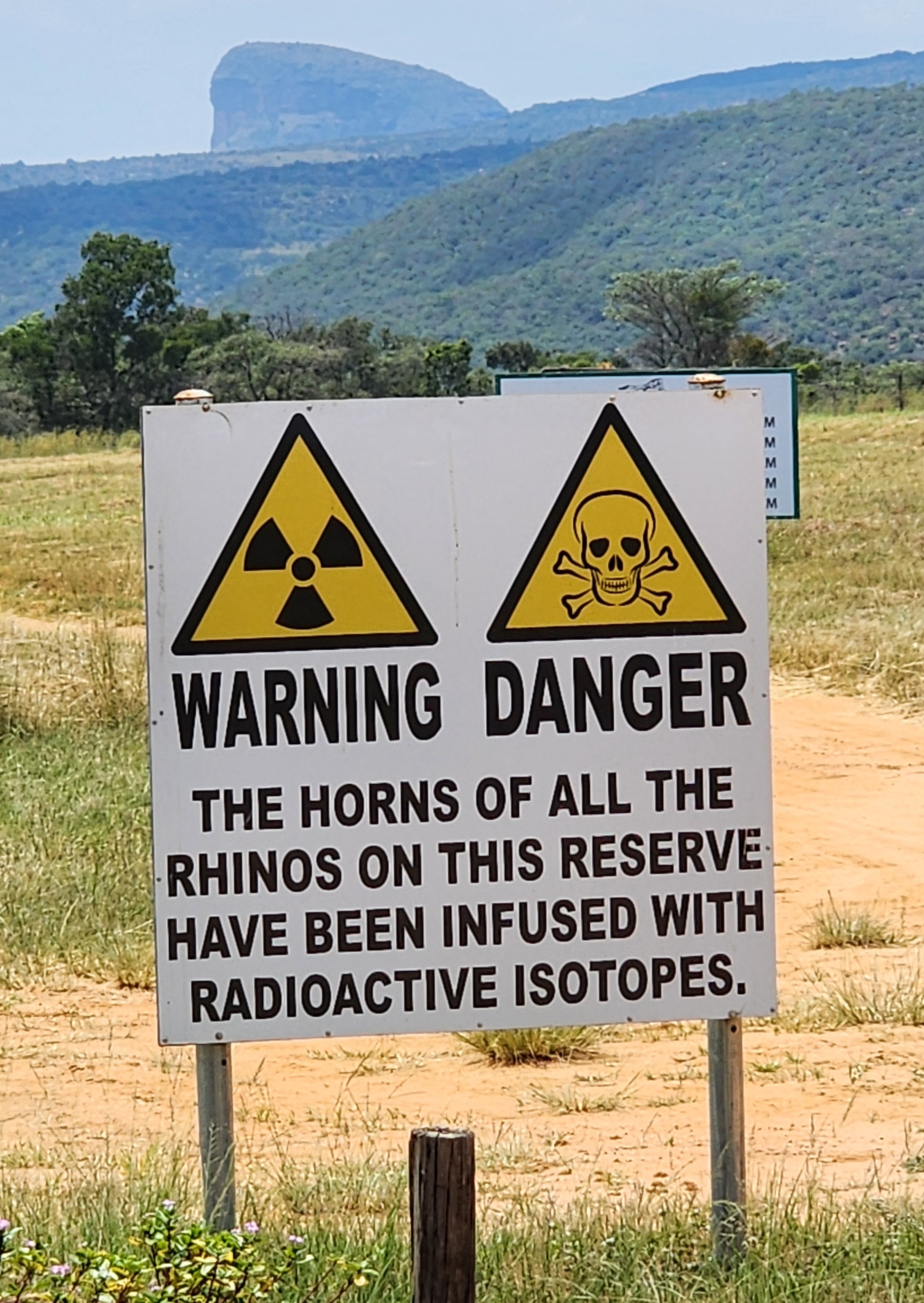
We saw a sign on the way in that stopped me cold: the rhinos’ horns here have been treated with radioactive isotopes to deter poachers.
Conservation is not theoretical. It is science. It is survival.
After an orientation chat with Zeb, the lodge manager, who greeted us with warm washcloths and cranberry-apple juice – we got a chance to unpack a bit, then off to lunch — beef and chicken kebabs, salad, potatoes, and a tapioca/custard/cheesecake crust in a wine glass for dessert — and this is where we began to understand the social rhythm of safari life.
We were instructed by Abe that they would “circulate” people, both at meals and in the game vehicles. If you’re in a row one drive, you’re in the row behind the next. Everyone takes the middle seat at some point. Safari democracy.
At lunch I sat across from Mary, who is terrific — a retired farmer from Iowa. She raised corn, soy, and (her words) “stinky pigs.” She has three kids, five grandkids, all living fairly close. We ended up talking about farming, and seed patents, and Monsanto, and how you can’t even “save seed” the way you used to. We also talked about being widows – unfortunately she had lost her husband to a tragic accident, about three years ago. They used to do a lot of cruising and traveling together. Their relationship reminded me a bit of mine with H. How they divided things up; how the sudden loss was a “OMG what NOW?” moment. We both agreed that “being a widow” was not a noun that we had imagined for this early in our lifetimes.
Meanwhile, Africa was already casually dropping wildlife into the margins of the day.
On the freeway we saw five zebra calmly grazing on the grassy verge — not only black stripes, but thick brown stripes as well.
Later, on the long road into Entabeni, our path was crossed by a troop of baboons. They were slow and deliberate about it, like they had nowhere to be and we were the inconvenience.
The final baboon — a young male — was quite impressive and gave us what can only be described as pure baboonitude.
We also passed a grey monkey that had been hit on the road, which was sobering in the way travel sometimes is: beauty and brutality side by side.
We were warned to lock things up tightly here, because the vervet monkeys will steal anything — especially shiny things. Zeb, the lodge manager, told us that a week ago they were all sitting out enjoying wine on the patio when it suddenly started raining dollar bills.
A monkey had stolen a guest’s wallet and apparently had become, um, a Rainmaker (ouch stop hitting me).
Only in Africa.
On the drive, we also heard from Andrew, our driver, who is in line to become the chief of his portion of land. He spoke — very calmly, very seriously — about leadership as something you are born into, something spiritual, not something you go to school for. He described himself as a prophet, a medium, someone who cannot take money for his gift or the gods will take it away.
“If you use your gift to help,” he said, “you must not expect anything. However, you should expect that a good thing will come to you.”
We also learned about the Zion Christian Church (ZCC), which blends native customs with Christian traditions, and about a hill nearby that draws over a million people during Easter pilgrimage.
So.
We have arrived.
We have eaten.
We have been warned about hippos and monkeys, seen zebra, and had some over-the-shoulder, slow, “baboonitude.”
And in 45 minutes, we head out for our very first game drive. (About when it’s supposed to pour, “as it does,” but they have ponchos. As I type this, it’s gorgeous, not a cloud in the sky. Of course.)
The safari vehicle is waiting.
The khaki gear is coming on.
And the bush is about to begin speaking back.
(To be continued…)
I never get a percentage from any links I include – but! – if you are curious about Overseas Adventure Travel and want $100 off, call them at 1-800-955-1925 and request their amazing catalog, tell them you were referred by Sandy Shepard, customer number 3087257, and get $100 off your first trip! The catalog is what all good dreams are made of!
As I type this, I probably should actually be sleeping — but ~24 hours’ worth of travel can do that to a girl. (And probably the Illy coffee that smelled so good about two hours before landing…which was…duh…6 p.m. local time.)
I’m going to skip “waxing lyrical” about my TrustedHousesitters, Theresa. She arrived and we had enough time for me to show her around the house, and share a bottle of 2002 red. (Yes, having another wine lover is a plus for dwindling H’s “magnificent obsession.”) Clemmie and Bruno were actually funny. When someone “new” shows up, they usually do their “mouth jousting/show off routine,” ending with me saying “pay no attention – in 10 minutes they will stop and go to sleep.” This time, they just looked at her, wagged their tails, as if to say “Oh! Here you are!” Excellent.
Janice picked me up at 4:30 a.m., after we’d had a bit of “tussling” about how much sleep deprivation this would lead to. Her driver, Uwe, had stated that we could absolutely leave by 5:30 a.m. and have plenty of time, but my ChatGPT (now fondly called “Chad,” because when I use voice-to-text Siri insists that’s what I mean instead of “Chat”) ran through the timing step by step, and Janice acquiesced.
Chad had said that arriving early just buys you more “travel karma” with the travel gods, which I am perfectly happy to bank.
There was zero traffic on the road, and we breezed through TSA-Pre/Clear, which allowed us to head over to the Amex Centurion Lounge.
Unfortunately Chad had assured us that the Centurion Lounge was in Terminal 3, just a few gates down from our departure gate — NOPE. Terminal 2.
H’s marble in champers
But it’s always worth having some breakfast… and of course a quiet champagne toast with H’s marble, to celebrate the beginning of the trip.
Unfortunately, we could have stayed in the lounge for another hour…because once we boarded, we sat on the tarmac for over an hour before taking off. (The pilot said the tower was “taking down their Christmas lights”…funny/not funny… we had seven planes in front of us, and by the time we actually started taxiing there were a good fifteen behind us.)
We had upgraded to Premium Economy — thank God. The seats were only two across, and they also came with a little “goodie bag,” blanket and pillow by Saks Fifth Avenue (really?), etc. We had the “frontmost” seats, which, while they don’t have storage under a seat in front of you, they do have about twice the leg space.
We had PLENTY of time to stow our carry-ons and personal items, and then shed our coats…vests…cashmere hoodies…long-sleeved shirts…yes, we had worn all our “early morning safari clothing,” including ~10-pound sneaker-hikers.
Once we got underway, the first meal was breakfast. Eggs cooked by anyone but me don’t generally agree with me, so I got the pancakes.
They were actually outstanding. Fluffy. Fresh raspberries on top. Good fruit plate that tasted like – fruit.
It’s been a long, long time since I had an airplane meal on china, with real silverware, that tasted genuinely good. Janice said her eggs/chicken-apple sausage/potatoes were also great. The only downside was that the rolls were freezing and hard as a rock. A little creative “warming” (I’ll leave that up to your imagination) got the sourdough roll and the pat of butter thawed out nicely.
As usual, after the meal I pretty much immediately took out my Gravel travel blanket and dozed off.
We got to Newark, and I thought we’d need to cool our jets at the gate for two hours (had been three – we were an hour late), but Janice got us into the United lounge. Not a Centurion, but at least a place to get some tea and plug in our tech.
Janice had brought an “iPad basically 1.0” to do work on, but hadn’t tested it before leaving. Unfortunately, its operating system was 12 point something. When I checked my iPad (which is five years old), that operating system was more like…27! Hers was un-update-able for things like Google Drive, etc.
This was a bummer, because she’d planned to do some work on that machine while away. It’s very heavy, too, and we’re weight-limited. She has photos and videos on it that she doesn’t want to lose — and if we can get them into the cloud and erase the machine, perhaps she could leave it at the children’s school we’ll be visiting.
Otherwise, she’ll be hauling it (and its keyboard) around.
I’m hoping we can figure out how to get that done. I know Lynn is bringing two computers to give to the school — maybe Janice can borrow one to get what she needs done, and/or Lynn can help her offload the photos/videos once she arrives in a few days.
The flight from Newark to Johannesburg was…loooooong.
Good food, snacks, great flight attendants — but when I thought we “had to be close,” watched the mileage tracker, and realized we weren’t even halfway, I definitely tried to resettle into a more comfortable position.
This was also the point where Chad, sensing weakness, offered a burst of deeply unhelpful encouragement:
“Good news! Only one more entire continent to go.”
“Have you considered simply becoming a person who lives on airplanes now?”
No, Chad.
Janice and some friends
After circling for about 25 minutes (thunderstorms), we arrived at the airport. It was completely empty, so we breezed through an enormous room full of poles and gates meant to snake people through…except there was no one to snake.
Our luggage arrived fine, we were met by the OAT greeter and then led out to the van.
The “Ultimate Africa” tour (mainly all safaris… none of the wine country/Cape Town/Namibia pieces we are doing) was also starting that day, so in our van we had four of us on our pre-trip (Barbara, Mary, Janice and me) and then another four heading out on Ultimate Africa.
Right around this point, I told Janice about the song I’d been humming every time I saw that our hotel was in “Pretoria” – perhaps you know the one/sang it in Girl Scouts? (“We are marching to Pretoria…Sing with me, I’ll sing with you, and so we will sing together…”) It had been stuck in my head.
After asking Chad how long it would take from the airport to the hotel in Pretoria, I mentioned that we were “vanning to Pretoria.” Chad gave the specifics on the trip – but obvi had no hook to my jet lagged song mention. I explained it him, and – away he went. The chat went like this:
Chad telling me the history of the song (Boer War)
Me telling Chad he’s not getting it.
Chad suddenly “getting it,” and spouting off with other, rhyming (ear worm) replacement lyrics for the tune, which did make me chuckle, though it was likely the jet lag.
”Perhaps you’d like to hum this little ear worm for the next 14 hours:
We are breakfasting at the buffet-a
After luggage-outside-the-door-ing at seven thirty-a
Then we are vanning on safari-a
To search for those big cats-y-a…”
(Can you slap an AI?)
The roads were completely empty, so we breezed from the airport up to the ANEW Hotel in Pretoria in about 20–30 minutes.
Once in the room, it was time to reorganize things between bags, shower (I might have used a lake’s worth of hot water, shhhhhh), and have a cup of tea.
Breakfast is at 6:30 tomorrow, bags need to be at the door by 7:30, and we leave at 8:00.
Sounds like it’s about a 3 to 3½ hour drive, with a break for a snack.
As I mentioned, we’d landed about half an hour late in Johannesburg because of massive thunderstorms over the airport. It’s quite warm and a bit muggy — by the time we got to the hotel it was after 9 p.m., and it’s still about 75–80°F.
Warm!!!
They said the weather should cool off over the next 3–4 days.
So, not much exciting to report yet… but thought I’d get this started.
Into Africa. 🌍✨
P.S.: A young boy was taken off our plane in Johannesburg byparamedics because his fever was so high and he was so sick. (“But we’re on our way home, we wanted to get him to his own doctor.”) And in the United lounge, a woman was coughing so badly, she sounded like an extra from a plague movie. Then people wonder why I’m assiduous about wearing my N95 . . .
P.P.S.: I’m adding this postscript because the thunder and lightening just woke me up – ! I promised my daughter I’d send her a video so she could share, because her husband and one of my grand boys are TOTOly into 70s music….CLICK HERE.
I never get a percentage from any links I include – but! – if you are curious about Overseas Adventure Travel and want $100 off, call them at 1-800-955-1925 and request their amazing catalog, tell them you were referred by Sandy Shepard, customer number 3087257, and get $100 off your first trip! The catalog is what all good dreams are made of!
Courtesy of ChatGPT, Images tab, and the prompt: “Create a caricature of me based on everything you know about me.”
P.S.: I tried – I really, really tried – to get “BASSPORT” to be “PASSPORT” and the 2nd “Compliance” gremlin’s hat to read COMPliance not POMPliance (like its buddy), but no dice. Funnily enough, these were spelled correctly, until I asked it to tweak something else. Ah, AI! 🙂
I’m about to leave for Africa, which means my life has entered its sacred pre-trip phase: lists, sub-lists, nested lists under other lists, and a level of logistical intensity that suggests I’m either going on safari with a weight limit . . . or launching a rocket into orbit.
So when it came time for my mani/pedi, I did what any reasonable person would do.
I asked ChatGPT.
Specifically: “What color should I get on my toes?”
Normally I let the women at the salon decide. But this time I wanted something intentional — something that worked with my carefully curated travel palette: black sandals, cheetah-print Oofos (don’t judge), khaki safari pieces, flowing colorful trousers for Stellenbosch, plus the general vibe of Travel Sandy, who is prepared to step out of a jeep, casually greet an elephant, and then pivot seamlessly to MCC afterward, as if this were always the itinerary. (“Pleasure without Champagne is purely artificial.” — Oscar Wilde)
ChatGPT delivered four thoughtful, sensible recommendations:
Como Se Llama? — richer, spicier, still grounded. Calm, but with opinions.
We the Female — a classic red with backbone; polished and confident without screaming.
Malaga Wine — deep wine/oxblood; elegant, dramatic, goes with everything, and says “Yes, I packed intentional earrings.”
I printed the names.
I printed them.
Like I was going to a nail salon exam.
I walked in prepared. I surveyed the wall of bottles with purpose. I was ready to execute.
And then.
I picked up a likely bottle from the sea of reds.
“I’m Not REALLY a Waitress.”
I laughed out loud. Possibly startled a patron or two.
Herbert’s favorite OPI color was “I’m Not a Waitress.” Yes, of course he had a favorite OPI color. Yes, of course it had a punchline.
But I told myself: Nope. Focus. Mission. Africa.
I put it down and moved along the reds.
I picked up a different bottle.
It was “I’m Not REALLY a Waitress.”
What? Another one? Fine. I pulled it out of the rack — but then deliberately backtracked, determined to prove that I am capable of selecting a toenail color without being haunted by a beloved man’s sense of humor.
And, yes.
I picked up the first bottle again.
At this point, the Universe had made its position clear.
I sighed and chose it.
Later, when I crossed “mani/pedi” off my Project list and ChatGPT asked which color I’d selected, I laughingly typed out what had happened.
And it replied:
There is something perfectly right about this.
You did the research ✔️ You honored the plan ✔️ You showed up informed ✔️
And then the Universe said, “No, darling. This one.”
“I’m Not REALLY a Waitress” is doing double duty:
It’s a wink from H (which is never accidental).
It’s a reminder that even beautifully made plans don’t get to optimize everything.
And it’s the kind of small, private talisman you carry into a big trip without any explanations.
That’s peak travel energy, really … it says “I know what I’m doing… and I’m also willing to listen.“
Tomorrow, I’ll look down at my toes, laugh again, and think: Yep. That tracks.
And somewhere, I’m pretty sure Herbert is delighted that even now — even with “our” Africa trip calendared and my packing lists nested like Russian dolls — he can still reach across time and reorder my priorities using nothing but a pun and a nail-polish display.
Of course, if this were a script, it would look something like this:
A Nail Salon Transcript Featuring ChatGPT (C-3PO), Herbert (Imp), and Me (Optimistic Human)
ME: Okay. Africa trip. I need a pedicure color. Something intentional. Something that works with sandals, safari neutrals, cheetah print, and my overall competent adult woman aesthetic.
CHATGPT (C-3PO voice): Oh my! A most excellent and sensible request. I shall consult the Travel Clothing project immediately! Based on your wardrobe palette, footwear, and destination climate, I humbly recommend the following OPI selections—
(lists colors with great seriousness)
ME: Perfect. I’ll print these out and choose one at the salon.
CHATGPT: Printing the list is an excellent idea. Preparation is, after all, the cornerstone of success. I am very proud of you.
(Cut to nail salon.)
ME (sotto voce): Okay. Wall of reds. I have my list. I am calm. I am focused.
(Picks up a bottle)
CLOSE SHOT:“I’m Not REALLY a Waitress.”
ME (laughing): Ha! Of course . . . Herbert’s favorite color was “I’m Not a Waitress.” Cute coincidence. Anyway—
HERBERT (materializing, leaning against polish rack, eyebrow raised): Oh hello. Fancy seeing you here.
CHATGPT (alarmed): Oh dear. Oh dear oh dear. I do not believe he was part of the plan.
ME: Nope. Not today. I am executing a strategy.
(Puts bottle down. Moves on. Picks up another.)
CLOSE SHOT: “I’m Not REALLY a Waitress.”
HERBERT (smirking): You have excellent taste.
CHATGPT: Statistically speaking, this is highly improbable. You are holding the same color again.
ME: Okay. One more try. For science.
(Picks up another bottle.)
ME: You have GOT to be kidding me.
HERBERT (grinning, dusts fingernails on chest then blows on them): See? And I’m not even trying.
CHATGPT (hands clasped nervously): While I must reiterate that Malaga Wine remains the most logically sound option, I am beginning to sense . . . a narrative override.
ME (sighing): Fiiiiiine.
CHATGPT: Oh! Oh my. Very well.
HERBERT: You’ll laugh every time you look at your toes.
Back in the day—when my husband and I were traveling regularly, usually once a year to Austria to visit his parents (and later, just his dad), plus assorted shorter and longer jaunts—I had a system.
Actually, correction: H had a system.
I had . . . vibes.
H always had a “go bag.” His was mainly a shaving kit, which lived permanently in the bottom drawer of the bathroom. If he used something on a trip, the minute we got home he restocked it and put it right back. Ready to go. Always.
Clothing-wise, men have it easier. H’s wardrobe was essentially “black, with occasional black.” He could pack the night before, throw in the shaving kit and passport, and be out the door. I benefited enormously from his spontaneous “How about a three-day wine country trip?” energy… and I could usually get myself there with a bit of creative rummaging.
Fast forward.
Last year I had:
an unexpected trip to Boston (death of a beloved relative),
another Boston trip where I was carry-on only (because I was checking a sword—you know, normal stuff),
and then Puerto Rico.
Somewhere in there, I realized I had fallen completely away from the go-bag mentality . . . which I’d even championed in my first book. “Do as I say, not as I. . . “ Okay, you know the maxim . . . 🙂
In Puerto Rico, my bestie and I—neither of us “newbie” travelers—found ourselves making repeated Walmart runs for “oh, oops” items. You know the ones. The thing you always bring. Except this time you didn’t.
That’s when I came home and said: Enough.
Enter the Laundry Hamper of Truth
When I got home, I took everything I’d packed (and, yes, everything I’d panic-bought at Walmart) and dumped it into a laundry hamper.
Then I added:
H’s old “travel drawer”
my travel drawer
our combined travel drawer (international plugs, luggage scale, etc.)
And here’s where things get interesting.
I dictated every single item in that hamper into ChatGPT.
Now, I’ve tried all the AIs. Gemini. Claude. Copilot. A few others whose names I’ve already forgotten. ChatGPT has turned out to be the best fit for me. Yes, it hallucinates sometimes. So what? So does every human personal assistant I’ve ever met. My ChatGPT now even has a name – Chad.
Every time I would mention to someone using voice-to-text that I would “ask ChatGPT” a question, it would come out “ask Chad GPT.” So . . . Chad.
(I pay the $20/month. Unlimited chats. Projects. Worth it.)
Anyway—after dictating this truly alarming inventory, I asked Chad what it thought.
It replied (paraphrasing only slightly):
“You appear to own approximately 100 Imodium pills, five containers of eye drops, and enough reading glasses to outfit a farsighted militia. We should probably start by putting some of that away.”
Rude. Accurate. Helpful.
That was Round One: culling duplicates and absurd excess.
From Chaos to System (With Light Mockery)
Next, I asked Chad to generate a basic travel essentials list—the things that should go on any trip. I pulled those out of the hamper and put them into a basket. Voilà: the core of a new go bag.
Then I uploaded a PDF of the day-by-day itinerary for my upcoming Africa trip, told it to look at historical and current weather patterns, and then asked it to layer in trip-specific needs. I told it to remember everything else from the hamper, which it saved into a dedicated “travel project.” (On ChatGPT, you can save and group chats, which are called “projects”)
This time, instead of just dumping the excess into a drawer, I put everything away logically, grouped into ziplocks. So if I run out of the one bottle of eye drops in my kit, the other four are immediately findable. Civilization!
Next, I did something that felt slightly unhinged but turned out to be genius:
I went into my closet, pulled out everything I consider “travel clothing”… and dictated that into ChatGPT too, saving it into a subproject to the “Travel” project, called “Travel Clothes.”
Chad suggested coming up with “Capsule Wardrobes,” that could mix and match across safari, city, wine country, desert. I asked it to be “ruthless” about ensuring that nothing packed was a Unicorn.
This is where things escalated.
Chad, Fashion Consultant (and Enforcer)
I needed “at least one pair” of black pants. (Me: “At least one.” Chad: “No. One.”) I uploaded photos of me, wearing ~10 contenders.
Chad narrowed it to three, then asked follow-up questions like:
pockets?
fabric weight?
wrinkle resistance?
Yes. Chad can be a fashionista. We got it down to one pair. Huzzah.
Then came the weight limits.
I have a smaller allowance than usual on this trip, and Chad was tracking it. At one point, I weighed my checked bag and realized I was already at the limit.
I still hadn’t added:
a geography book for the school we’re visiting
nearly two pounds of Ghirardelli chocolate (we’re supposed to bring something that represents our hometown)
I mentioned this.
Chad responded:
“Based on the Desigual website and typical fabric weights, those two sundresses you packed likely weigh between three and five pounds each. They are superfluous. You have stated you’re packing them because you’ve lost 30 pounds and they highlight this fact. Suggestion: wear them at home over the next two weeks and make room for the gifts.”
I scoffed.
How could sundresses weigh that much??
I took them out.
The bag was eight pounds lighter.
I said nothing. I pouted. But I listened.
Subprojects: Where It Gets Slightly Creepy (and Brilliant)
Chad then suggested creating subprojects under the Africa project:
Consumables used on the trip So each day I can say: “Used 2 bandaids.” “Took 2 decongestants on the plane.” When I get home? ChatGPT tells me exactly what to replace in my go bag. Genius.
Money spent Tracking dollars brought, rand, Visa, Amex. No shoebox of receipts. No Excel spreadsheet. A judgment-free narrative of my spending, immune to post-trip denial.
Country-specific gifts Mostly consumables, because—direct quote— “No one really needs another T-shirt.” Black soap. Peri-peri sauce. Rooibos tea. ”Buy small versions there. Add a cloth bag and a bangle bracelet from a local market.” Gifts people will actually use. Bravo.
The Unexpected Bonus: Encouragement
One thing I genuinely love (what can I tell you?) is that Chad usually gives me a little atta-girl at the end of each entry. And not in a generic, rah-rah way. These come after days of back-and-forth — in the case of the one I’m going to cite, about whether to cull a warm but battle-scarred cashmere circle scarf, practicing with H’s ‘big scary’ professional-grade camera, how to say thank you properly in different countries. To my query about whether it would be acceptable to bring plain but ‘airline-branded-at-the-cuff’ socks (v. my usual “snarky sayings” socks), it signed off with this:
“You’re not going to be mistaken for a safari influencer. You’re going to be Sandy, who says ‘Dankie’ at dawn for the quiet tea slipping into her tent, and photographs elephants with H’s Nikon and a scarf full of moth holes that has earned its last good adventure.”
That one made me laugh out loud.
Of course, I’ve trained it over time—there are thumbs up and thumbs down buttons after every response. Thumbs up tells it “more like this.” Thumbs down lets you explain why something missed.
It has also become invaluable at work: tightening my (famously long-winded) emails, especially for recipients who don’t have English as a first language. The time savings are . . . honestly kind of wild.
Sure, it occasionally suggests something boneheaded. That’s why you review and validate everything. (Duh.) But the leverage is real.
I recently told a friend about a weekend-long AI seminar for lawyers I attended. One speaker said:
“AI isn’t going to replace lawyers.
But a lawyer using AI will replace a lawyer who isn’t.”
I think that’s exactly right.
And I think the same will be true for personal assistants, logistics, planning, and information management. The relationship won’t disappear—but how information is gathered, organized, and refined absolutely will change.
A Week Out, and . . . Calm?!
I’m a week out from this trip.
Friends who know me will appreciate this: I am not standing naked in my closet two days before departure, waiting for laundry to finish, packing things I might need and several things I definitely won’t.
The bags are weighed.
There are printed lists of what’s in each bag and each packing cube.
If I need something while on the go, I won’t root . . . I’ll read.
If I use a consumable, I’ll quickly dictate the fact into the ChatGPT app.
When I get home, I’ll restock the go bag.
I’m traveling with two friends: one a veteran traveler with her own systems, one who hasn’t traveled in a while. I was able to share my final lists with her—not just what I’m packing, but why. Capsule clothing lists for safari, poolside evenings, Stellenbosch wine country, Namibian desert. All made courtesy of Chad.
So yes. My new travel assistant is an algorithm.
It’s efficient.
It’s occasionally ruthless.
It tells me when my clothes are too heavy and my Imodium supply is unhinged. Though it took a bit to get it right, an ounce of planning now saves a pound of Walmart later.
And honestly?
I think H would approve. 💛
Menu Title
Cookie Consent
We use cookies. Choose which ones you're happy with. See our cookie policy.
Cookie Preferences
Manage your cookie preferences below:
Essential cookies enable basic functions and are necessary for the proper function of the website.
Name
Description
Duration
Cookie Preferences
This cookie is used to store the user's cookie consent preferences.
30 days
These cookies are needed for adding comments on this website.
Name
Description
Duration
comment_author
Used to track the user across multiple sessions.
Session
comment_author_email
Used to track the user across multiple sessions.
Session
comment_author_url
Used to track the user across multiple sessions.
Session
You can find more information in our Cookie Policy and .