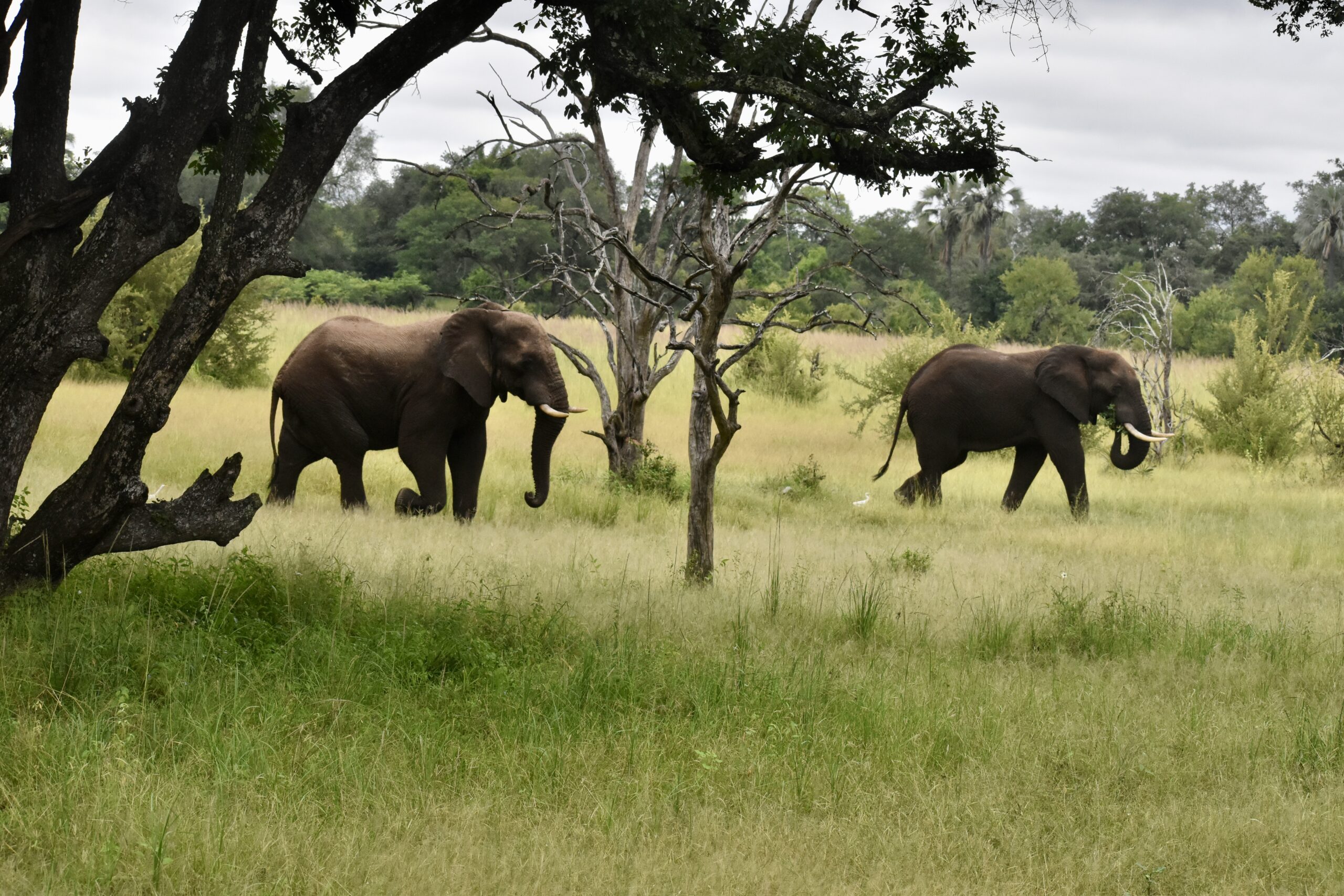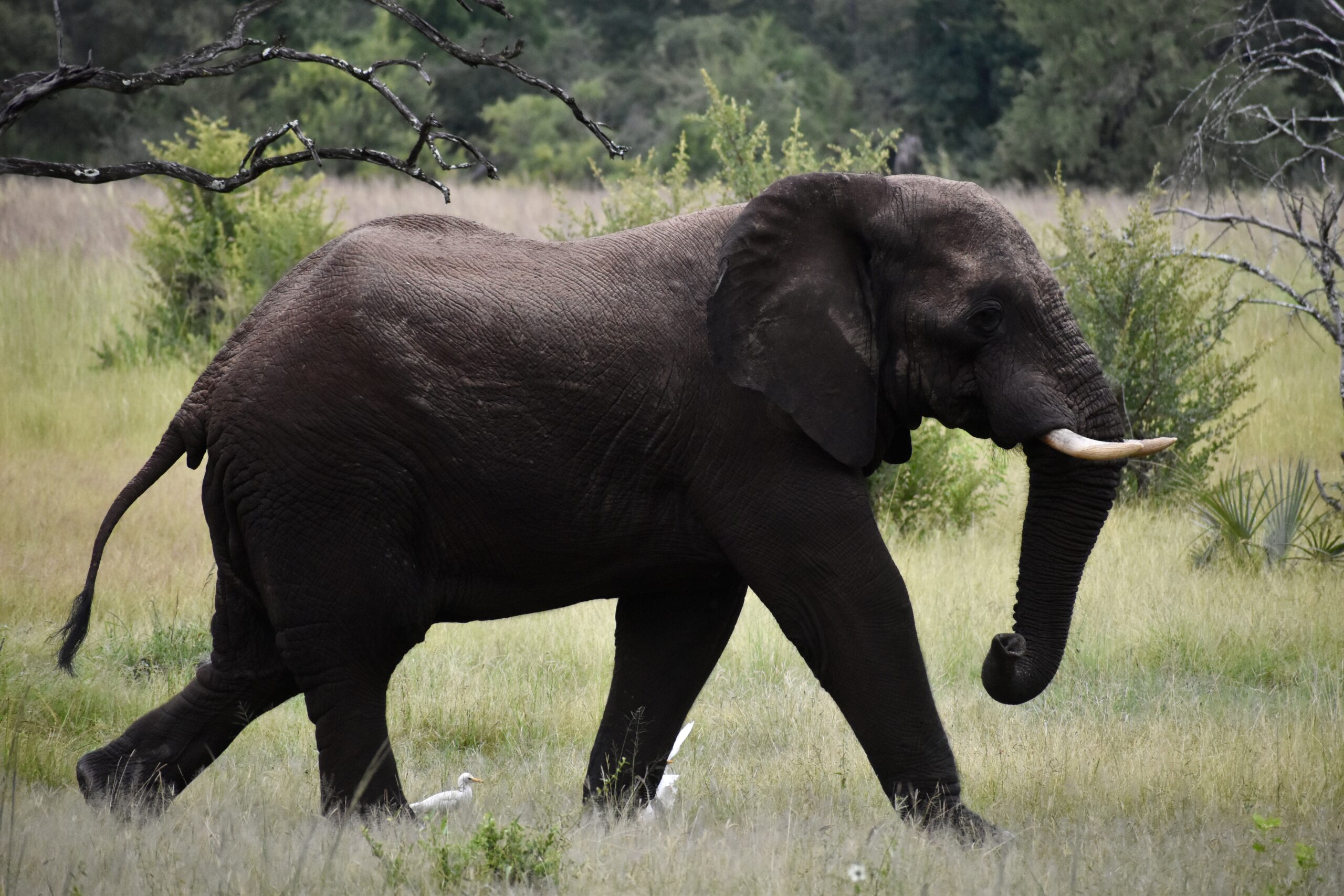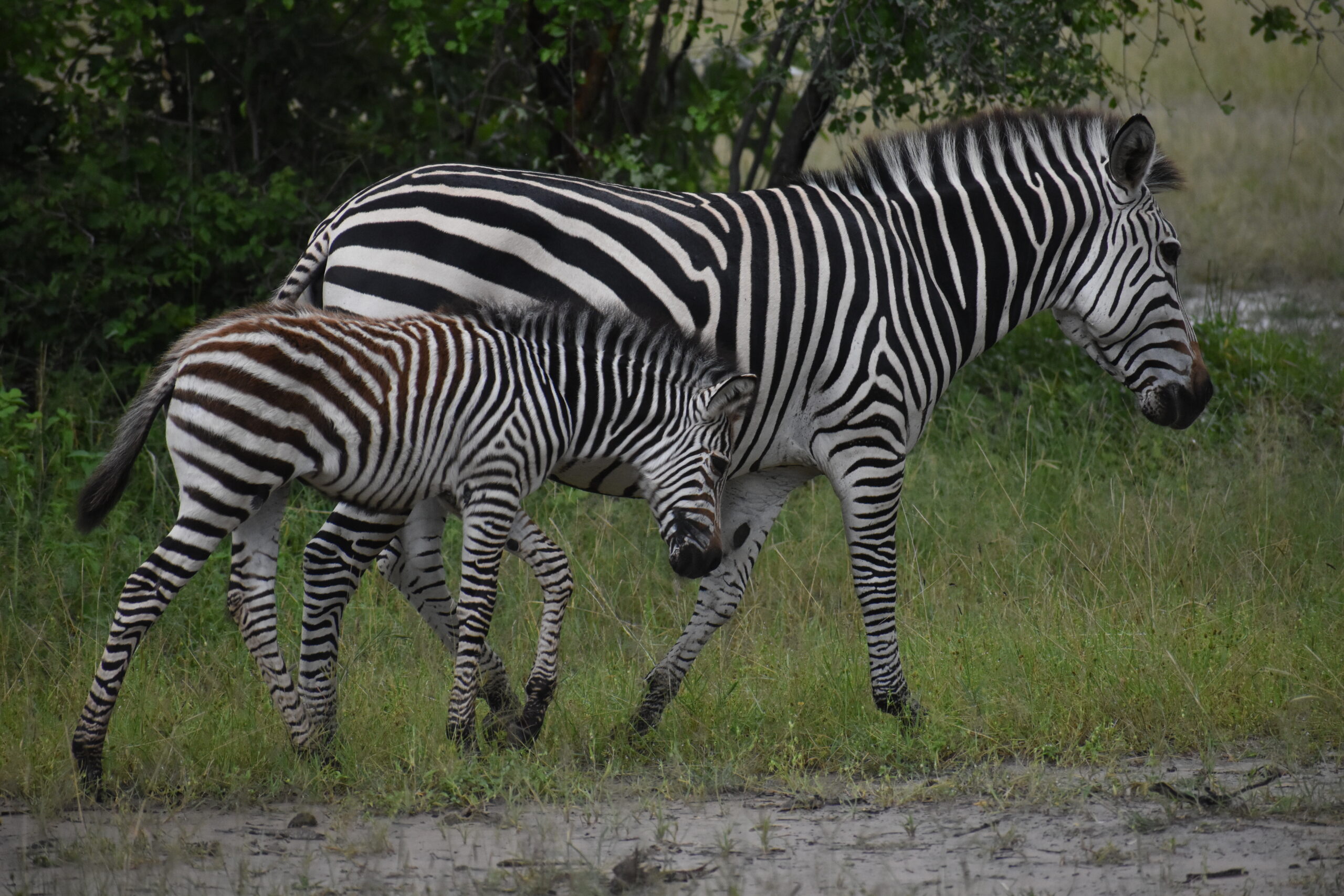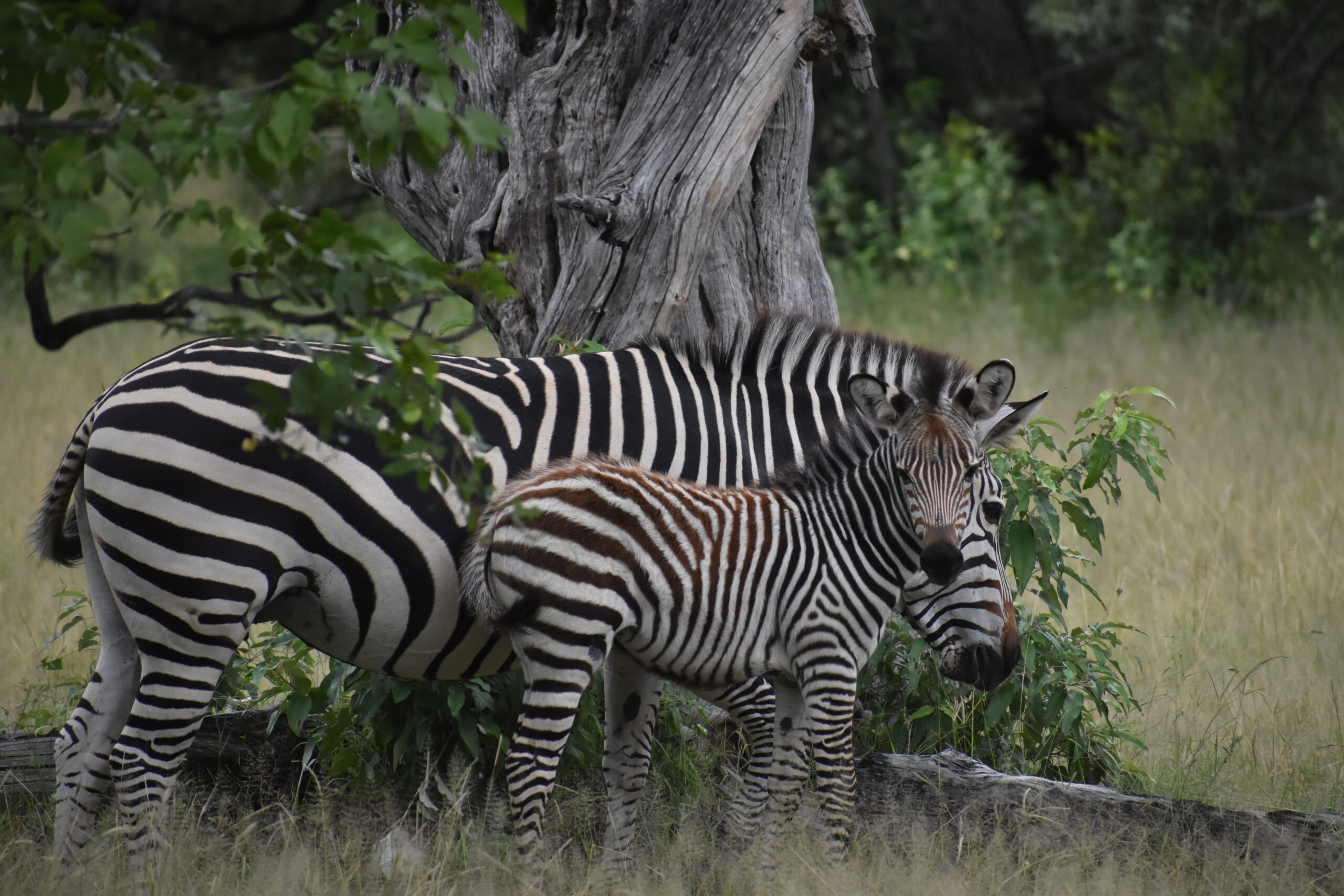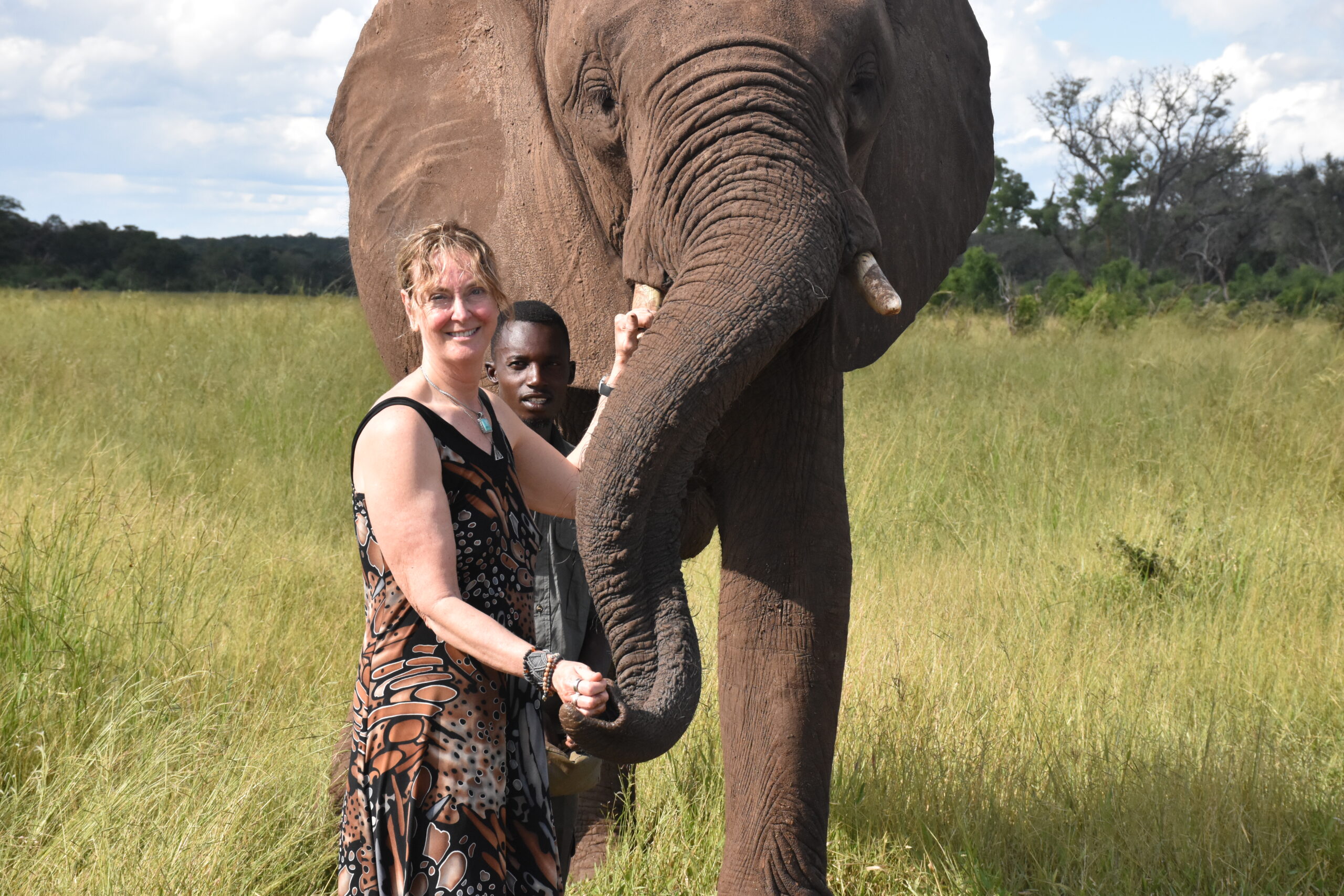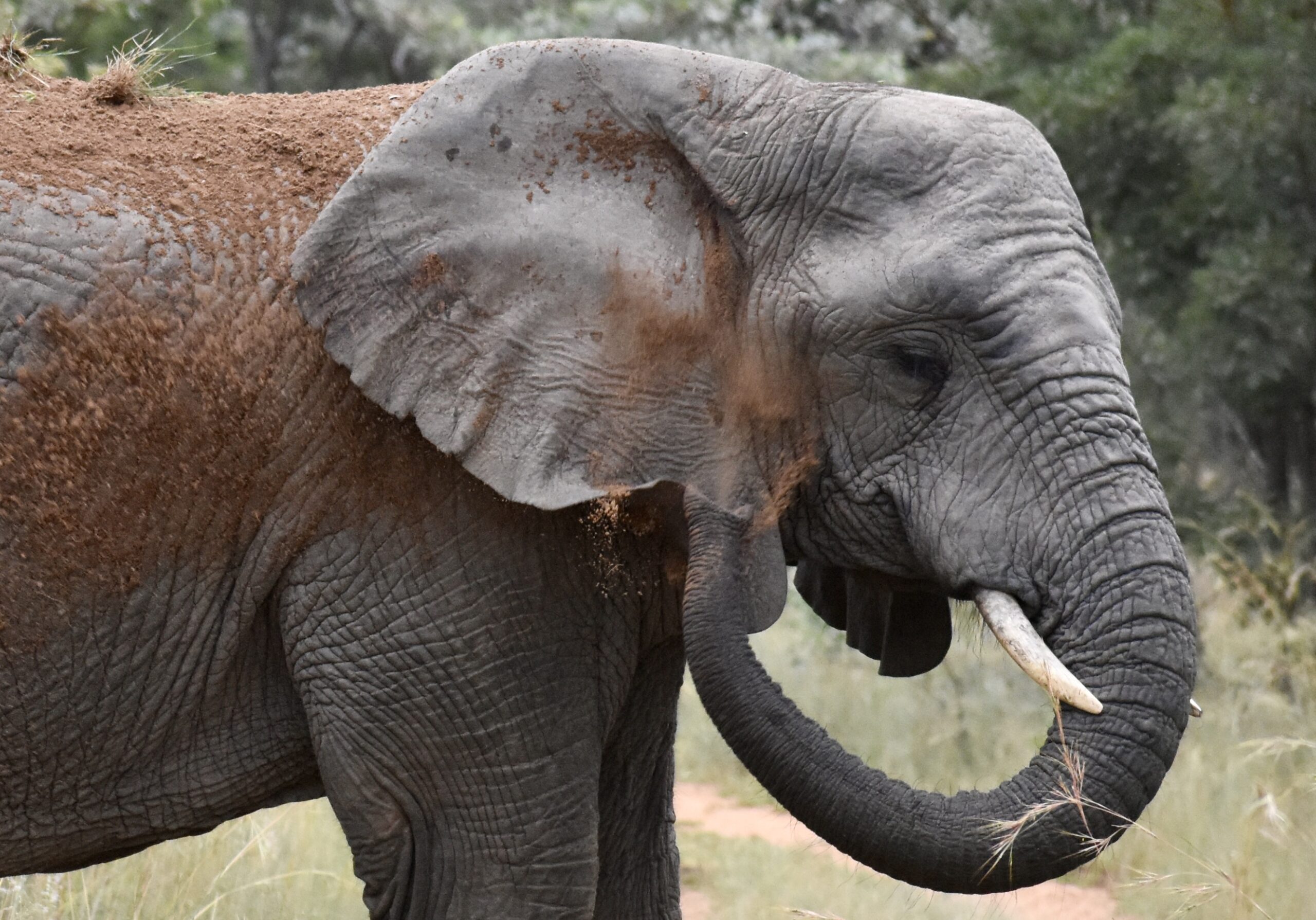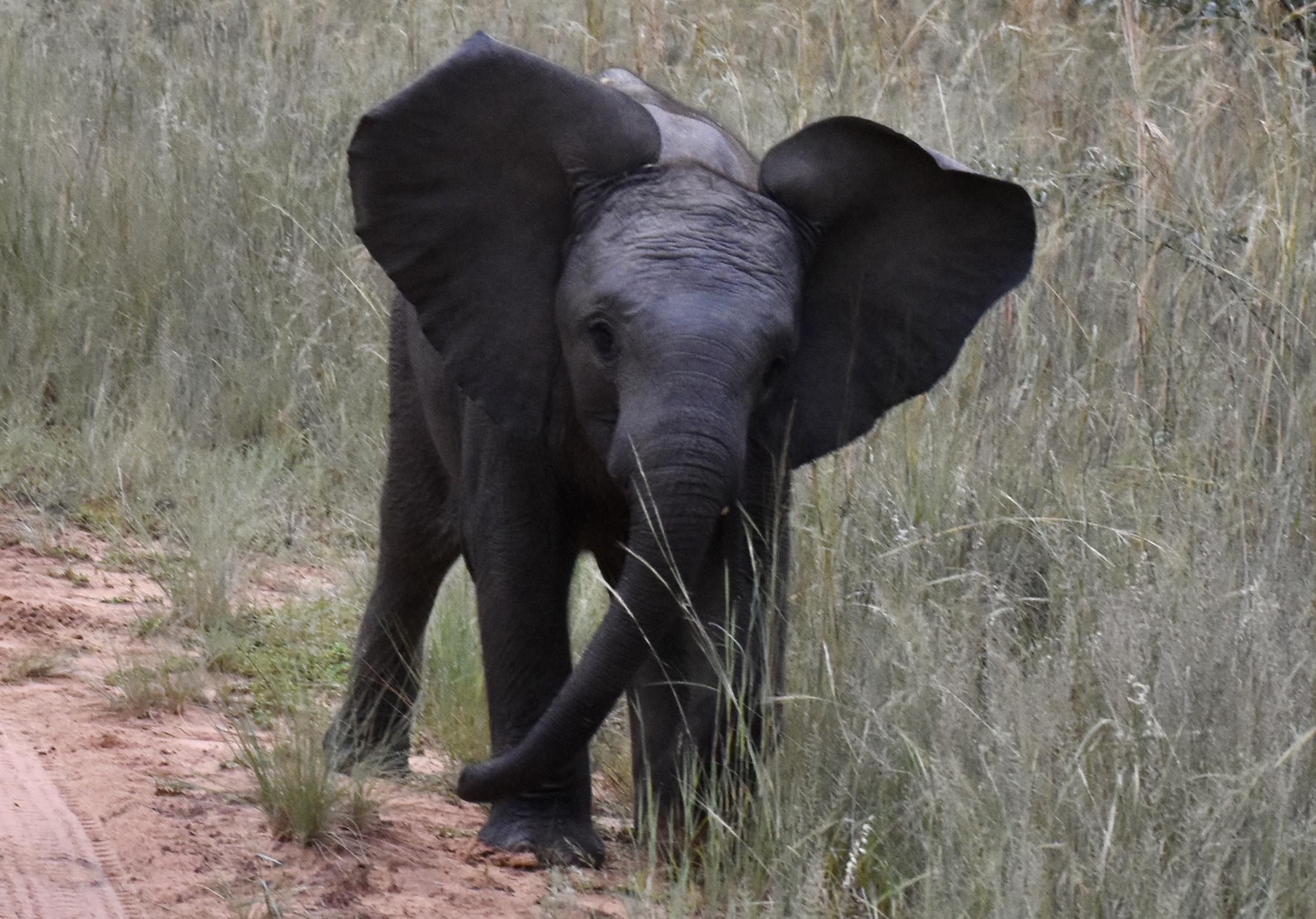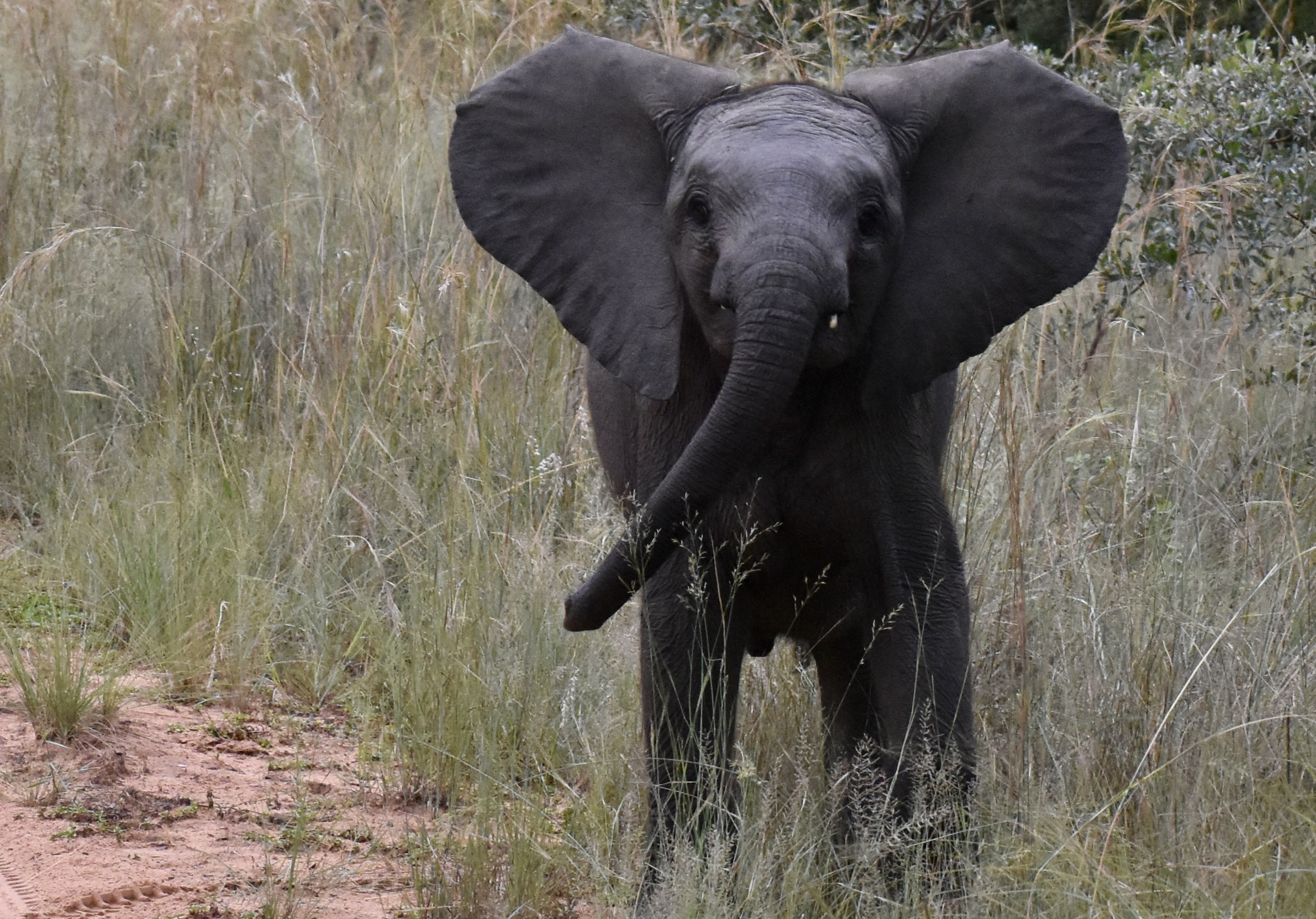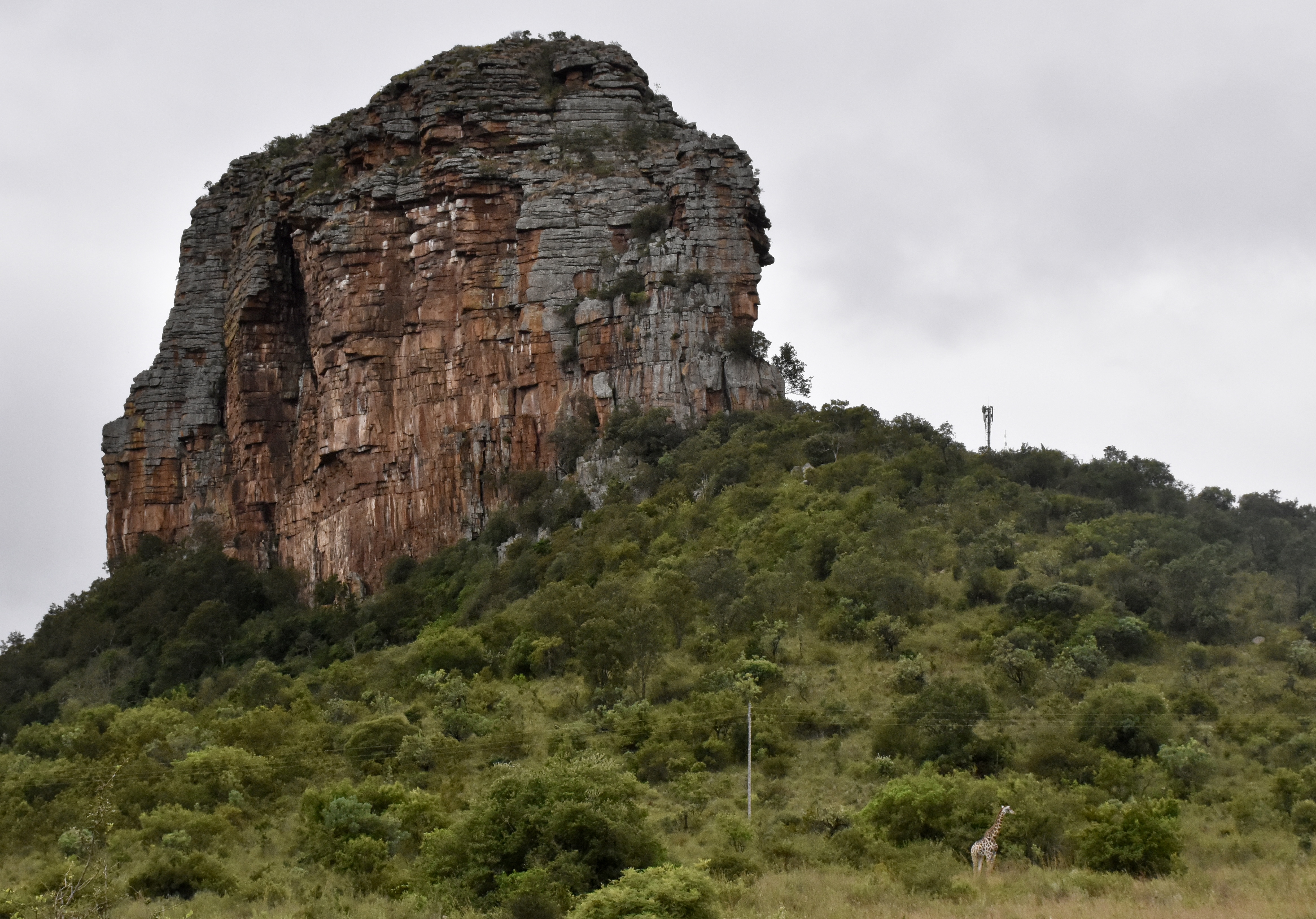
We didn’t have to get up too early — bags outside the door, breakfast, and off we went. The drive to the airport wasn’t long, though it was punctuated by an elephant calmly blocking the street. As one does.
Lynn had taken my shaving kit into her checked bag (which is now about ten pounds under weight, thanks to the school computers being gifted and some strategic shifting). Unfortunately, the bag I purchased to replace the dearly departed over-the-shoulder bag that died at the airport is not quite as roomy. I did my best to stuff it with the camera bag and tech bag. The late, great bag had also held the two pounds of Ghirardelli chocolates for our upcoming home-hosted visit. Yes, lamented.
We flew from Zimbabwe back into South Africa and landed at Kruger Mpumalanga International Airport. Mpumalanga is the province that borders Kruger National Park, and the word means “place of the rising sun.”
On our roughly 1 hour 45 minute van drive, we received a master class in South African history.
“Kruger” refers to Paul Kruger, the second-to-last president of the South African Republic (Transvaal) before the British took control. When defeat seemed imminent, he fled into Mozambique (then Portuguese territory), and ultimately to Switzerland, where he died in exile.
Abe reminded us that “Afrikaners” were not just of Dutch origin, but also included French Huguenots and Germans who had settled here. The word “Boer” means farmer — though today it is often used as a pejorative.
The British originally had little interest beyond trade, but once gold was discovered, everything changed. In 1910, the British and Afrikaners formed the Union of South Africa — in part because together they represented only about 10% of the population, and unity strengthened their political control. It was described as a democracy, but it was democracy for some, not for all.
As Abe put it, they believed it was their “God-given right and moral obligation” to educate — and rule — the indigenous population. South Africa became, in many ways, a “little Europe.”
It took 84 years before South Africa became a true democracy in 1994.
Abe did note that during white minority rule, South Africa developed some of the most productive agricultural land in the world. This province is an example: lush, subtropical, and astonishingly green. We saw citrus groves, banana trees wrapped in protective coverings, and macadamia nut farms — which are currently booming, with farmers pulling out other crops to plant macadamias.
This area also produces timber for the paper industry and sits atop some of South Africa’s largest coal reserves — much of it lower-grade coal used in power generation and heavy industry, including smelting operations such as copper processing in Zambia.
Large tracts of land and many mines remain owned by international conglomerates. De Beers, for example, is not just about diamonds.
Abe pointed out something I hadn’t realized: look at the name on your juice box on the plane — Rhodes.
Cecil Rhodes founded Rhodes Fruit Farms, which still operates today. Rhodes never married and had no children; instead, he poured his wealth into imperial expansion and philanthropy (including the Rhodes Scholarship). He was very much the flip side of Livingstone — a buccaneering imperialist who aggressively acquired land for what he saw as the glory of “Queen Vicky” and the British Empire, during the era when it was said the sun never set on that empire.
Many British settlers wrote of South Africa as “empty land,” ignoring the indigenous populations who had lived here for generations.
Driving along the roads, you sometimes see white crosses marking places where farmers were killed — a visible reminder of how deeply entangled and unresolved land and race issues remain.
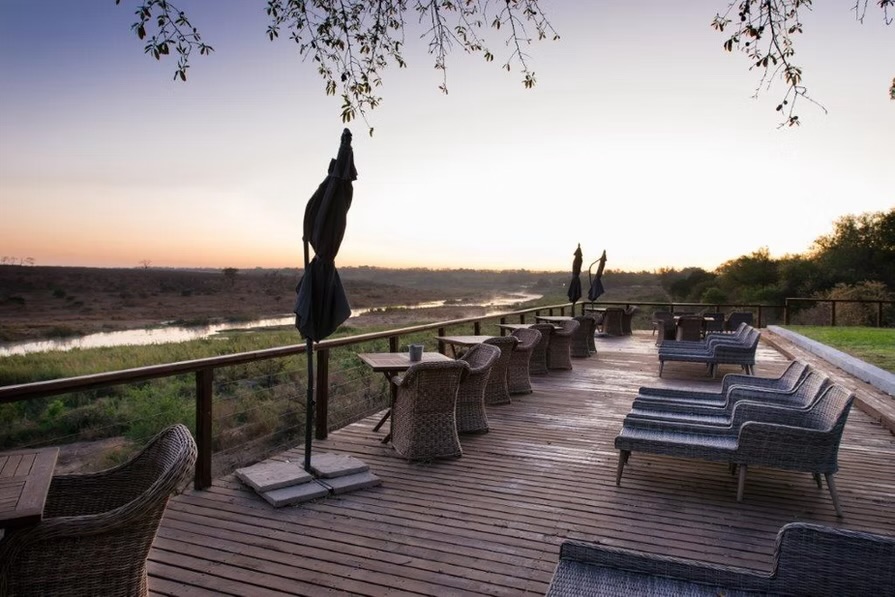
We arrived at Buckler’s Africa Lodge and, after a brief rooming debacle, were rewarded with a lovely lunch overlooking the Crocodile River.
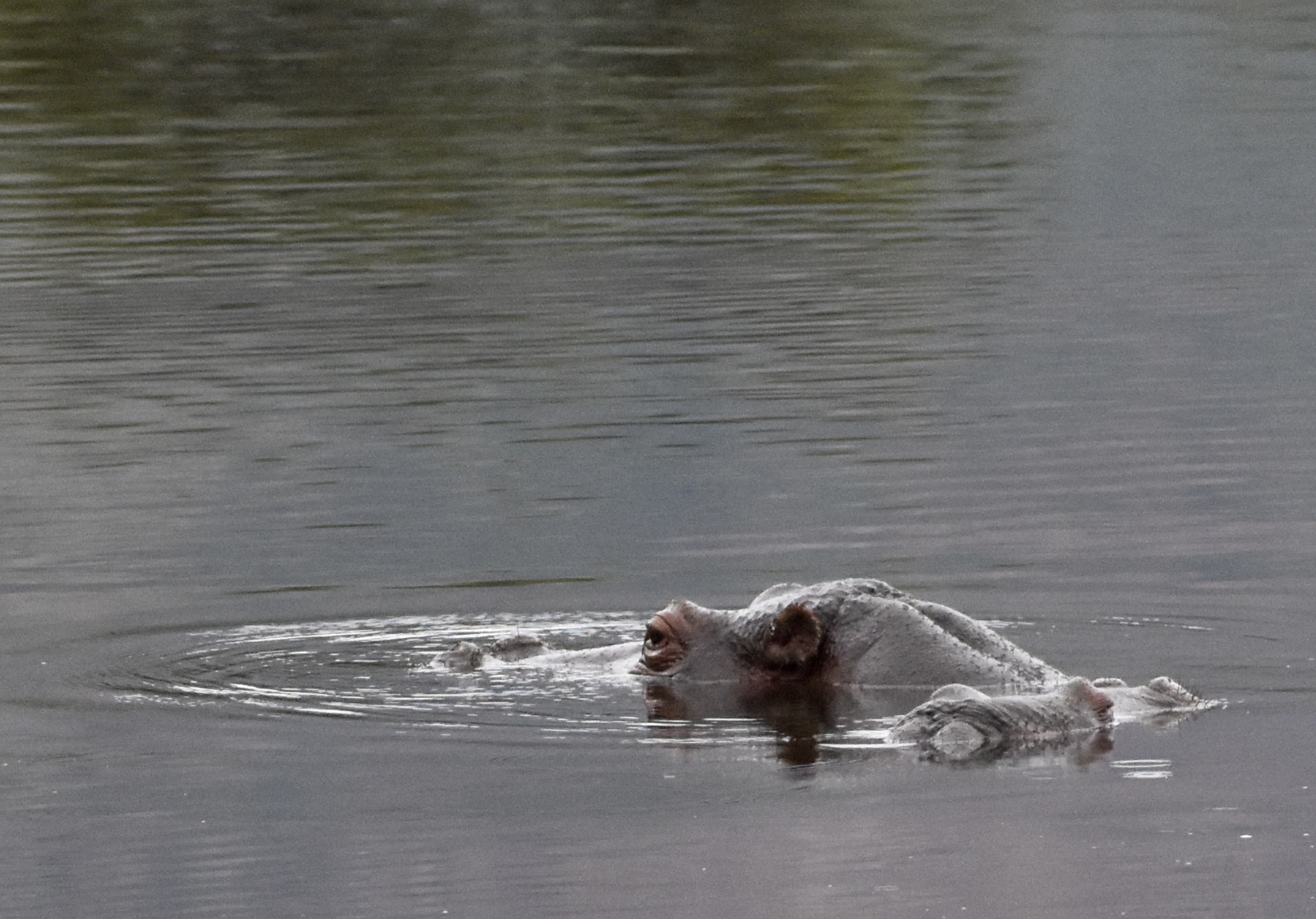
There was an elephant quite close to the deck, and another further upstream with five hippos nearby. Abe and I were both surprised the hippos were out of the water — it was hot, and their skin is sensitive!
All of our meals are covered while we’re here. We’ve had lunch and are now unpacking just enough to reassemble “safari clothes” before dinner.
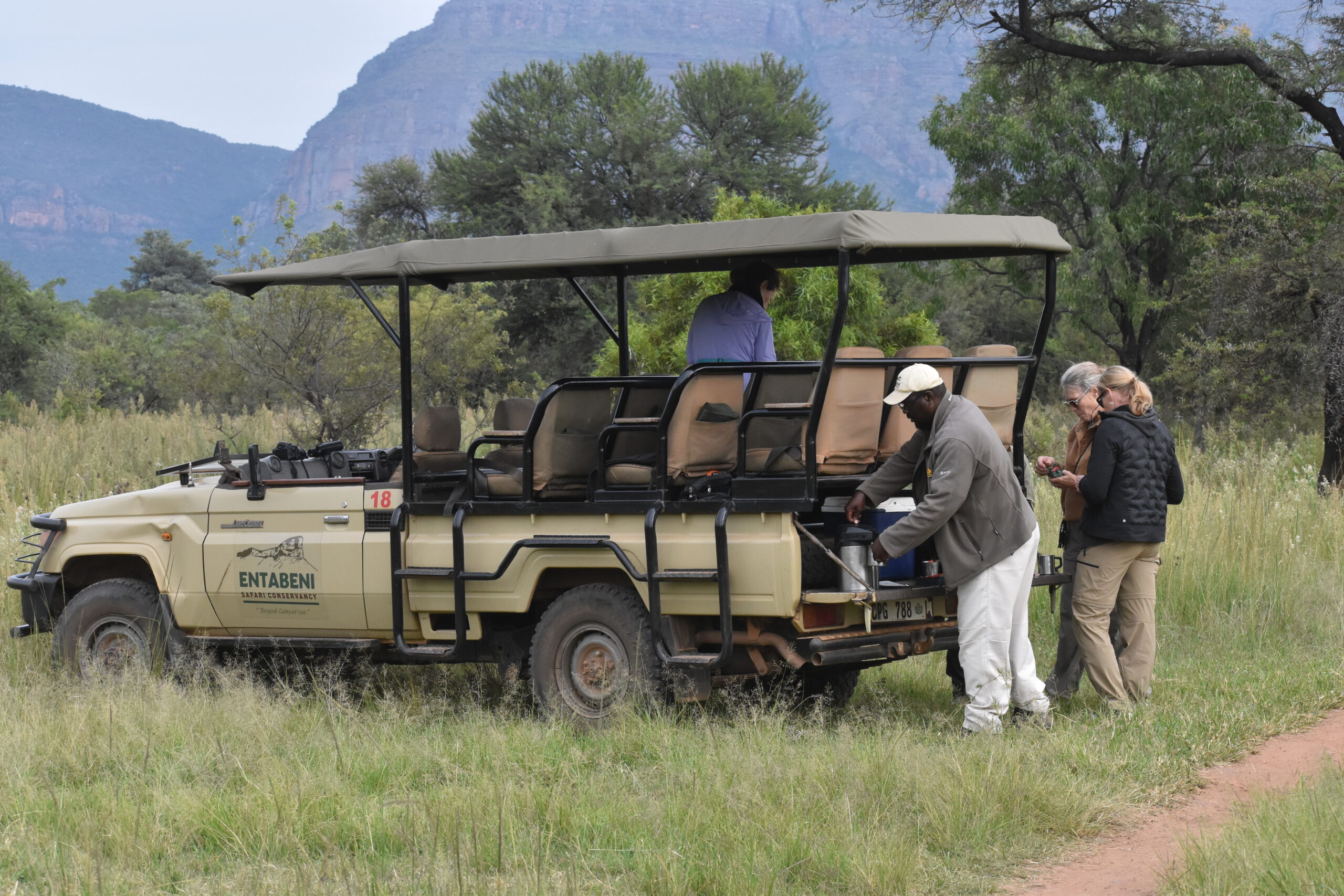
Tomorrow is our first full Kruger game drive: wake-up call at 5:00 (coffee, tea, rusks), depart at 5:30, into Kruger by 6:00 through Crocodile Bridge Gate. Breakfast packs at 8, lunch at 12, back to the lodge by 3, and dinner at 7.
The following day — Monday, Herbert’s birthday — we repeat the early start, return to Buckler’s for a proper breakfast at 9:30, lunch at 1:00, an afternoon drive at 2:30, and then a Boma dinner at 7 with local entertainment.
When we were getting ready to leave the U.S., there had been massive flooding in Kruger, closing much of the park and causing evacuations. I had watched a YouTube video filmed from the deck at Buckler’s showing the Crocodile River raging almost up to the deck.
Today, while eating lunch on that same deck, I realized that an entire building between the riverbank and the deck must have been underwater.
The staff confirmed it.
Everything is fine now.
I don’t think I took any photos today — between getting up and out, driving, flying, and driving again. Well, that’s not entirely true. I did try to take photos of the hippos and elephant across the Crocodile River, but I’m feeling too lazy right now to get out the SD card transfer cable. Those will wind up in tomorrow’s post.
And finally — thank you.
I spend a fair bit of time getting what we learn and what I’m noticing into this blog. I mostly do it because my mom reads it aloud to my dad, and sometimes my dad pulls it up himself.
But to the rest of you out there who are following along — thank you, thank you, and thank you. 😉