
We began the day at Table Mountain, because when in Cape Town, you go up the mountain. The cable car (technically a rotating gondola) carried us upward into blue sky… and then later, back down into pure whiteness as the fog rolled in like a curtain being drawn.


At the top, the landscape felt almost other-worldly — flat, windswept, dramatic. At moments it reminded me of Machu Picchu, but with ocean on three sides. We walked, took in the views, and I found a perfect place to leave an H marble. I also watched volunteers clipped into carabiners rappel down the sides of the cliffs to clean trash from the mountain face — a reminder that even in the most spectacular settings, humans leave fingerprints (and sometimes more). It was definitely chilly up there, and I was absurdly grateful to discover that the gift shop included a coffee concession — shades of Austria, where H always insisted that every mountaintop has an entrepreneurial soul ready to pour you a proper grosser brauner.
By the time we descended, the fog had swallowed the cable lines entirely. I took a quick photo (above) – the gondola wires vanish into nothing — though on the way up it had been a vertiginous drop, clear views for miles in every direction. From infinite horizon to pure white curtain in less than an hour.






Boulders Beach — The Penguins
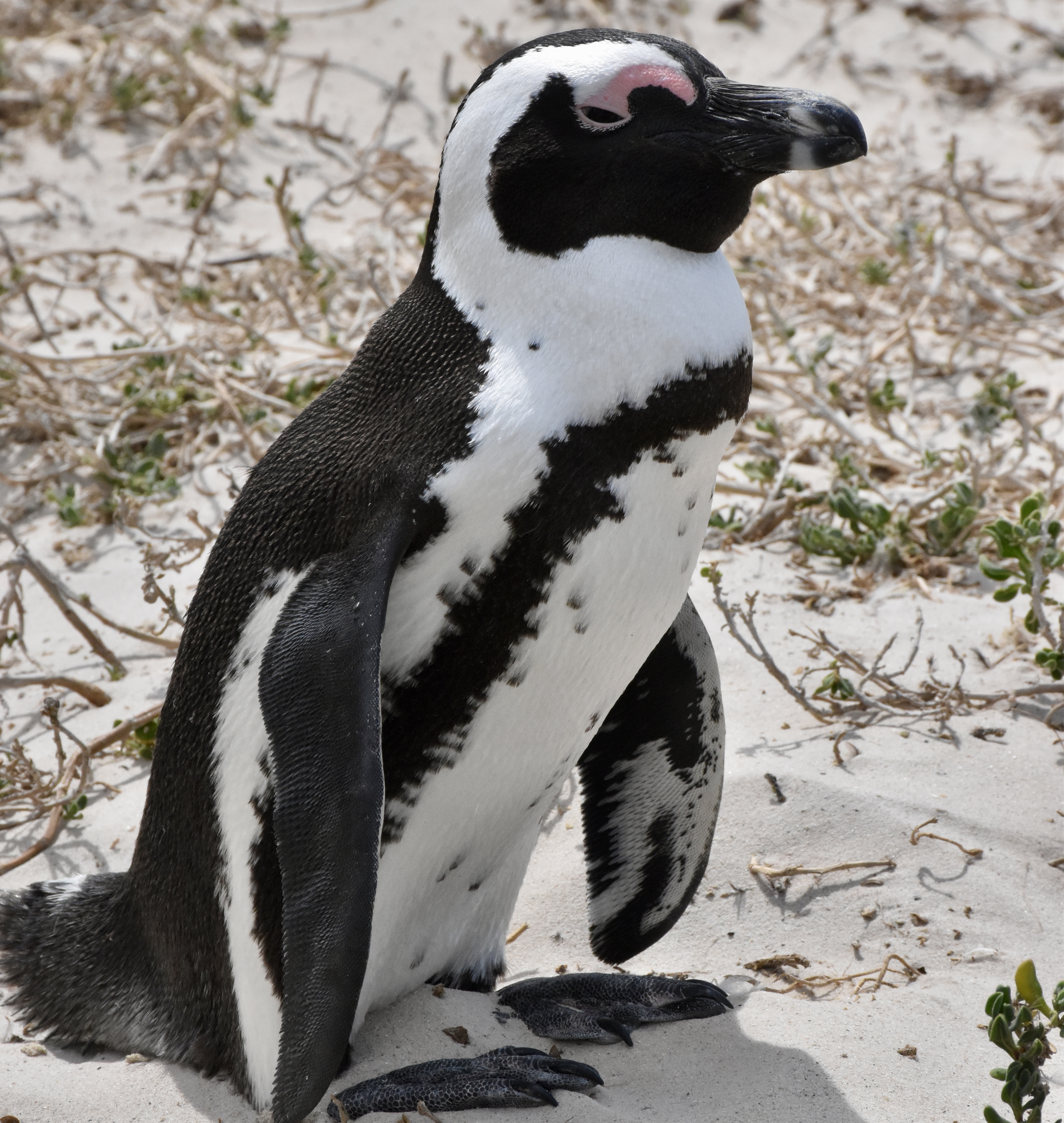
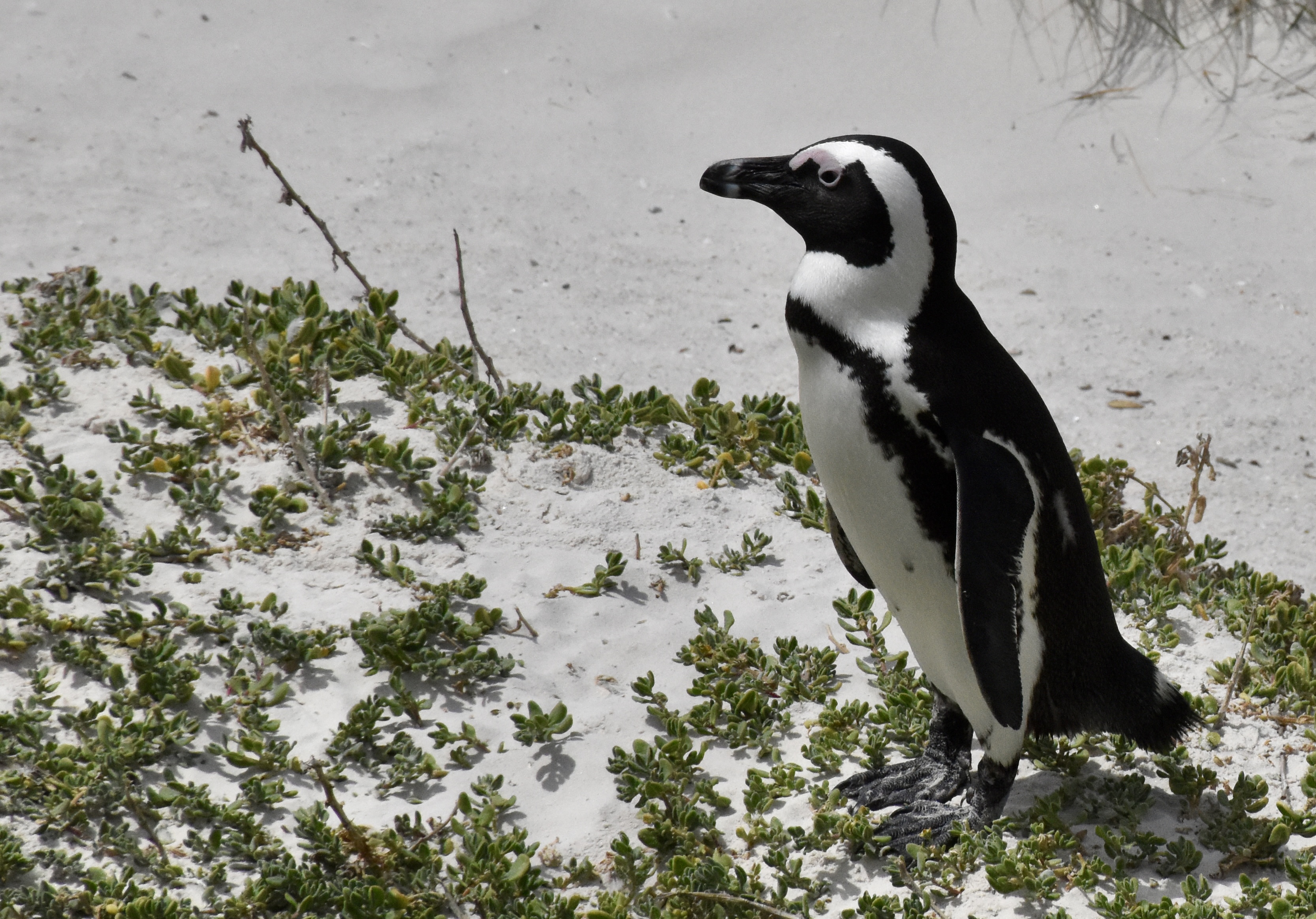
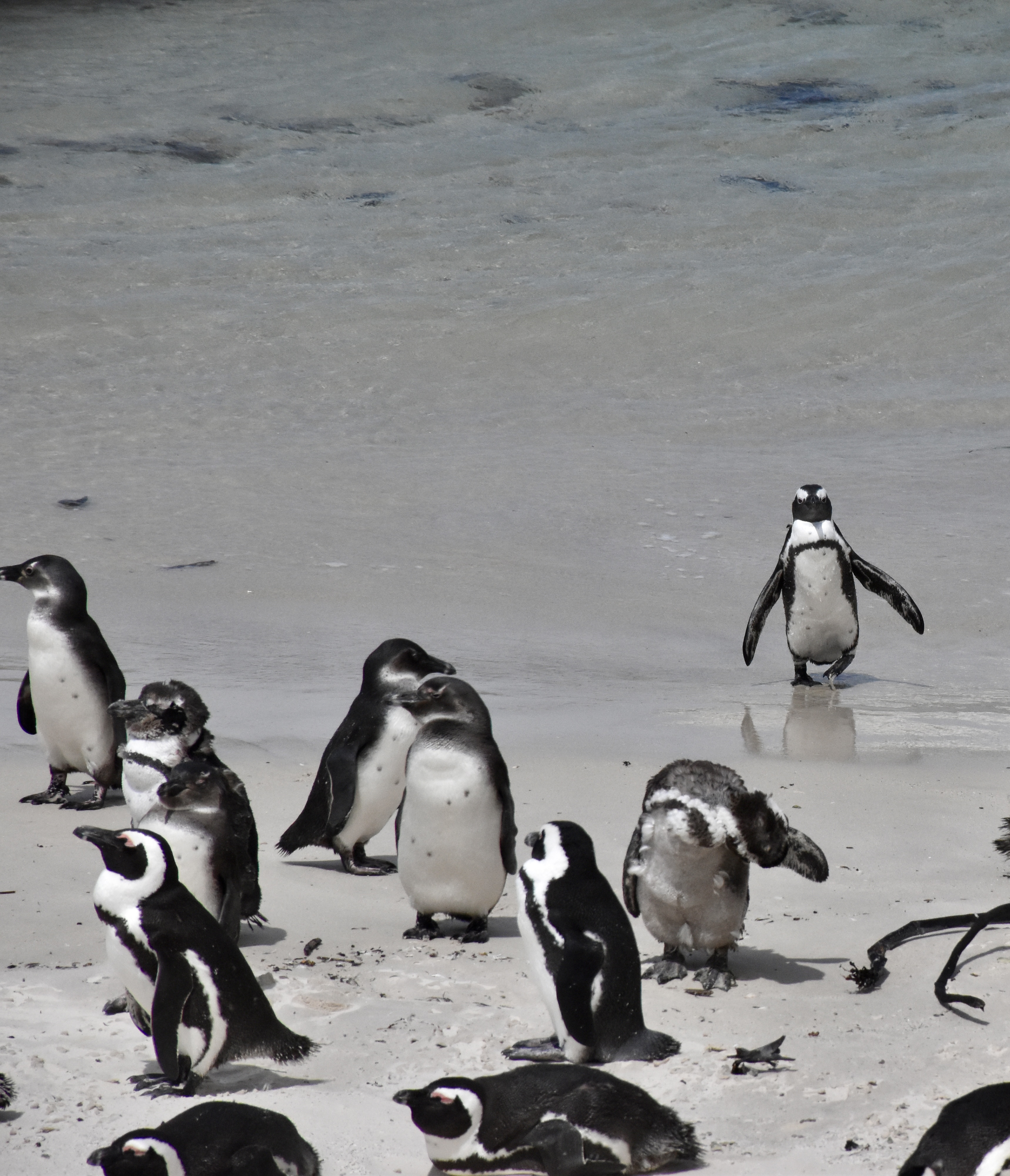
From there (after lunch) we headed to Boulders Beach in Simon’s Town, home of the African penguins.
They are heartbreakingly adorable. They mate for life. Both parents share incubation and chick-rearing duties. Historically, they would lay two eggs. Now, because of food scarcity and environmental pressure, most successfully raise only one.
They are currently listed as critically endangered.
Part of the pressure is industrial fishing. Massive foreign trawlers — Taiwanese fleets were specifically mentioned — harvest sardines and anchovies in such volume that the penguins’ food chain is disrupted. Abe said he believes his grandson’s generation may be the last to see them in the wild.
That landed heavy.
The “Difficult Discussion”: Poaching for Survival vs. Poaching for Profit
One of OAT’s four “pillars” is a Difficult Discussion — an honest conversation about a controversial topic tied to the region. Ours was about poaching — specifically abalone and rock lobster in this area.
The speaker was from Abe’s village — Abe had actually been his Sunday school teacher decades ago. He explained how illegal abalone harvesting works: one diver goes out, but he needs lookouts, cleaners, runners. The economic benefit ripples outward. It’s not just one man feeding his family — it’s multiple families surviving off the same risk.
He argued that government investment in legal abalone farming could transform the community: jobs from security to processing to logistics, tax revenue, stability. Instead, foreign companies once ran large fish processing plants here, then abruptly pulled out, leaving behind huge decaying buildings and economic collapse. Abe’s mother had worked in one of those plants.
I told him about otters back home cracking small abalone on their chests, infuriating licensed divers. He laughed and said here it’s baboons. They wait for certain tides and moon conditions, swarm the exposed coastline, and strip it clean. “And you don’t argue with baboons,” he added. Fair.
It was one of the more nuanced discussions we’ve had — not romanticizing poaching, but not ignoring the economic realities either.
The Cape of Good Hope
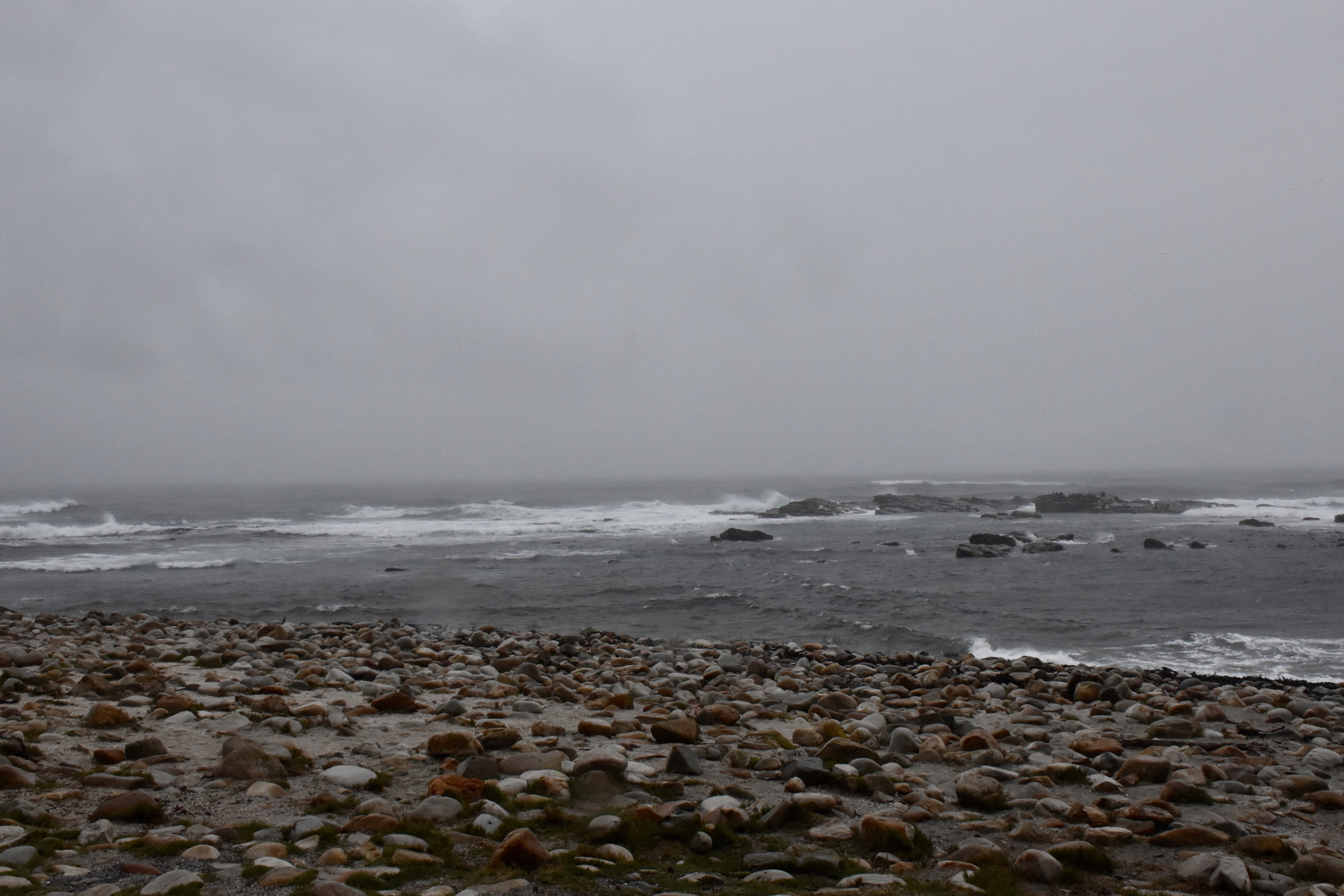
When we rounded the bend toward the Cape, the wind came howling and the rain hit sideways. This is not a gentle landscape. The Cape of Good Hope marks the southwestern tip of Africa — not technically the continent’s southernmost point (that’s Cape Agulhas), but historically the psychological turning point for European sailors.
Sir Francis Drake once described it as “the fairest Cape we saw in the whole circumference of the earth.”
Many sailors might have disagreed in the moment. The Cape became infamous for shipwrecks — violent currents where the Atlantic and Indian Oceans collide, unpredictable weather, hidden reefs. It was once called the “Cape of Storms” before being rebranded “Cape of Good Hope” for marketing purposes (hope sells better than storms).
The word “Cape” refers to a promontory — land that juts into the sea — and here, the mountain range literally runs into the ocean.
Constantia Valley — Tomorrow’s Adventure
Driving back, we passed through Constantia Valley, the oldest wine-producing region in South Africa (and among the oldest in the Southern Hemisphere). In the 17th and 18th centuries it was famous for sweet wines — Napoleon Bonaparte famously requested Constantia wine during his exile on St. Helena. European royalty prized it.
Apparently today the winemakers in Constantia have broadened the wines to accommodate different (non-sweet-wine-centric) palates — but that’s tomorrow’s investigation. Mike, Fran, Mary, Barbara, Ari, Ilana and I are plotting a hop-on hop-off bus and ferry situation, then Mike and I will be branching off into the valley ourselves to see what wineries we can hit for a tasting before the farewell dinner. If the weather cooperates. It looks a bit nasty . . . Raincoat and umbrella time.
Abe’s Story — Khoi, Afrikaans, and Identity
On the drive, Abe shared more about his own background.
He is of Khoi descent — historically labeled “Hottentot” by Dutch settlers, a term now considered derogatory. The Khoi lived along the Cape coast; the San (sometimes called “Bushmen”) were more inland. Abe’s heritage is mixed — Khoi and Germanic. Under apartheid, people of mixed heritage were categorized as “Coloured,” a bureaucratic label that carried severe legal consequences.
He explained how Afrikaans — often seen as “the language of apartheid” — is actually a polyglot language shaped by Dutch, Malay, Khoi, and other influences. Yet in school, until 1994, only “Standard” textbook Afrikaans was acceptable. The version spoken in his community — with borrowed words and local inflections — was reprimanded as improper.
He became an activist at 12 during the Soweto uprising. He didn’t speak English well then — studied it in school but didn’t use it. So he taught himself through television, determined to become a better activist.
He had wanted to be a doctor. Then a teacher. But as an activist under apartheid, employment doors were closed. Banks wouldn’t hire him. He went into theological studies instead. His family were civil servants — teachers, pastors, ministers.
He mentioned Cry, the Beloved Country by Alan Paton (which I downloaded for the flight home). Paton later testified during Nelson Mandela’s 1964 treason trial. Mandela avoided execution; the sentence was life imprisonment and many say that it’s due to Paton’s testimony on his behalf.
Apartheid itself literally means “segregation” in Afrikaans.
He also reminded us that the word “Boer” means “farmer” — once descriptive, now often pejorative. “Aardvark” in Afrikaans literally means “earth pig.” Language is layered like that.
One particularly complicated issue: under apartheid, all non-white groups were lumped together legally. Today, in certain university admission systems, “Black” applicants may receive priority over “Coloured” applicants, which creates its own tensions. Faith, our home host, had mentioned that her daughter — strong grades — did not receive placement under such quota systems. The woman on the phone had reportedly told her so directly.
South Africa is not simple.
Pants Are Getting Tight
Let me also just say: three full meals a day is… aggressive. At home I don’t eat three. Here it’s breakfast buffet, plated lunch, plated dinner, and usually wine or local beer. If you leave food on your plate, someone asks what’s wrong.
My pants are registering the data.
Tomorrow we do not meet until 9:30 a.m.
Huzzah.
I never get a percentage from any links I include – but! – if you are curious about Overseas Adventure Travel and want $100 off, call them at 1-800-955-1925 and request their amazing catalog, tell them you were referred by Sandy Shepard, customer number 3087257, and get $100 off your first trip! The catalog is what all good dreams are made of!