
Kruger is why I’m behind.
Yesterday (Day 1 here), I was up until nearly 10 p.m. editing photos — and we had to be “at the gate to Kruger” at 5:00 this morning. Guides get priority entry into the park for the first half hour. Yesterday we did not. Today we did. Worth the 45 minutes less sleep.
Yesterday, over 300 photos didn’t make the cut.
And there were still nearly 300 left.
We’ve done the morning round thus far today, and it’s been a bit “quiet.” Which, in Kruger terms, still means astonishing.

Abe told us we were to be “helper guides.” The actual guides use WhatsApp groups and radios to alert one another to sightings. Some guides share generously. Some hoard. Abe noted — diplomatically but clearly — that the hoarding behavior unfortunately skews toward certain white guides. The ecosystem is complicated in more ways than one.
We were tasked with spotting whatever we could. Even if it was just an ALT or a BLT — an Animal-Like Thing or a Bird-Like Thing (a.k.a. stump, rock, bush).
So here is what our collective eagle eyes turned up.
The “road runner birds” are actually spur fowl — cousins to the kamikaze picnic birds we saw in Entabeni.

The sausage tree is apparently a fine place to sleep — no snakes. However, the sausages themselves are heavy, woody, and could absolutely knock you unconscious if one fell. So perhaps not that fine.
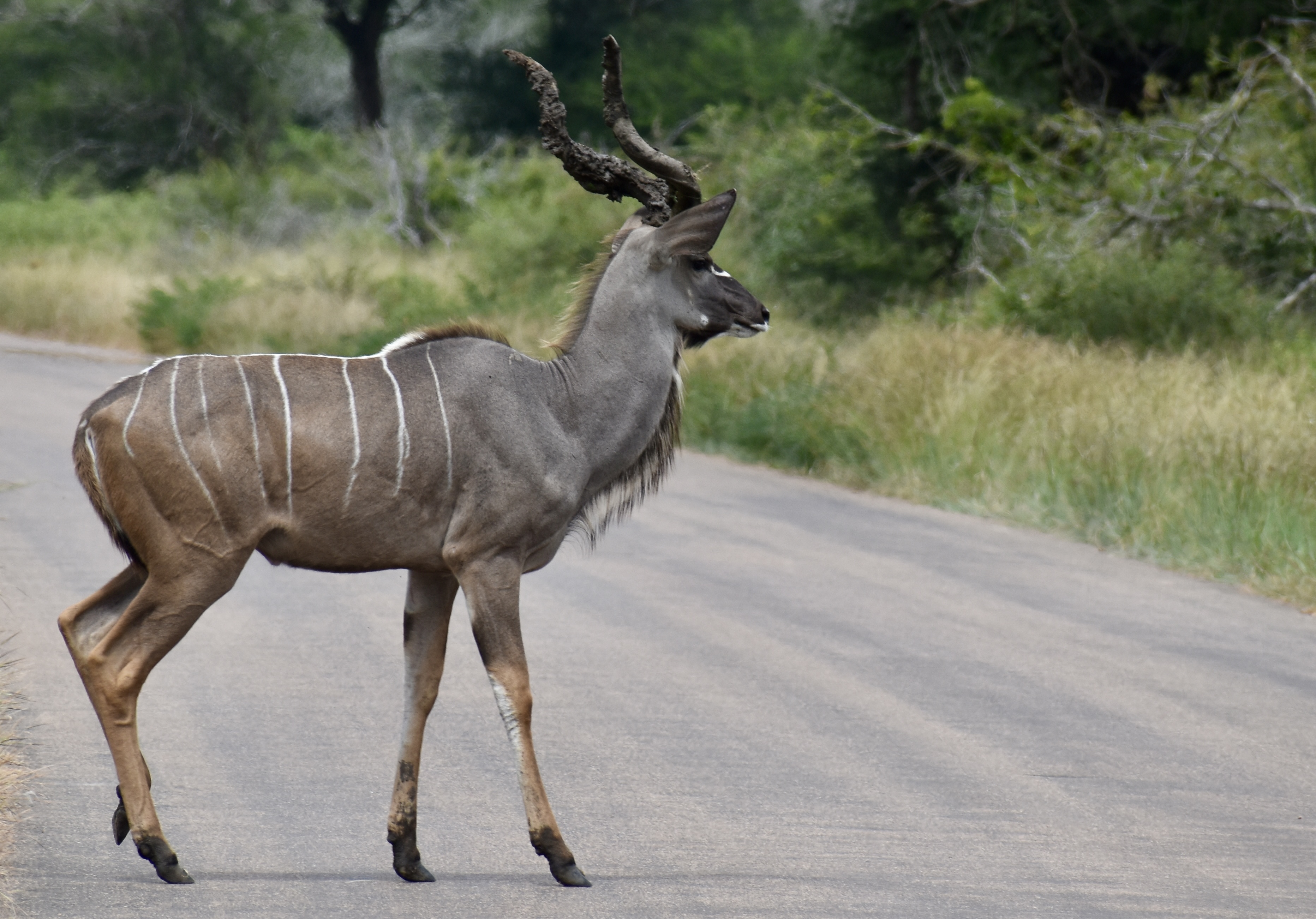

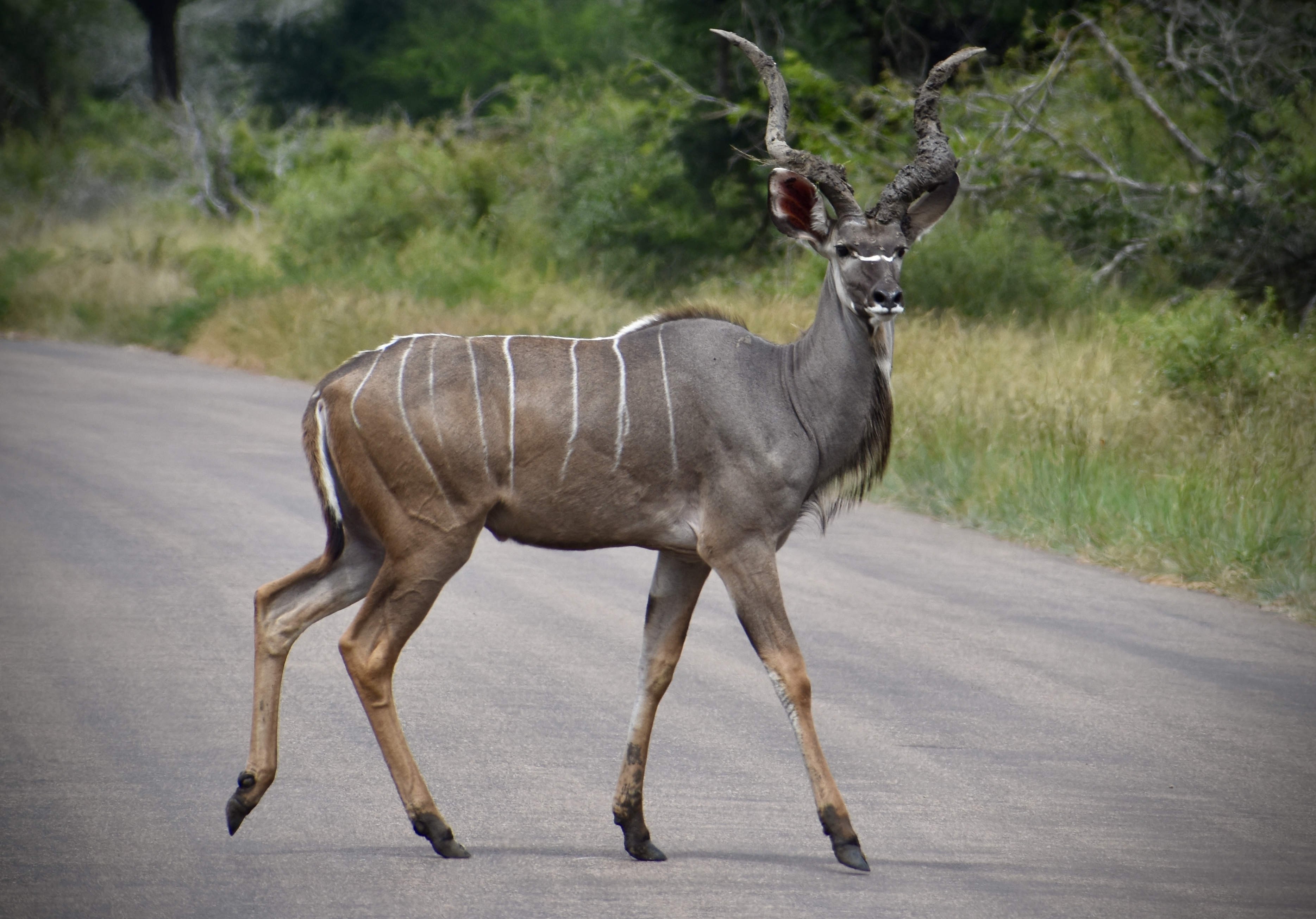
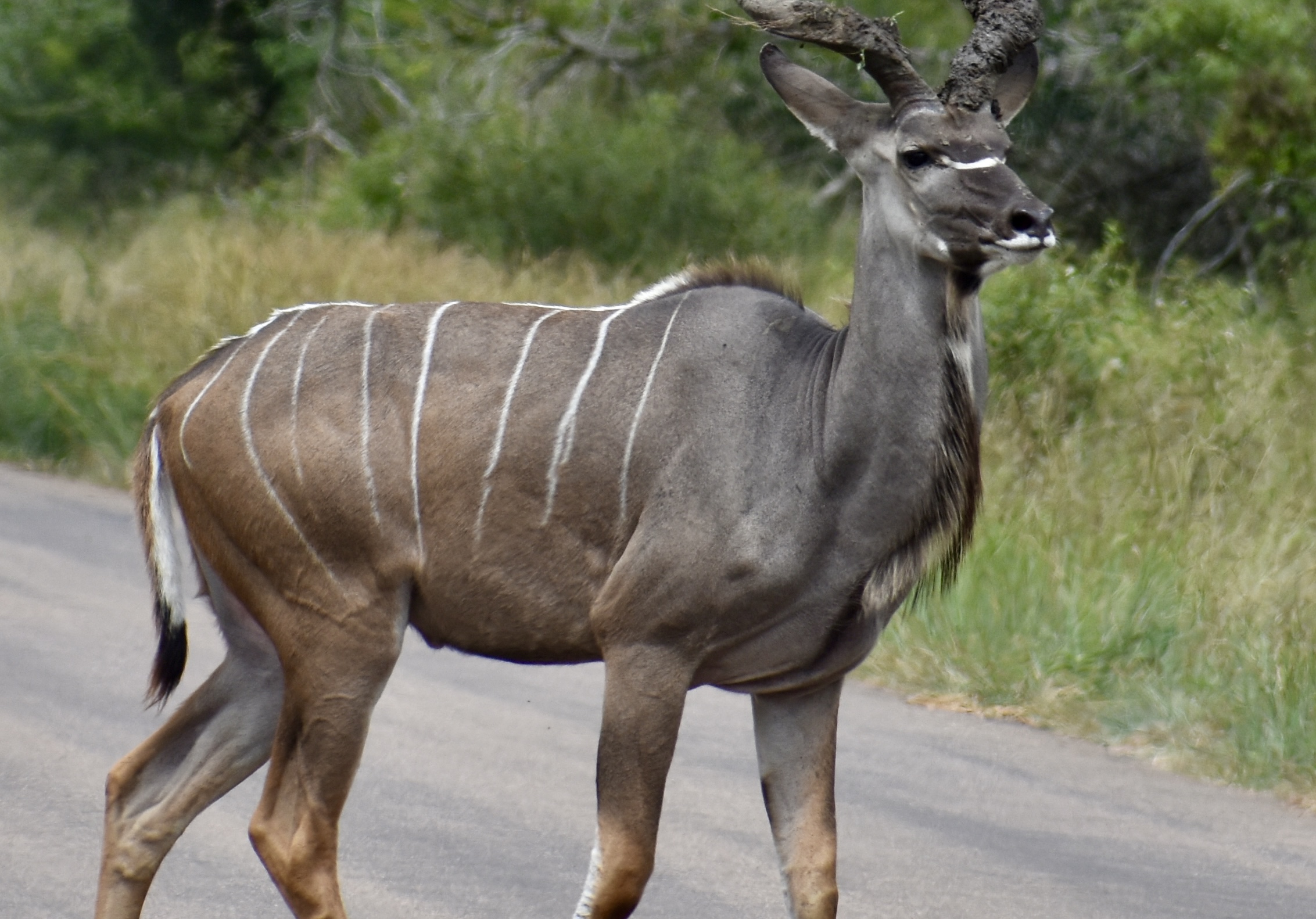

Tracey spotted a kudu deep in the bush. The name “kudu” is said to mimic the sound they make when bounding away. The spiraled kudu horn produces an extraordinary resonant sound and was historically used for communication — we dubbed it the “African shofar.”
All wildebeest (gnu) calves are born in December. So much so that in the local language, December is referred to as “wildebeest birth time.” Nature runs on schedule here.

We saw a red (something) tree with long bean-like pods hanging from it. If you burn the pods, you can brew a kind of bush coffee from the ashes.
We had a black mamba cross the road — too fast for a photo, which is precisely the problem with black mambas. They are among the most venomous snakes in Africa and extraordinarily quick. (And yes — venomous, not poisonous. Venom enters the bloodstream through a bite; poison harms when ingested or absorbed. Think curare from the slime on poisonous frogs, used on poison darts. We were corrected, properly.)
We glimpsed a hyena — mostly brown blur through brush — but it counts.

We have seen many a weaver bird nest. The male builds it. He then brings a female to inspect it. If she disapproves, she tears it apart. He may try again — if she hasn’t found a better nest carpenter first. Evolution has no patience for mediocre craftsmanship.
We photographed a terrapin crossing the road. It immediately made me think of “Terrapin Station,” the Grateful Dead album — and Phil Lesh’s now-closed venue back home. I don’t know if the turtle had any jam-band aspirations, but it had excellent presence.
We learned that giraffes have an extraordinary blood pressure regulation system. When they lower their heads to drink, specialized valves and tight skin around the neck vessels help control the rush of blood so they don’t faint. When they lift their heads again, they shake slightly as circulation stabilizes. If humans had to drink like that, we’d be horizontal most of the time.
We saw so many birds.
The European roller — iridescent blues and flashes of gold — is a cousin to the lilac-breasted roller (Lynn’s favorite from her previous trip). The kingfisher we saw had a red head and brilliant blue wings. I will have a slideshow of All Things Kruger on the last day. It takes too long to upload . . .


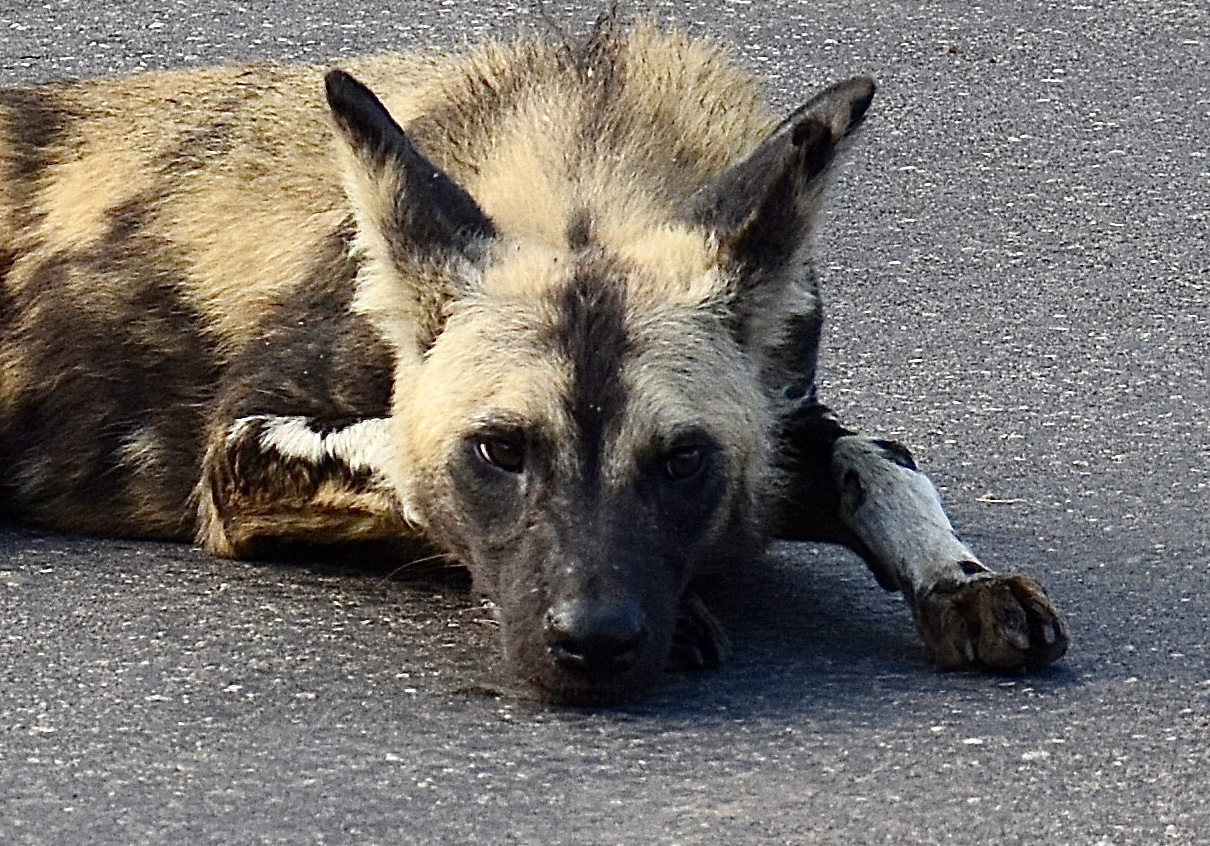
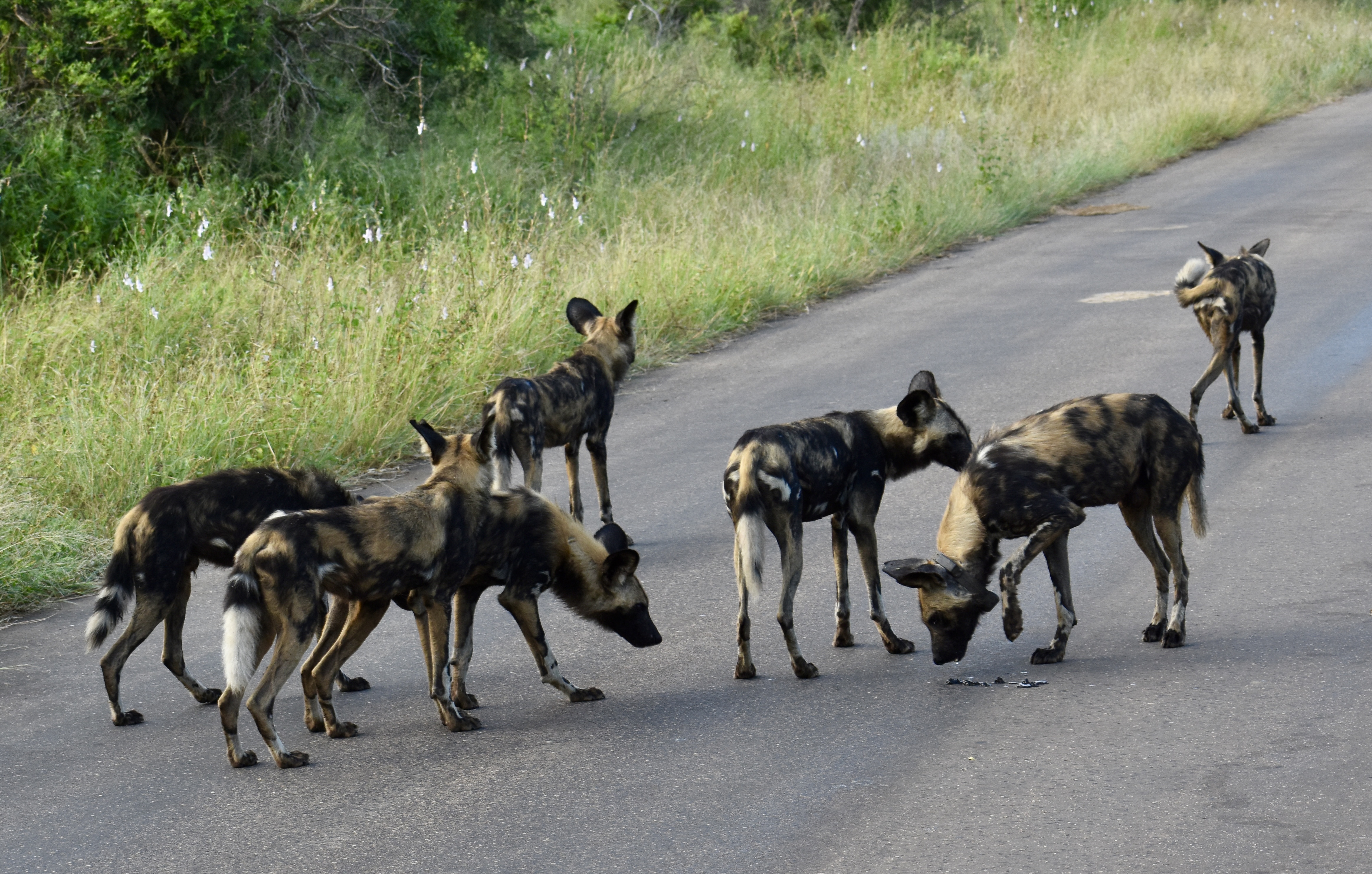
We spotted painted dogs — African wild dogs — which is incredibly rare. Not only that, we saw a mating pair. In a pack, only the alpha male and alpha female breed. The others help hunt and raise the pups. It is a tightly structured society with one ruling couple at a time. We also learned that wild dogs are democratic – they “vote” on whether it’s time to go hunt by sneezing. The alpha male and female’s sneezes, however, count for more votes than the rank and file.
On warthogs, the males have four tusks — two prominent upward-curving ones and two smaller ones behind. Females have just the two front tusks. The babies have little white facial tufts that simulate tusks until their real ones grow. Their tails stick straight up when they run — partly for communication in tall grass, partly for balance. (They do trip. A lot.)
We learned about elephant social structure. The matriarch — what I scribbled as “Mytrog” — is the head female. She leads the herd and influences mate selection for younger females. The dominant males operate more independently and are responsible for mentoring younger bulls on how to “behave” like adult males.
To distinguish male from female elephants visually: the female often has a more V-shaped forehead; the male’s forehead tends to appear broader and flatter. Subtle, but once you see it, you see it.
We saw a Cape glossy starling — metallic blue-black — and remembered why they’re called kamikaze birds at picnics.
We learned about amarula—the fruit elephants love—which is turned into a cream liqueur that tastes like a cross between Baileys and coquito. Abe picked some up in Victoria Falls, and we had it for dessert on our first night here. If it shows up in Duty Free, resistance may be futile.
That said, with a 44 lb checked limit and a 15 lb carry-on, every potential purchase is now evaluated in pounds. “Lovely carving . . . nope, that’s a pound.” If I can’t wear it, it’s a liability.
And then — perhaps most fascinating — we learned why giraffes must keep moving. When they browse on acacia trees, the tree begins producing tannins that make the leaves bitter. Not only that, the tree releases airborne chemical signals that alert neighboring trees, which then also turn their leaves bitter. So giraffes must move constantly, outpacing the communication network of the trees.
Nature is not passive.
It is strategic.
We head out again in about twenty minutes for the afternoon drive.
If yesterday was 600 photos and a black mamba, I’m not betting against Kruger.
Stay tuned.
I never get a percentage from any links I include – but! – if you are curious about Overseas Adventure Travel and want $100 off, call them at 1-800-955-1925 and request their amazing catalog, tell them you were referred by Sandy Shepard, customer number 3087257, and get $100 off your first trip! The catalog is what all good dreams are made of!