
When the Ocean Says “Not Today”
As I type this, we’ve just received notification that our snorkeling tour has been canceled — again — due to high waves. We’ll get our money back (thank you, Get Your Guide, for at least being efficient about that), but I’m honestly pretty sad.
I was really hoping to see one of those big sea cows. Manatees. Herbert and I saw them a few years ago when we were down in the Keys, and I remember being completely charmed by them — their calm, easy-going presence, like floating reminders that not everything in the world needs to be rushed. I had been quietly looking forward to that particular reunion.
We’re still doing our Old San Juan food tour, which I’m genuinely excited about — we just won’t be hopping straight from tapas to flippers afterward. Sharon, ever the optimist, suggested we could still bring our suits along and see whether we agreed with the call; there are snorkel rental folks right on that beach. But given how consistently the tours have been canceled, I think this is one of those moments where you take it from the experts and listen when they say, Today is not the day.
There’s also a small logistical ripple to this that carries a little more weight.
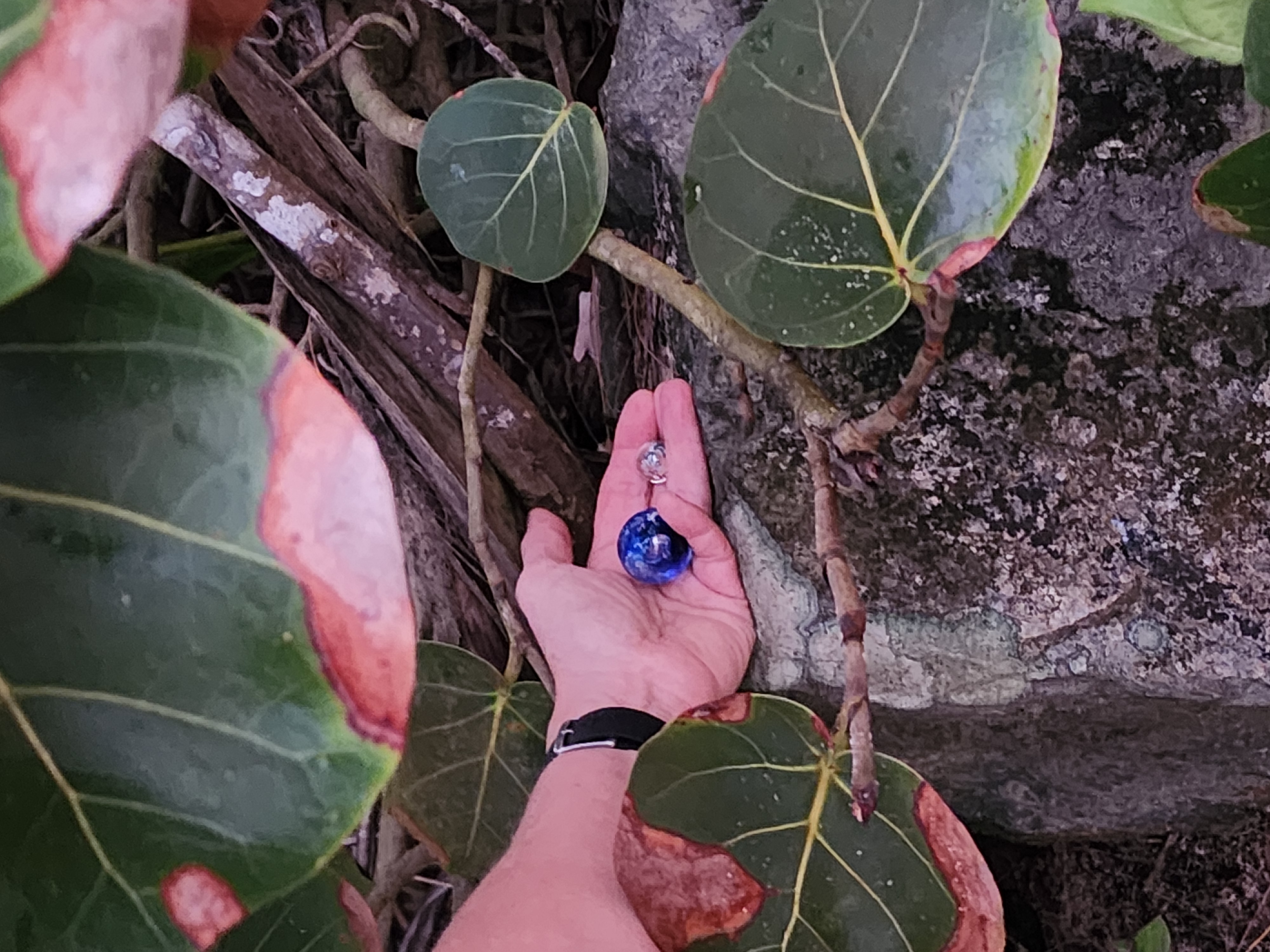
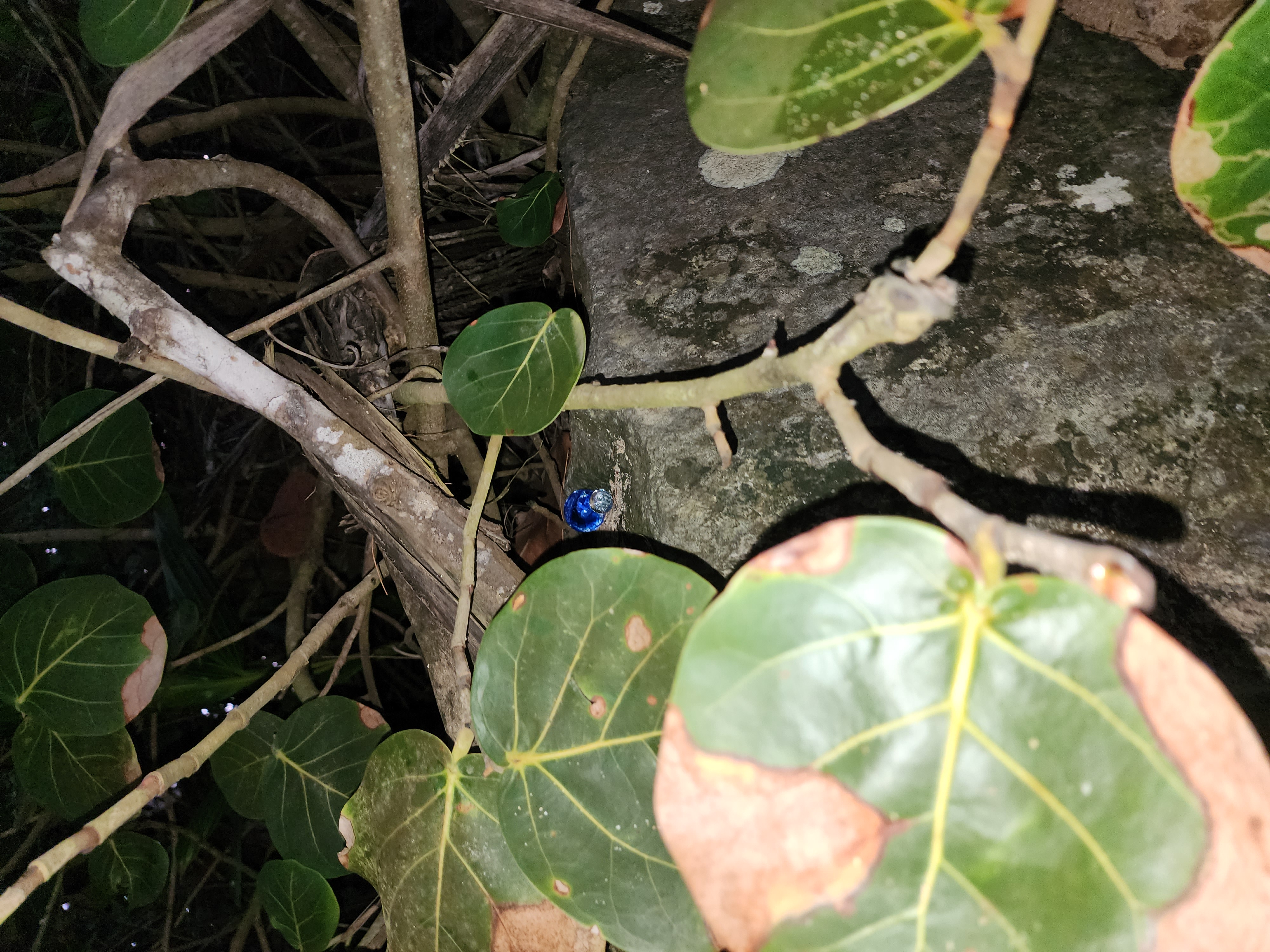
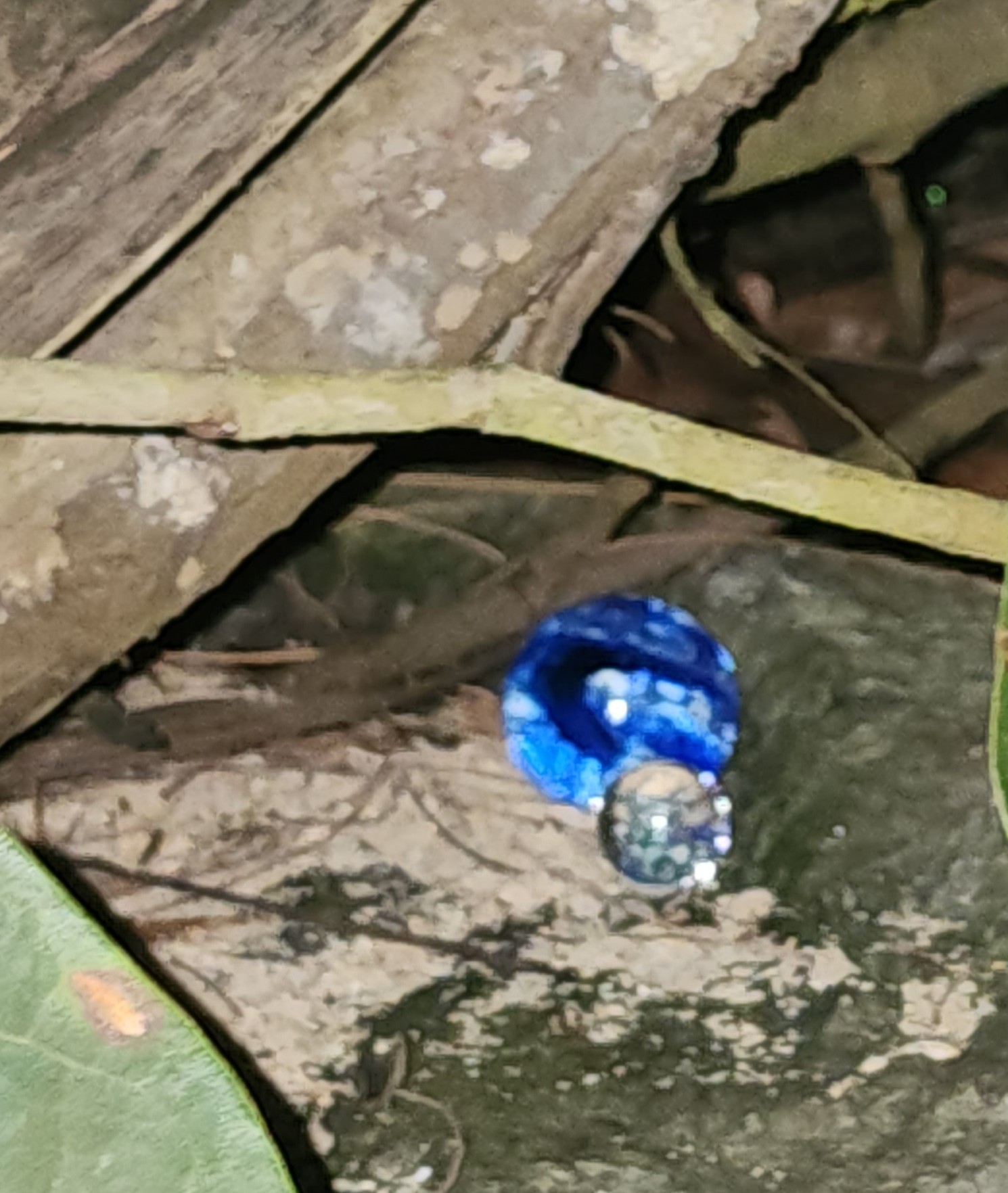
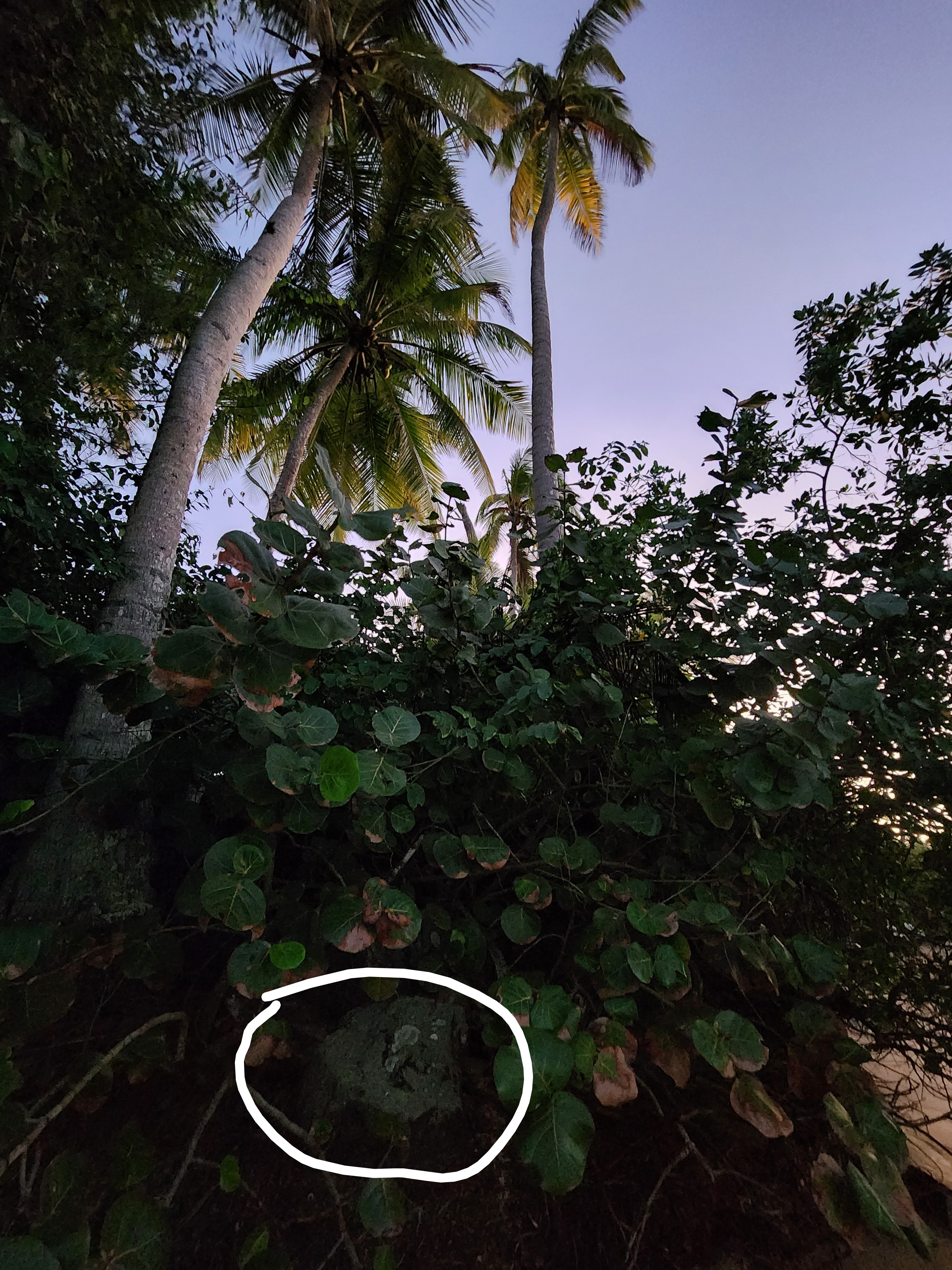
Leaving Herbert’s cremarble at the rum hacienda, overlooking the quiet industry of barrels and history, had felt exactly right — a place rooted in time, craft, and patience. But I had also brought one of my friend Lynn’s marbles with me. Her husband Jim loved water. He didn’t particularly drink, but he adored the ocean, lakes, movement — all of it. The plan had been to leave Jim on the snorkel tour, out where the water was alive and busy.
Instead, I’ll walk down the beach here at the Hyatt later today and find a spot for him to look out at the waves.
Herbert might join him.
Two guys. Watching the water. Watching the sunset. No swimming required.
Old San Juan Food Tour
Déjà Vu Parking & a Calm Meetup (This Time)
We drove into Old San Juan and parked in the same parking lot we’d used for El Yunque, which immediately gave the day a sense of foreboding… from when the tour meetup had gone sideways.
For El Yunque, Sharon and I (and another couple) had gone to the Seahorse statue. Then sprinted from the Seahorse statue to the Banco Nacional plaza. Only to receive a text from the guide telling us to go back to the Seahorse statue. This time, however, we got it right on the first try. We met at Banco Nacional plaza, waited calmly, and let the rest of the group come to us.
It turned out to be a really great group, right out of the gate. A couple and a family were all heading out the next day on the same cruise ship (it turned out), while two solo guys were also cruising, on different ships. We could actually see all three cruise ships sitting out in the harbor, waiting.
Meet Claudia (y “Familia”)
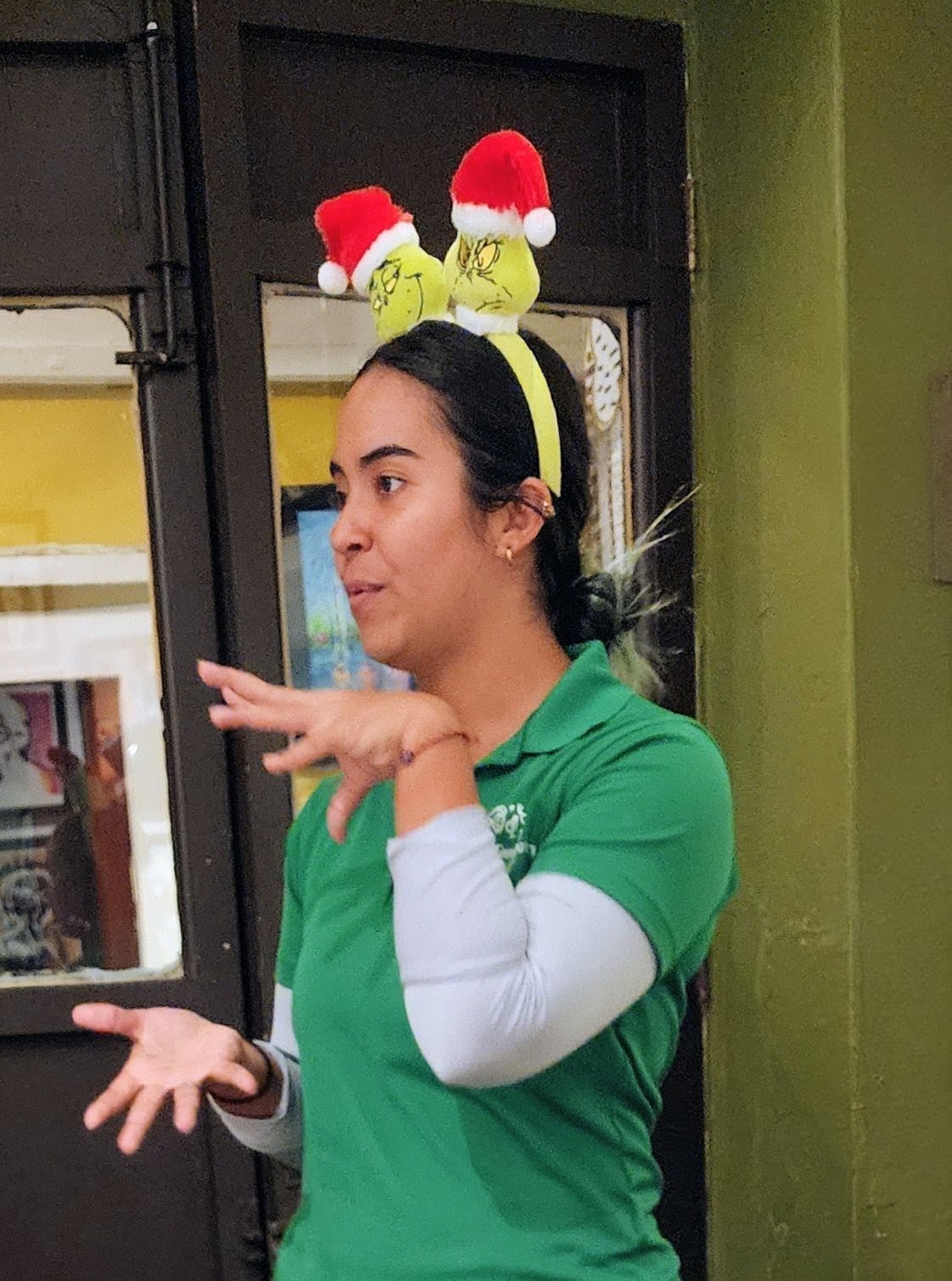
That’s where we met our guide, Claudia — 27 years old, super fun and immediately warm. She referred to us as “familia,” a word I’d heard from other guides earlier in the trip as well, and one that somehow managed to feel accurate rather than performative.
Hidden Coffee: Café Cuatro Sombras
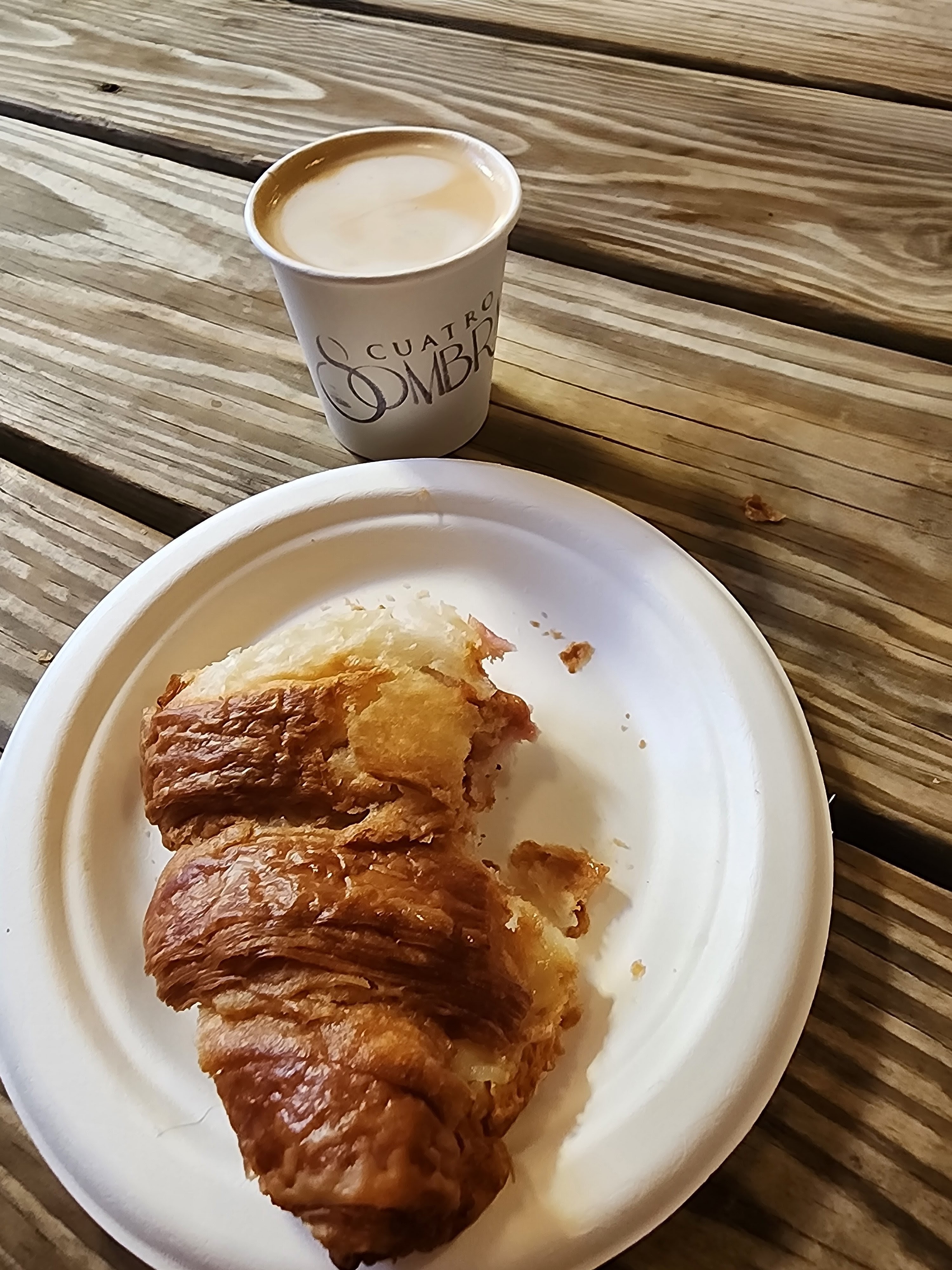
Our first stop was Café Cuatro Sombras. Sharon and I had already flagged it as a “must-visit,” for after the tour. Bueno! From the street, it looks like almost nothing: a door in a wall. But once you open that door, the café stretches back nearly an entire block. Fun, bustling, THE place for a coffee in Old San Juan (if you were “in the know”).
We had their version of macchiato, a cortadito, along with a croissant filled with Black Forest ham, Havarti cheese (both “non-local”) and guava butter (local, and excellent). Claudia talked us through their coffee, grown in the Yauco mountain region of Puerto Rico and medium-roasted right there. Behind us, big burlap sacks of green (unroasted) beans were stacked along the floor.
She also explained that while we tend to think of “coffee” as one thing, there are actually three main types of beans sold under that name: Arabica, Robusta, and Liberica. Arabica is the one most people associate with “good” coffee — smoother, more aromatic, and less bitter. Robusta has more caffeine and a harsher edge, which is why it often shows up in mass-market or instant coffees. Liberica is much rarer, and isn’t commonly used on its own.
The beans here were 100% Arabica and single-origin, meaning they came from a specific farm rather than being blended from multiple sources — which helped explain why the coffee tasted so clean and intentional, not just “strong.”
I bought a small bag of beans for Melissa as a thank-you for watching the dogs and had them ground, in case she doesn’t have a grinder. Given the price of that small sack, I joked that perhaps they were grinding gold into it.
Palate Cleanser with a View: Señor Paleta
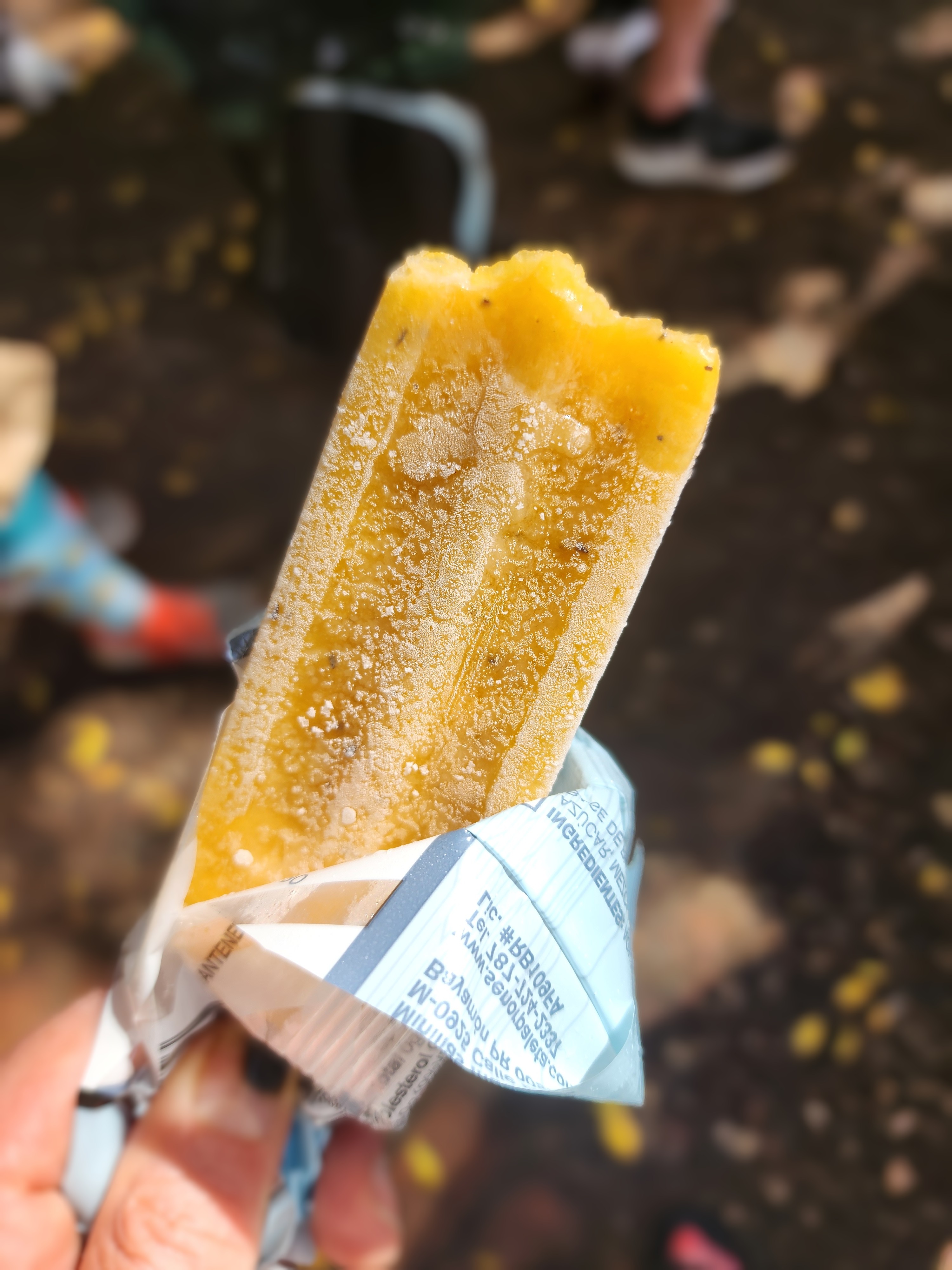
From coffee, we moved on to a passion-fruit popsicle from Señor Paleta (“Mr Popsicle”), which has no tables or chairs because you’re meant to take it across the street and eat it in the park overlooking the harbor.
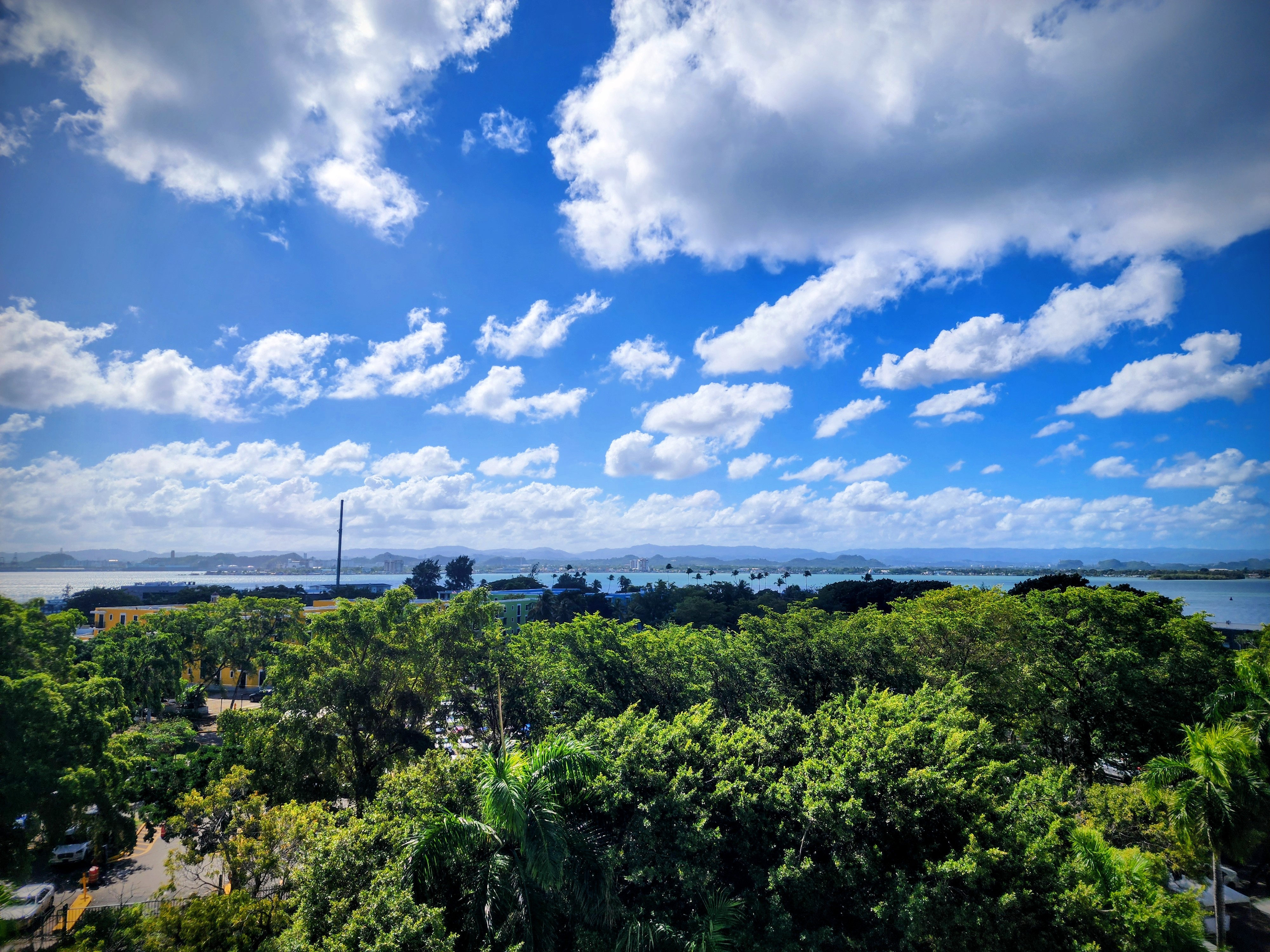
We could see the Bacardi location across the water; Claudia mentioned that the ferry over is 50¢ each way (25¢ if you’re 65+). The passion fruit led to a tangent about a place called Mojito Lab, where you can make your own 32-ounce mojito for $12 — her favorite being passion fruit and coconut.
She also mentioned that 70–80% of the world’s rum comes from Puerto Rico, which I mentally flagged as “verify later,” but after the past few days’ rum education didn’t seem entirely implausible.
Alley Eats & Naming Distinctions: Café El Punto
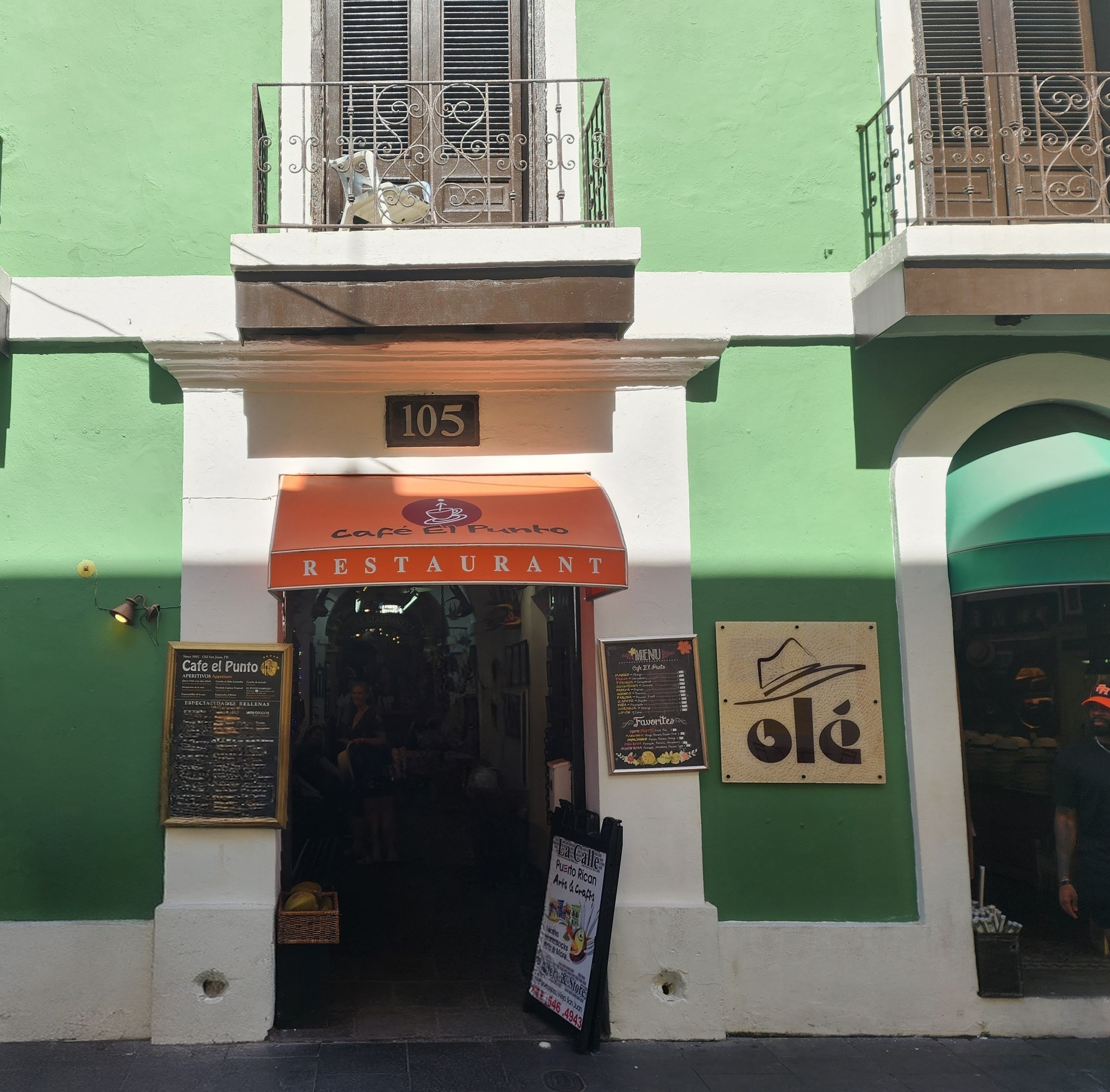
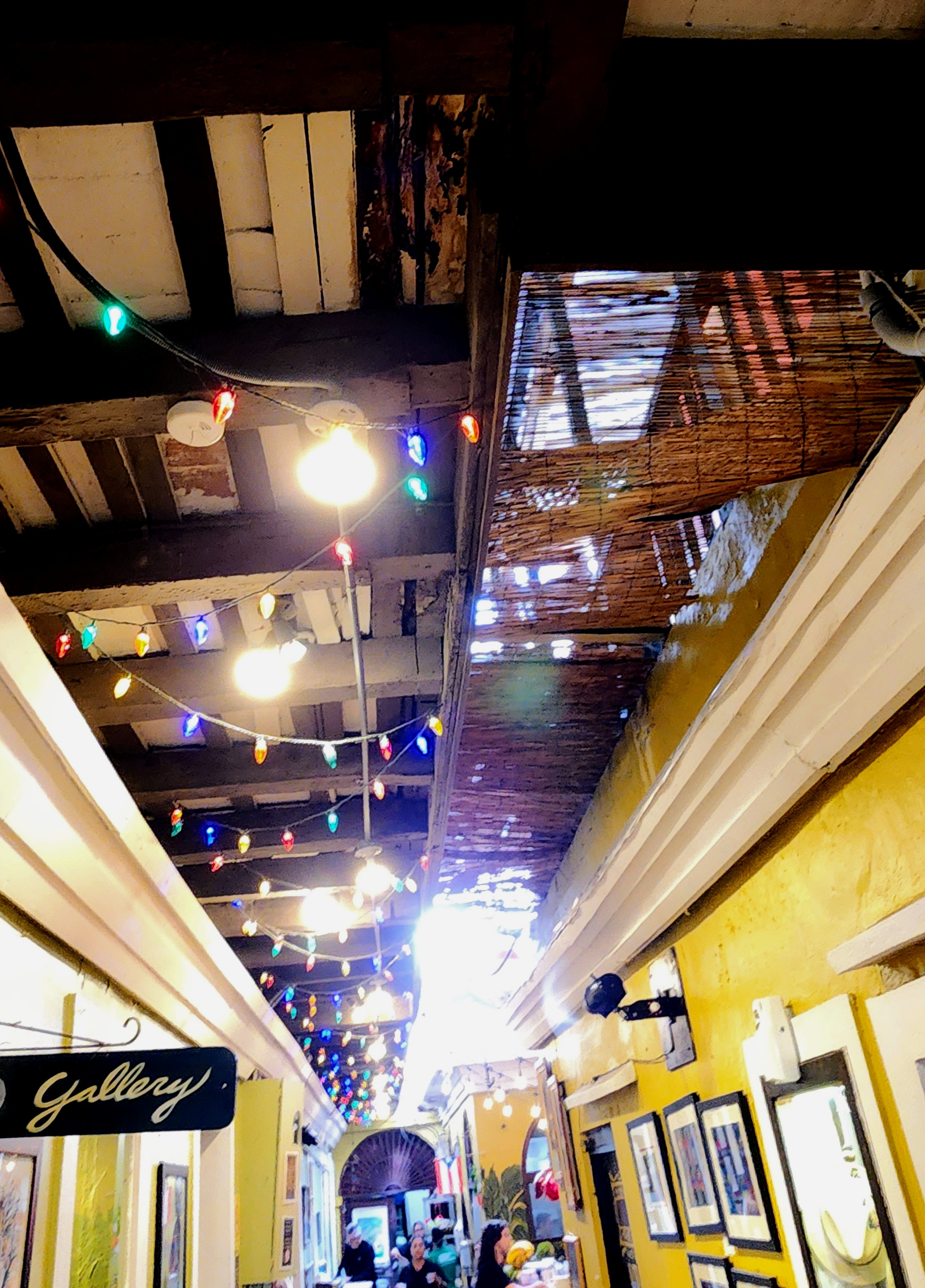
Next stop: Café El Punto — an important distinction from “El Punto,” which Claudia warned is not where you want a taxi to take you (it’s where the druggies hang out and will definitely get you a raised eyebrow from the driver).
This restaurant sits in what used to be an alley. It was closed off in the 1800s as San Juan grew and needed more space. Homes were even built into these alleyways. Today the area is full of bright, cheerful colors — almost South Beach–like.
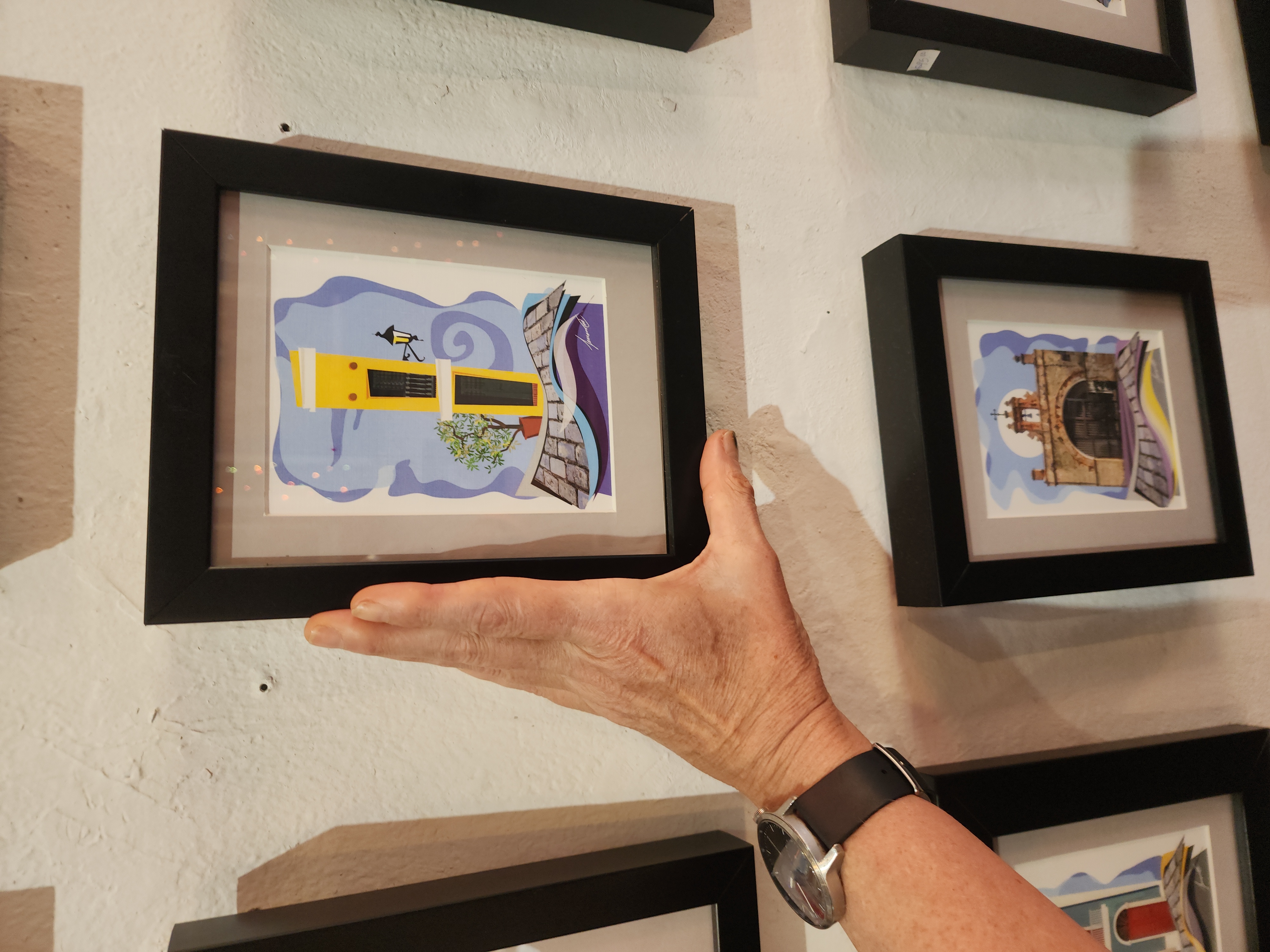
At the entrance, there’s a small gallery where I bought a piece of art depicting an impossibly thin, bright yellow “alley house,” and also a pair of drop crochet earrings that appear to have been made by fairies using individual hairs as needles.
Here we had alcapurrias — deep-fried, cigar-shaped fritters of plantain, cassava, yucca dough with meat inside — that are always served very hot and are common street food, with everyone having their own dough recipe. They came with the ubiquitous pink sauce (ketchup + mayo; everywhere in Puerto Rico) and a runny, non-tomato-based hot sauce that Sharon loved so much she tried to buy a bottle for Donovan.
The server explained, apologetically, that they couldn’t bottle it because it contains yeast and would explode.
. . . Alrighty then.
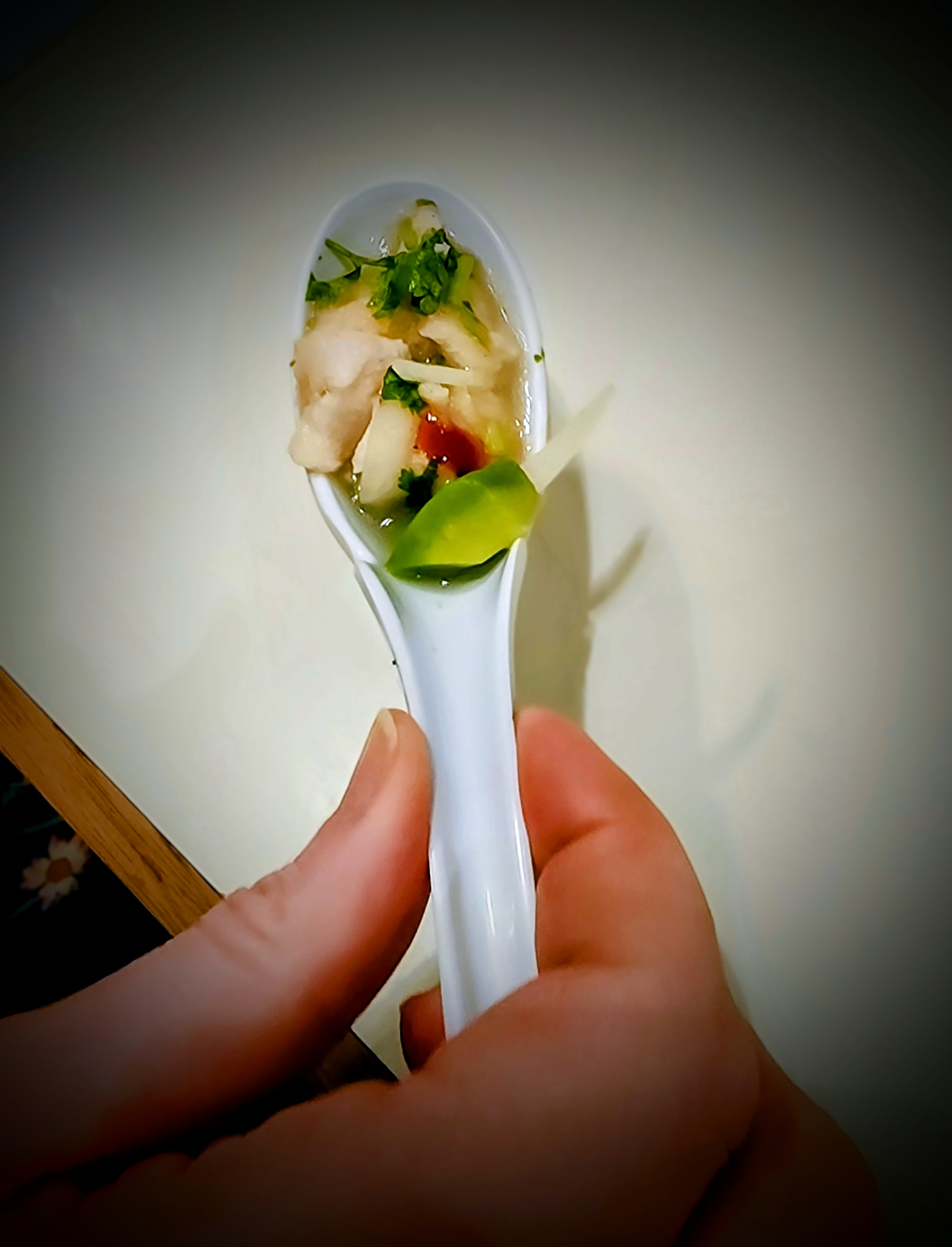
The fish-eaters also had a fresh grouper ceviche with lime juice, cilantro, onions, sriracha and aquacate (tropical avocado); mine was sans grouper. When Claudia tried to show us what tropical avocados look like, Sharon and I thought we already knew — after all, we’d been served avocado halves the size of footballs earlier in the week.
We were wrong.
Claudia pulled out a photo of her dad holding an avocado roughly the size of his torso. Perspective corrected.
Mofongo Muscles at La Mallorquina
From there, we moved onto the main drag and into La Mallorquina, founded in 1848 and widely described as the oldest restaurant in the Western Hemisphere. Inside, two enormous mirrors and a fountain are original to the space.
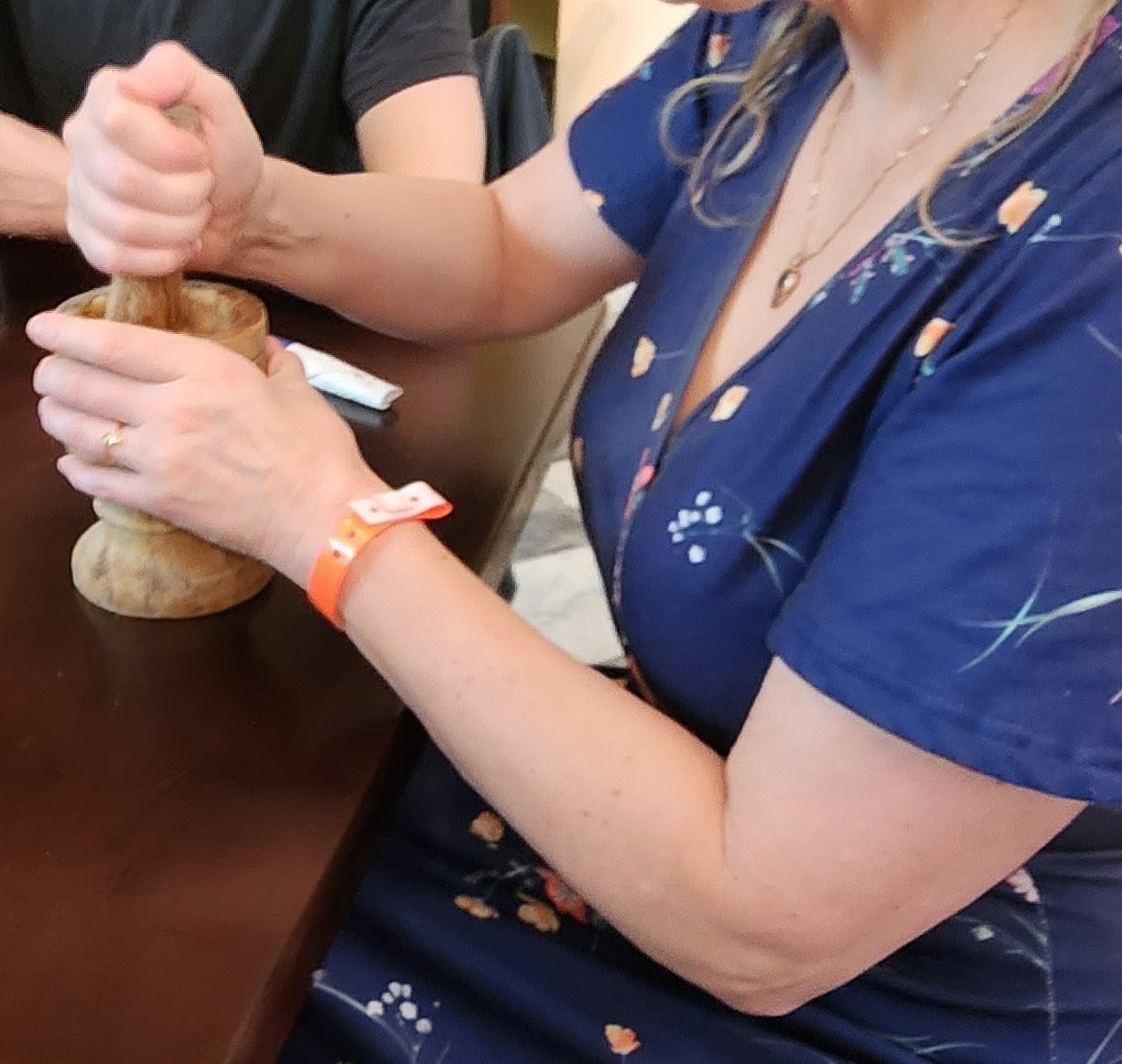
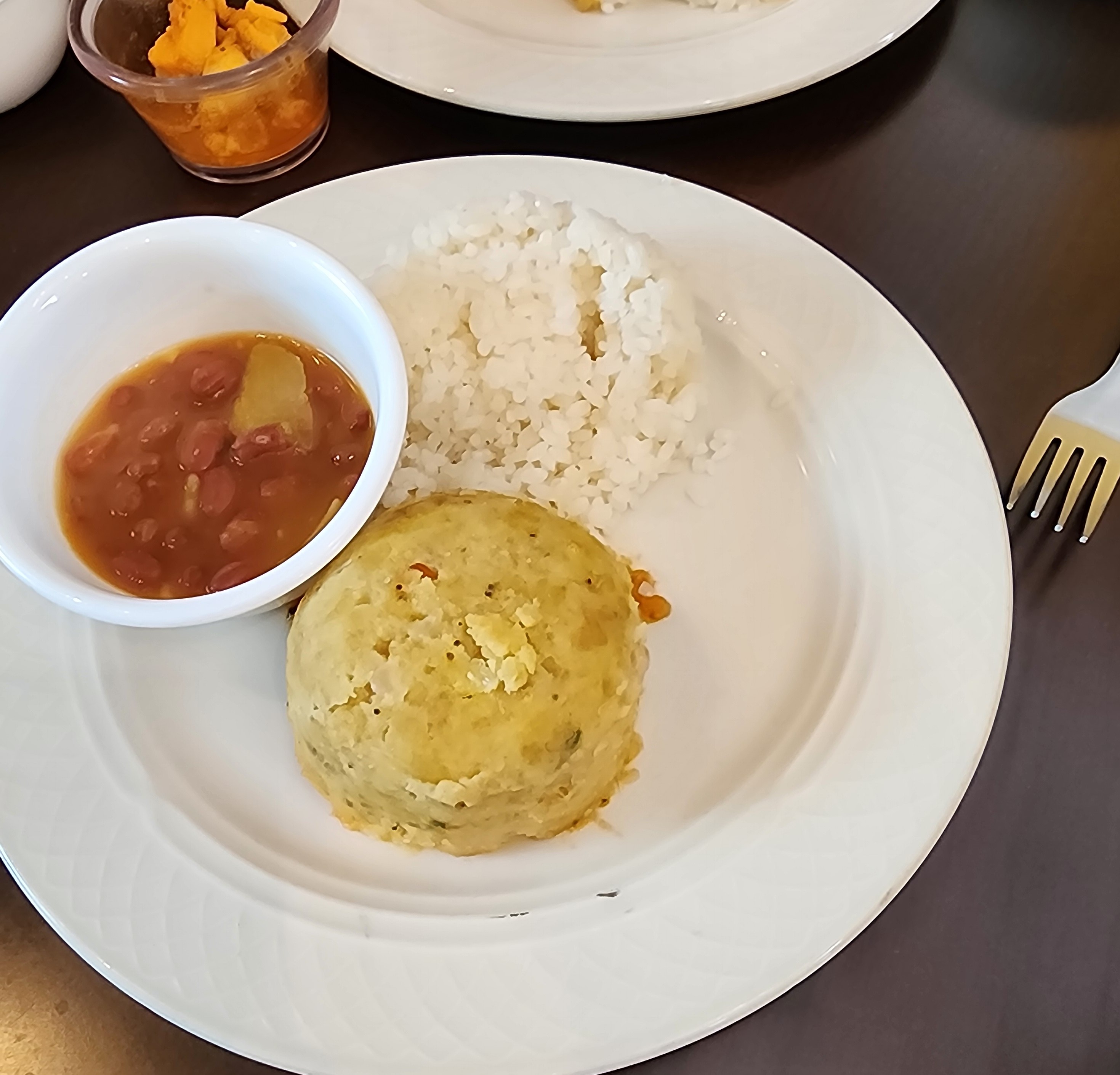
Here, we made mofongo ourselves, each with our own mortar and pestle. Fried plantains, butter, and garlic get pounded into a paste, then flattened into the bottom of the mortar. A hole is made in the center with the pestle, and then you fill the hole with Pollo Criollo (grilled, marinated chicken in broth).
Then comes the moment of truth: loosening it with your knife and flipping it onto the plate.
Sharon executed a perfect inversion with aplomb.
Mine… looked like food. Which is ultimately how it winds up anyway.
The Piña Colada Debate (White vs. Yellow)
We were also served piña coladas, and Claudia made a point of saying they were white: “If it’s not white, it’s not right.”
I respectfully disagreed, citing our Ron del Barrilito mixology class from the day before. According to that lesson, the original piña colada ratio is 2 oz coconut, 2 oz rum, and 4 oz pineapple, served over ice — and if it doesn’t taste like pineapple, it’s not really a piña colada.
Claudia conceded that yes, that was the O.G. version, but said that now the blended white version is more common. Even so, I stand by my position: yellow beats white.
Dessert, Chocolate, and Saying Goodbye
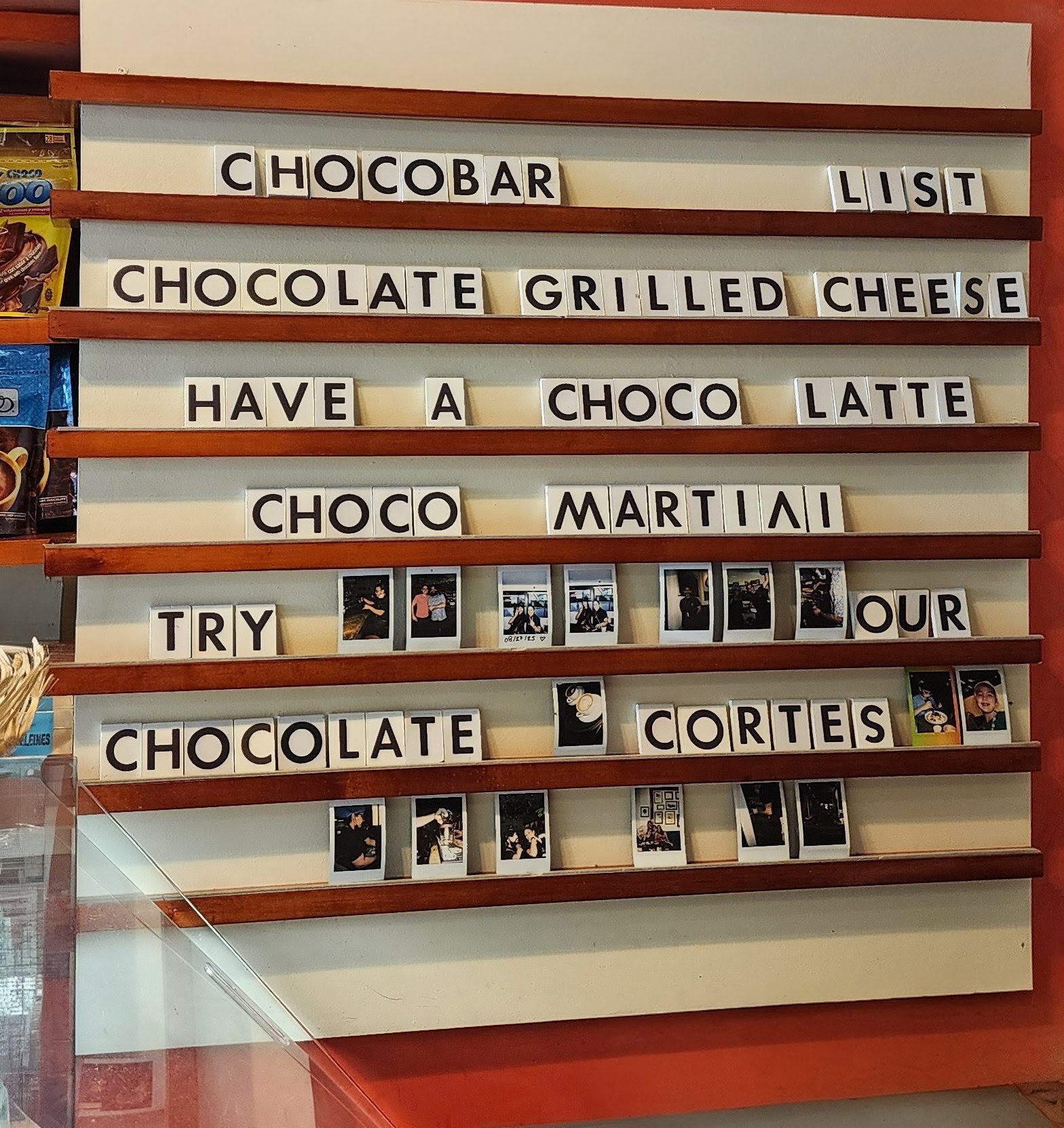
Dessert came at Chocobar Cortés, part of the Cortés family chocolate empire. The founder’s passion was simple: if it could possibly be made with chocolate, he wanted to make it. (I mean, who can dispute a man’s belief that “Everything goes with Chocolate?”) Chocolate grilled cheese. Curly fries with chocolate dipping sauce. Avocado toast with chocolate guacamole. Chocolate salt. Chocolate candles. Chocolate hot sauce.
Given the earlier hot-sauce-that-might-explode incident, Sharon wisely opted for a bottle of chocolate hot sauce for Donovan.
Apparently Don Pedro Cortez Forteza came to Puerto Rico after establishing his “bean to bar” chocolate manufacturing company in the Dominican Republic in 1929, starting the largest chocolate manufacturing empire in the Caribbean. (The company also provides chocolate to Nestle and Hersheys.) There are two ChocoBars in the island: One here, and one about 5 minutes’ drive from the Hyatt! (We happened to spy it on our way home.) There is also one, however, in The Bronx; Claudia said that this is particularly for the “New Yorkicans” who were missing their Puerto Rican chocolate!
We received what can best be described as croissant turnovers filled with dark chocolate and cream cheese (“quesito”). Since Sharon and I were completely stuffed, we chatted for a bit, had the desserts boxed up, and bid adios to our genuinely lovely group.
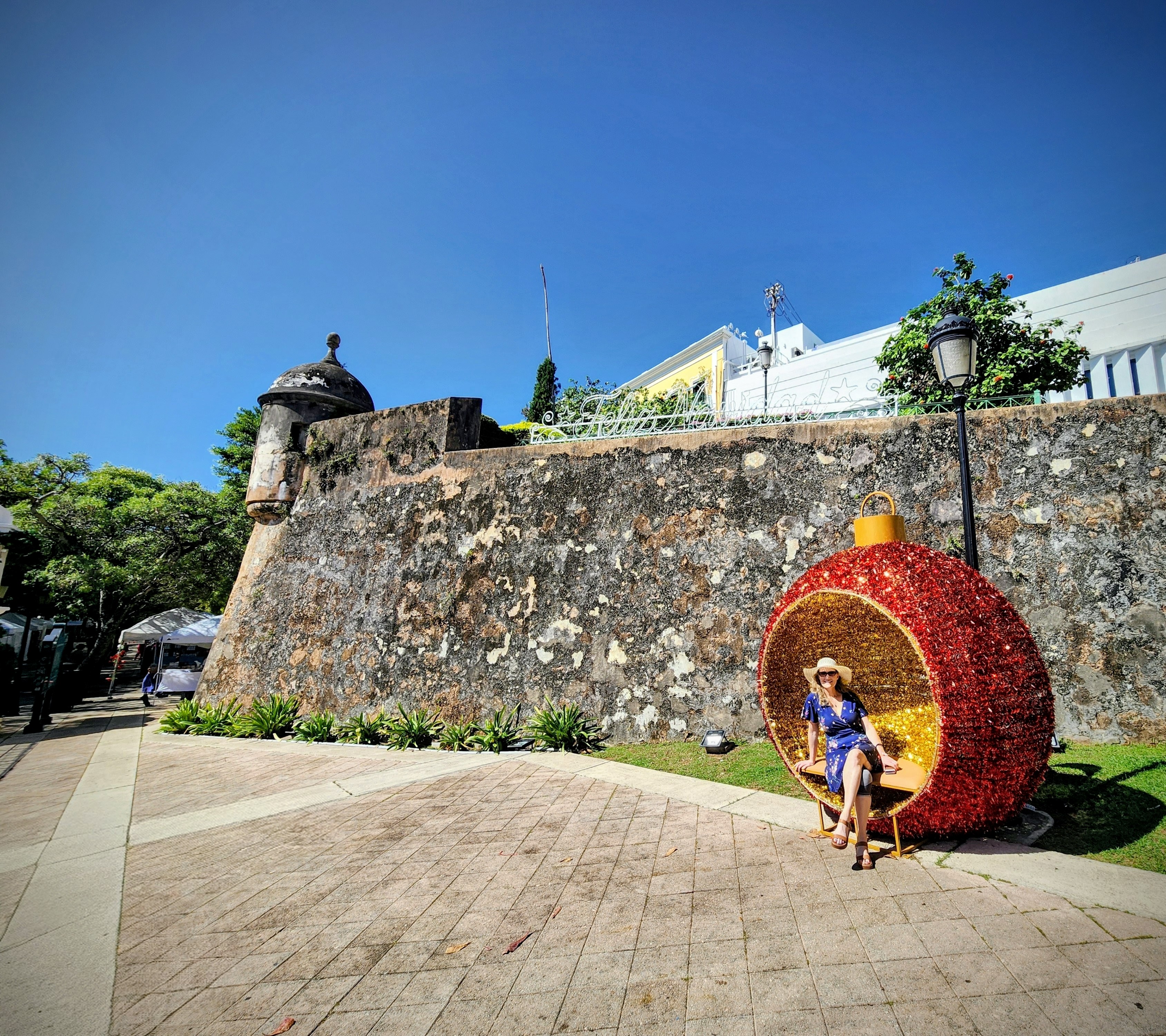
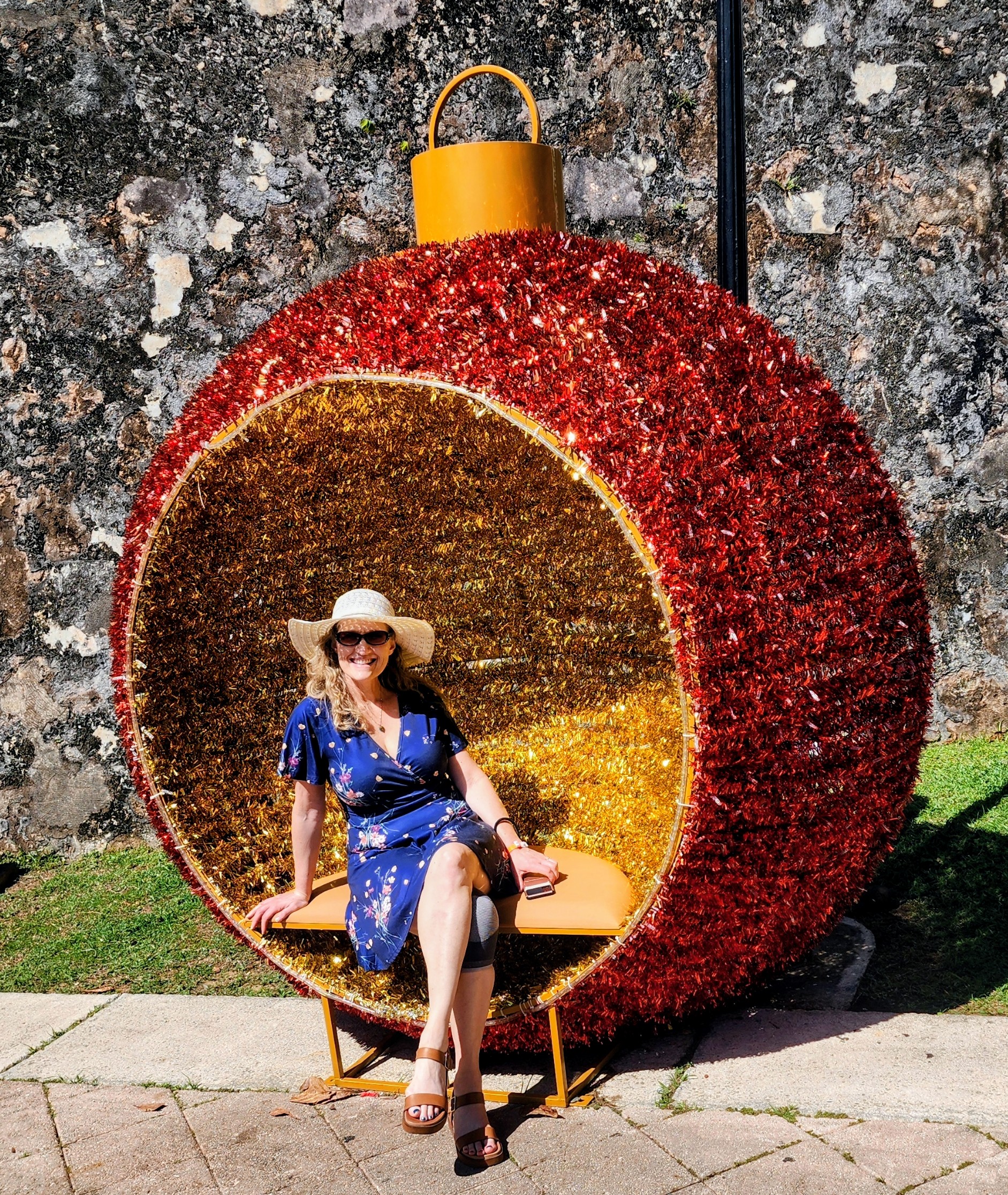
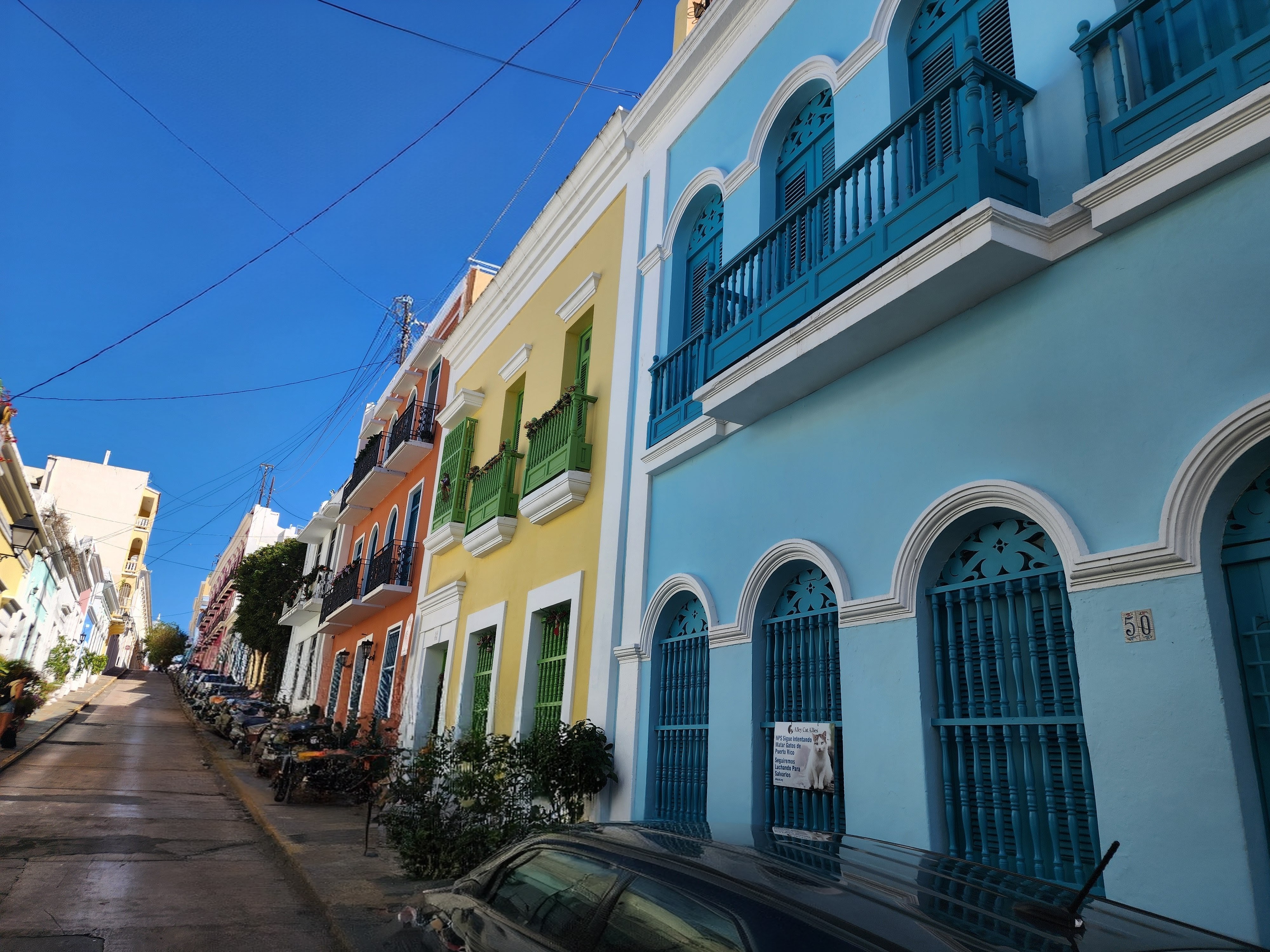
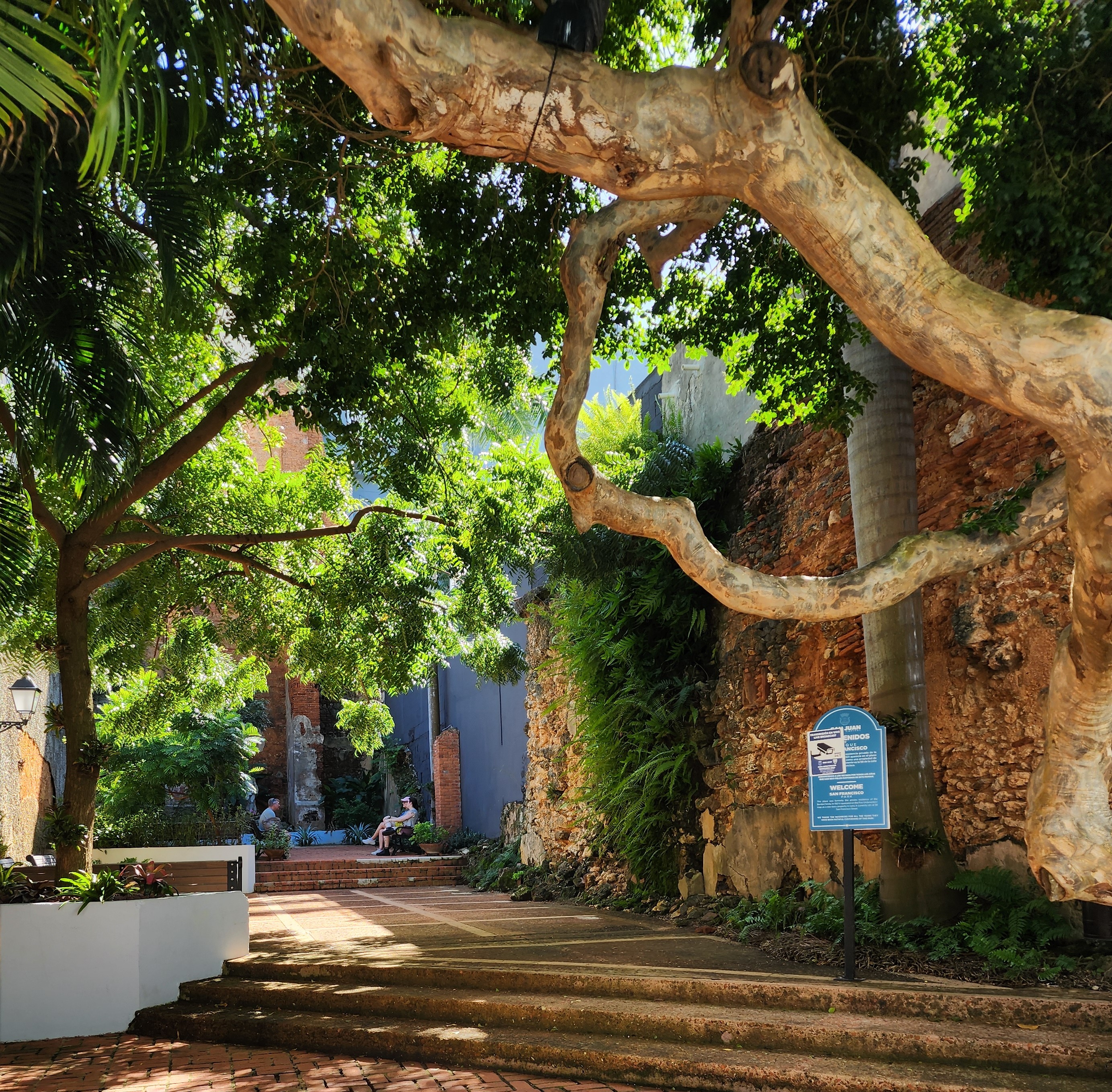
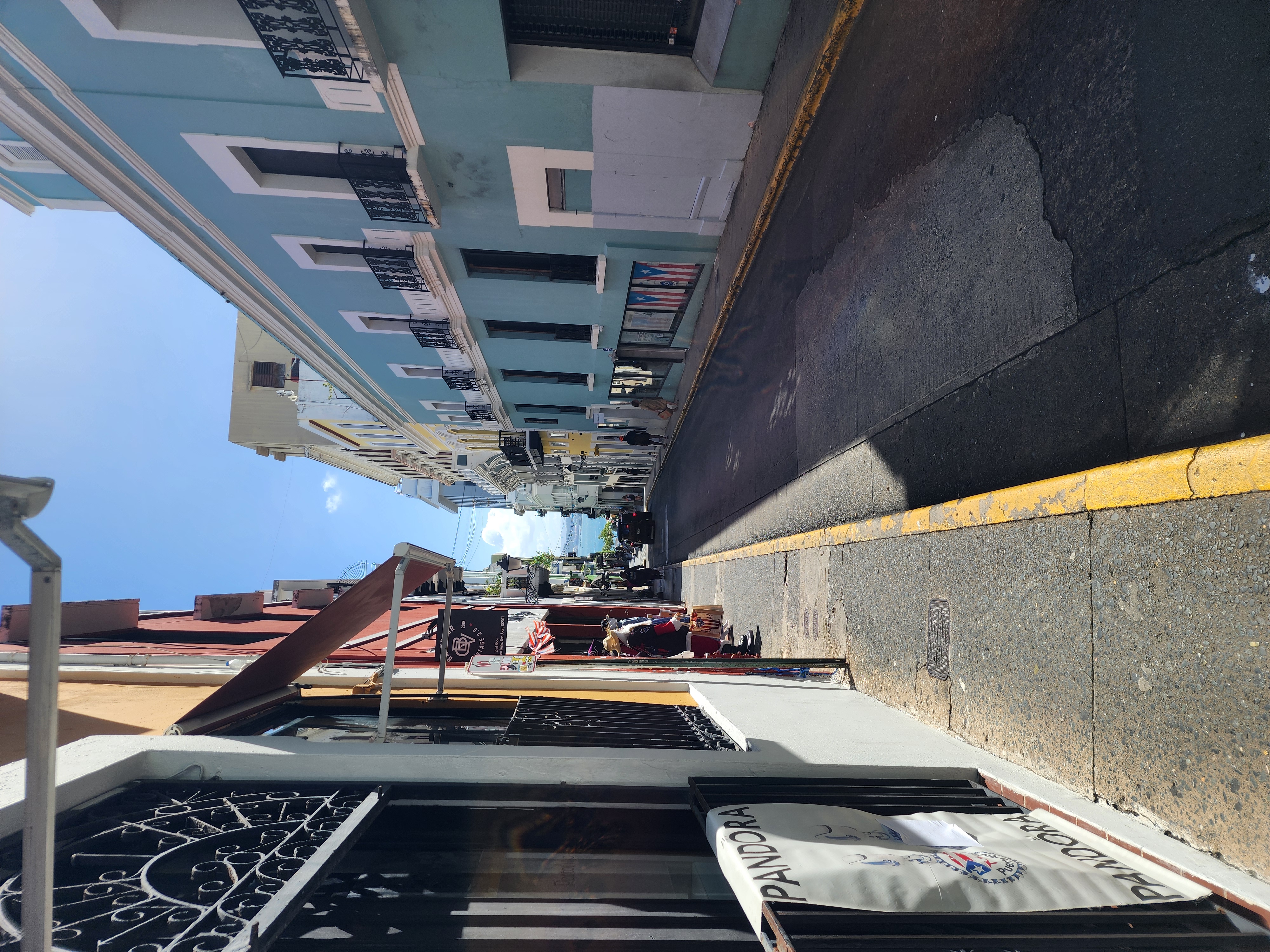
We wandered Old San Juan a bit on our own afterward, including along the battlement walls and into a small Christmas market full of interesting trinkets. It was hot, but it hadn’t rained. (We had umbrellas in our bag, which probably explains that.)
Back to the Hyatt, Forward to Home
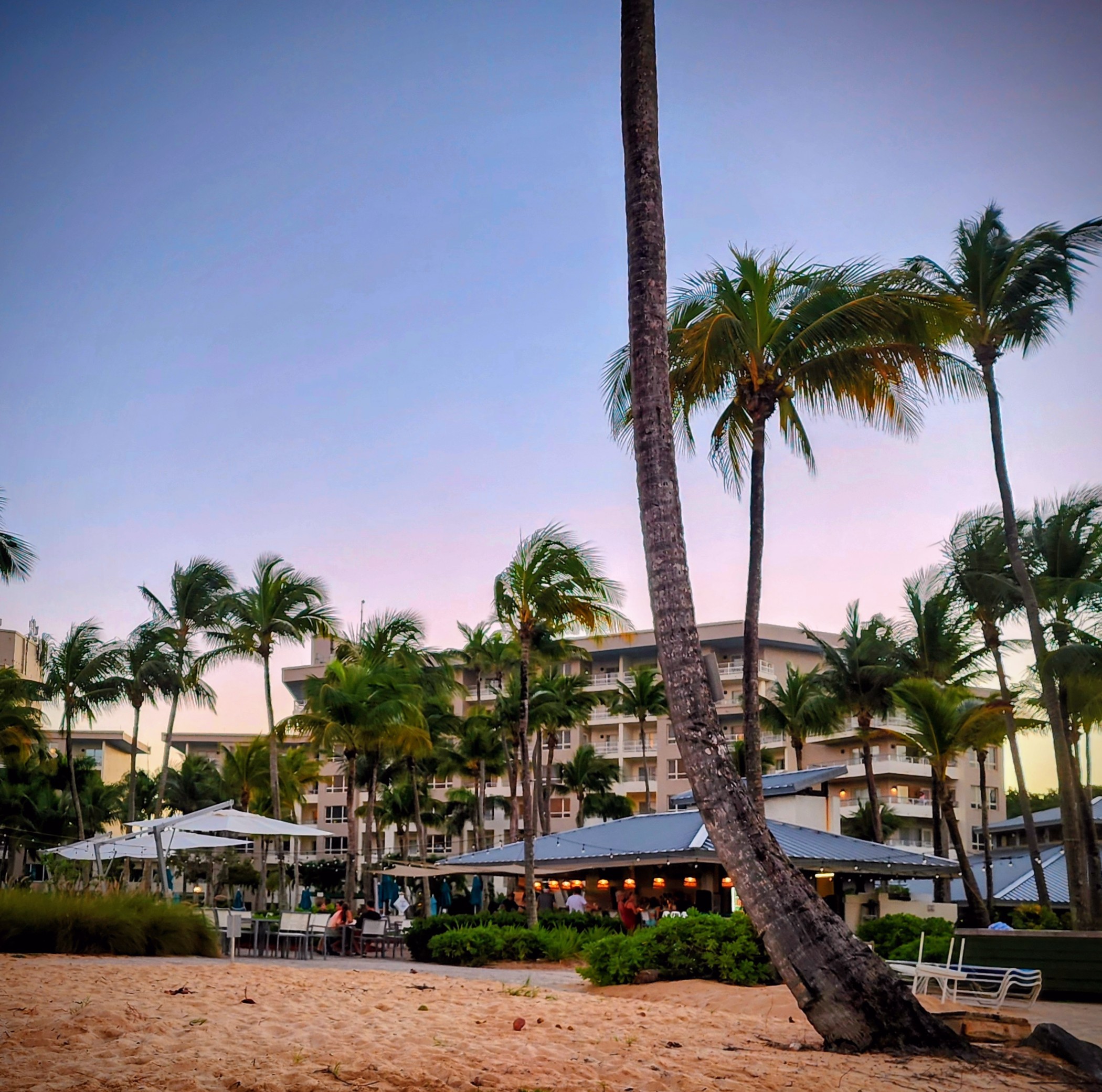
We retrieved the car, drove back to the Hyatt (where I am typing this now), chatted a bit over the chocolate turnovers — and the three rum drinks we had thoughtfully saved from yesterday in our water bottles.
Now we’re packing. We’ll need to check in Melissa’s carry-on because we have breakables, Irritatingly, as of December 1 (we made our plane rezzos in August), American Airlines changed its policy: even in Premium Economy, a checked bag is now $40, and $5 more if you pay at the airport v. online. This is nonsense, especially since when we booked the trip, one checked bag was included.
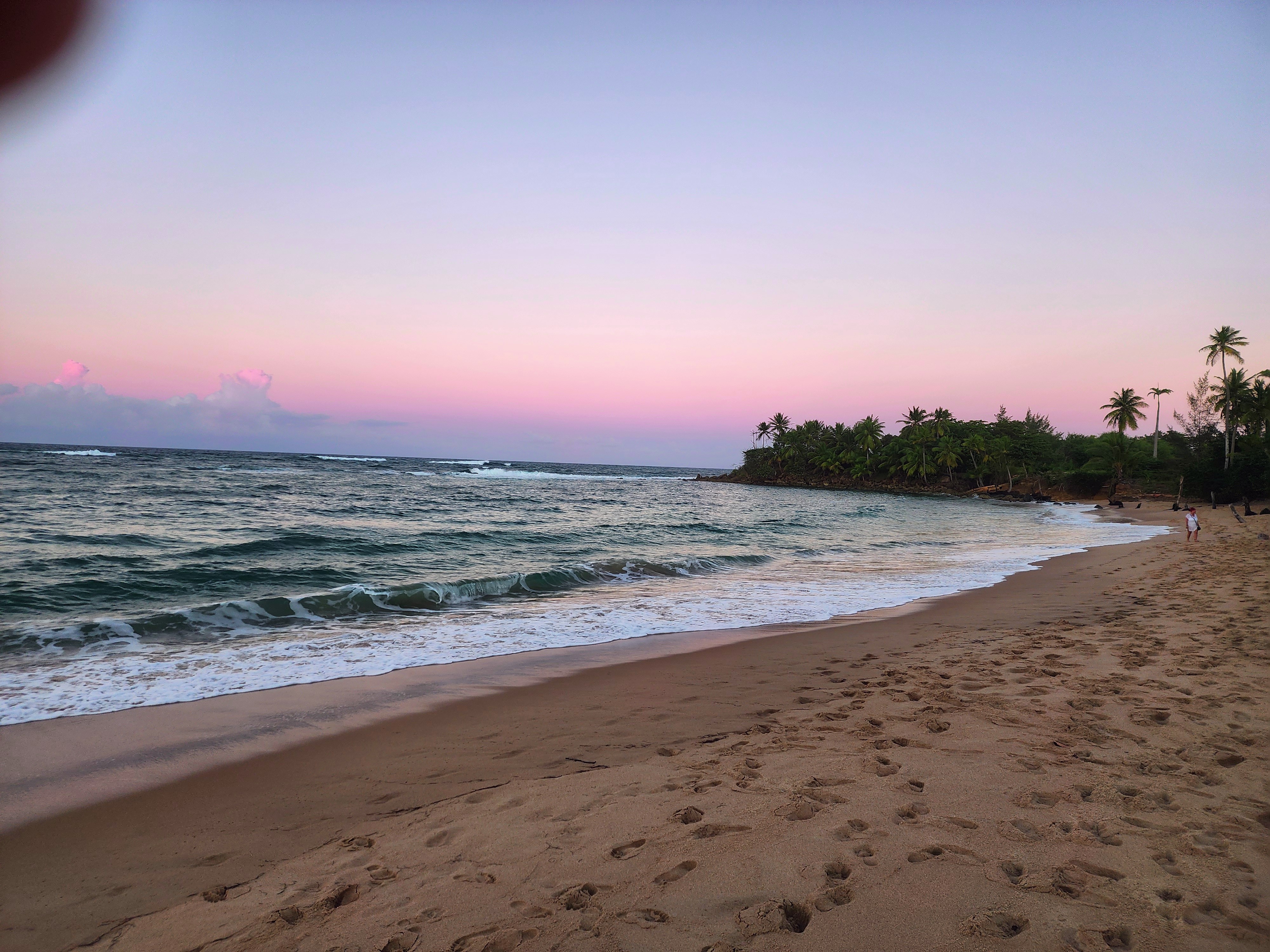
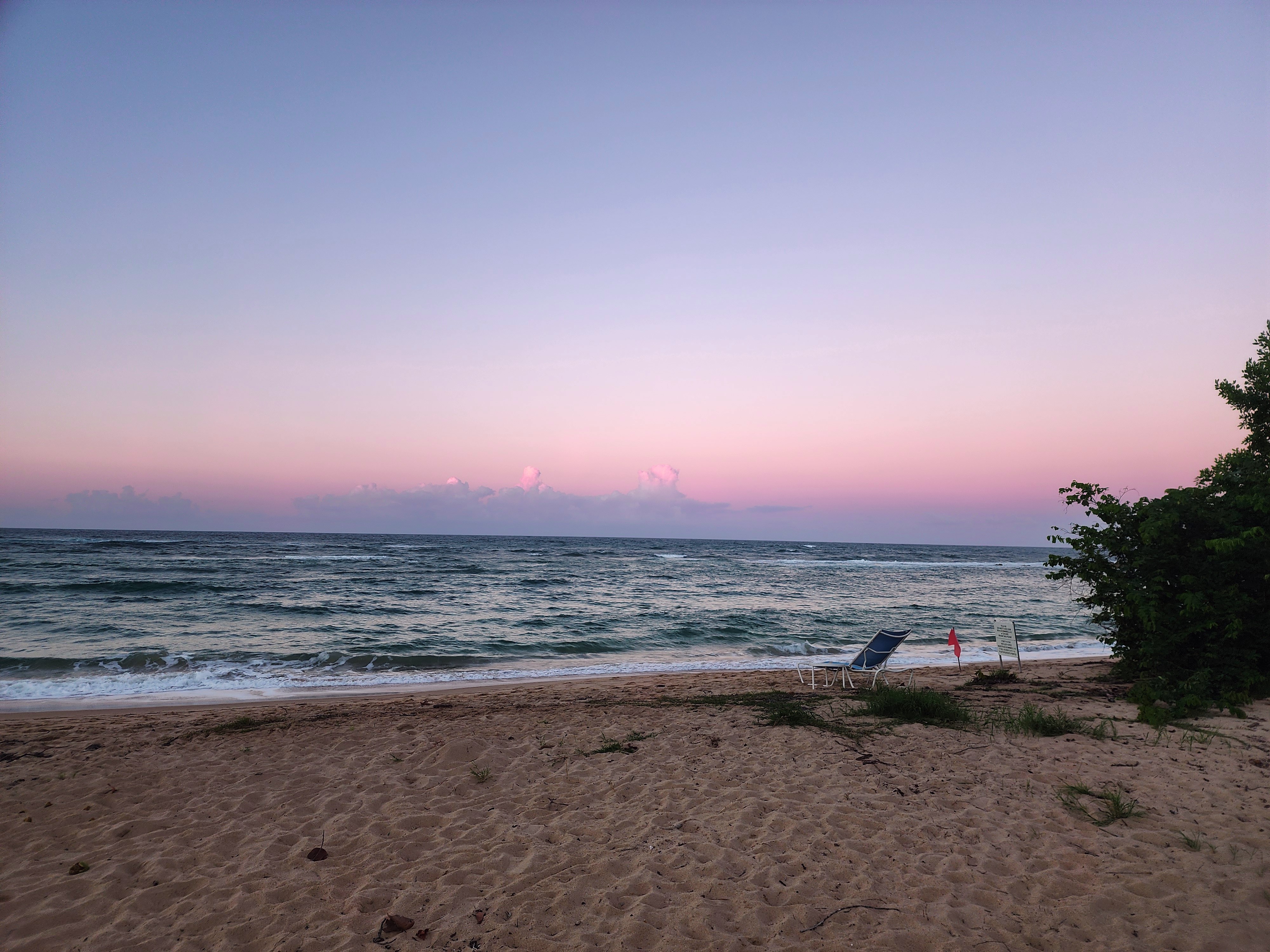
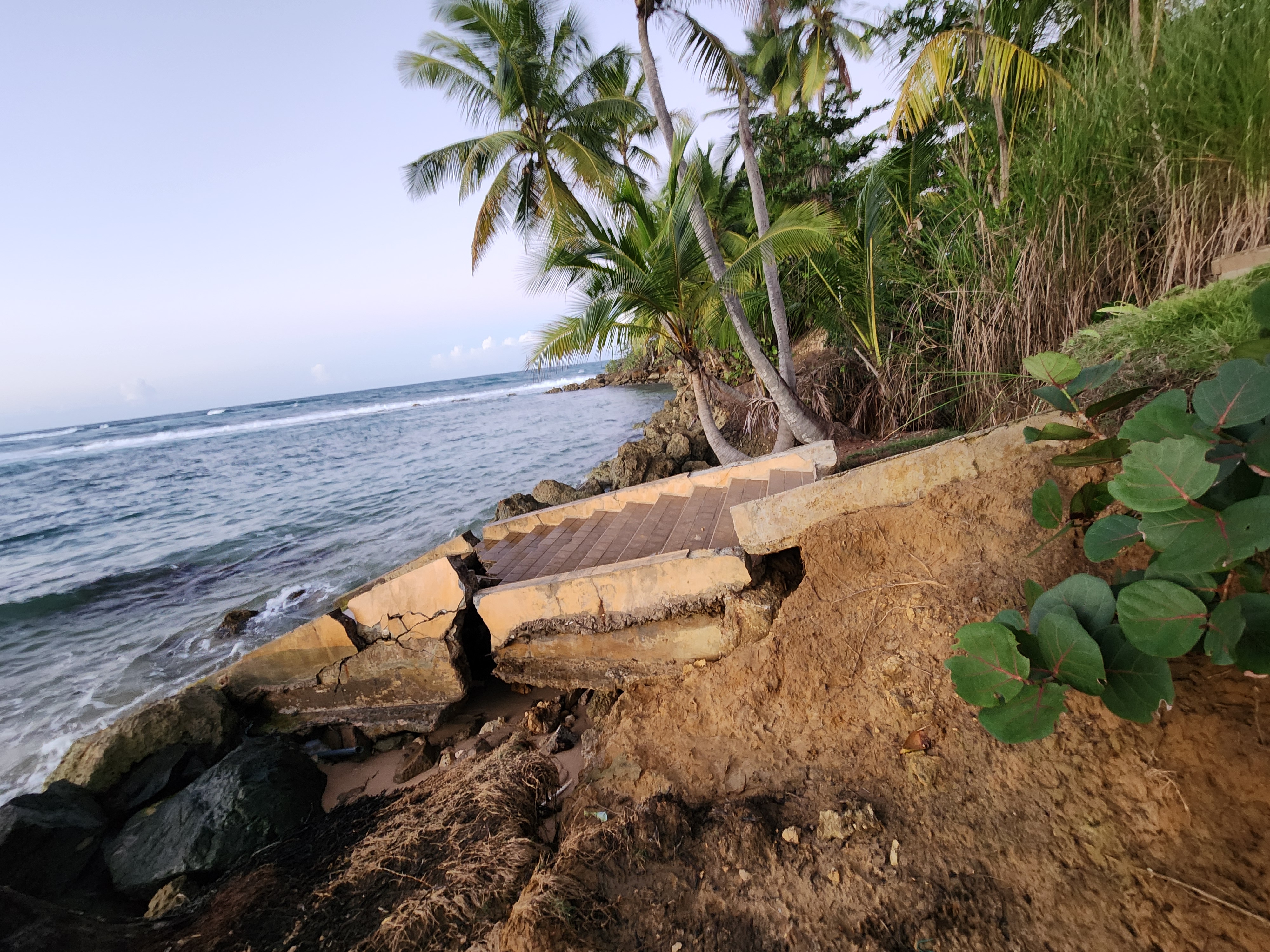
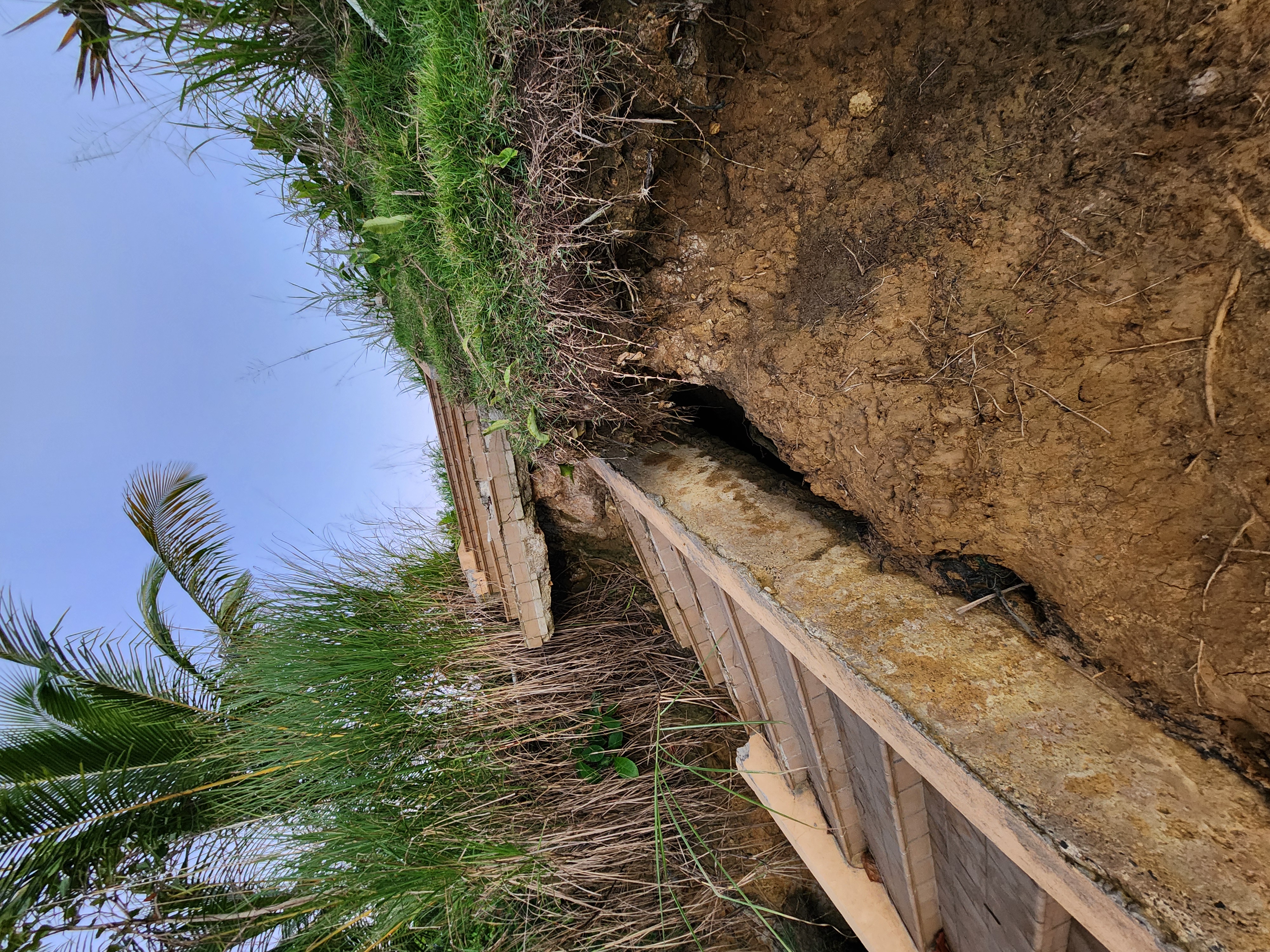
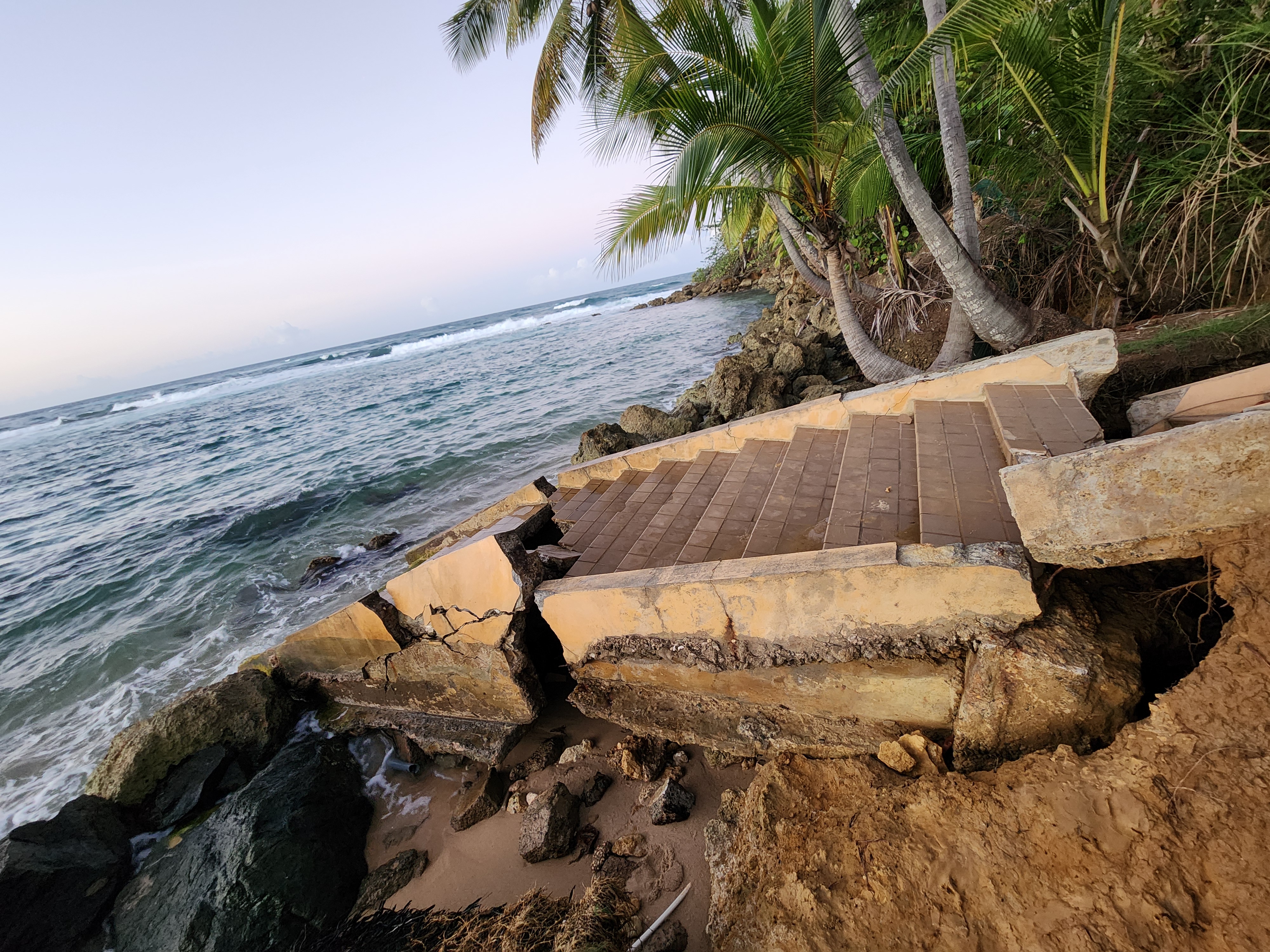
Tonight’s plan is to head down to the beach and find a good spot for the boys’ marbles, then catch some live music and Happy Hour at Mahi Mahi. Yes, this means that between lunch piña coladas and yesterday’s carefully rationed rum with the chocolate turnovers, we are giving Puerto Rico a proper send-off.
Weather, Waiting, and One Last “No”
Meanwhile, back home, the weather gods are apparently in a mood. I got a text from Melissa letting me know that San Francisco is in the middle of a “Pineapple Express” — a full-on atmospheric river bringing steady rain after a couple of weeks of unusually cold weather. December has decided to commit.
We also found out that our Miami flight is now three hours later than originally scheduled. Fortunately, there’s an American Express lounge at MIA.
No more piña coladas, though.
Really. Just say no. No?
Hi Sandy and Sharon!
Your trip sounded amazing!!!
Sandy thank you for sharing your daily adventures!!!
Wonderful pictures!!!! Great stories!!!!
Travel safe!
See you soon!
xxooxx
Sandi
Great location for Jim! I’m sure he and Herbert will enjoy it.