
Today we drove north along Namibia’s Skeleton Coast, a stretch of shoreline famous for fog, shipwrecks, and one of the most overwhelming wildlife spectacles on earth.


The drive itself is long and starkly beautiful — the Atlantic on one side, the desert on the other, and almost nothing in between.
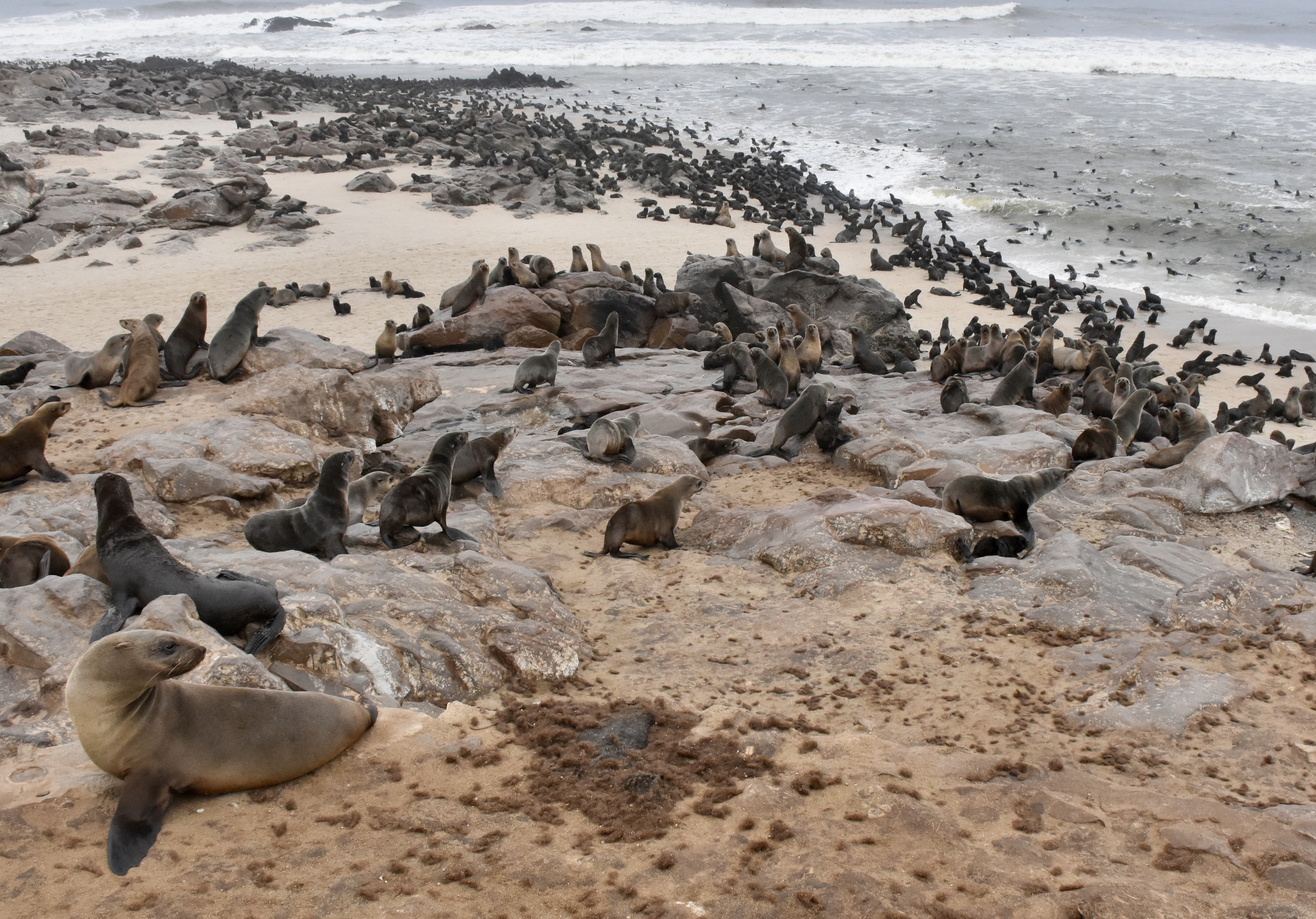
Our destination was Cape Cross, home to the largest Cape fur seal colony in the world.
But first, a bit of history.
The name Cape Cross dates back to the Portuguese explorer Diogo Cão, who landed along this coast in the late 15th century and erected a stone cross (padrão) to mark Portuguese exploration. That cross gave the place its name — and the original now sits in a museum in Germany (“lifted” during the German occupation of this area), though a replica stand at the site today.
History is never simple here.
Two Hundred And Ten Thousand (give or take)
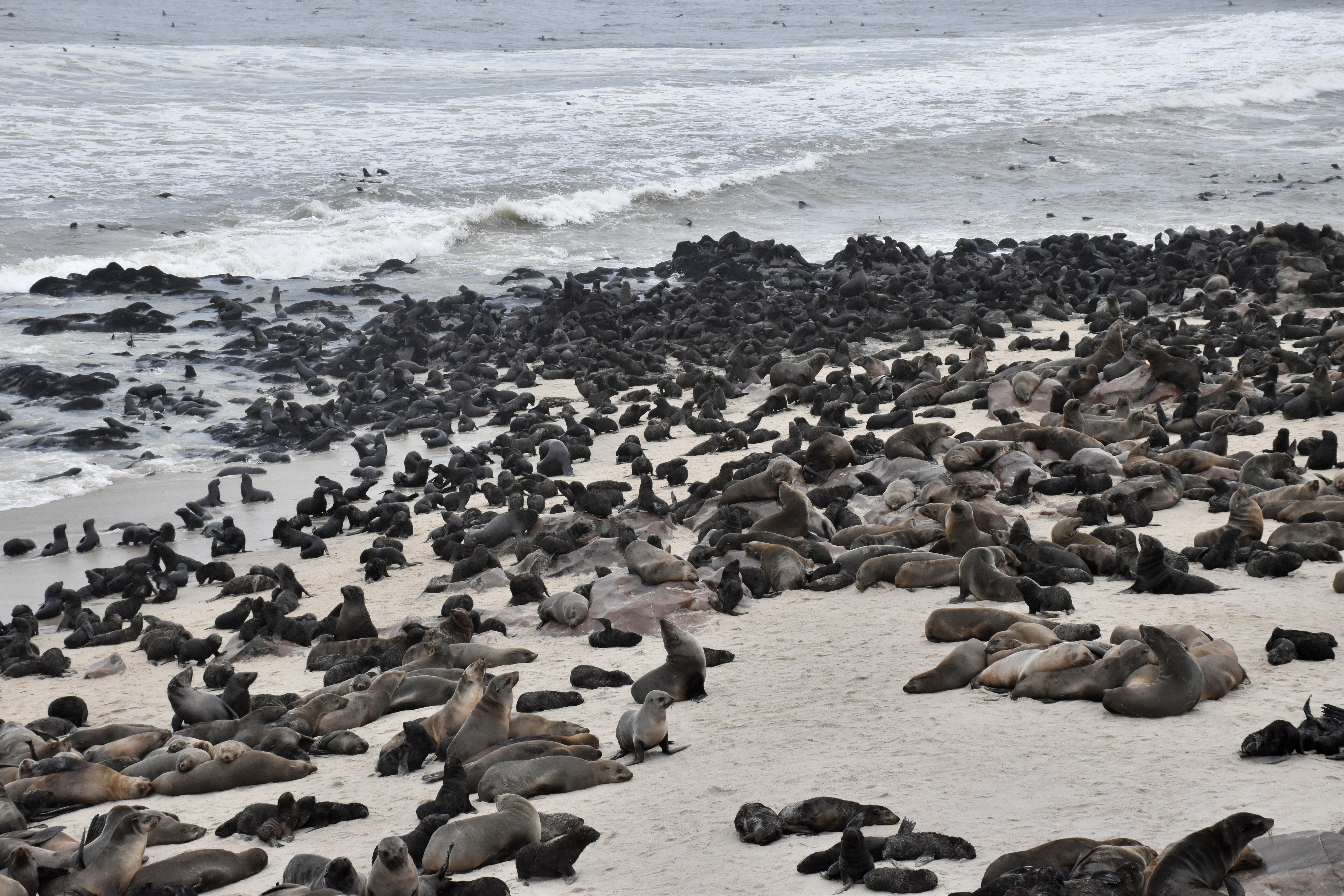
Cape Cross hosts about 210,000 Cape fur seals.
When we first stepped out of the vehicle, we heard what sounded like . . .
cows.
Then . . . goats.
Then something in between.
Only after a moment did it click that every single sound was coming from seals.
The colony stretches as far as you can see — rocks, beach, and dunes covered in a moving carpet of fur.
And then . . .
the smell hit.
There is no delicate way to describe it.
Imagine:
- hot fish
- fermented seaweed
- wet dog
- and approximately 210,000 digestive systems working simultaneously
All gently baking in the Namibian sun.
Your brain goes through phases:
First 30 seconds:
OH MY GOD WHAT IS THAT SMELL
Three minutes:
Okay . . . I can survive this.
Ten minutes:
Look at the BABIES.
And the babies are fantastic.
Huge dark eyes. Soft silver fur. Awkward scoot-flopping movement.
The colony is deafening — mothers calling to pups, bulls barking, waves crashing, wind blowing across thousands of flippers slapping sand.
It’s like standing inside a living ecosystem engine.
Male seals live 25–30 years.
Females can live up to 40.
And somehow all 210,000 of them seem to be having a conversation at once.


The Walkway Incident
The viewing area at Cape Cross includes an elevated wooden walkway that runs along the edge of the colony.
Before we went out, Abraham gave us one very important instruction:
If a seal climbs onto the walkway, back away slowly and do not confront it.
Noted.
At one point Brigitte and I were standing on the walkway, completely transfixed — open-mouthed — staring out at the thousands upon thousands of seals covering the beach.
Suddenly a seal bellowed loudly right behind us.
We grabbed each other in absolute panic, convinced that a massive bull seal had somehow gotten onto the walkway behind us.
Nope.
The seal had simply scootched underneath the walkway and decided to make his presence known.
From below.






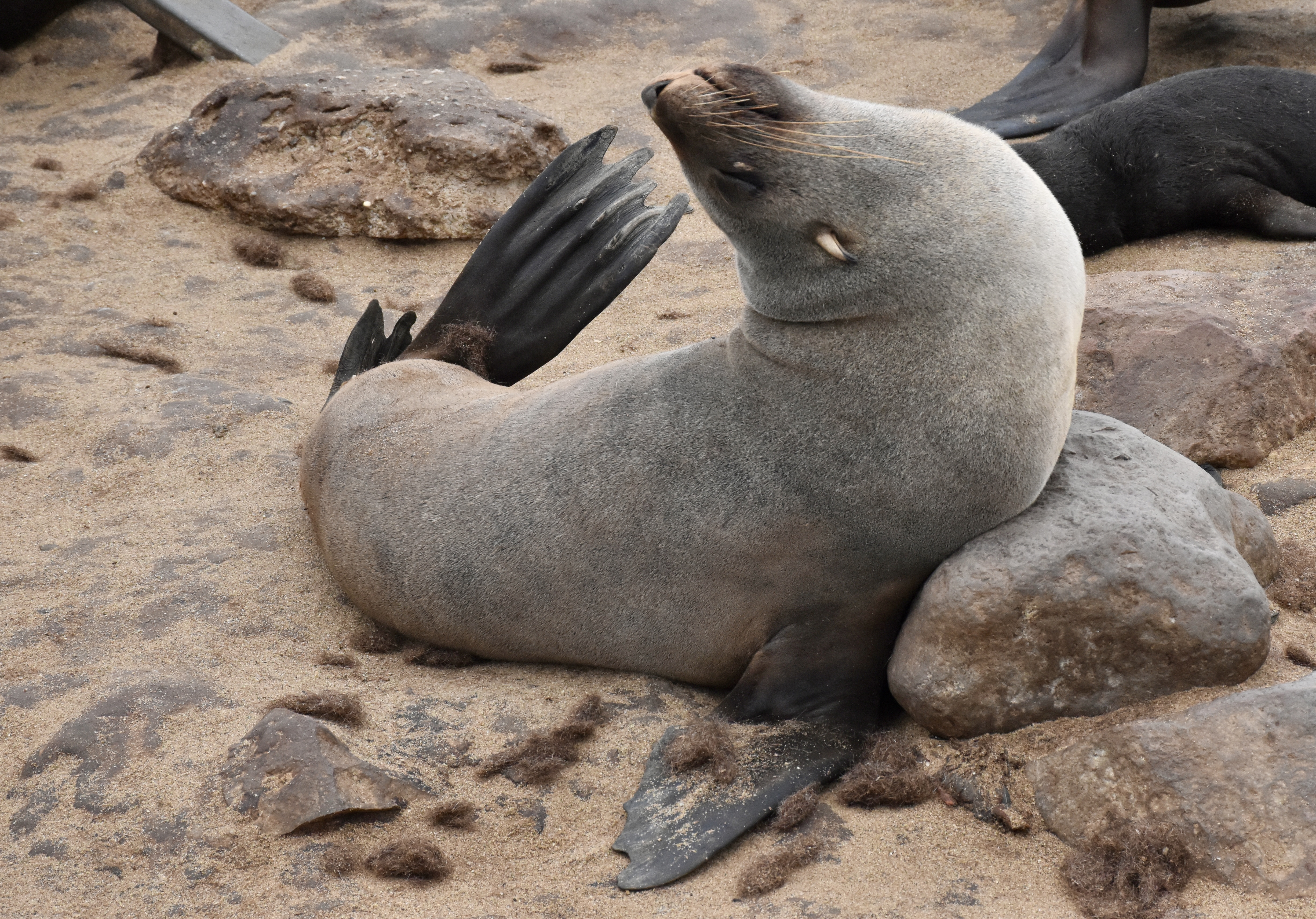


I’m fairly certain he was laughing.
The Funny Part
The truly funny part is what happens when you leave.
After about ten minutes away from the colony, the entire Namibian coastline suddenly smells fresh and wonderful.
Perspective is everything.
A Detour for Lichen
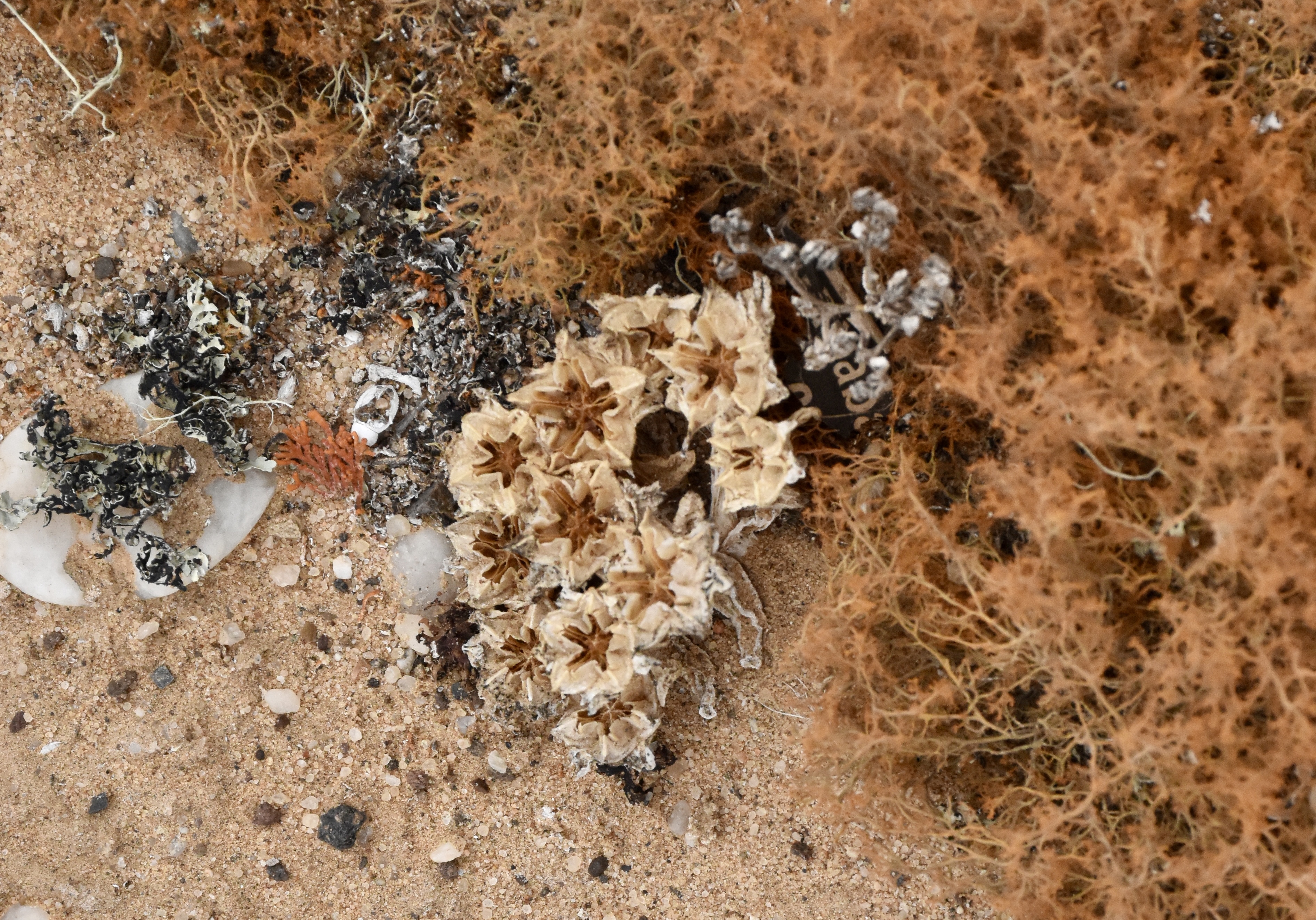


On the drive back from the seals, Abraham pulled off the road to show us something that at first glance looked like . . . nothing at all.
Just pale patches on the desert gravel.
But when we looked more closely, the ground was covered with lichen, some of it decades — even centuries — old. These delicate organisms survive in one of the driest environments on earth by absorbing moisture directly from the coastal fog that drifts inland from the Atlantic. Abraham poured some water on a patch – which transformed.
They look fragile because they are.
A single footprint can destroy growth that took many decades to form. For that reason visitors are asked to stay on specific paths and tread very carefully.
It was one of those quiet reminders that in a desert landscape that appears empty, life is actually working very hard just to exist.
Lunch, Namibian Style
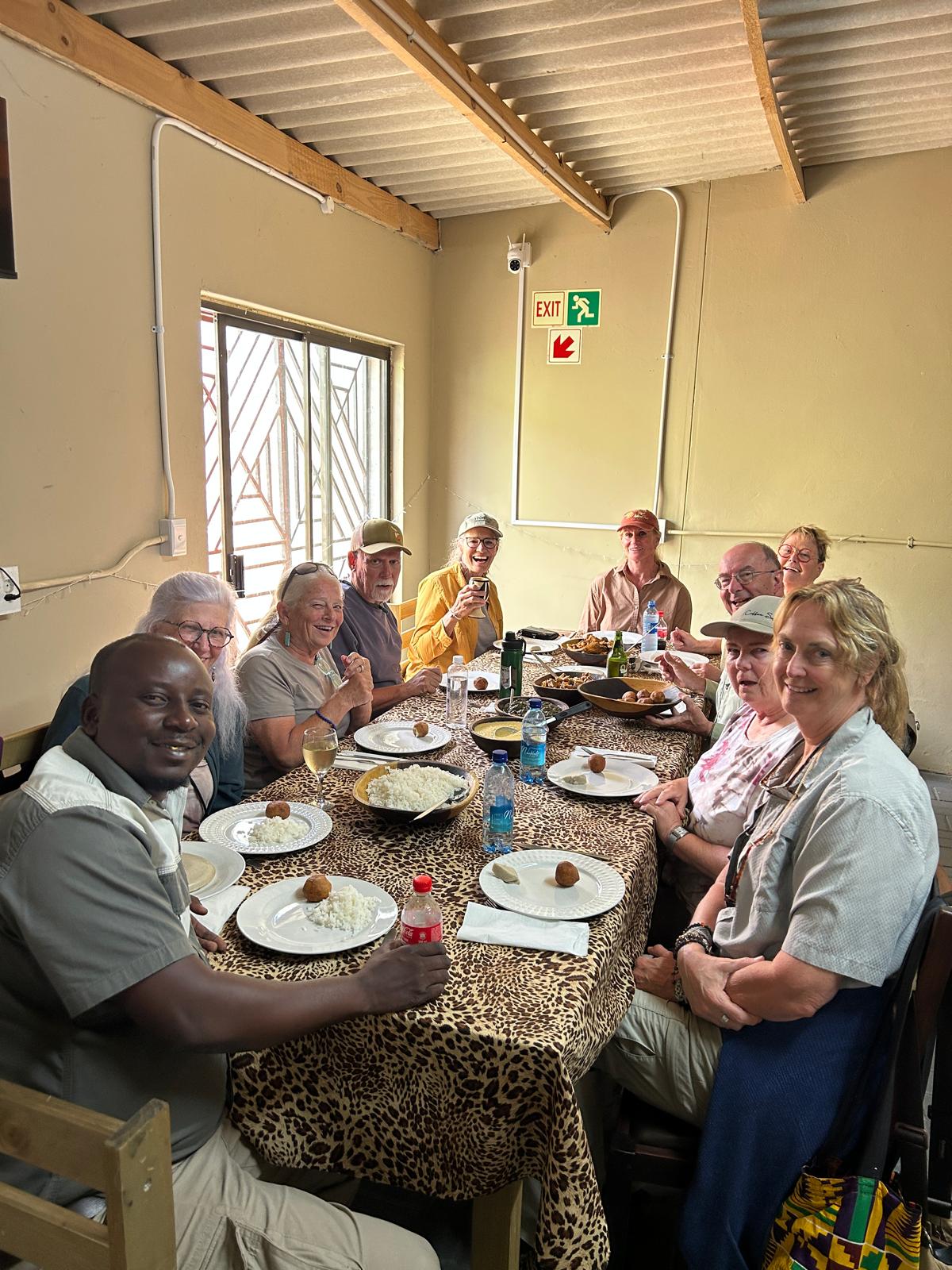
After the long drive back south, Abraham took us to a small local restaurant he knew for lunch.
Here we were introduced to a very traditional Namibian way of eating.
The centerpiece was sorghum paste, which you pinch off with your fingers and use as a scoop for the food on your plate.
Our dishes included:
- black-eyed pea mash
- spinach (which Abraham cheerfully admitted were essentially local weeds)
- chicken pieces
- beef stew
The spinach came with a bit of sand still in it, which only added to the authenticity.
After we ate, a local a cappella group came in and serenaded us.
One of the songs was “The Lion Sleeps Tonight,” which felt particularly appropriate given where we are. I sent a Marco Polo video to a few friends, because sometimes travel hands you moments that are too delightful not to share.
The Township
After lunch Abraham offered to take the group through the DNC township outside Swakopmund.
Townships in southern Africa developed during apartheid-era spatial policies, and still house the majority of working-class residents. The one we passed through consisted largely of corrugated metal and cardboard structures, one pressed against the next in dense rows.

Cardboard house upon cardboard house upon cardboard house.
Everyone but the wealthy lives there.
Some members of the group chose to walk through the area with Abraham and speak with residents.
Lynn and I opted to sit that portion out.
Travel sometimes offers windows into other people’s lives that are important to see — but also difficult to process in the moment.
Back to the Hansa
We returned to the Hansa Hotel late in the afternoon.
Dinner was scheduled for the group, but I quietly opted out.

Instead I ordered room service, including a Namibian classic dessert cocktail called a Dom Pedro — ice cream blended with Amarula, the cream liqueur made from the marula fruit.
Research purposes, obviously.
Getting a bottle of this back home for Sharon and Stacey to try is going to be my next big life goal.
My current goal, however, is to finally get the blog caught up, which after several very full days had fallen a bit behind.
Of course that still leaves processing today’s photos . . .
including approximately 210,000 seals.
Stay Tuned.
Tomorrow, we leave for Sossusvlei (which I keep humming to Phil Collins’ “Sussudio”) . . . about a six hour drive. Without traffic. Inflatable seat cushion, comin’ out.
I never get a percentage from any links I include – but! – if you are curious about Overseas Adventure Travel and want $100 off, call them at 1-800-955-1925 and request their amazing catalog, tell them you were referred by Sandy Shepard, customer number 3087257, and get $100 off your first trip! The catalog is what all good dreams are made of!