
I’m sitting on the veranda at Babson House early in the morning with a cup of coffee, listening to dozens of different bird calls echoing across the Namibian bush.
Then I hear another sound.
At first it blends in with everything else — a low rhythmic rumble — but something about it feels familiar.
I lean forward and look over the edge of the veranda.
One of the cheetah boys has flopped down directly below.
And he’s purring.
Not a little rumble. A full, deep, contented purr — the unmistakable sound of a very large cat who has decided that this particular patch of earth is exactly where he wants to be.
I may have died and gone to heaven.
Apparently heaven has cheetahs.
And the frothy cappuccino I just made in our kitchen.


The Cheetah Run
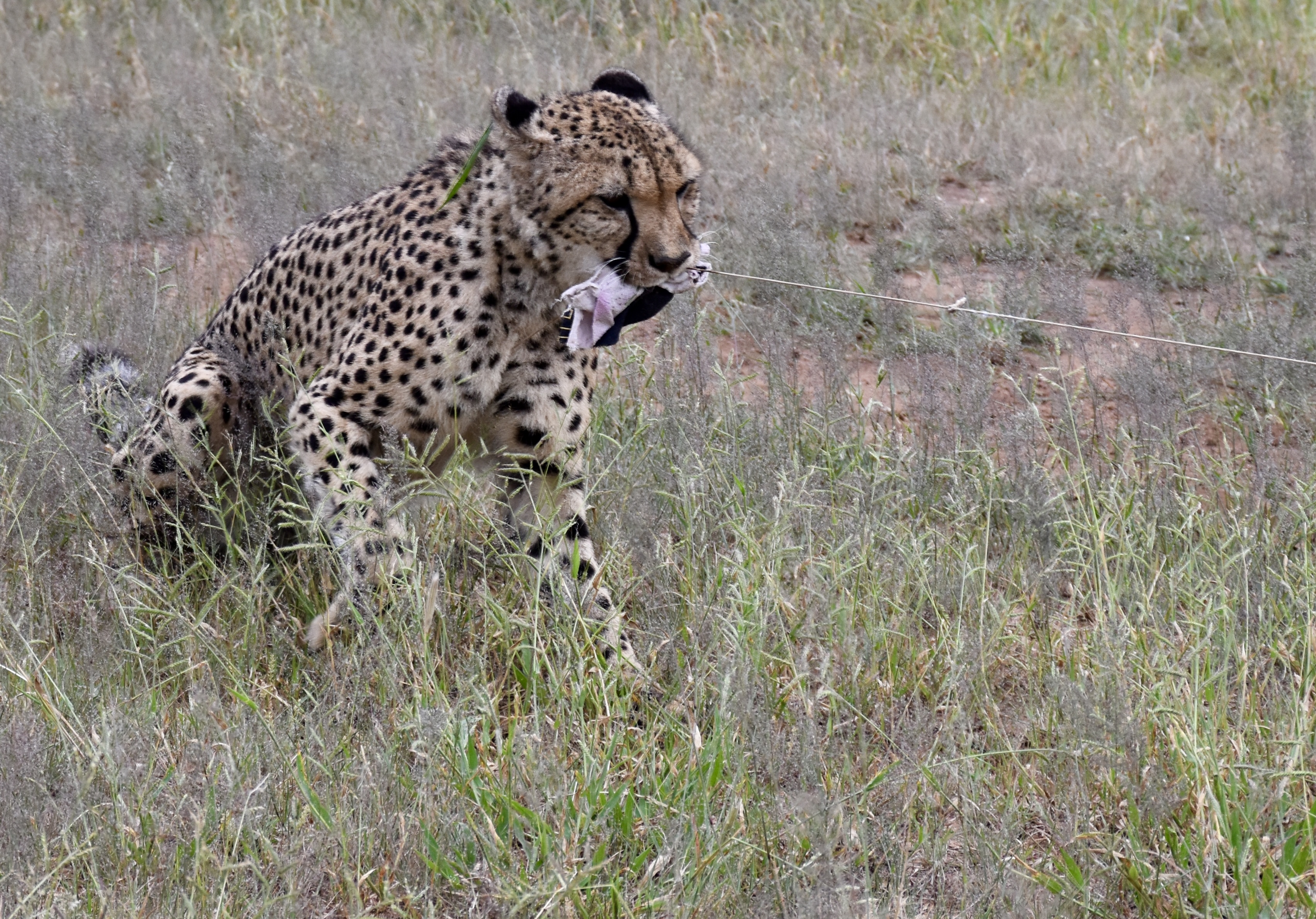
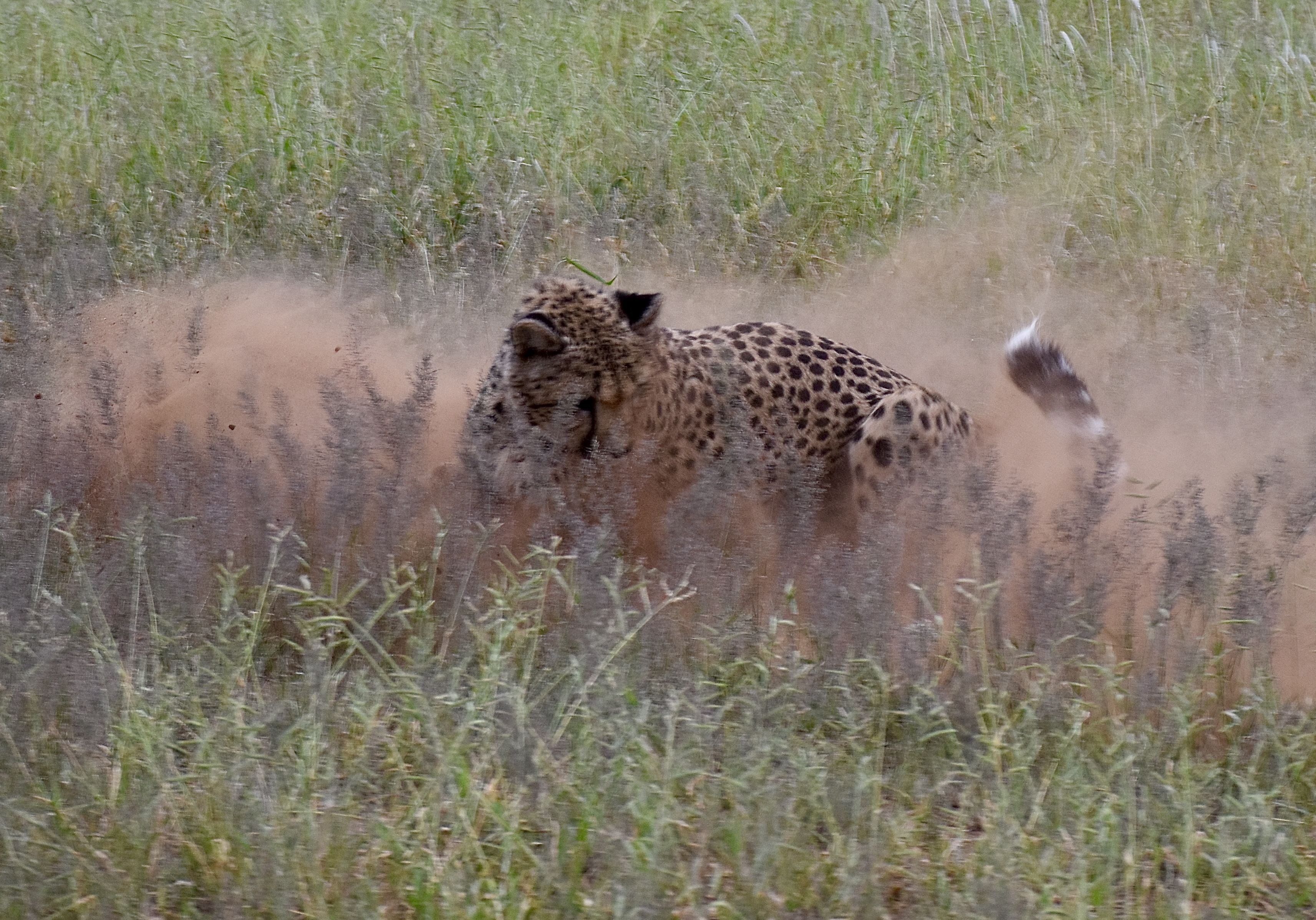
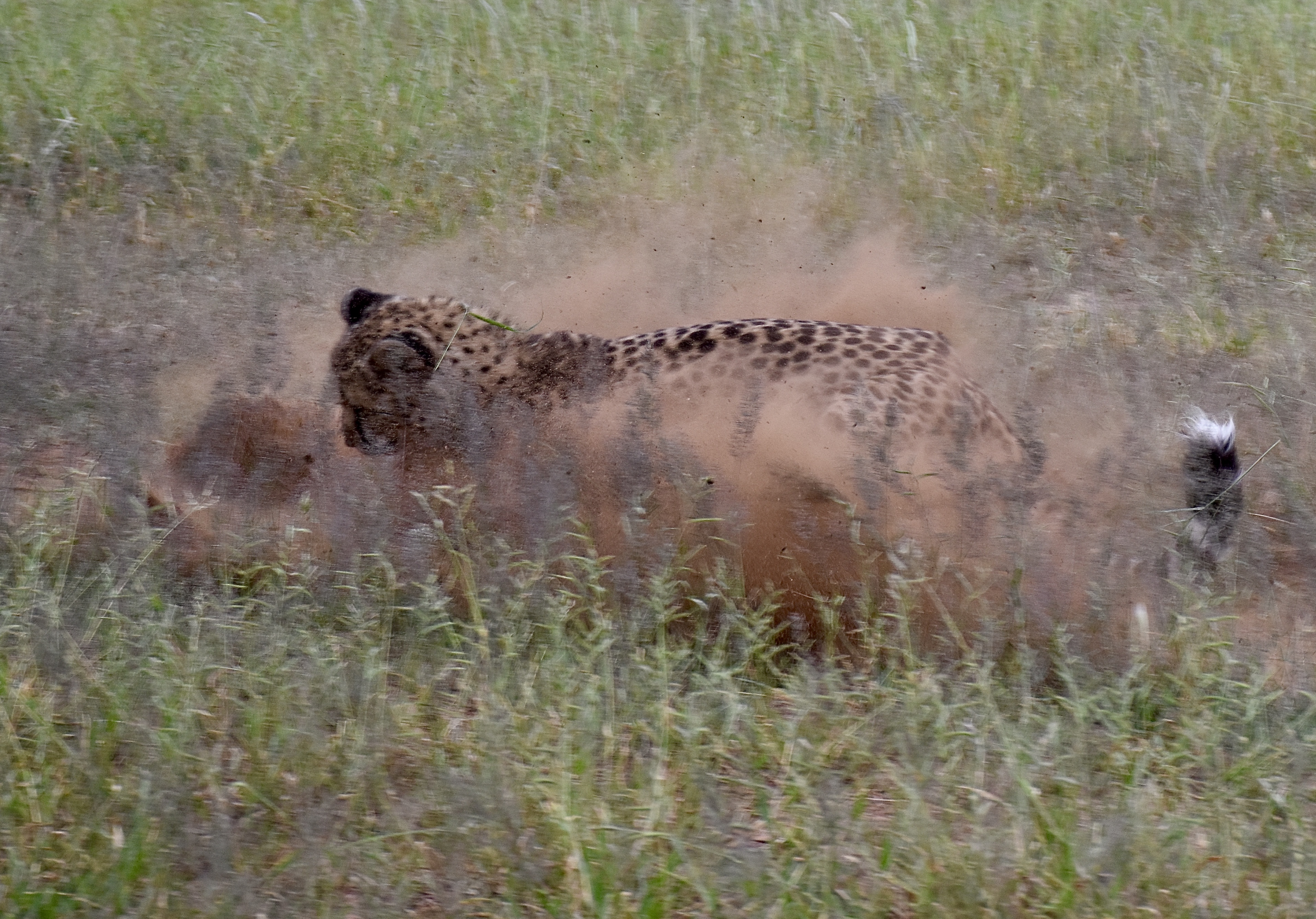
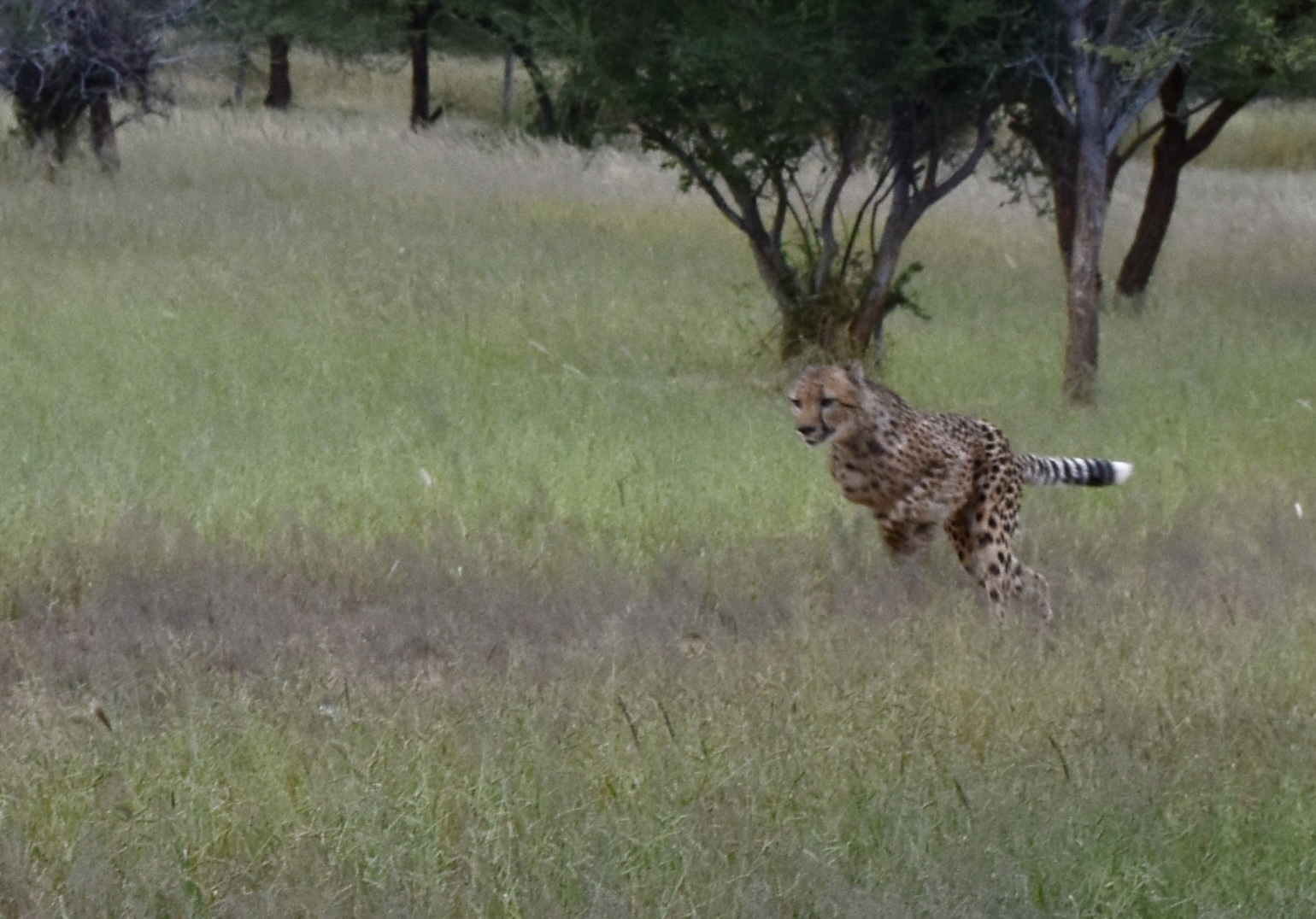
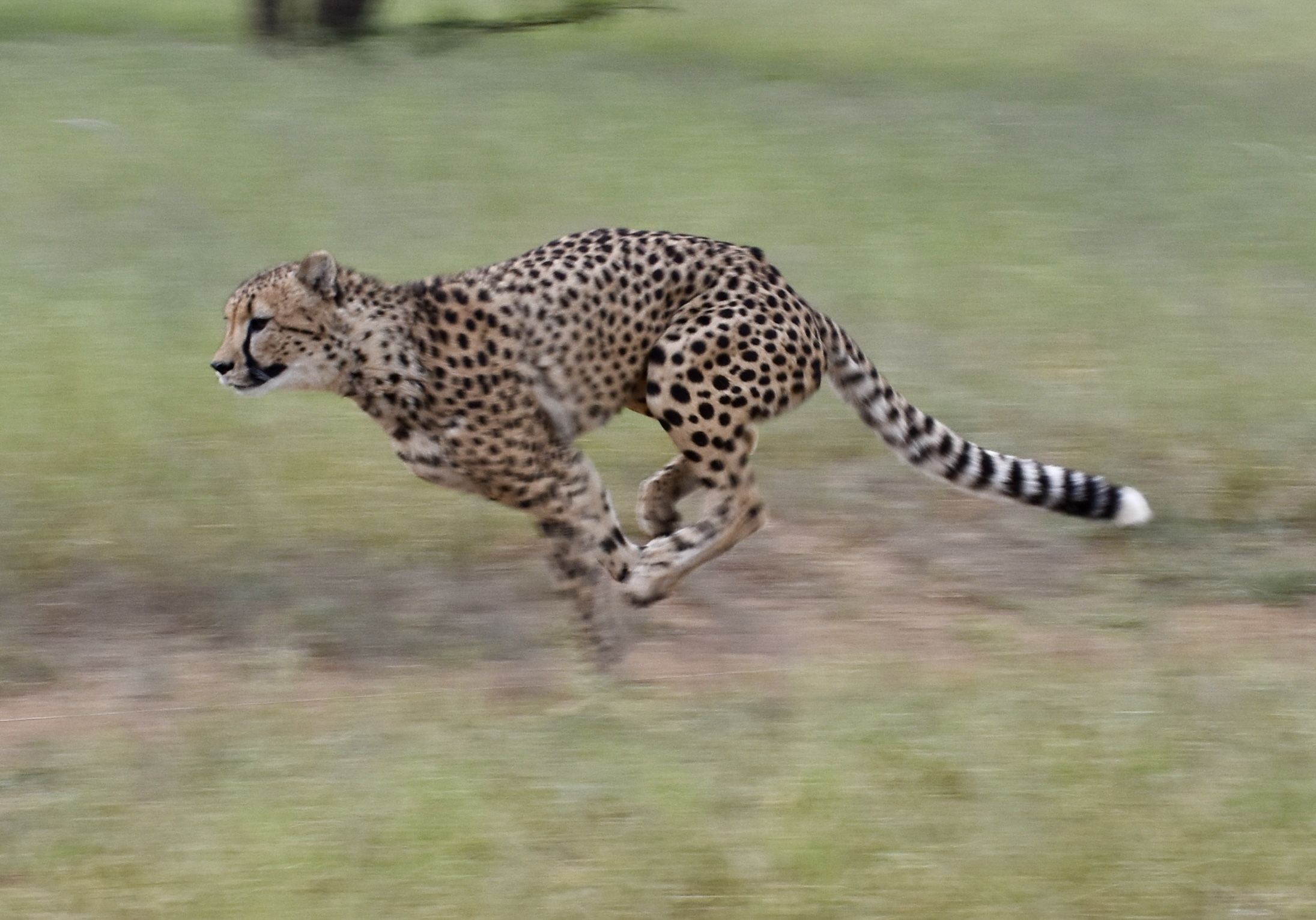
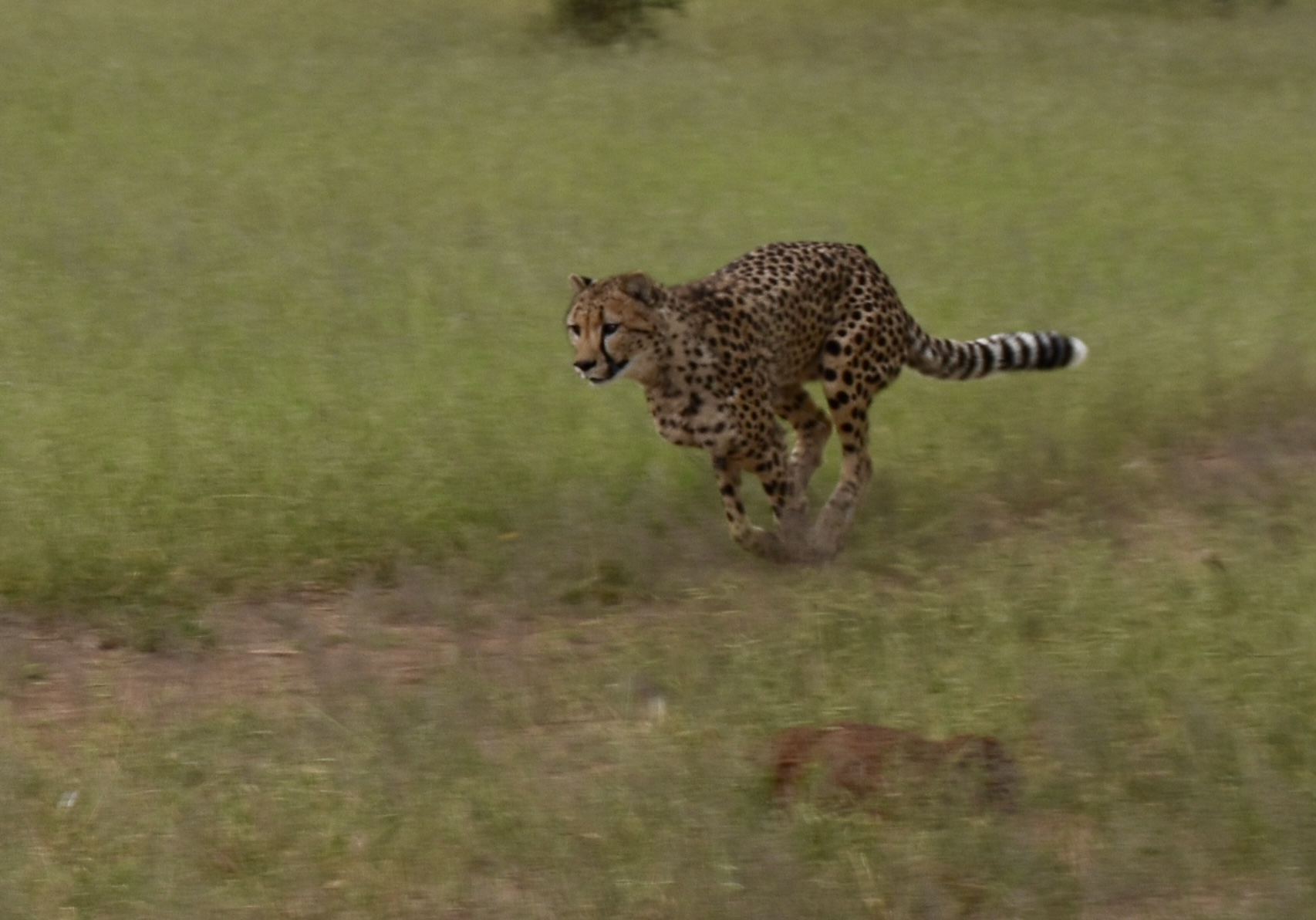
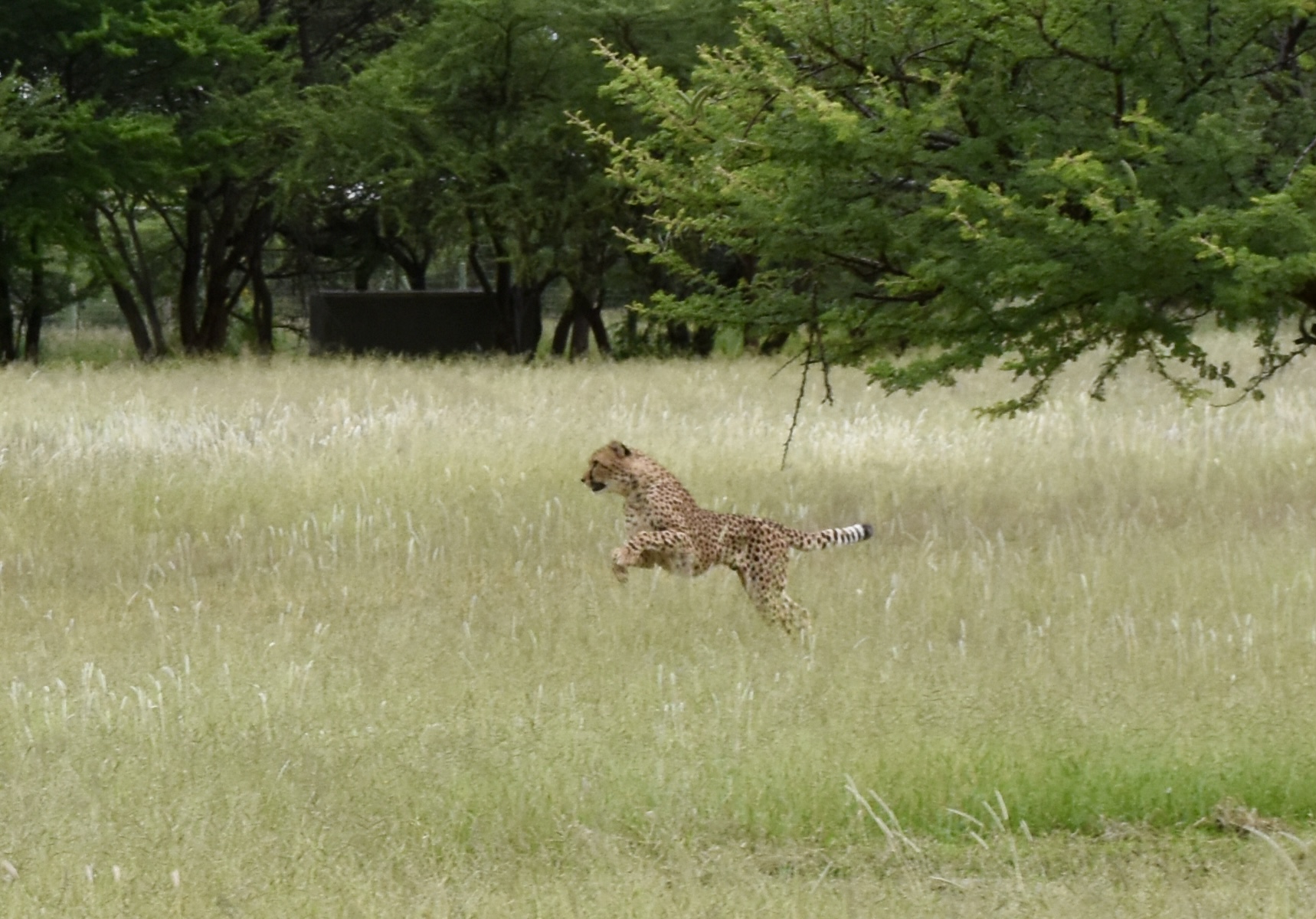
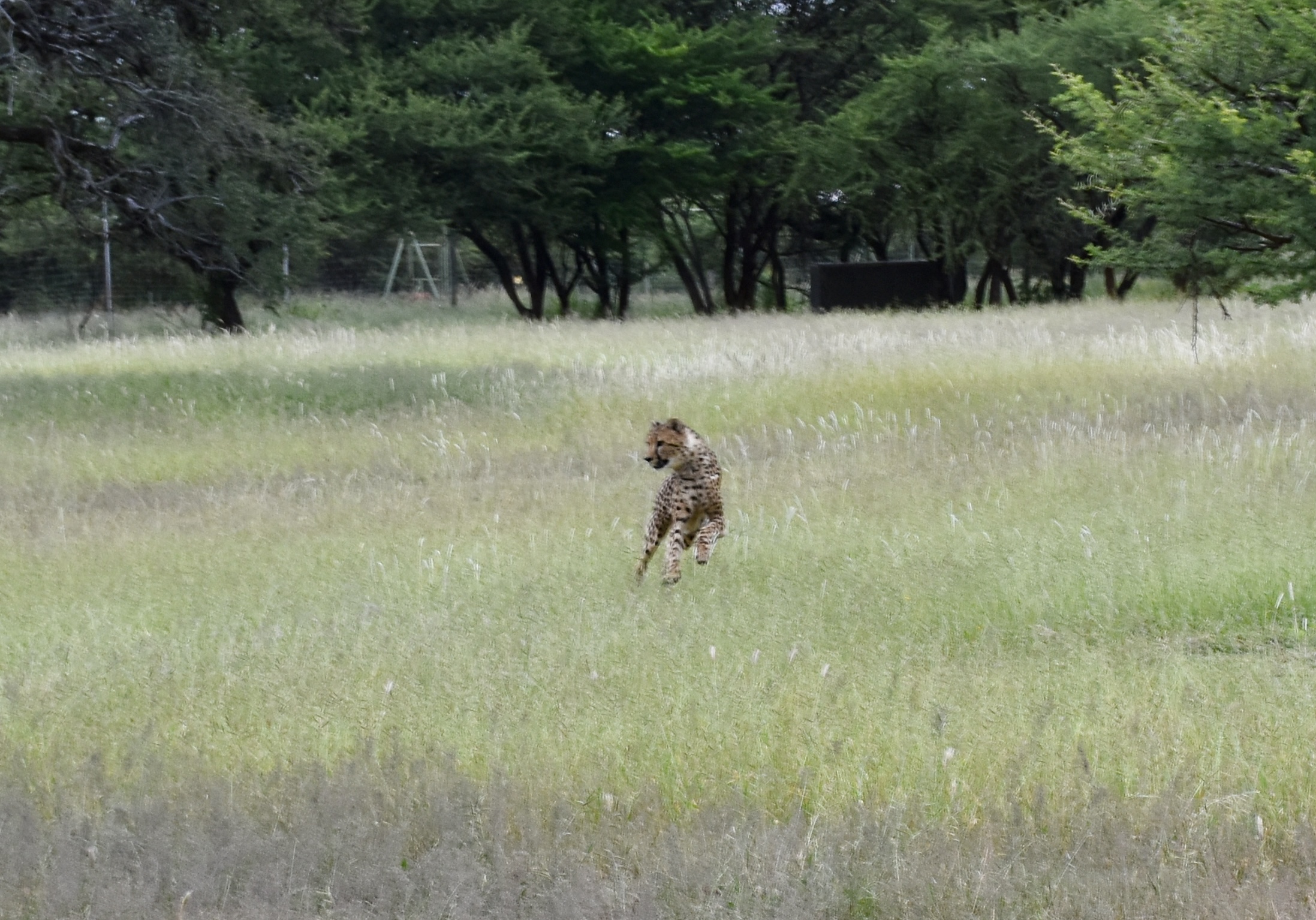
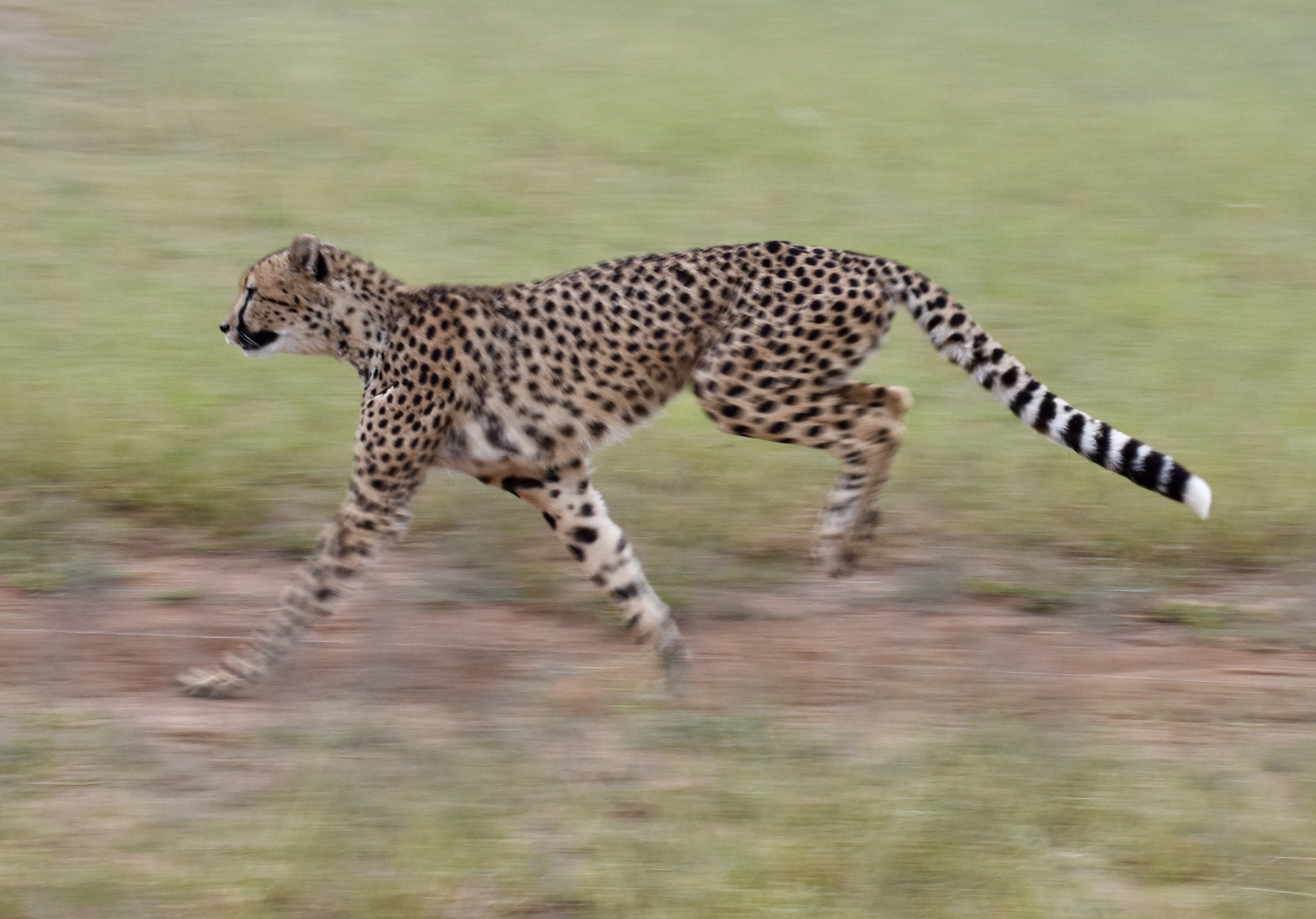
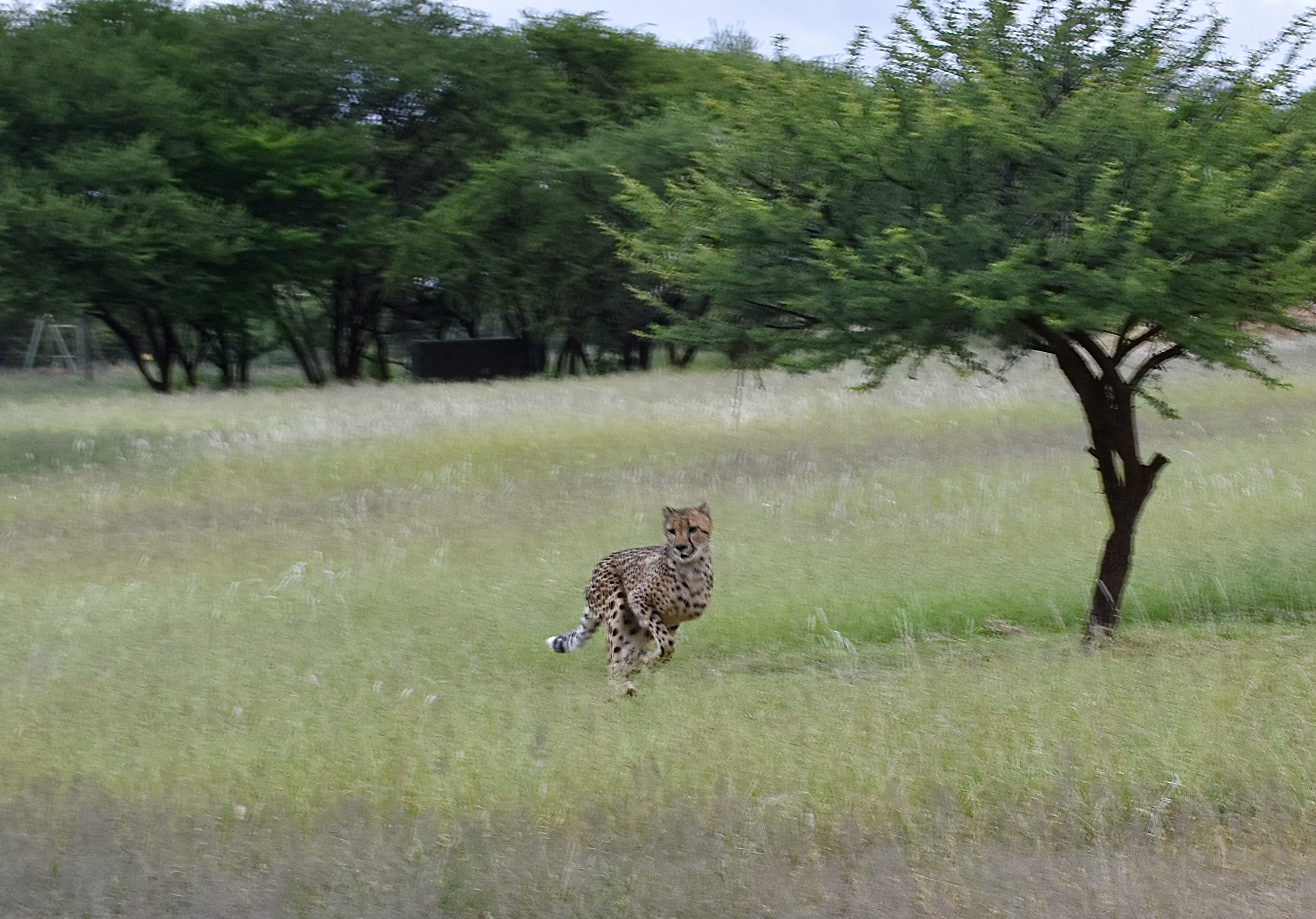
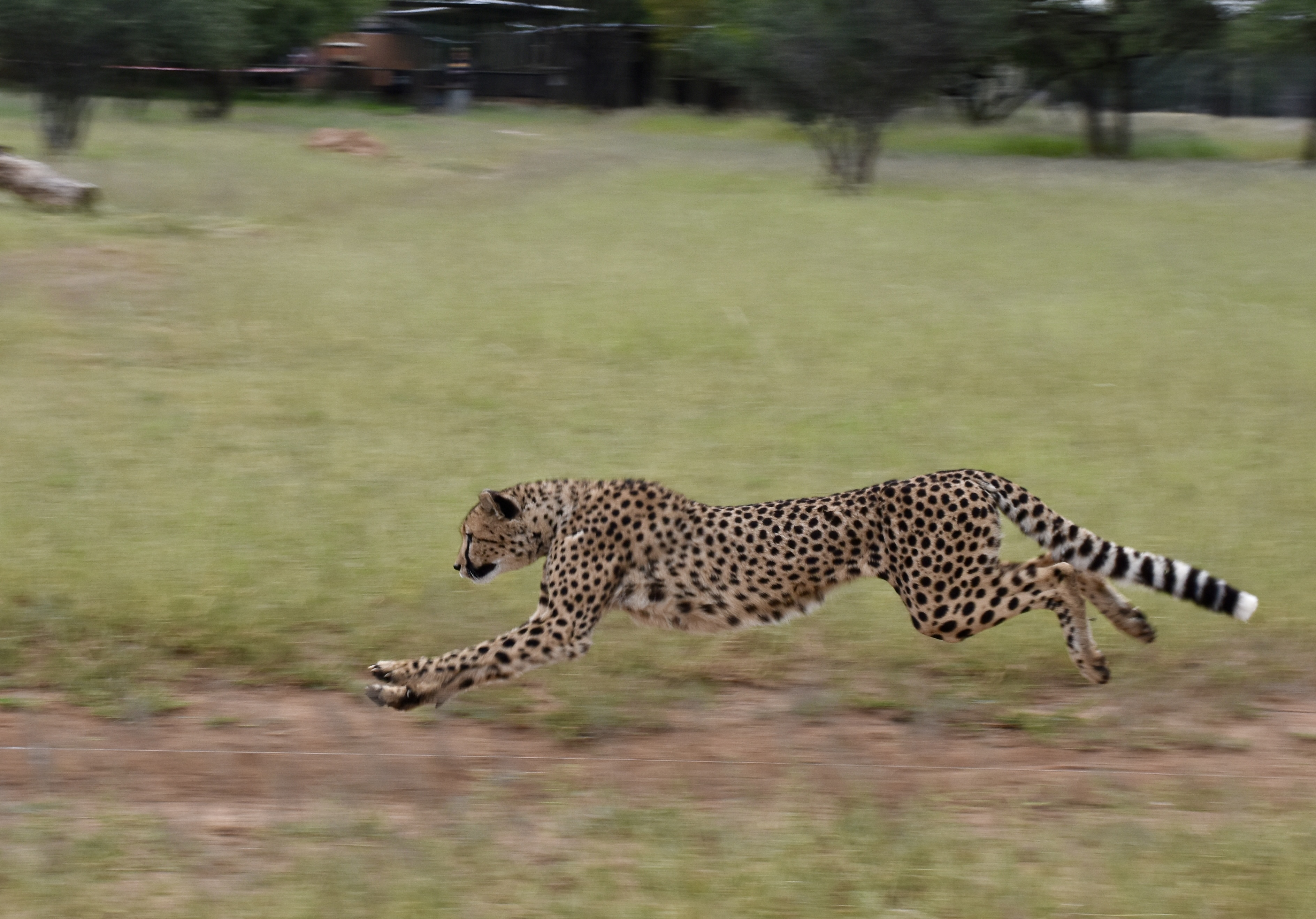
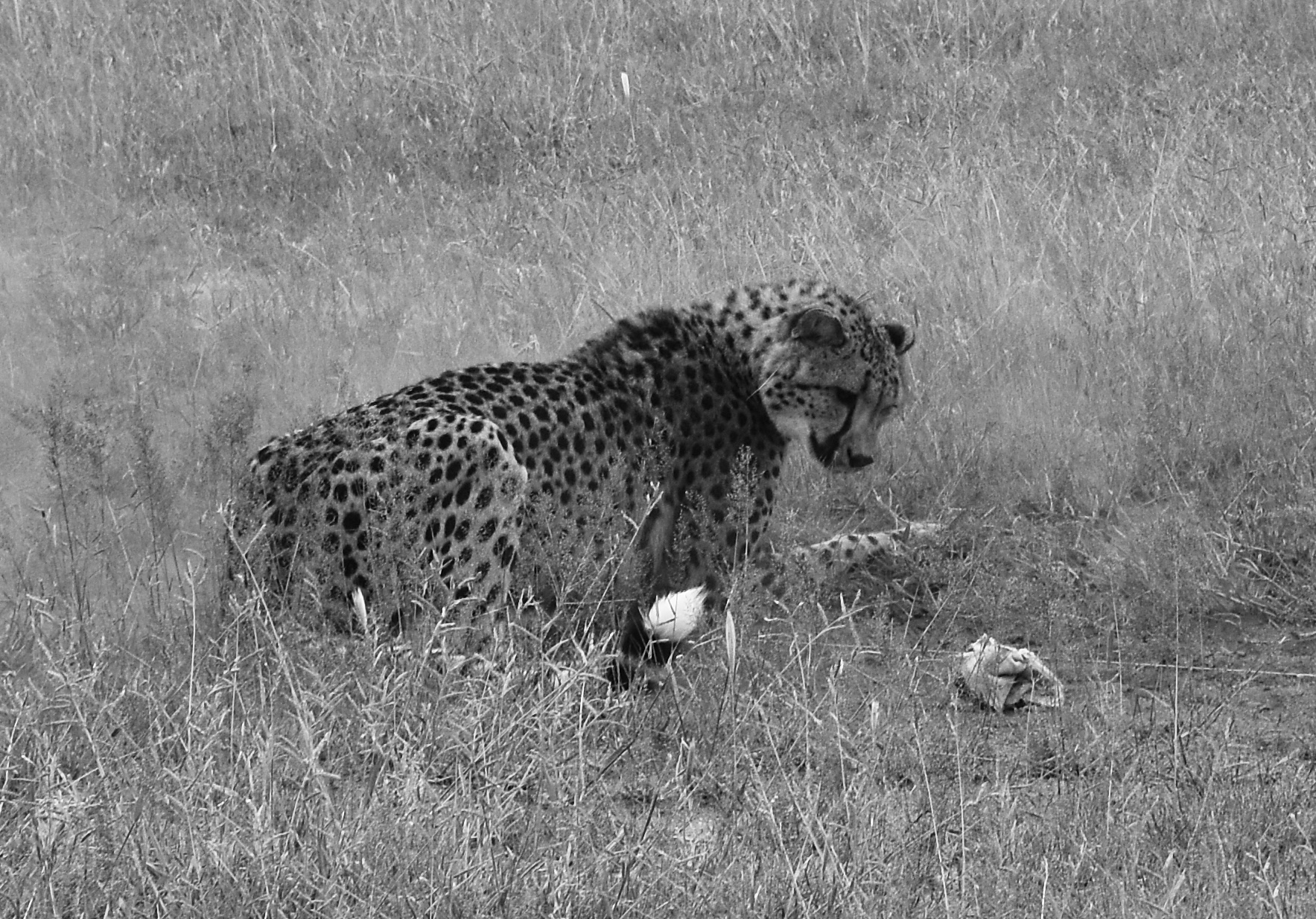
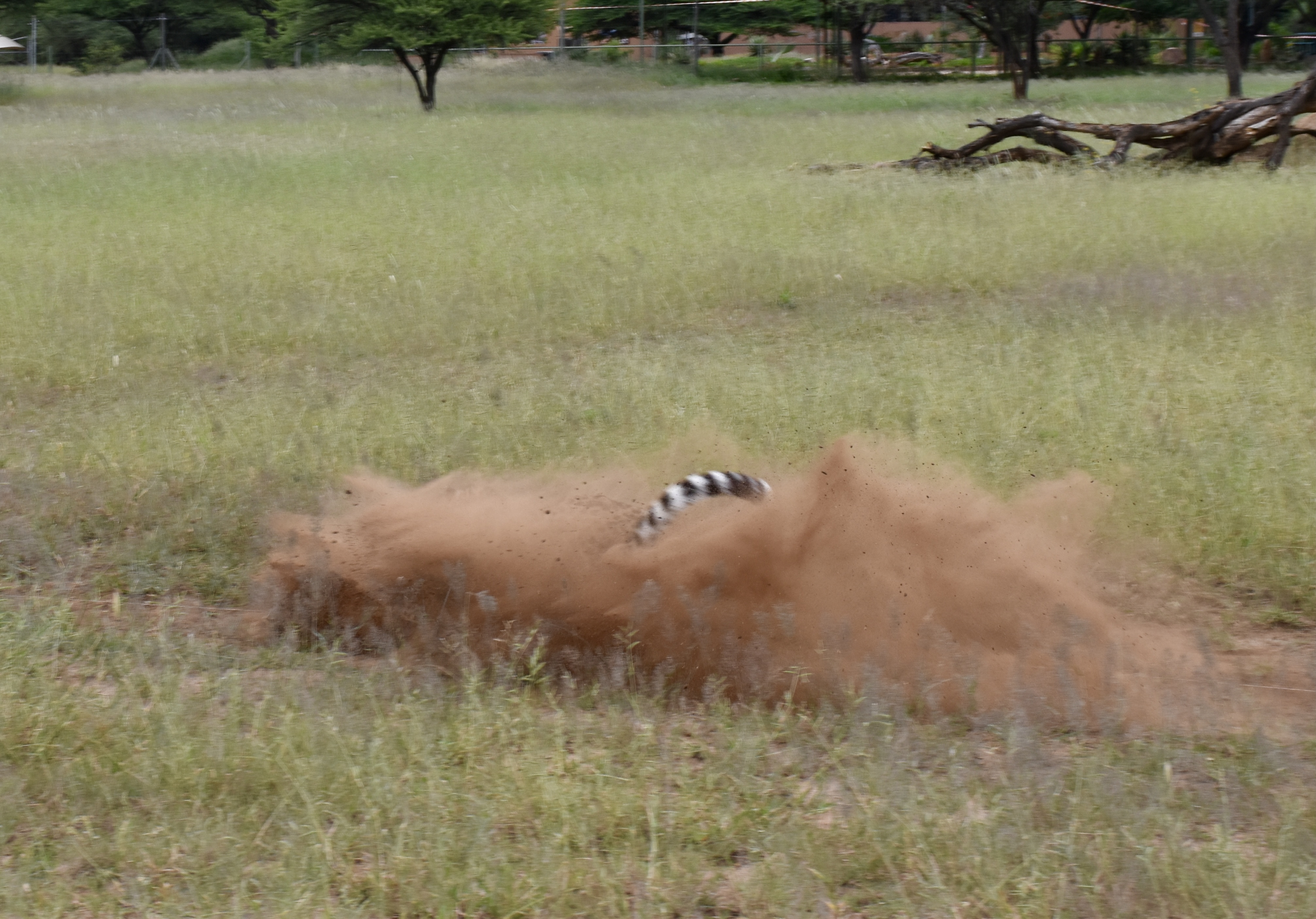
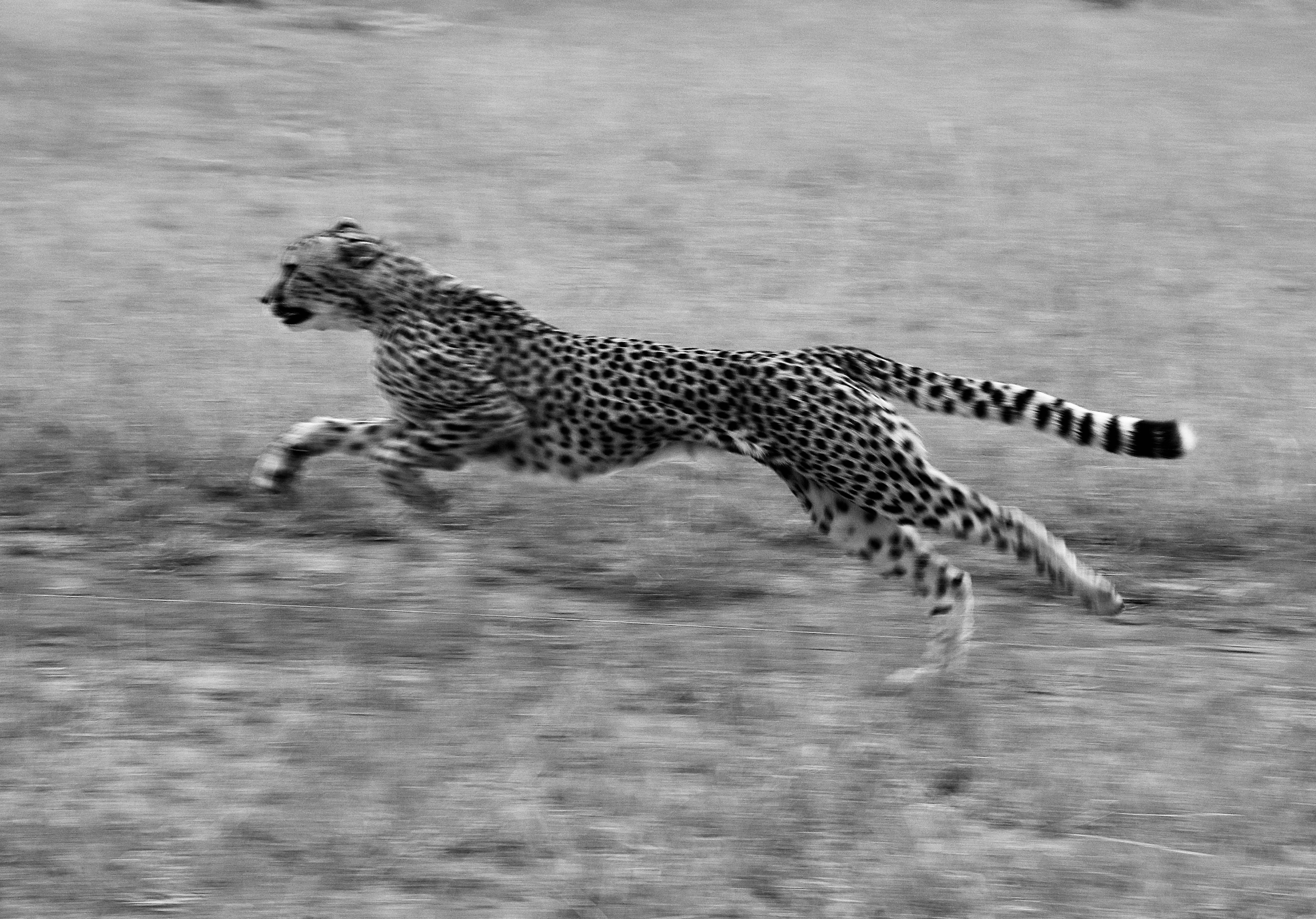
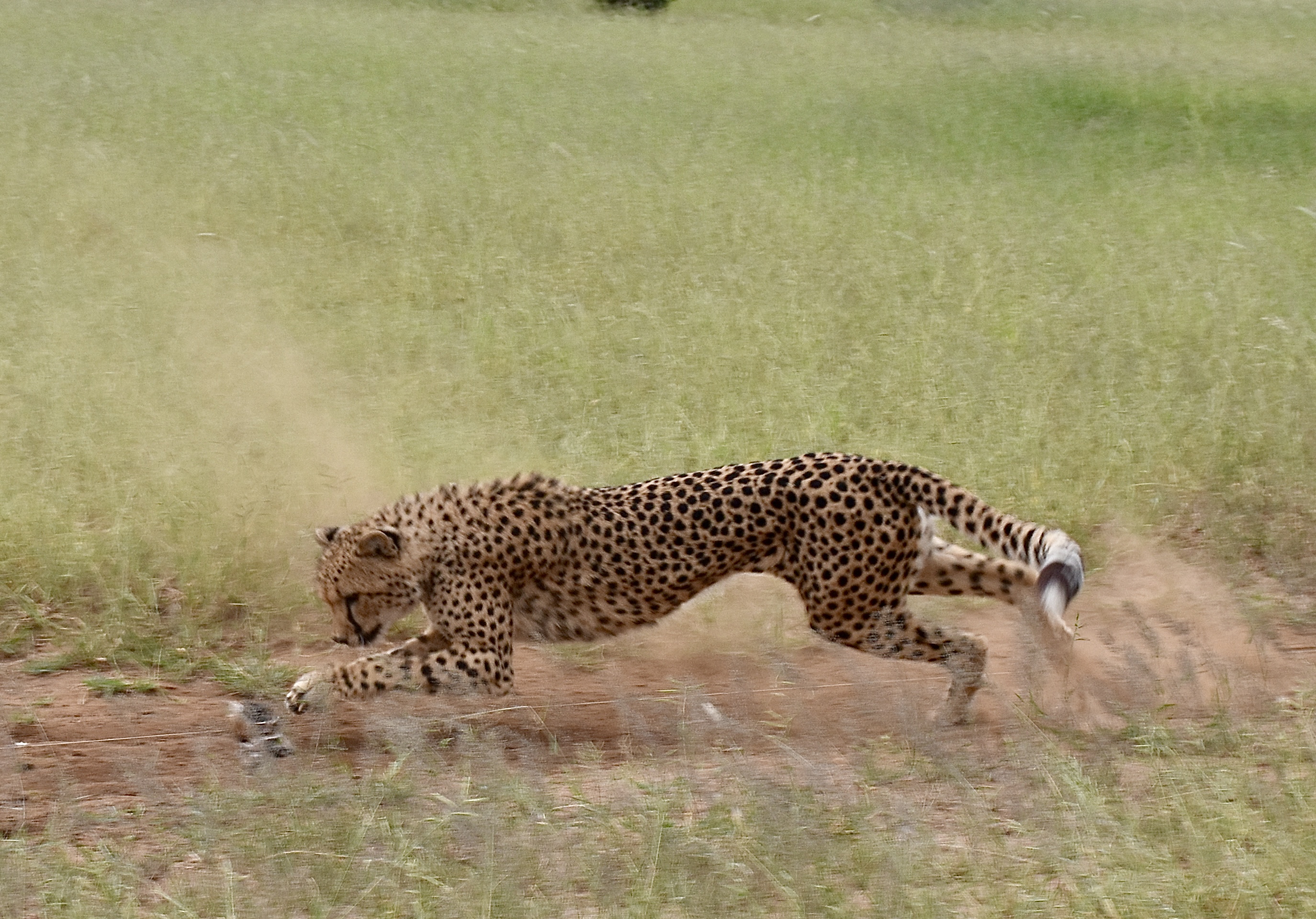
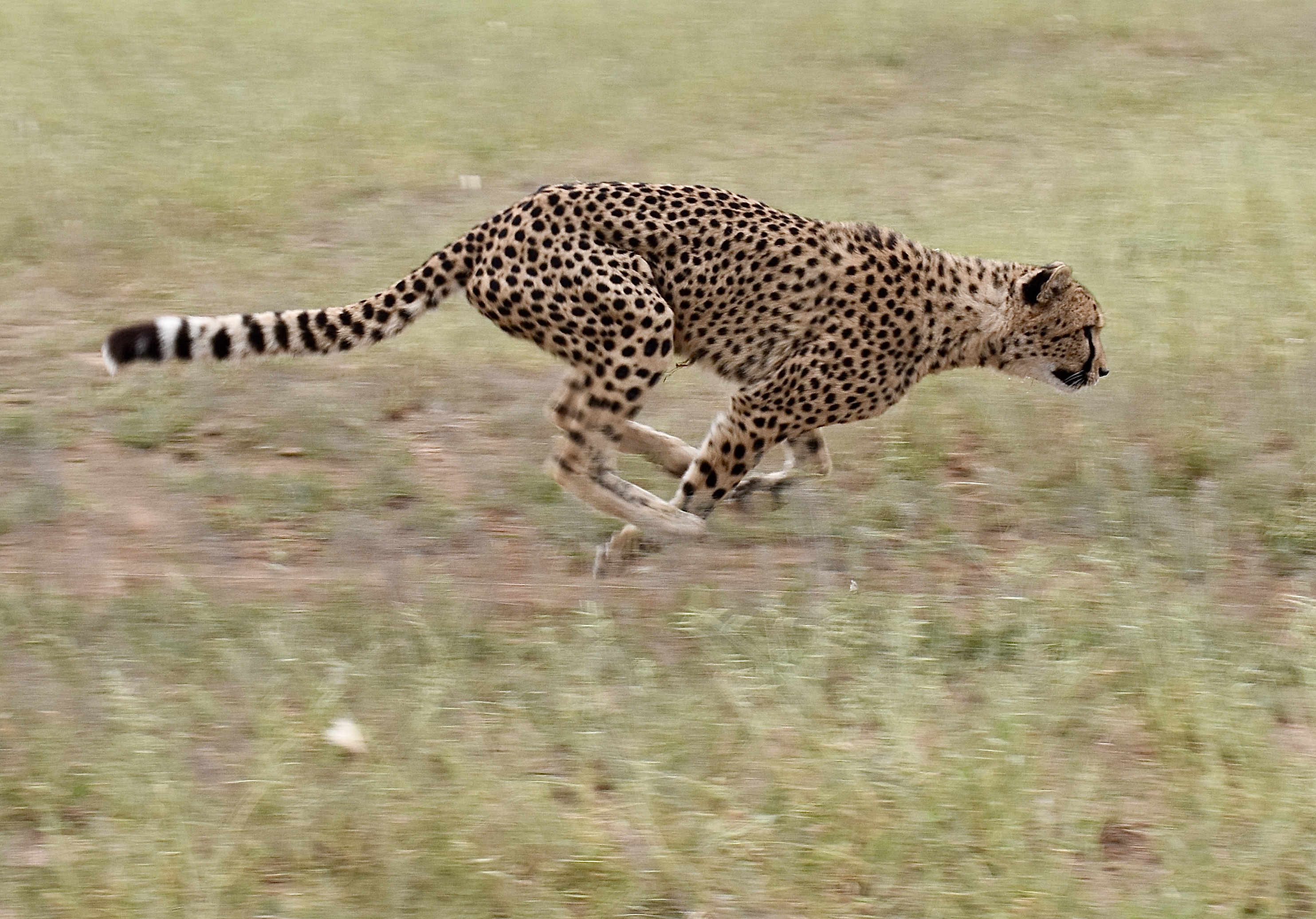
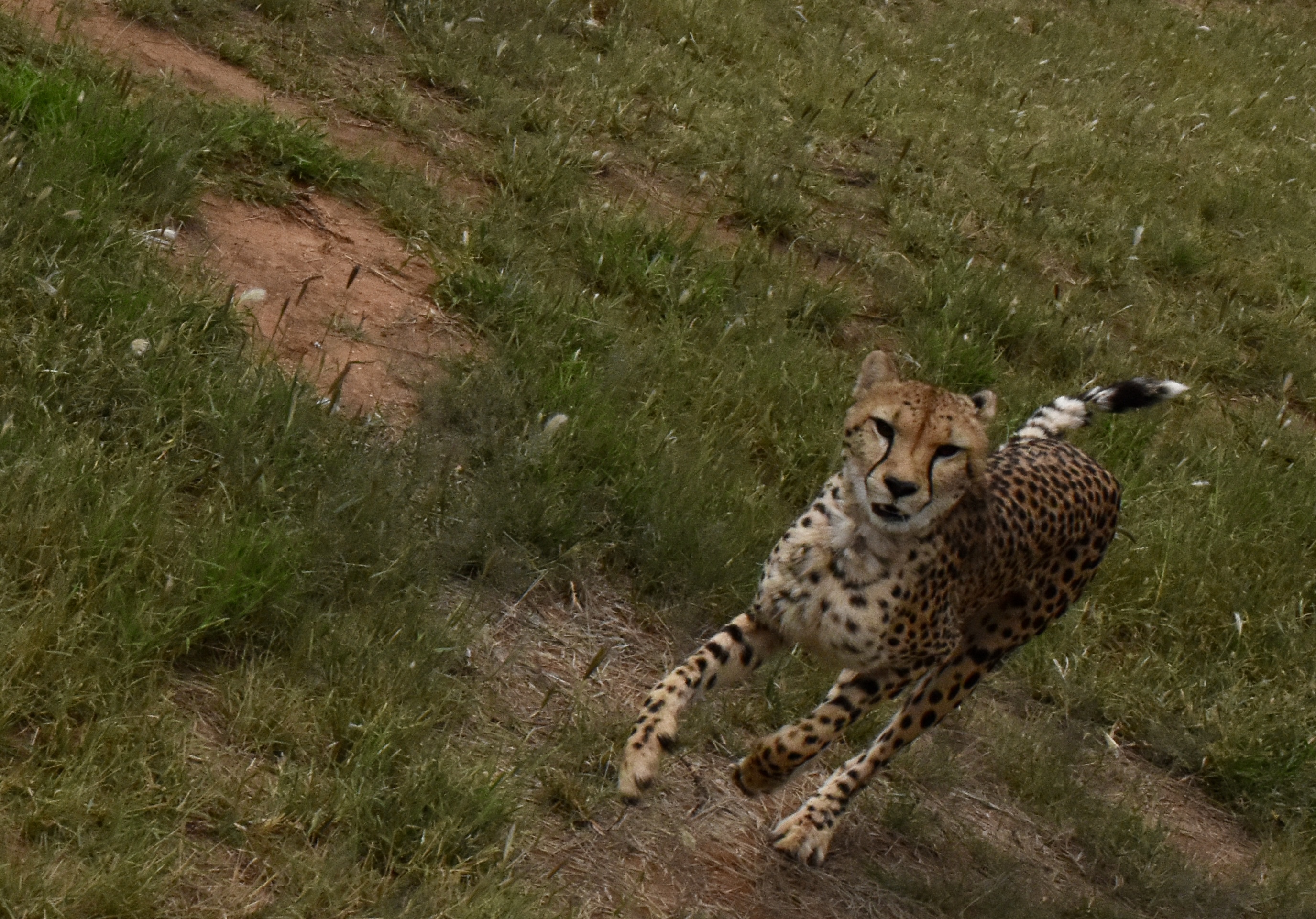
Later that morning after breakfast, we watched the cheetah run.

To keep rehabilitating cheetahs in top condition, CCF uses a lure system where a cloth is pulled along a wire track across an open field. The lure can change direction, accelerate, slow down — even double back — forcing the cheetah to react the way it would during a real hunt.
When a cheetah launches into a sprint, you suddenly understand the numbers you’ve read your entire life. They can reach roughly 60–70 miles per hour, but the most astonishing part is the acceleration.
It happens almost instantly.
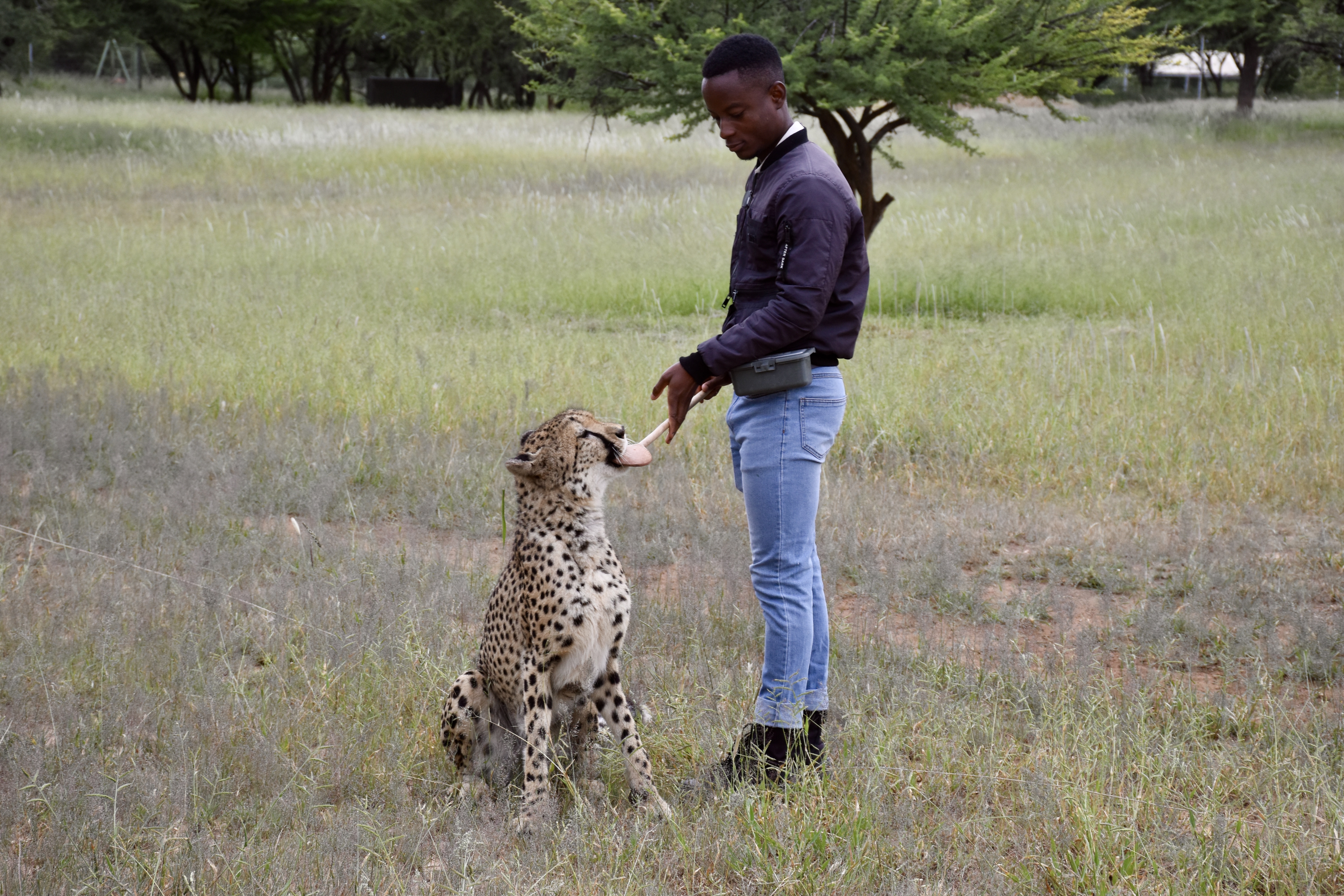
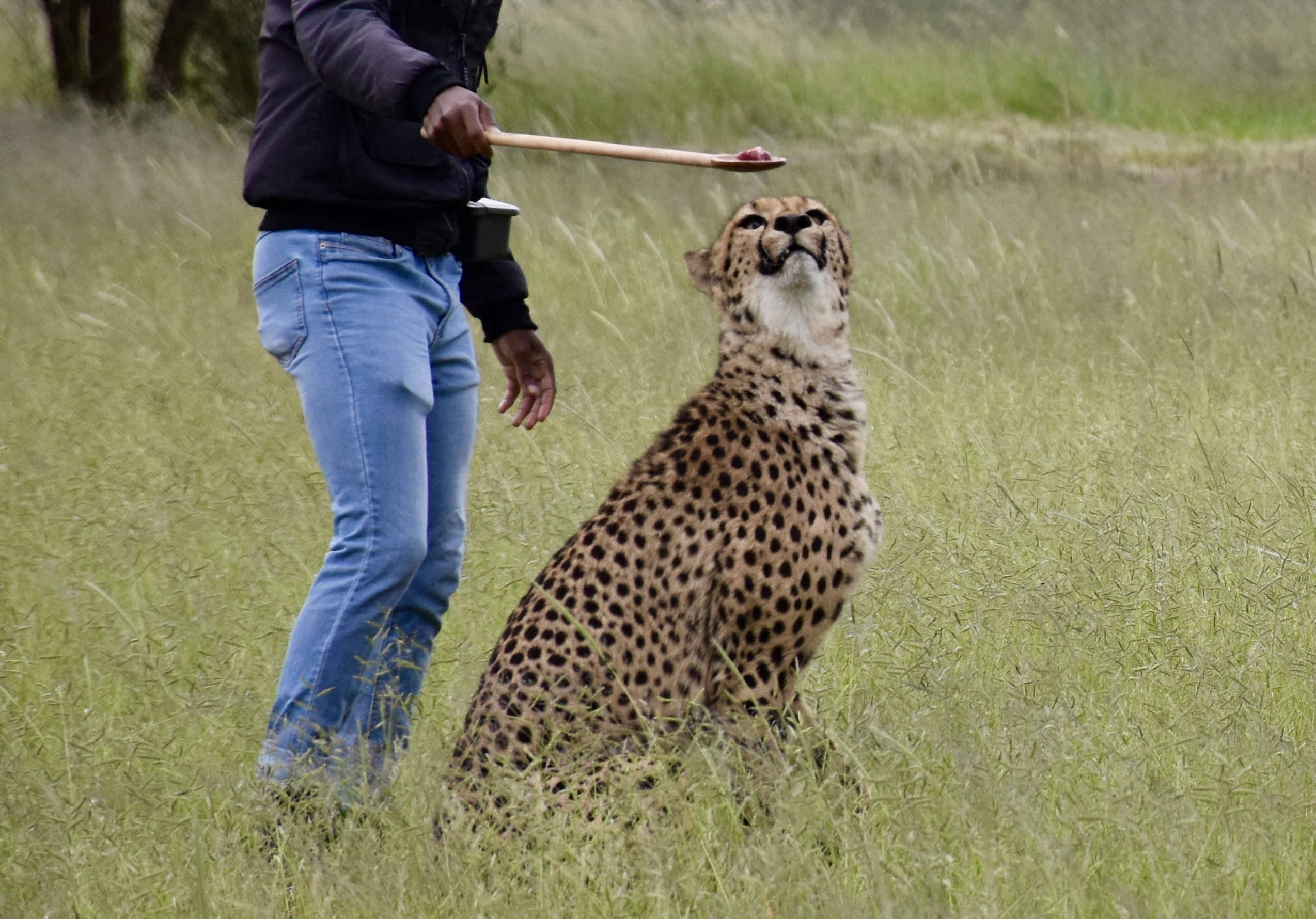
Once the cat catches the lure, it’s rewarded with fresh meat delivered on a long wooden spoon. That keeps the meat off the ground and prevents contamination.
Cheetahs have extremely delicate digestive systems. Unlike lions or hyenas, they cannot eat meat that has been sitting around for long. Their food must be fresh.
Watching the run was extraordinary.


























Behind the Scenes
Later we went behind the scenes to see the feeding of several cheetahs that are kept away from human contact.
A jeep races down the road outside the enclosure and the cheetahs chase it. Once they arrive, big hunks of meat and bone are tossed over the fence.
Yes.
I was absolutely involved in that process.
Apparently once you’ve thrown meat to cheetahs once, you’re permanently promoted to the “throwing team.”
No one even asked after I’d done it the first time. Someone simply handed me a couple of haunches and pointed toward the fence.
I handed Lynn my camera so she could document the moment.
It’s a strange point in life when throwing meat to cheetahs begins to feel like a routine morning activity.
And I have to say:
A day without blood under your fingernails… how can that be a good day?




Living With Predators
CCF is perhaps most famous for its livestock guardian dog program, which helps farmers protect their animals without killing predators.
These are large Anatolian shepherds who live with the herds of goats or sheep.
Unlike herding dogs such as border collies, which move livestock through pressure and fear, guardian dogs simply become part of the herd.
The animals trust them completely.
When a potential threat appears, the dog moves toward it and “addresses the situation.”
Watching a herd follow their guardian dog out to graze was remarkable. The goats trusted that dog completely.


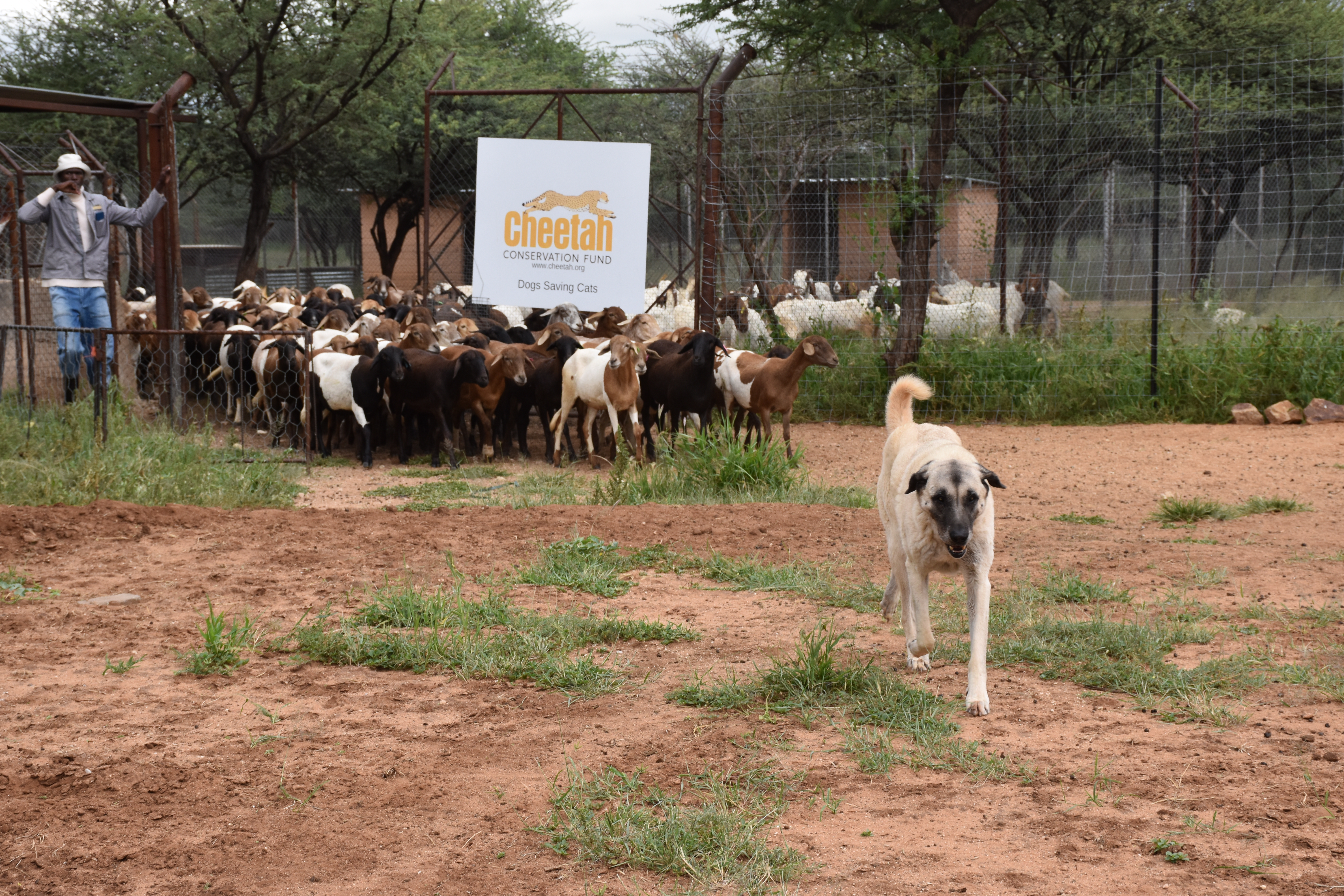


And when a tractor happened to cross about fifty yards in front of the goats’ path, that dog made very sure the tractor understood it was in the wrong place at the wrong time.
We also met the newest recruits — a litter of milk-drunk Anatolian puppies born just a few days earlier.


They looked like little fuzzy potatoes.
Interestingly, the staff handles them as little as possible. They weigh them for health checks, but otherwise avoid bonding so the puppies will grow up identifying with livestock rather than humans.
Farmers who receive the dogs — after a long waiting list and a small fee — get to name the puppies themselves, which helps build the bond.
Helping Farmers Thrive: Goats, Milk, and New Income
Another part of CCF’s work focuses on helping farmers improve the economics of livestock so that predators become less of a perceived threat.
One of the interesting shifts they’re encouraging is the move from traditional meat goats toward dairy goats.
Many farmers in the region historically raise goats primarily for meat. But CCF has been working with them to demonstrate that dairy goats can provide a more stable and continuous source of income.
A dairy goat can produce milk for years after having a kid, which means the farmer has an ongoing product rather than a single sale. That milk can then be turned into higher-value goods — cheese, yogurt, soap, fudge, even ice cream (and milkshakes! Yum!) — creating additional income streams.
CCF also teaches farmers improved herd management practices.
Instead of goats giving birth sporadically throughout the year, farmers are encouraged to synchronize breeding so that kids are born around the same time. This allows the entire herd to be weaned, vaccinated, and wormed together, which is healthier for the animals and much easier for the farmers to manage.
Interestingly, this better care of the mothers often also results in more kids per birth, increasing the productivity of the herd.
What started as a small program has grown steadily. Many of the dairy goats now found in Namibia trace back to animals originally provided through CCF programs.
Even more encouraging, farmers in the United States have begun collaborating and sharing expertise, helping expand dairy goat knowledge, genetics, and practices.
It’s another example of the philosophy running through everything at CCF: conservation doesn’t succeed unless the people living on the land succeed too.
In other words, the goal isn’t simply to protect cheetahs.
It’s to make sure the farmers who share the landscape with them can make a living without feeling forced to eliminate predators.
If livestock are better protected, herds are healthier, and farmers have reliable income from milk and dairy products, the pressure to shoot a cheetah “just in case” drops dramatically.
Conservation, it turns out, is often less about saving animals directly — and more about helping people succeed on the land they live on.
And when that happens, the cheetahs get a future too.
It’s one of the things you begin to understand here: nothing in this landscape exists alone.


Bush Encroachment and the “BushBlok” Project
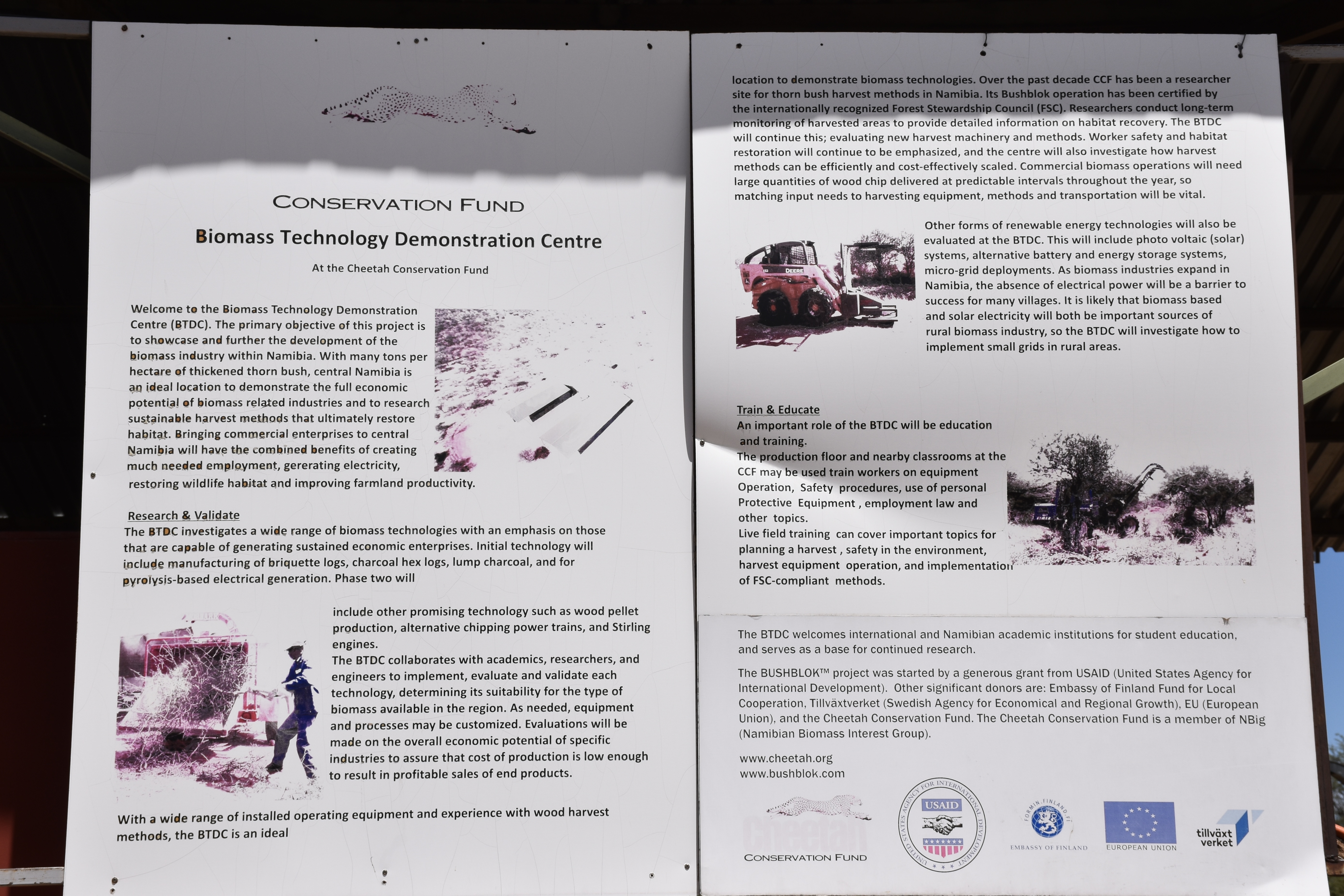
One of the biggest environmental challenges in Namibia is bush encroachment.
Large areas of land have become overrun with thorny shrubs and trees — including species like sickle bush (Dichrostachys cinerea) and various acacia relatives.
Some of this is natural, but much of it results from a combination of rainfall variability, climate change, overgrazing by cattle, and the disappearance of large animals like elephants that once knocked down trees and controlled bush growth.
The result is a landscape where thorn bush crowds out palatable perennial grasses that grazing animals depend on.
That affects everything.
Less grass means fewer grazing animals.
Fewer grazing animals means fewer predators.
So CCF developed an ingenious solution.
Bush is cut by hand, allowed to dry in the field, then brought to a processing facility.
Some of the most beautiful hardwood — especially from sickle bush — is actually shipped to Denmark for woodworking.
The rest goes through a multi-stage system:
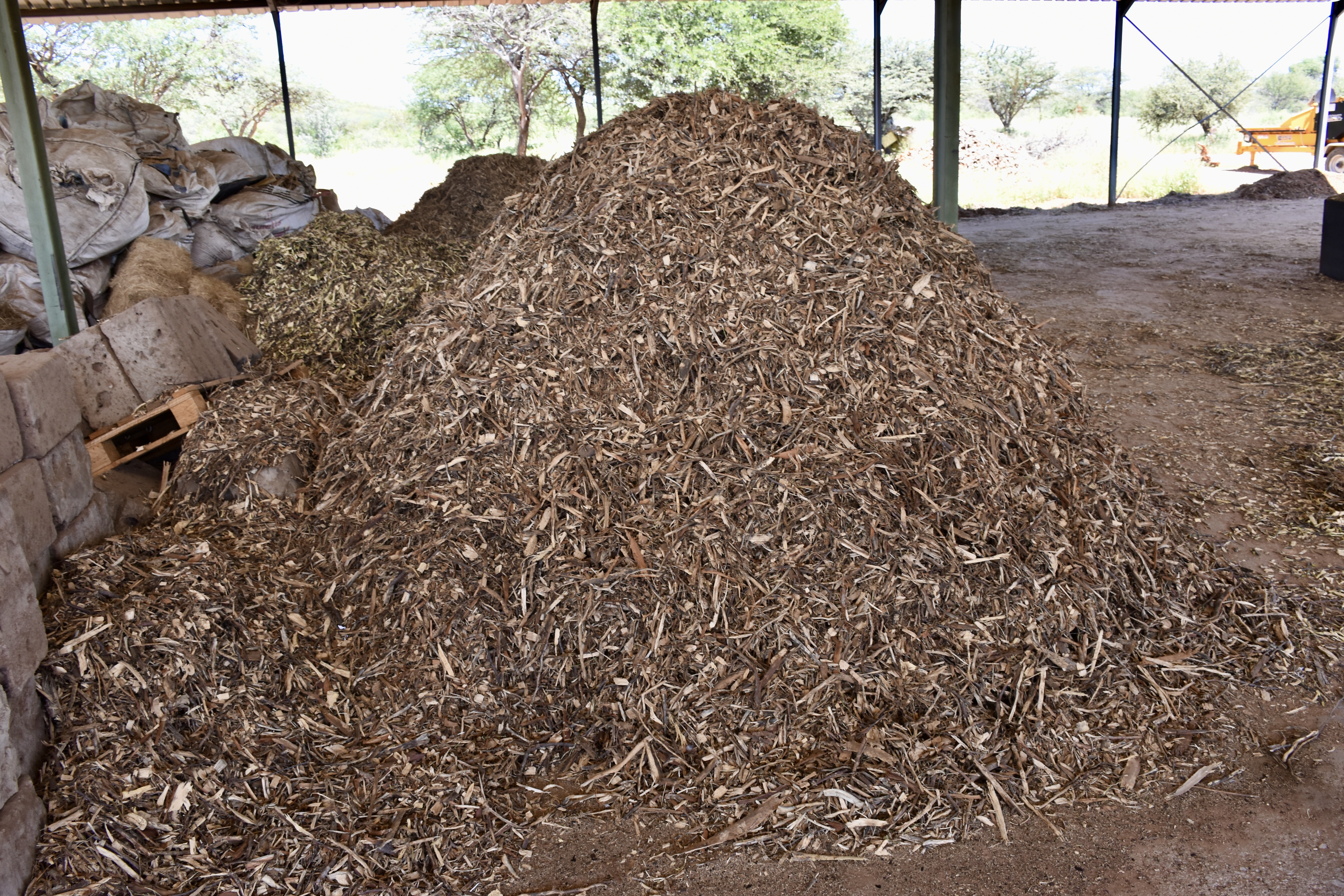
First it’s chipped (which looks exactly like mulch from home).
Then it’s refined further into something between coarse sawdust and fine wood chips.
That material is fed into a machine that heats and compresses it into dense fuel bricks.
The heat breaks down the plant cell walls just enough for the material to bind together.
“We’re not making charcoal,” Bruce explained.
The process works — but there’s a problem.
Inside the machine is a spiral cutter that processes the wood.
Acacia and sickle bush are incredibly hard.
So hard that the spiral cutter lasts only about six hours before needing sharpening.

The machinery originally came from Denmark, and CCF is now working with engineers in the United States to design a more durable version that can increase production capacity.
Even with those challenges, the project is remarkable.
It restores grassland habitat, improves grazing conditions for wildlife, and produces useful fuel at the same time.
Practical conservation at its best.
New Tracking Technology
After lunch, we visited the Ecology Department. There, the head showed us the tracking collars used on released cheetahs.
The newest collars — being developed with Fahlo, the company that produces the cheetah tracking bracelet I wear — are far lighter and more sophisticated.

In addition to GPS tracking, some include a small camera mounted under the cheetah’s chin.
When the collar’s accelerometer detects hunting behavior, the camera activates so researchers can actually see what the cheetah is pursuing.
Each collar also includes an automatic release system. After about two years, when the battery dies, the collar drops off so the animal isn’t burdened with dead equipment.
If a collar detects that the animal hasn’t moved for a concerning period of time, it sends an alert.
Sadly, that often means a farmer has shot the animal.
Farmers are only allowed to shoot a predator if there is actual evidence it killed livestock. Too often, though, animals are killed simply because someone believes they might cause trouble.
One heartbreaking story involved a female cheetah that had been rehabilitated after a trap injury. She was released from CCF scant days before giving birth, because Namibia does not allow wild animals to give birth in captivity.
A farmer shot her.
Both she and the cubs died.
The ecologist — whose wife is CCF’s lead veterinarian — told us they simply cried and cried.










Sundowner and Dinner
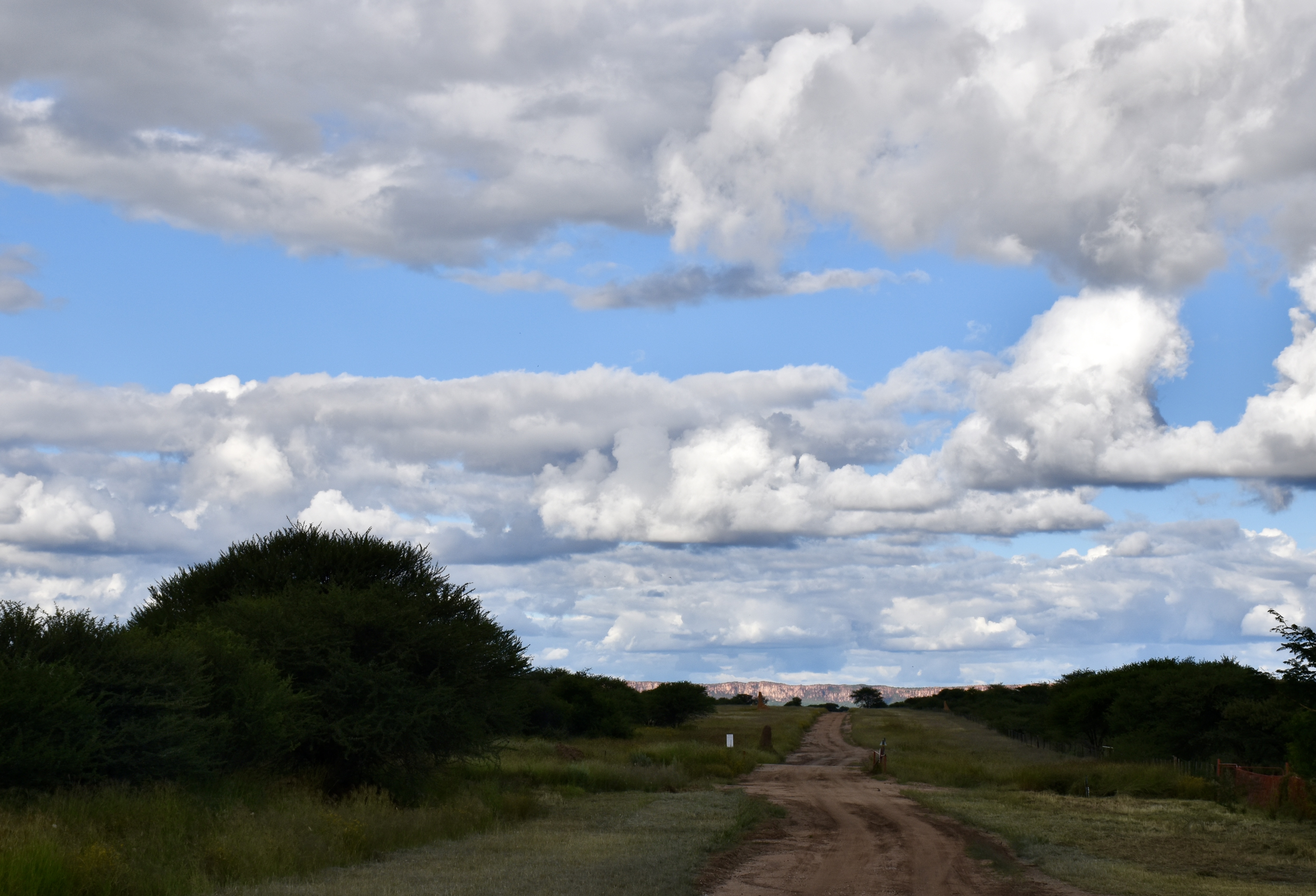
Our second evening we went out on a sundowner drive across the property.
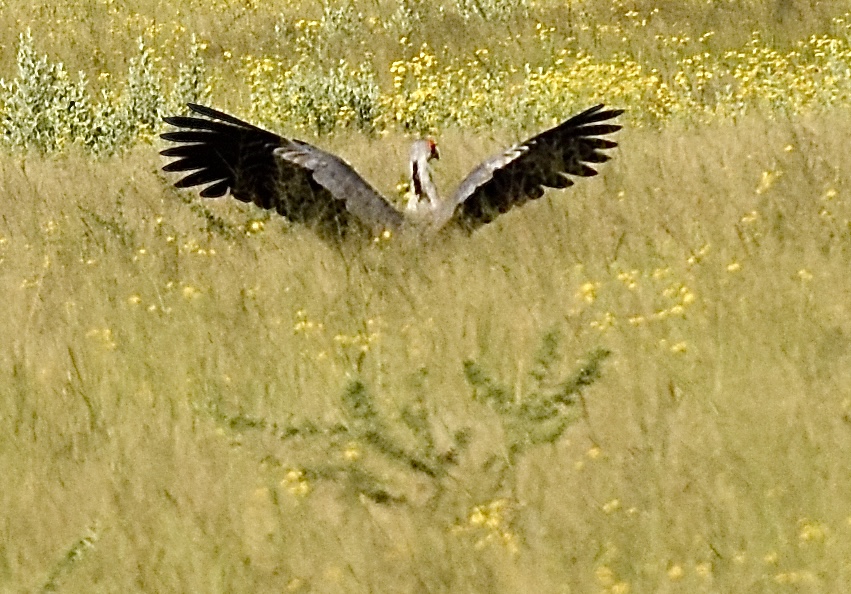
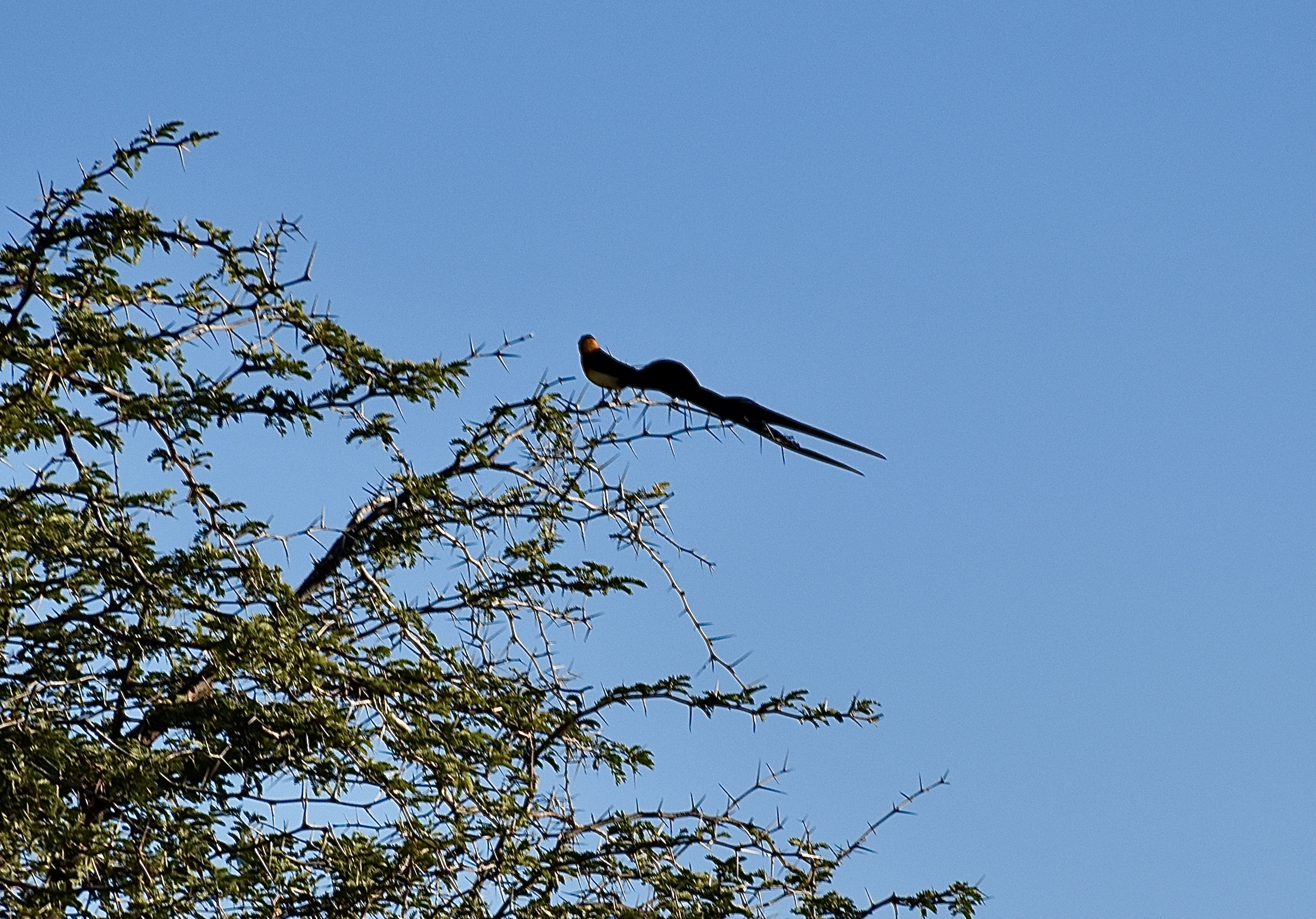
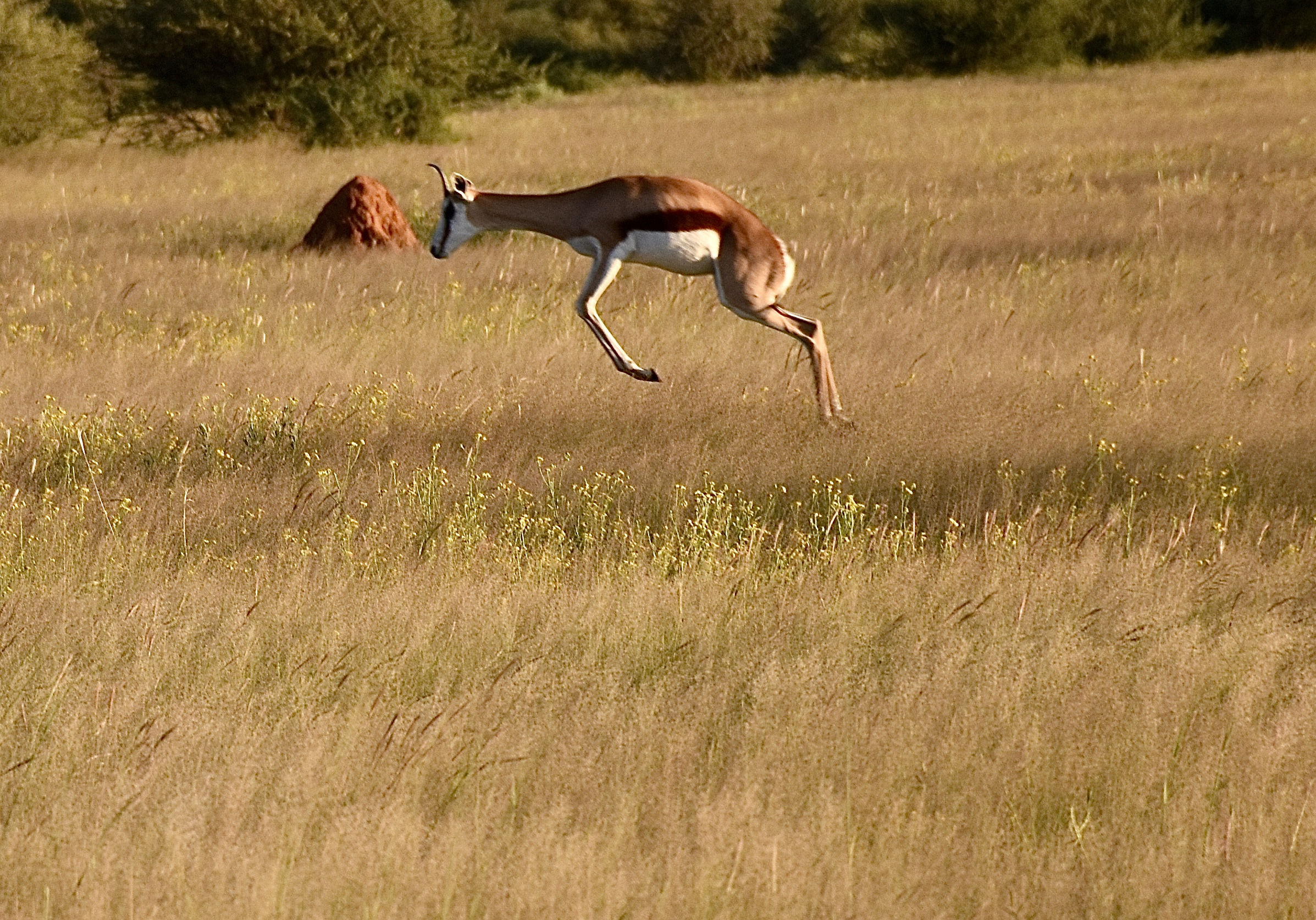
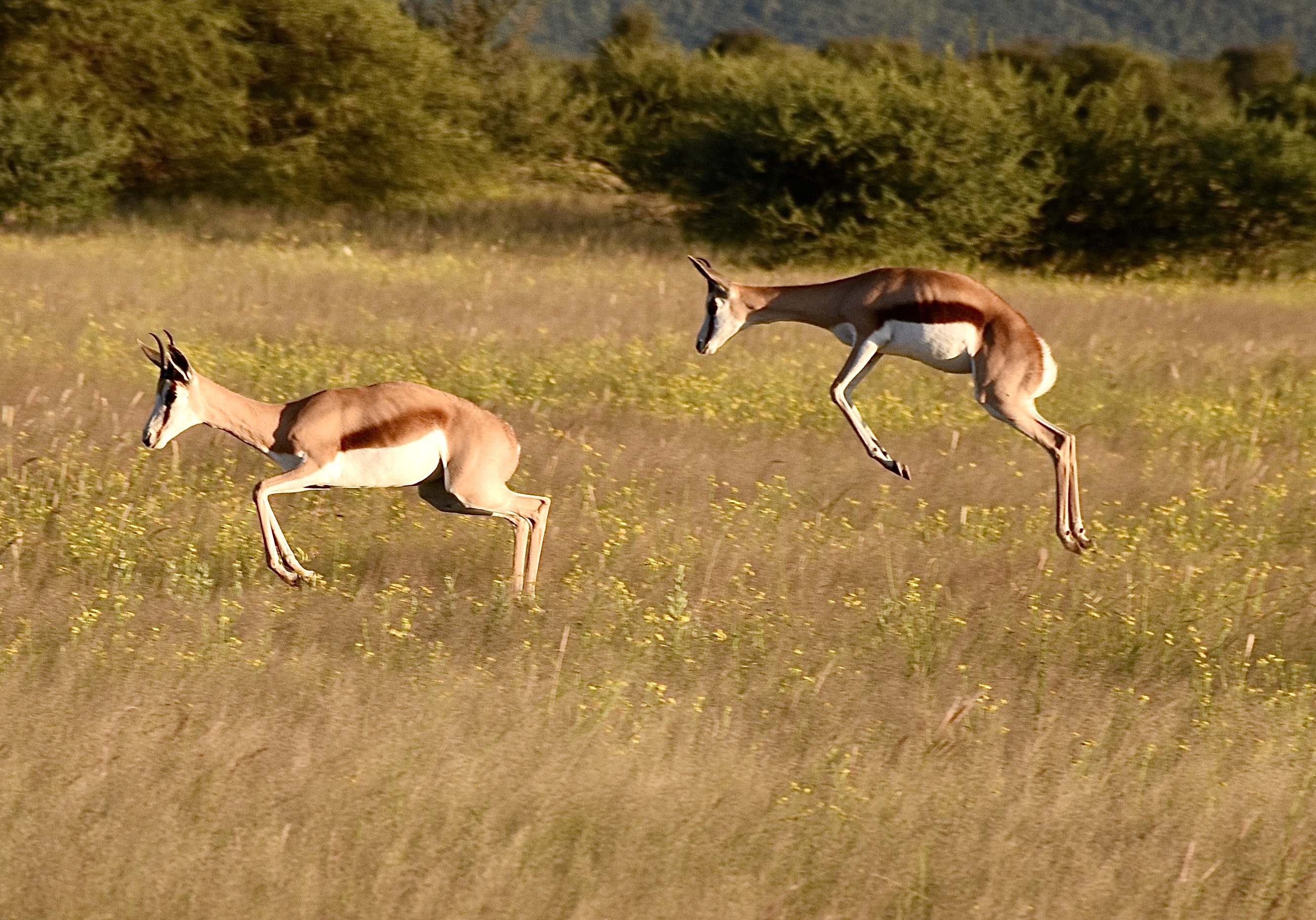
We saw a tower of eighteen giraffes, springbok, another smaller species of antelope, a massive herd of oryx, jackals, Cape hares, and — to my delight — a secretary bird.

I sent the photo to Jean-Marie, the birder from our earlier tour group who had been desperately hoping to see one.
Dinner that night with Dr. Laurie Marker and Bruce was unforgettable.
The conversation ranged from conservation science to Namibia’s wildlife to Somaliland versus Somalia to the founding of Namibia (Dr. Laurie talking about the people we had learned about at the Independence Museum . . . her friends), to the extraordinary amount of work still ahead.
The Last Morning
Our final morning at CCF began, appropriately, with meat.
As I mentioned before, once you’ve thrown meat to cheetahs once, you’re promoted permanently.
No discussion required.
Just hand over the meat and step up to the fence.
Then it was time to head for the airport.
(Yes, yes, I washed my hands . . . )
Even that departure had a little Africa-trip flourish.
When the three of us were checking in on the Windhoek to Frankfurt flight, Dr. Laurie was told that her flight from Frankfurt to San Francisco had been cancelled due to a Lufthansa strike. (Lynn was flying on United from Frankfurt to Chicago; I was on United from Frankfurt to San Francisco.)
Within minutes her journey home turned into a kind of aviation scavenger hunt involving Frankfurt, Copenhagen, and several other stops.

Just before the door closed on our flight, she was whisked on, and came back to show us she had made it.
After a month like this, a perfectly straightforward journey home would almost seem suspicious.
And with that, our time at the Cheetah Conservation Fund came to an end.
We headed for the airport carrying dust on our boots, a few new stories, and more than a little reflection about the journey behind us.
The flight home would bring its own kind of reckoning.