
Today started with a walk down to Victoria Falls, and wow was it wet! I chose not to wear the provided rain poncho but instead slung it over the camera bag to save the most expensive part (ha ha). So by the end, every stitch of anything I was wearing — and every inch of my body — was soaked through… but the camera was fine. (The photos are linked on yesterday’s post.)
We learned a lot about the Falls and the river that makes them so amazing. The local indigenous name for Victoria Falls is Mosi-oa-Tunya, which means “the smoke that thunders” — a reference to the massive spray and rumble that can be seen and heard from miles away.
We also heard about Dr. David Livingstone, the Scottish explorer and missionary who is credited with “discovering” the Falls for the European world in the 1850s (though of course local people had known them forever). Livingstone’s journeys across Africa made him one of the most influential explorers of his generation, traveling over 45,000 km across largely uncharted territory. Later in life he dedicated himself to fighting the East African slave trade.
This is also where the famous meeting with Henry Morton Stanley took place — greeted with the immortal line: “Dr. Livingstone, I presume?” Livingstone died in 1873 in what is now northern Zambia, and in an extraordinary act of devotion, his companions carried his preserved remains over 1,500 km back to the coast. His body was returned to Britain, but symbolically, his heart remained in Africa.
He named the waterfall Victoria Falls in honor of Queen Victoria — but standing there today, soaked to the bone, it feels much more like “Smoke That Thunders” is the correct name.
The waterfall itself is part of the Zambezi River, one of Africa’s great rivers, flowing through multiple countries before plunging into this incredible gorge. The Zambezi is the fourth-longest river in Africa (after the Nile, the Congo, and the Niger).
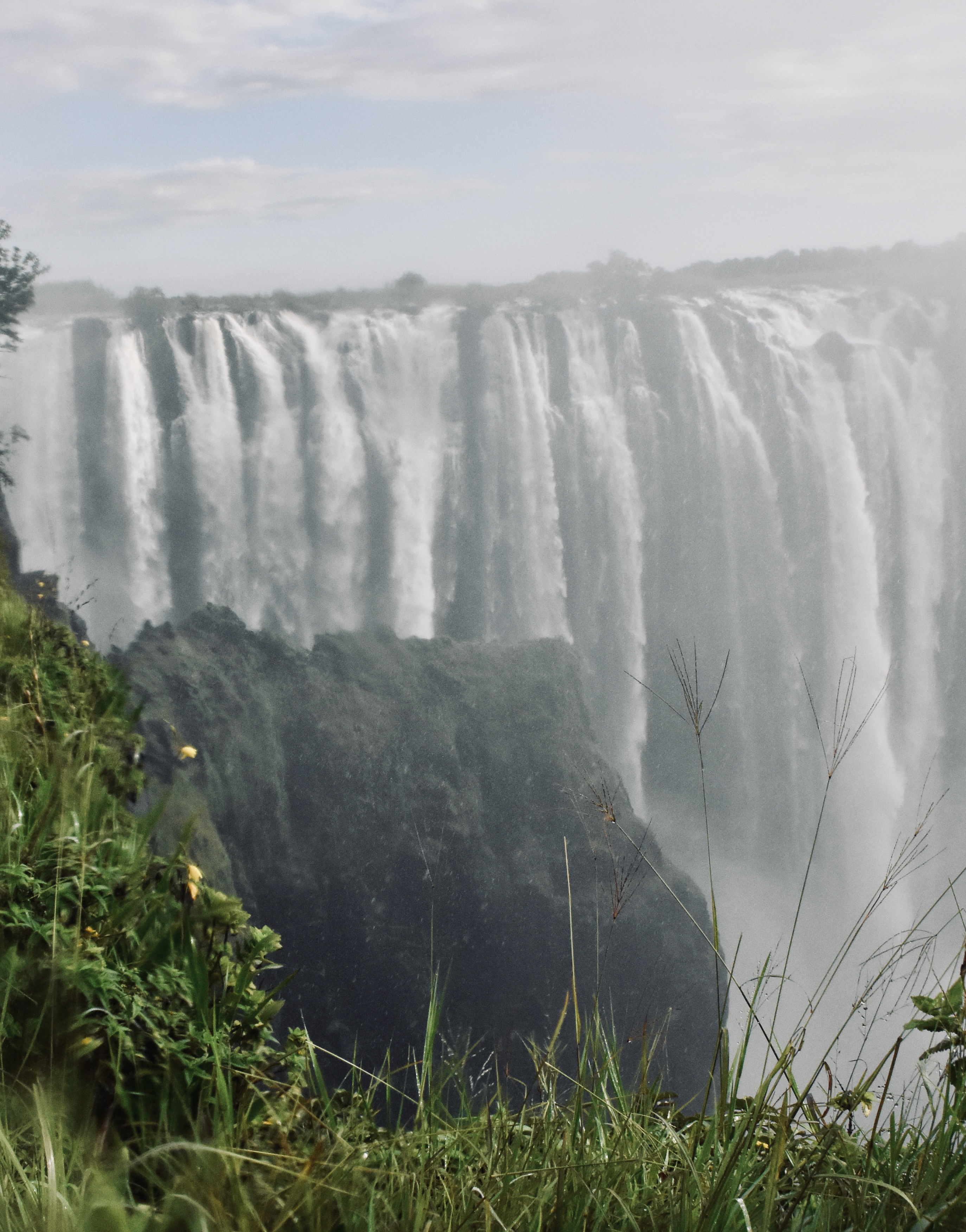
Our driver took us around the falls, and it was fascinating to see how the waterfall is not just one drop, but a whole series of named sections: Devil’s Cataract, the Main Falls, Horseshoe Falls, Rainbow Falls, Armchair Falls, and the Eastern Cataract — with Livingstone Island sitting right at the brink.
One of the signs compared Victoria Falls to other great waterfalls: it is taller than Niagara Falls, and while Iguazu is wider overall, Victoria Falls is often described as the largest sheet of continuously falling water in the world. Victoria Falls is about 1,737 meters wide (5,698 feet) and 107 meters high (351 feet) — an absolutely staggering wall of water when you are standing in the spray.
We also heard some fascinating cultural stories and traditional lore. One story was about different tribal ways of confirming paternity: in some tribes, when a child was born the elders would observe how livestock behaved around the baby. The goats were let out of their pen, then the baby was bundled up and lain across the threshold. If the goats wouldn’t step over the baby to get back into the pen, there was something suspect with the baby’s paternity.
In crocodile clans, if the crocodiles didn’t eat the baby if it was bundled up and laid in the water (yes, really), it was believed the child was truly a member of the family — especially if two crocs left it alone.
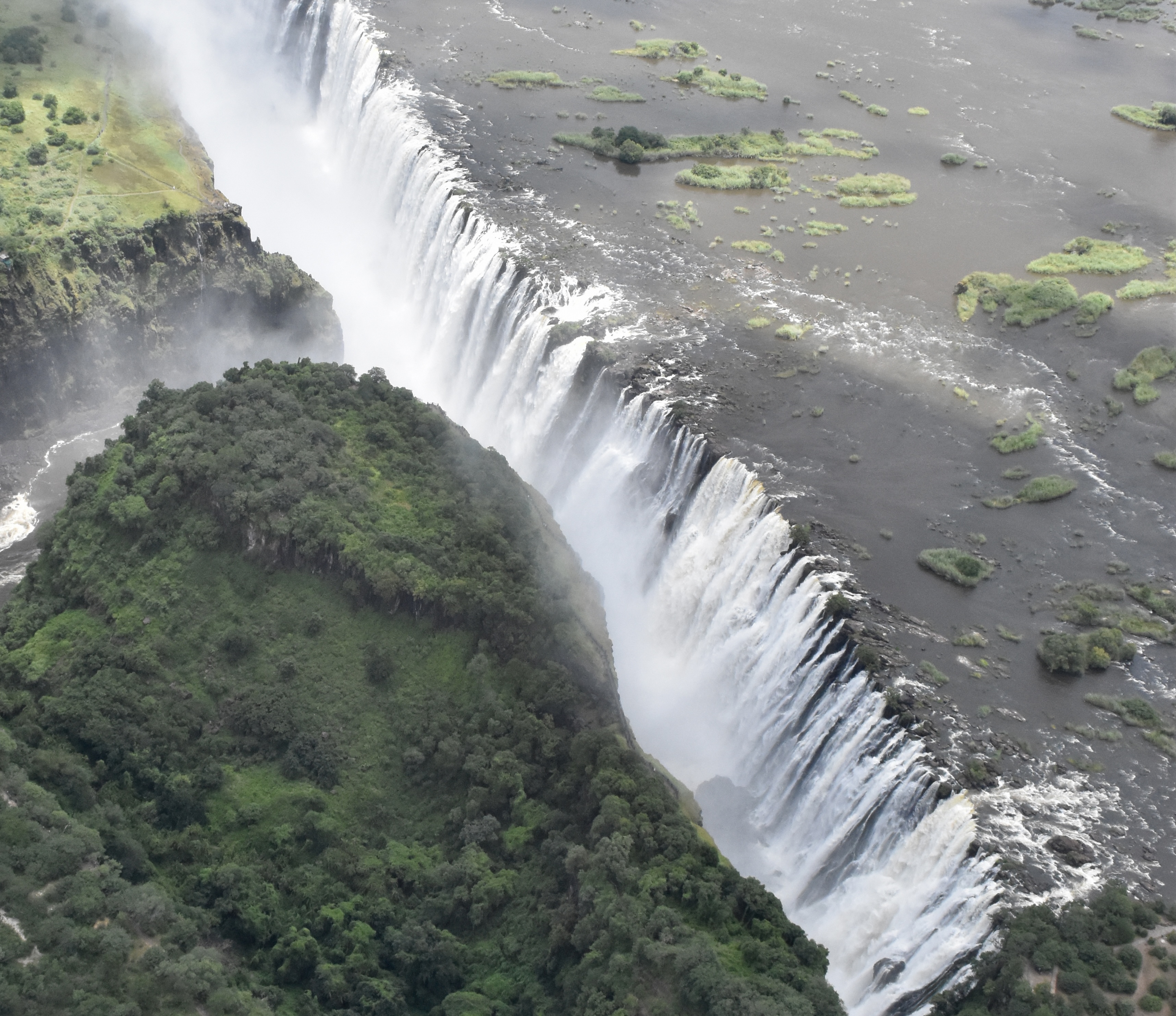
Next up was a helicopter tour over the Falls and the gorge — unbelievable views! Slideshow HERE. It’s so impressive from above to see the full width of this massive river suddenly plunging into the chasm below. Also seeing how many times the river has changed direction, cut and turned, etc. was fascinating.
After that we did an “Eye of the Elephant” tour. The guy who talked to us was absolutely great; we not only learned a lot (such as: a male elephant has a secretion gland behind his eyes that shows if he is afraid, in grief, etc. – if you see one with a dark streak down its face, BEWARE), but he also made us close our eyes, and sent us into a “meditation” to “become” an elephant.
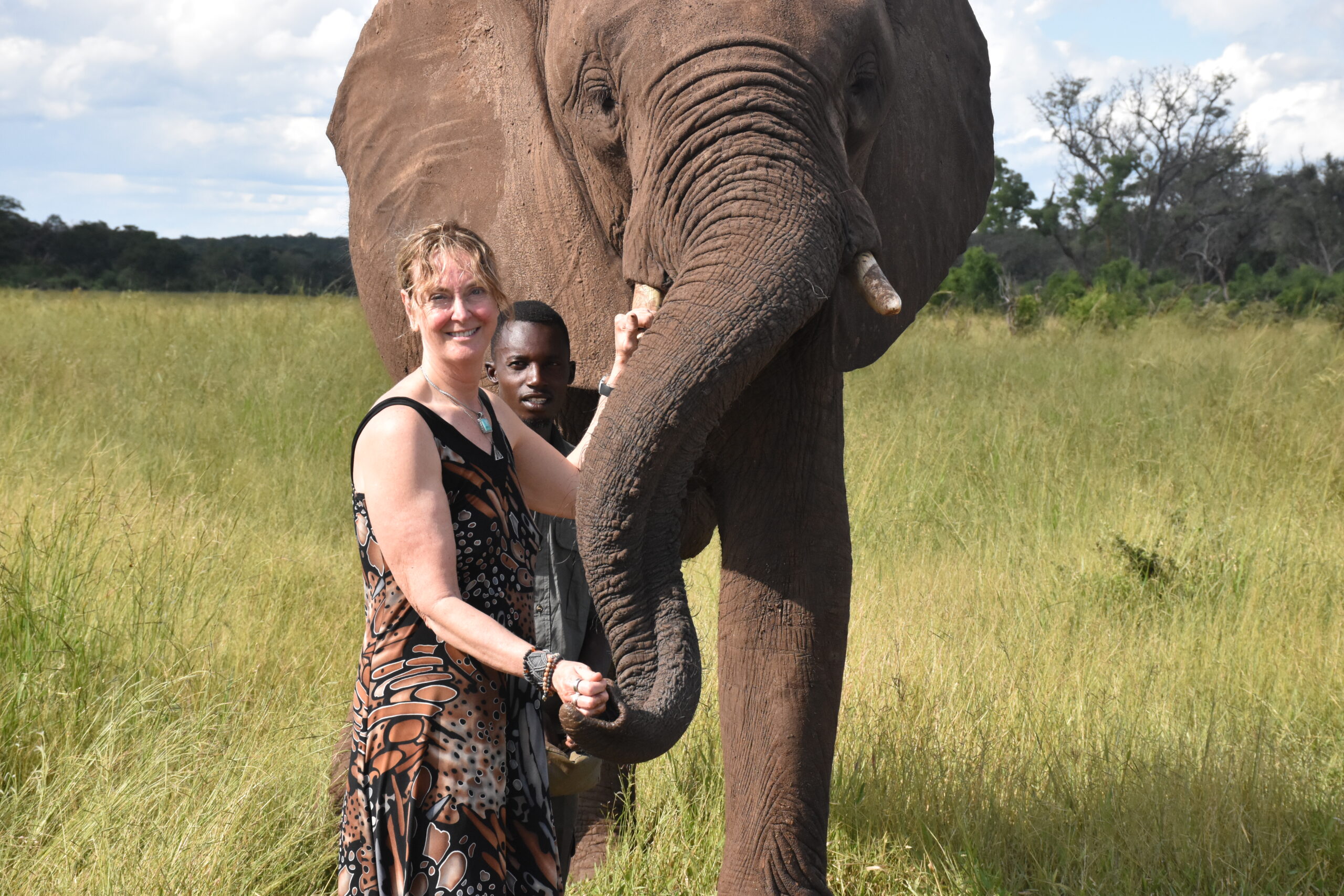
Once we were elephants, we were named after one on the compound – Lynn and I were “Musubi” who is a super smart female, who “figures out all the treat hides” when they are doing “enrichment” with the elephants. (Sounds about right?). Then we met our elephant — ours was Cariba. Photos HERE. (Trunk boops = always joyful.)
We also learned that an elephant’s trunk contains about 40,000 individual muscles (technically muscle fascicles). No bones. No joints. Just astonishingly intricate muscle structure. For comparison, the entire human body has only around 600 muscles. Which means an elephant’s trunk alone has more than sixty times the muscle power of our whole bodies. That’s how they can delicately pick up a single blade of grass, lift a calf, strip bark from a tree, or blast water with precision accuracy. It’s essentially a biological Swiss Army knife. No wonder they can paint pictures and we struggle with parallel parking.
At the end, we were encouraged of course to donate (it’s a non-profit and even with the tours, etc it has trouble making ends meet), and then were “turned back into humans” from being elephants. Our tour guide said to us ladies that “sorrowfully, you must lose the long eyelashes you have had,” and the men? Well, they had to lose their . . . “So large and impressive Appendage.”
The last thing we did that day was go to a play called Simunye — The Spirit of Africa, a local production near the Falls. It’s a beautifully creative performance that combines puppetry, dance, music, and visuals to tell a story about love, unity, and community through African myth and folklore. And it didn’t help that the “hero” was very easy on the eyes, either!
Wow!!! I was always so fascinated by seeing Victoria Falls in pictures. Those helicopter shots were absolutely wonderful.