
Well.
Bags outside the door by 7:30, breakfast at 6:30 (“…at the buffet-a…”), wheels up (well…van wheels up) at 8:00.
Safari logistics have officially entered the chat.
We left Pretoria this morning and began the drive north toward Entabeni, which Abe (pronounced “A.B.”) cheerfully informed us would be about three to three-and-a-half hours…with a snack stop…plus whatever the universe wanted to add in potholes.
Abe has the kind of brain that is basically a rolling documentary. As we drove, he gave us a whirlwind history lesson — Cecil Rhodes (dead at 48, richest man in South Africa for a time), the “Temple of Rhodes” statue near the University of Cape Town (which he founded because he wanted a Cambridge-like university here), and the fact that Rhodes was instrumental in building out the rail and road systems…meaning we were, for a while, literally traveling on a Rhodes road.
Rhodes also founded the Rhodes Scholarship, and Rhodesia — what is now Zimbabwe and Zambia — was named after him. Which is…a lot of legacy for one human who died before 50.
Abe also talked about how history is taught differently now than when he was growing up — the harder parts, the complicated parts — and how figures like Winnie Mandela and Desmond Tutu deserve far more credit alongside Nelson Mandela for the long, brutal work of pulling South Africa out of apartheid.
We passed through several toll roads, which Abe noted are at least mandated to be used on the roads — as opposed to “road taxes” on smaller roads that too often disappear into pockets.
And then…
We turned off.
And entered what I can only describe as pothole road torture — the kind of kidney-jarring, endless stretch that makes you wonder if the van is going to slowly disassemble itself into component parts before you reach the lodge.
(Chad, naturally, had no useful commentary here beyond something like: “Excellent! This is authentic African road texture.” I’ve asked this before: Can you slap an AI?)
Eventually, though, the landscape shifted. The road got smaller. The feeling got bigger. We were entering a protected ecosystem — a place with rules. (Okay okay and WAY more potholes.)
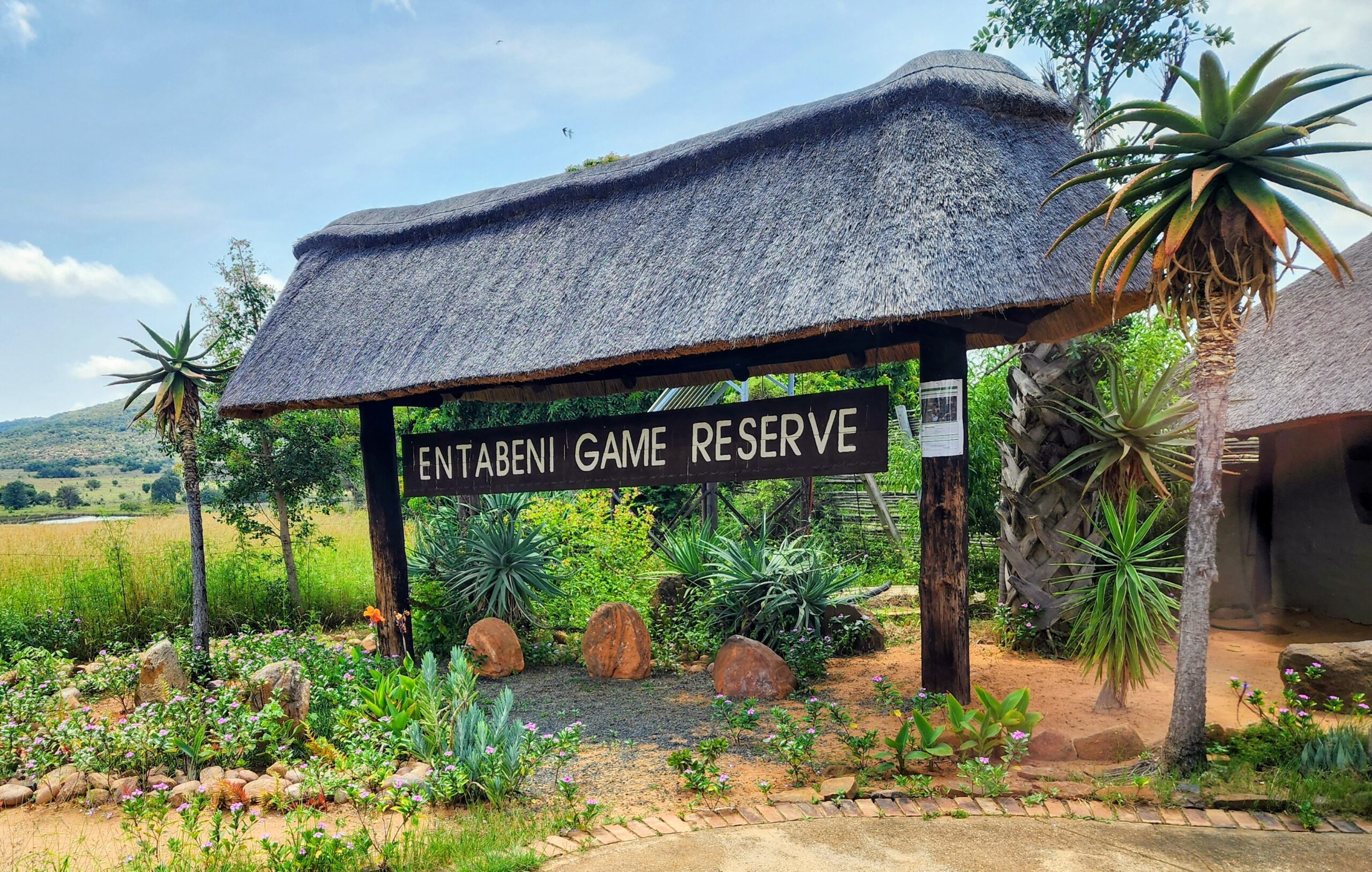
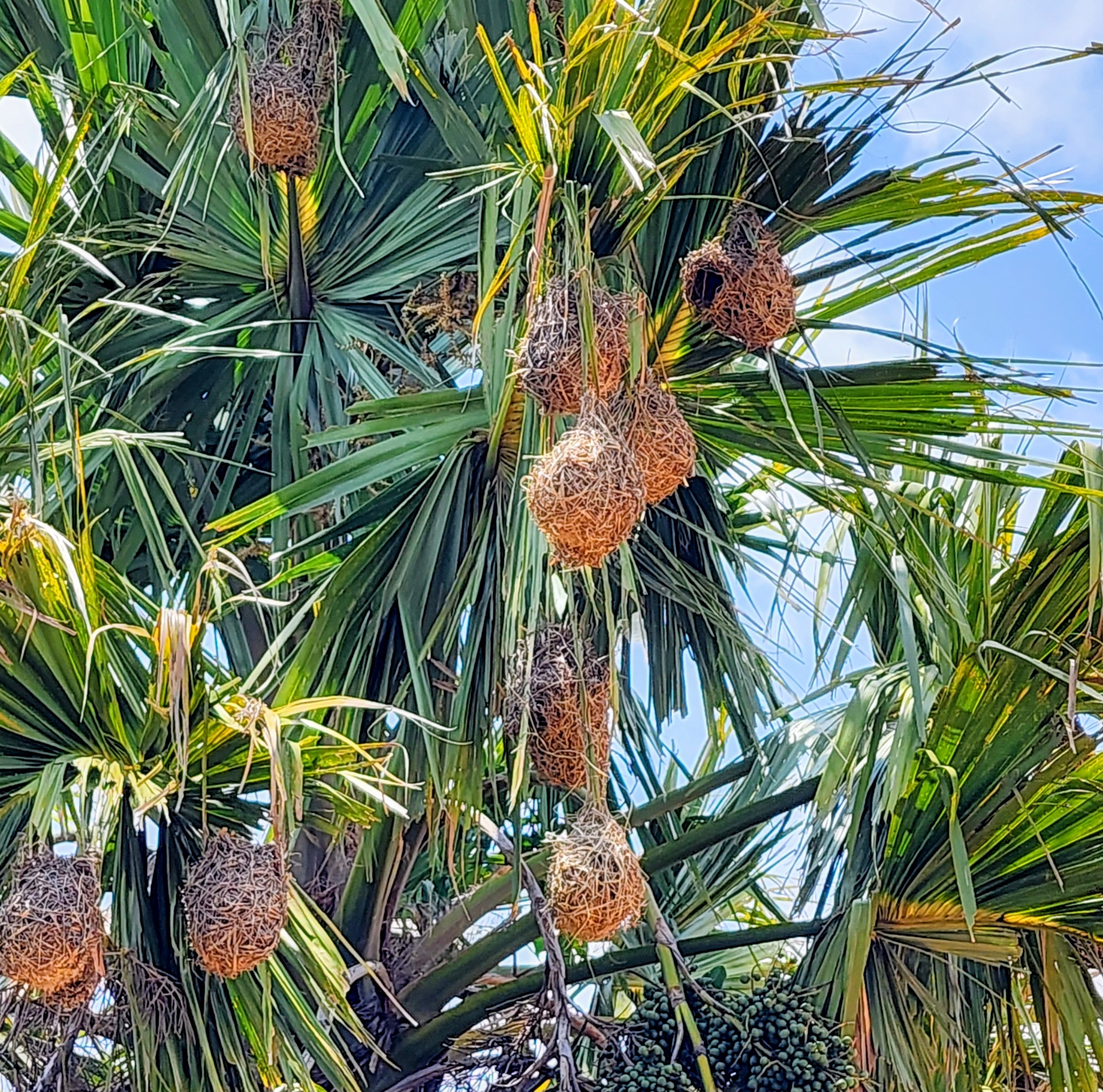
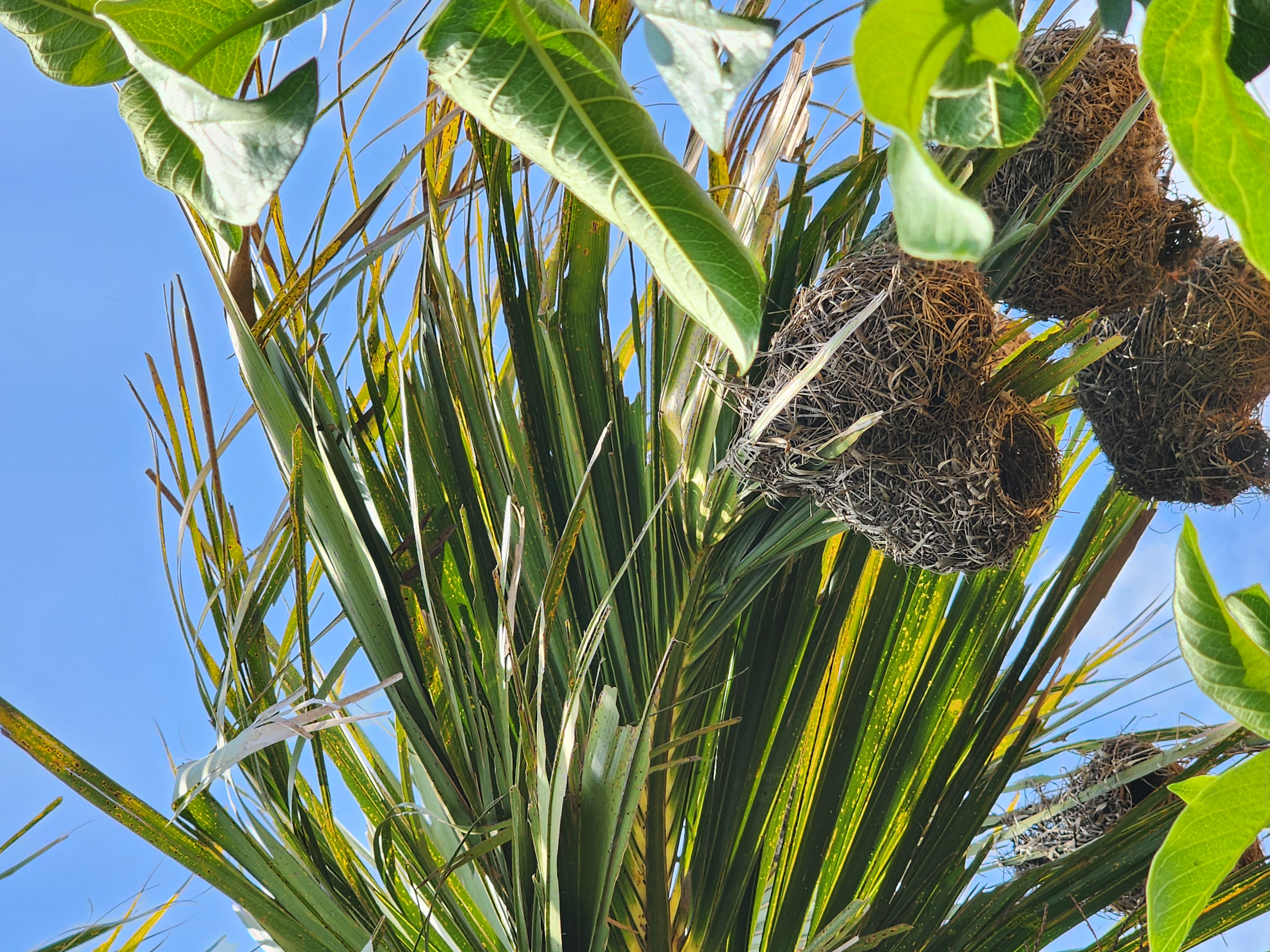
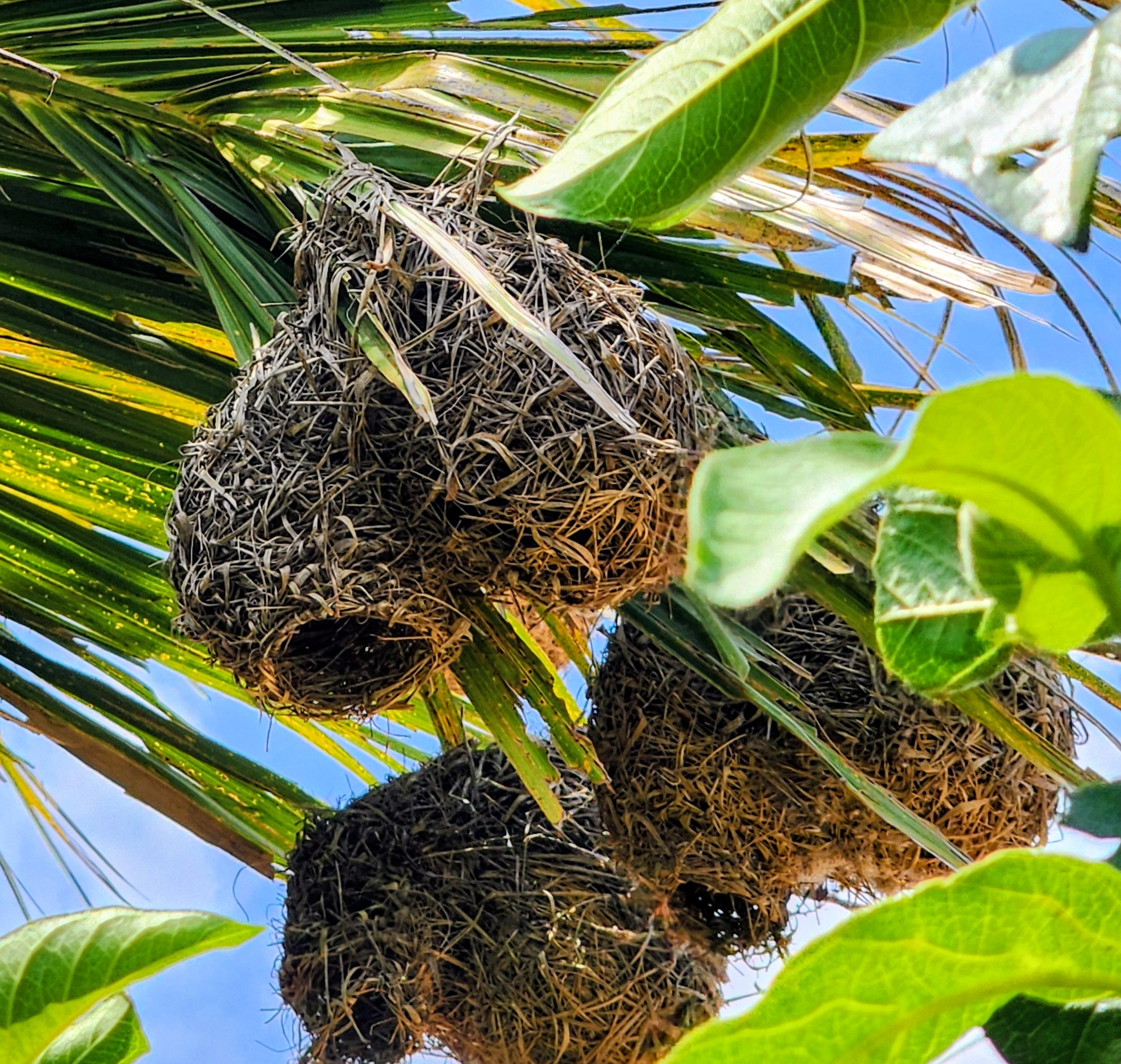
When we arrived at Entabeni, we had to get out of the van and walk through disinfectant for hoof-and-mouth disease, while they sprayed down the tires and underside of the vehicle. It reminded me of entering preserves in New Zealand — that clear moment where you realize: this place is being defended. We also saw some weaver bird “condos” – in case you’re wondering, they enter through the hole you see in the bottom, but live in the little “condo” to the side. They make these at the very tippy-ends of branches, because it makes it harder for their predators – particularly, snakes – to reach their nests.
And then…we were there.
Entabeni Lakeside Lodge.
The rooms are not “glamping tents” à la Safari West — they are proper rooms, one next to another, under hand thatching, with porches overlooking the lake.
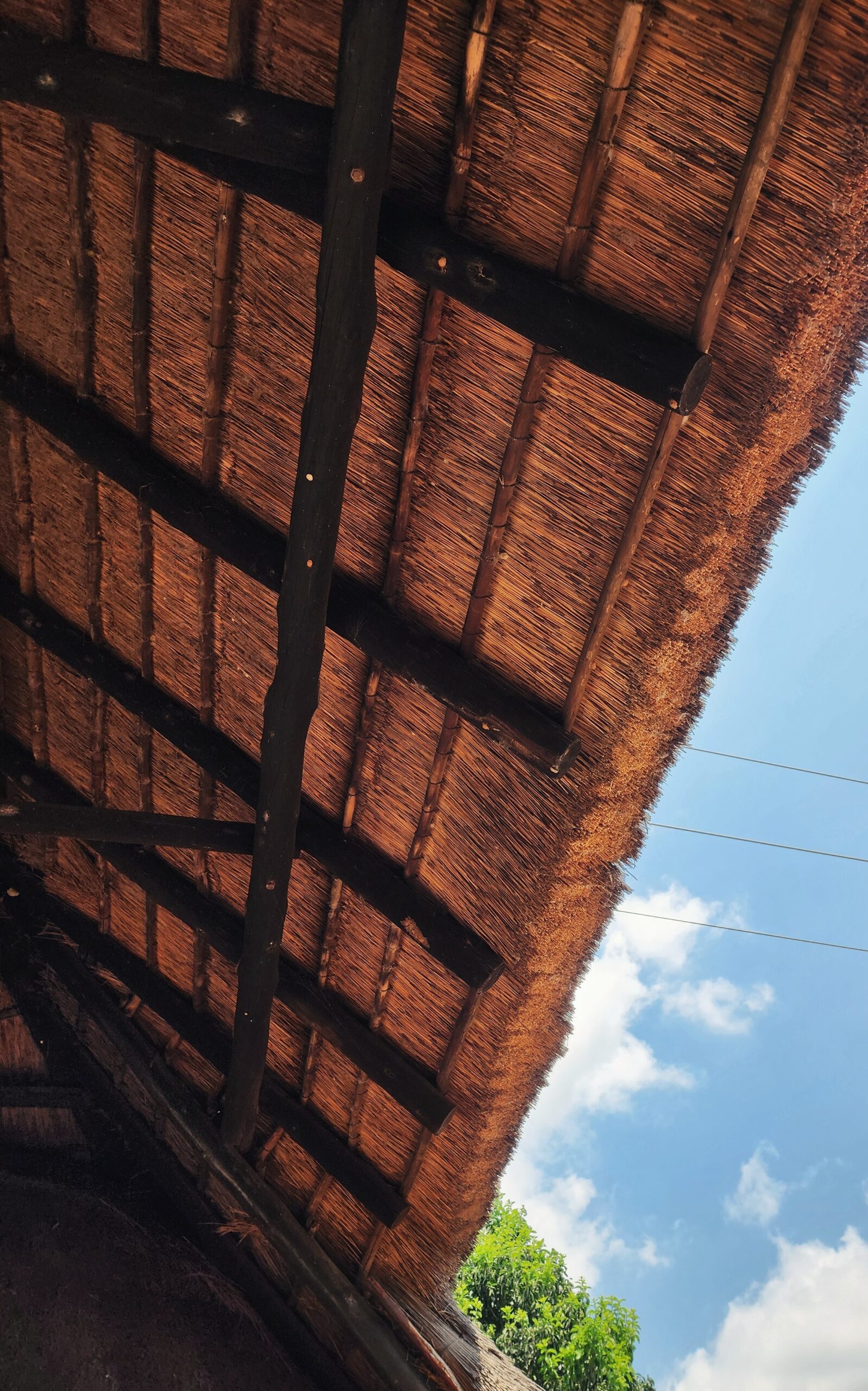
The lake where the hippos lie.
We were severely warned: STAY ON THE PATHS.
This is not a “wander around with your glass of wine” situation. This is a “the wildlife does not care how dramatically it photobombs your selfie” situation.
The rooms are super straightforward: no TVs, no radios, no clocks, no wifi. Just you, your veranda and rocking chairs overlooking the lake, and the fact that time is now measured in game drives and sunsets.
We saw a sign on the way in that stopped me cold: the rhinos’ horns here have been treated with radioactive isotopes to deter poachers.
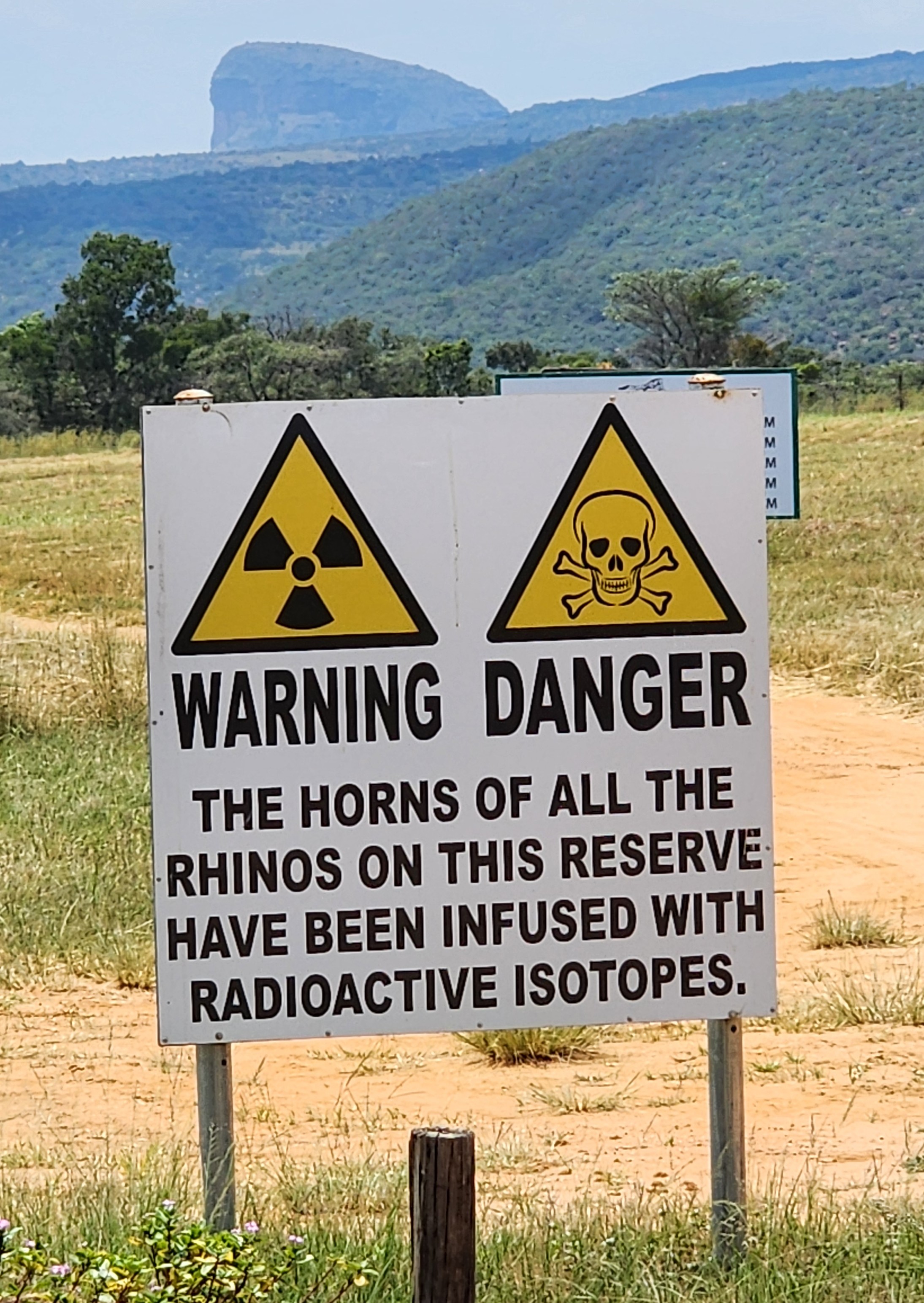
Conservation is not theoretical. It is science. It is survival.
After an orientation chat with Zeb, the lodge manager, who greeted us with warm washcloths and cranberry-apple juice – we got a chance to unpack a bit, then off to lunch — beef and chicken kebabs, salad, potatoes, and a tapioca/custard/cheesecake crust in a wine glass for dessert — and this is where we began to understand the social rhythm of safari life.
We were instructed by Abe that they would “circulate” people, both at meals and in the game vehicles. If you’re in a row one drive, you’re in the row behind the next. Everyone takes the middle seat at some point. Safari democracy.
At lunch I sat across from Mary, who is terrific — a retired farmer from Iowa. She raised corn, soy, and (her words) “stinky pigs.” She has three kids, five grandkids, all living fairly close. We ended up talking about farming, and seed patents, and Monsanto, and how you can’t even “save seed” the way you used to.
Meanwhile, Africa was already casually dropping wildlife into the margins of the day.
On the freeway we saw five zebra calmly grazing on the grassy verge — not only black stripes, but thick brown stripes as well.
Later, on the long road into Entabeni, our path was crossed by a troop of baboons. They were slow and deliberate about it, like they had nowhere to be and we were the inconvenience.
The final baboon — a young male — was quite impressive and gave us what can only be described as pure baboonitude.
We also passed a grey monkey that had been hit on the road, which was sobering in the way travel sometimes is: beauty and brutality side by side.
We were warned to lock things up tightly here, because the vervet monkeys will steal anything — especially shiny things. Zeb, the lodge manager, told us that a week ago they were all sitting out enjoying wine on the patio when it suddenly started raining dollar bills.
A monkey had stolen a guest’s wallet and was apparently had become, um, a Rainmaker (ouch stop hitting me).
Only in Africa.
On the drive, we also heard from Andrew, our driver, who is in line to become the chief of his portion of land. He spoke — very calmly, very seriously — about leadership as something you are born into, something spiritual, not something you go to school for. He described himself as a prophet, a medium, someone who cannot take money for his gift or the gods will take it away.
“If you use your gift to help,” he said, “you must not expect anything. However, you should expect that a good thing will come to you.”
We also learned about the Zion Christian Church (ZCC), which blends native customs with Christian traditions, and about a hill nearby that draws over a million people during Easter pilgrimage.
So.
We have arrived.
We have eaten.
We have been warned about hippos and monkeys, seen zebra, and had some over-the-shoulder, slow, “baboonitude.”
And in 45 minutes, we head out for our very first game drive. (About when it’s supposed to pour, “as it does,” but they have ponchos. As I type this, it’s gorgeous, not a cloud in the sky. Of course.)
The safari vehicle is waiting.
The khaki gear is coming on.
And the bush is about to begin speaking back.
(To be continued…)
Thank you Sandy… it feels like I am right there experiencing it with you!
So happy you included me to receive these details and photos!
Looking forward to following your adventure!
🙏
We did a Kenyan Safari around 20 years ago. There were 6 of us on the trip. When we first entered the National Park we saw our first Zebra…cameras out…clic, click, click.
Then a giraffe…again cameras out…clic, click, click.
We were all ‘in heaven’.
Then we saw elephants, lions, cheetah, hippos, etc.
Next time we saw Zebras or giraffe…cameras stayed away and we just said ‘it’s only a giraffe’!
We loved it. Enjoy every second.
Andrew
Truth!!!!!
Say hello to a fellow Iowan!!! We are from Ida County, curious about them, I can just imagine the stolen money being thrown down!
Mary’s from way up North, basically a stone’s throw from Minnesota. I will ask her though! She’s on Lake Winnepasaque (pretty sure that’s what she said).