
Today was our Zambia day — passports in hand, dual-entry visas at the ready.
No issues heading into Zambia (aside from the ever-present copper bracelet hustlers). Coming back into Zimbabwe was more dramatic: about half our crew had visa issues, while the rest of us — the dual-entry visa crowd — slipped back in without trouble.
We crossed over to sleuth out a rhino and, in the process, learned far more about elephants, vultures, monitor lizards, termite architecture, antelope anatomy, and group names than I expected.
And yes — we did see two rhinos. I’m not sure that officially qualifies as a crash (the proper group name for rhinos), but it was enough to make us happy.
First: elephants.

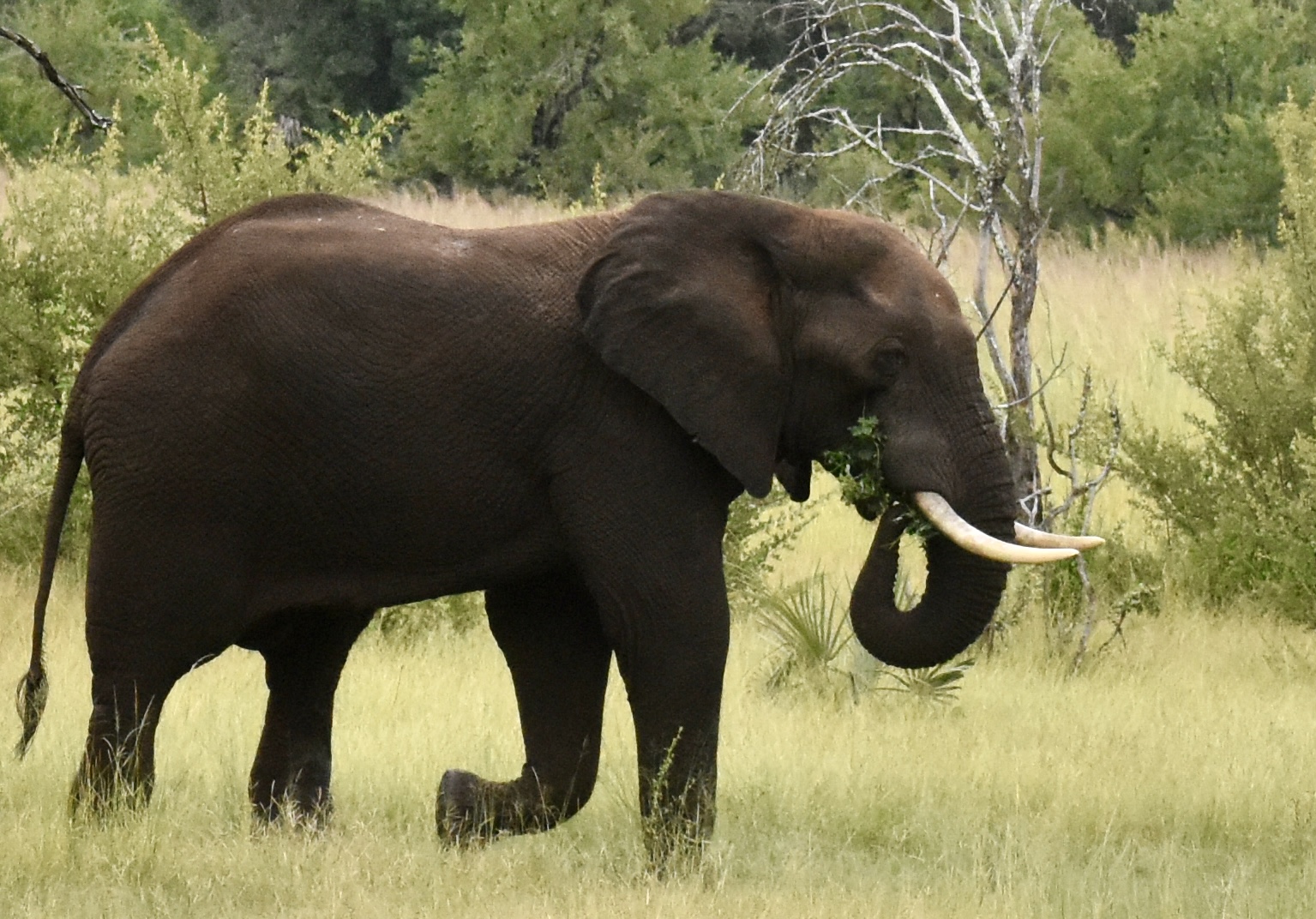

An elephant can be left- or right-“handed.” If the left tusk is sharper, that’s the dominant side. The dominant tusk is used for finer tasks — digging, stripping bark — while the blunter tusk handles heavier chores. If an elephant loses a tusk, it’s usually the blunter, more heavily used one.
And how to tell a male from a female elephant?
Watch the bathroom habits.
A female urinates directly on top of her dung.
A male sprays forward or around it — but never on top.
You’re welcome.
On to rhinos:

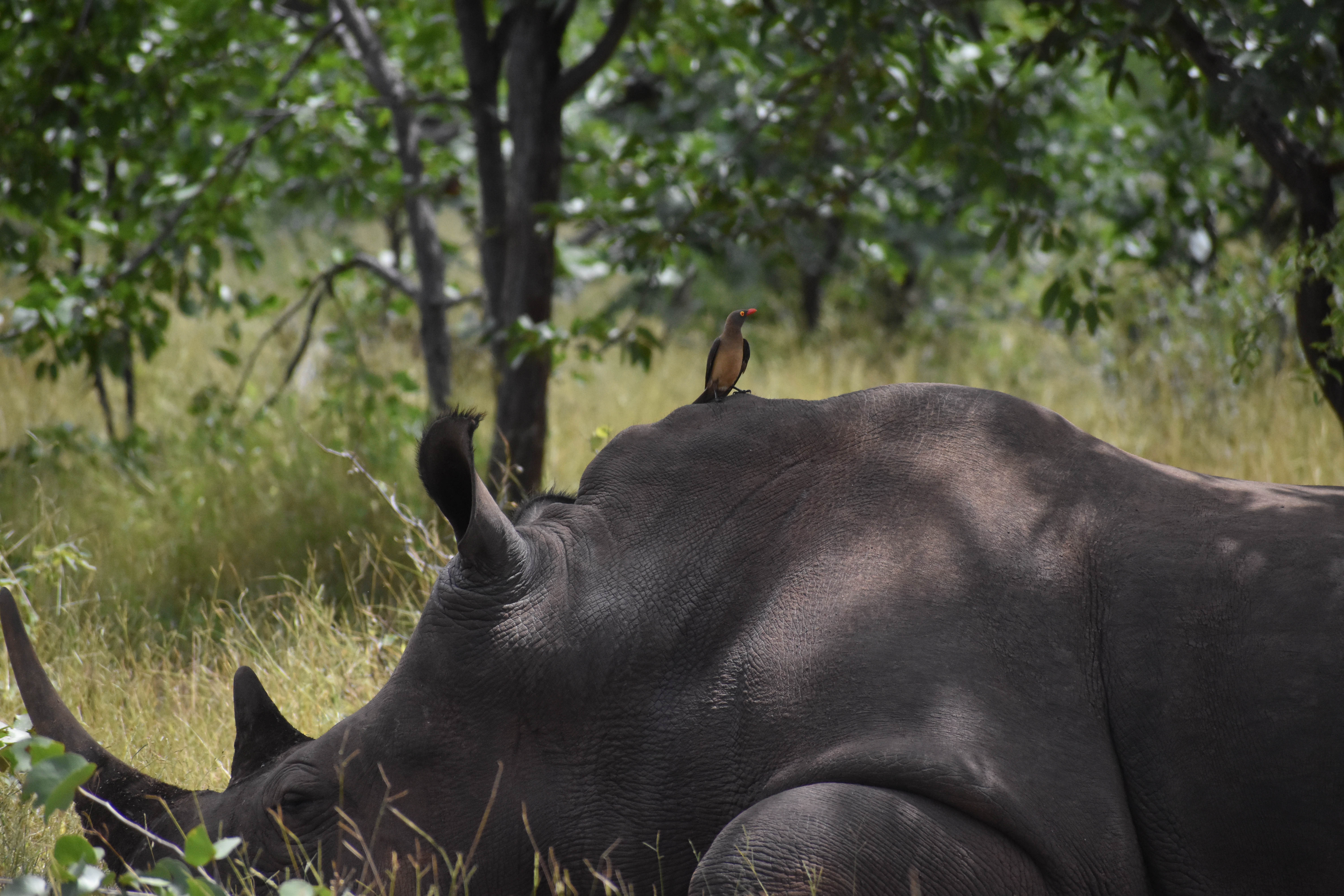
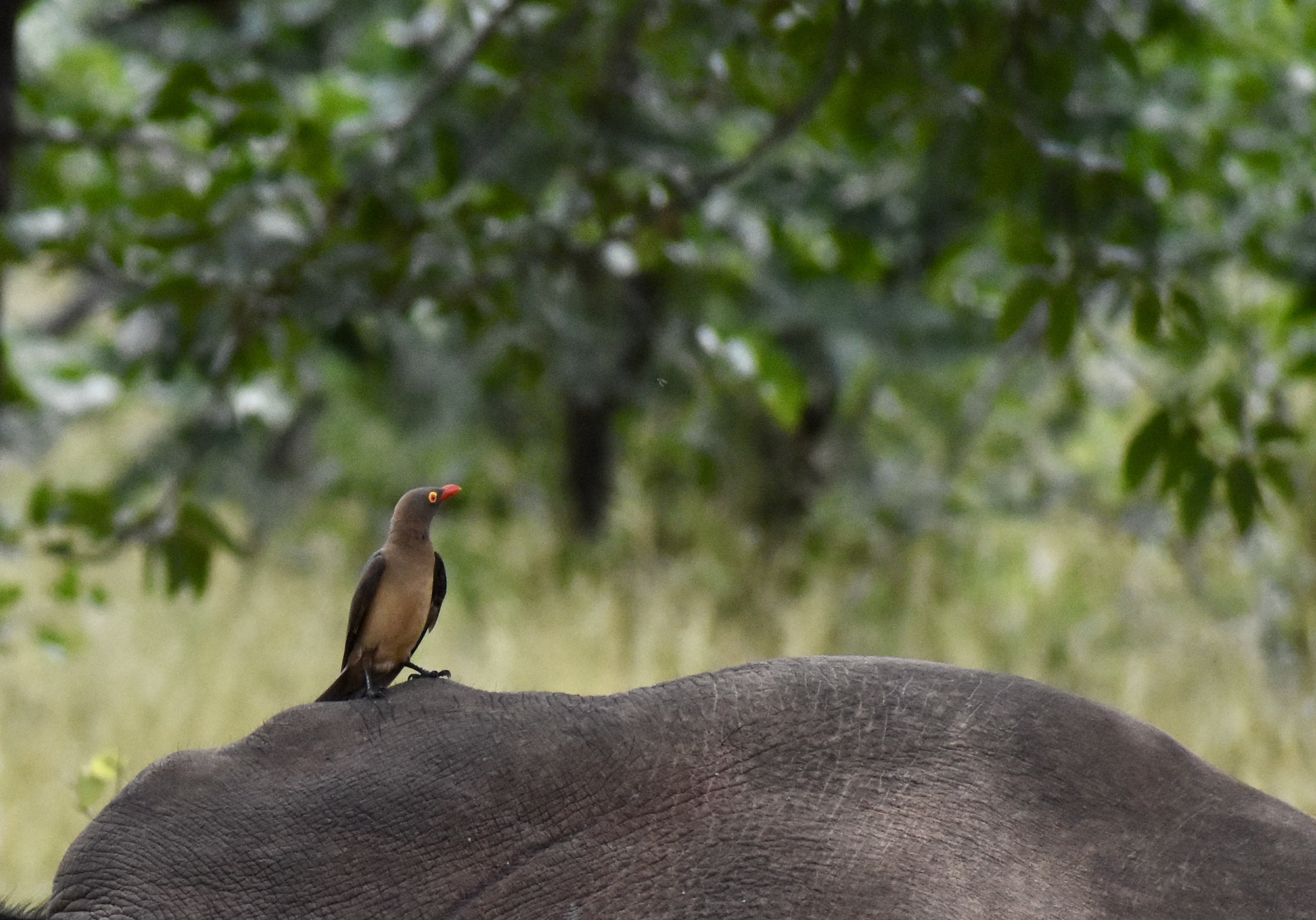
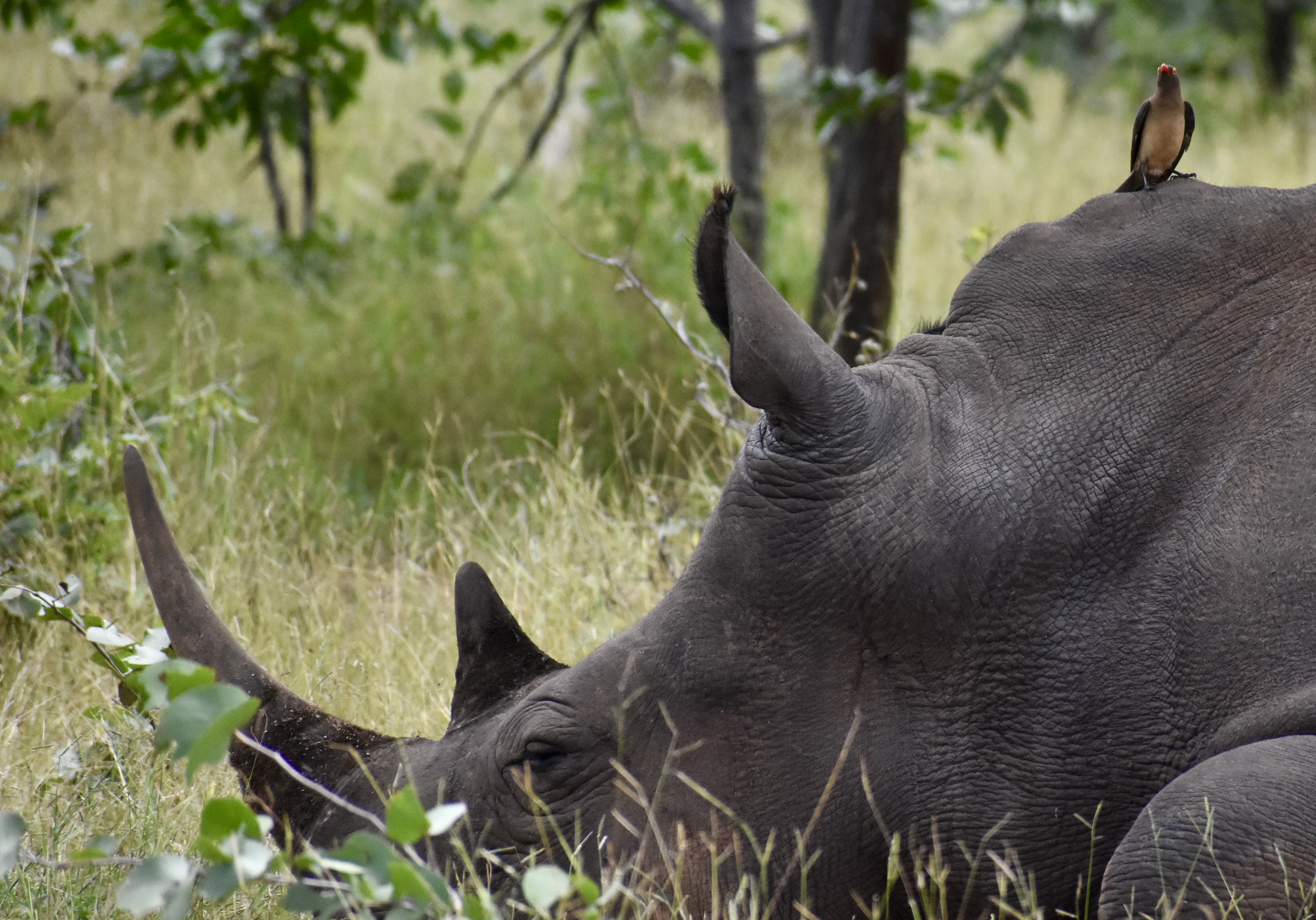
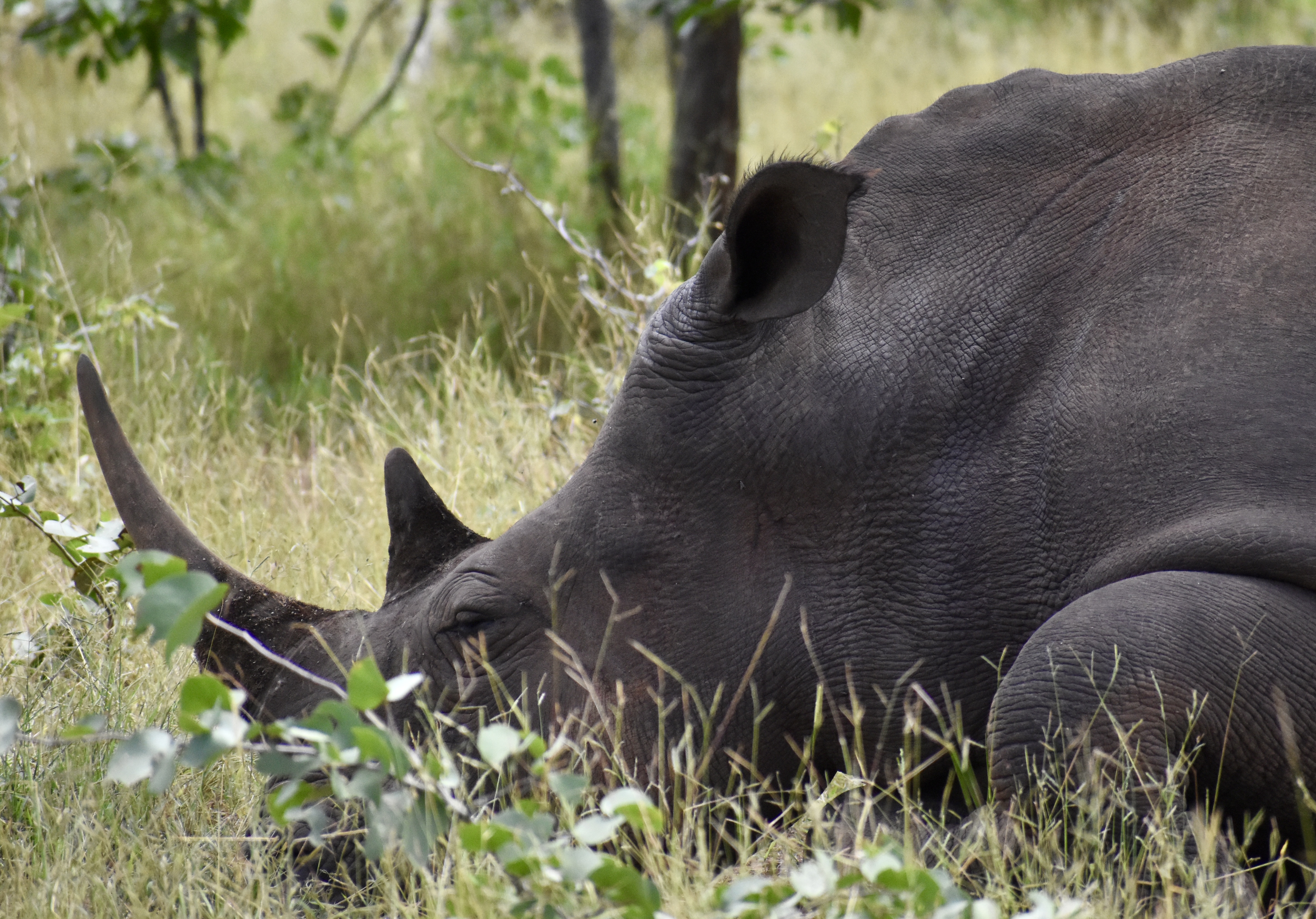

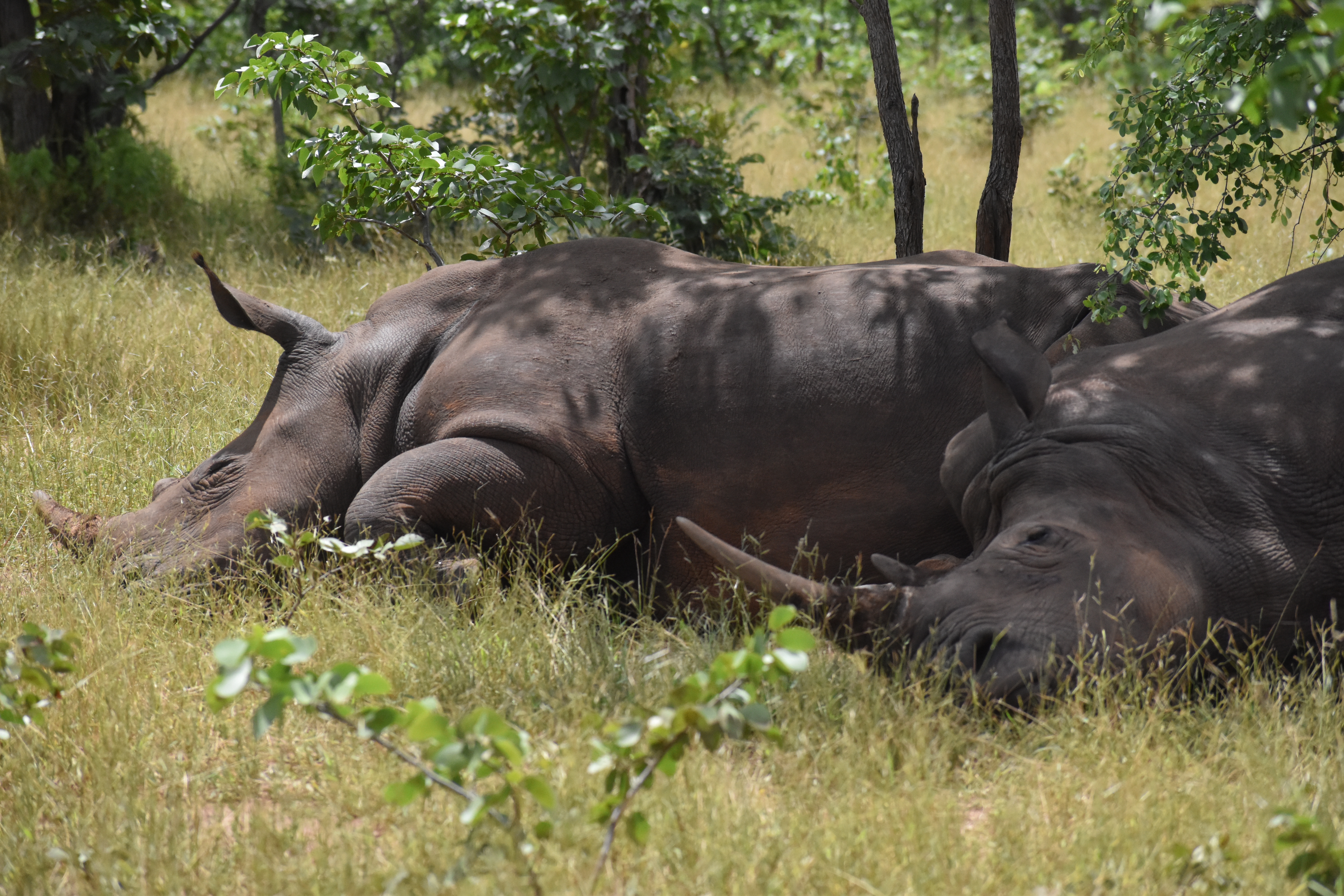
Black rhinos stand in front of their babies to protect them.
White rhinos keep their babies in front of them.
White rhinos have a noticeable shoulder hump and graze with their heads down. Black rhinos browse from trees and shrubs, so their heads are often up — which makes them harder to hunt. White rhinos, heads down in the grass, are easier to sneak up on.
We also learned that White Rhinos Don’t Jump. There is safari lore that if one charges, lying flat behind a log might save you — unless there’s a herd. In that case, apparently, they will simply surround you.
Comforting.
Those of us on the pre-trip have seen four of the Big Five — lion, elephant, rhino, and Cape buffalo — but not the mythical leopard. Those who joined us for the main trip have seen two so far.
We’ve all seen three of the Ugly Five — wildebeest, warthog, and vulture —the remaining two members of that less-than-glamorous club are the hyena and the marabou stork. As we head to Kruger tomorrow morning, we’re expecting to add a few more to our tally.
Then, there is also the Little Five (animals whose names contain the Big Five) – the antlion, the elephant shrew, the rhinoceros beetle, leopard tortoise (which we did see on the pre-trip), and the buffalo weaver.
Naturally, that led us to invent a few additional categories.
For the Nasty Five, we nominated the honey badger (zero fear, zero manners), the assassin beetle, the demonic wasps that stung me yesterday . . . to which I would add the black mamba and the tsetse fly — small, but historically mighty — to round out the category.
For the Pretty Five, we proposed the giraffe (elegance personified) and the cheetah; I’d add the zebra (nature’s graphic design masterpiece), the lilac-breasted roller (if Africa had a jewel mascot), and either the African fish eagle (wings outstretched over the Zambezi) or the puku — which we were lucky enough to see both male and female, separately.


Speaking of zebra, we also learned that a group of zebras is called a dazzle. The name fits perfectly: when predators are hunting them, the adults put the babies in the center and then weave and move together in a shifting black-and-white blur, trying to “dazzle” the predator and make it lose track of the young.
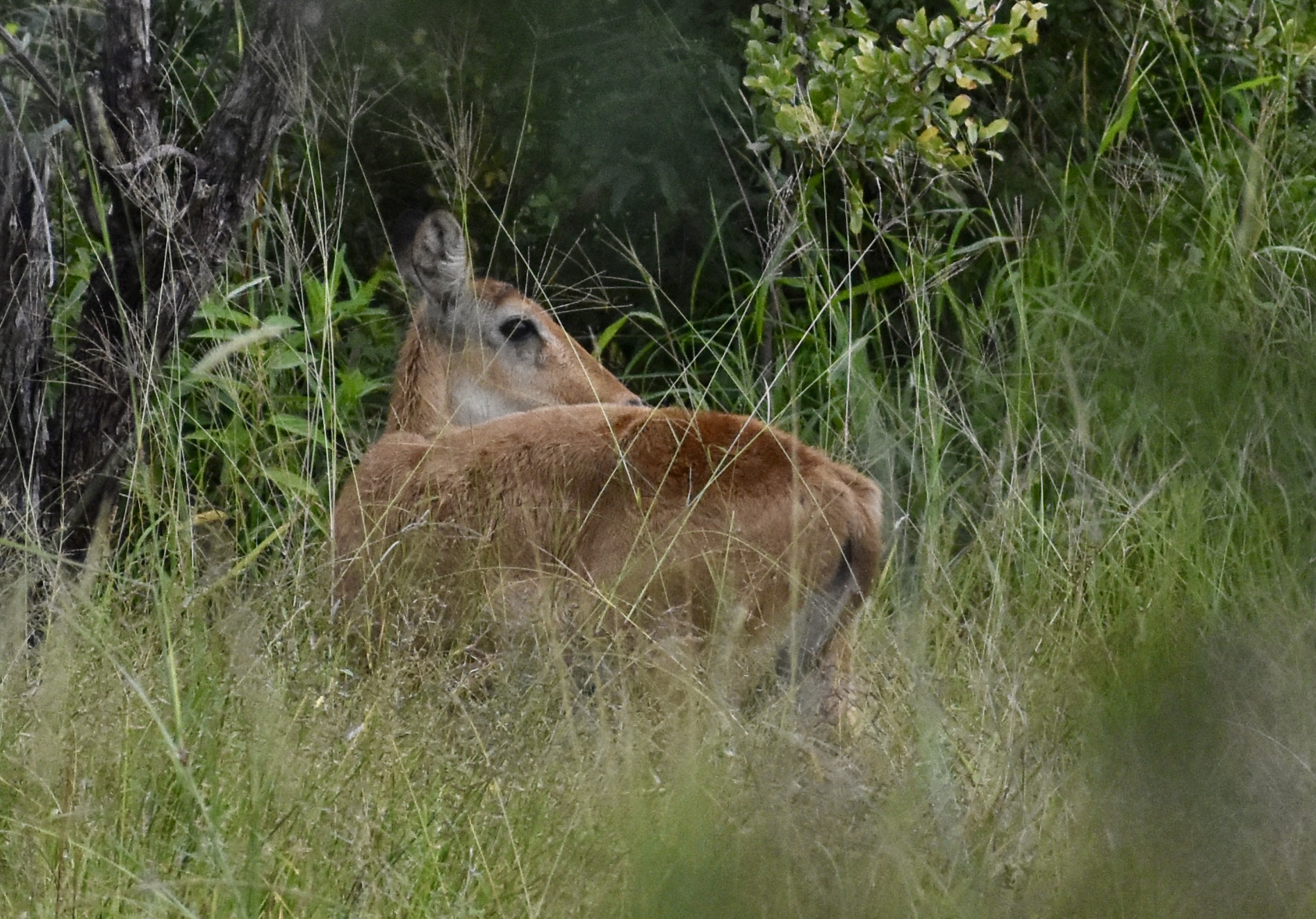


The puku is a reddish-brown antelope that favors wetlands and river plains. They’re built a bit differently from impala — slightly heavier through the front with relatively shorter forelegs — and their running style reflects that. They bound strongly forward but don’t leap as high or as theatrically as impala.

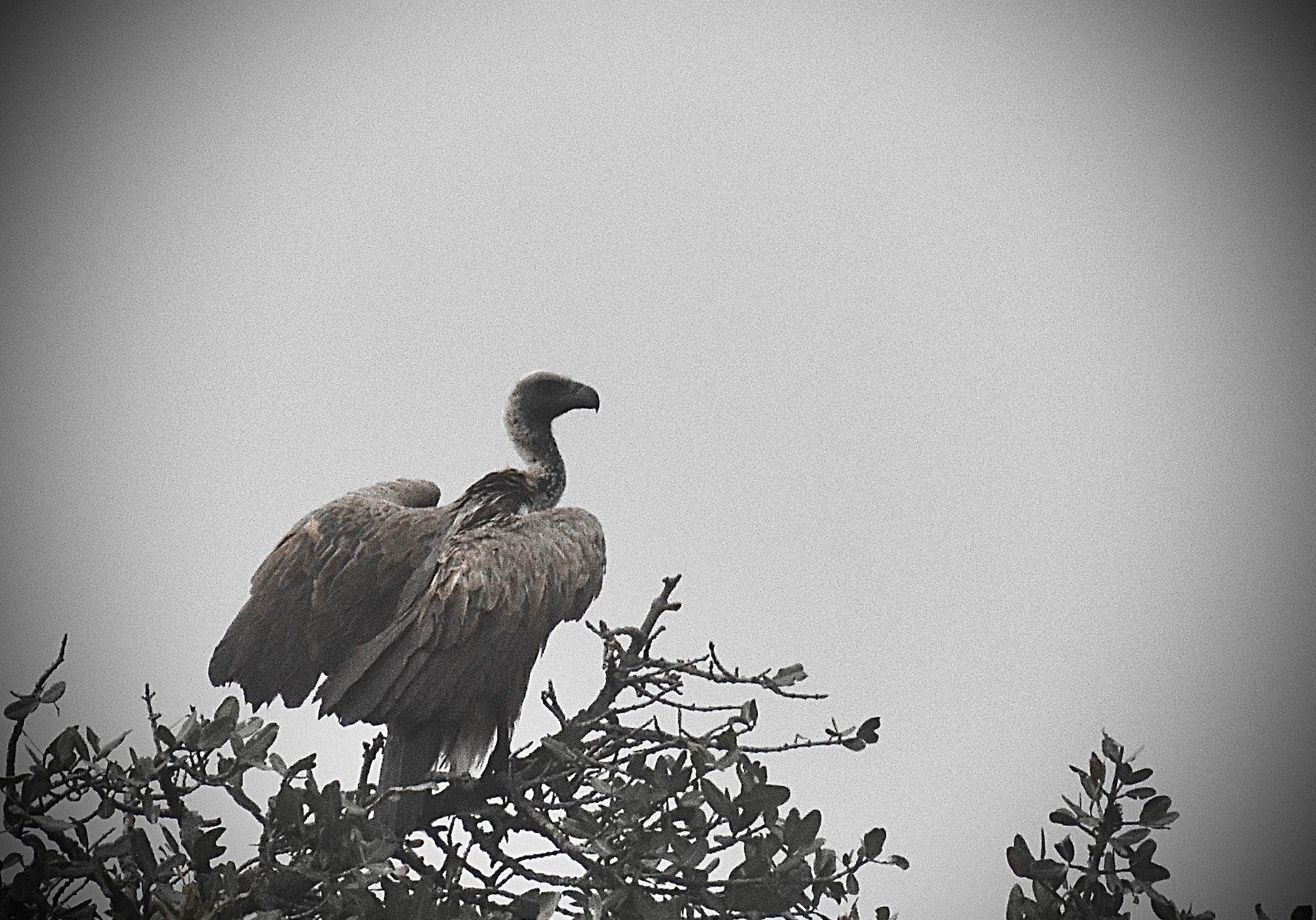

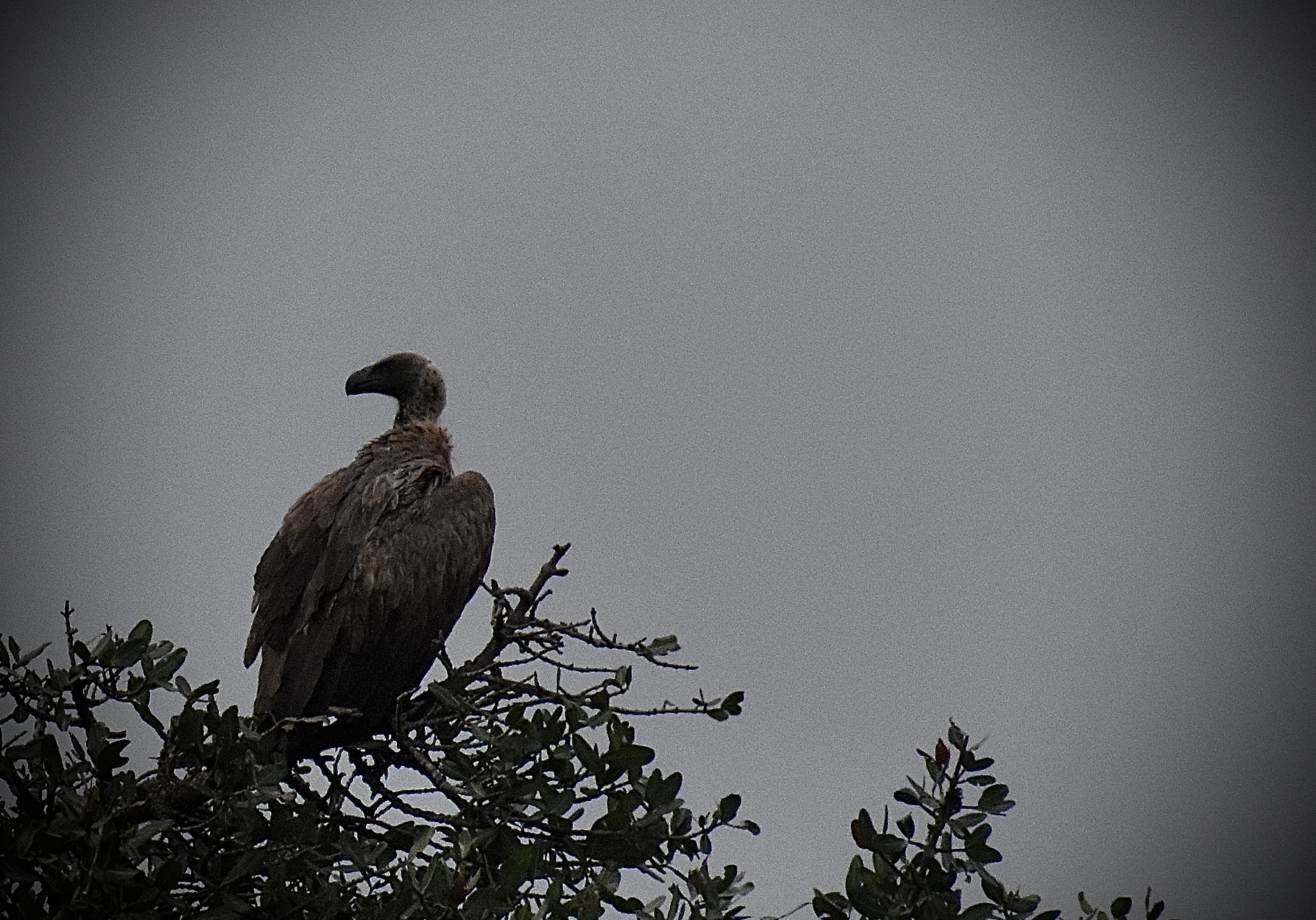
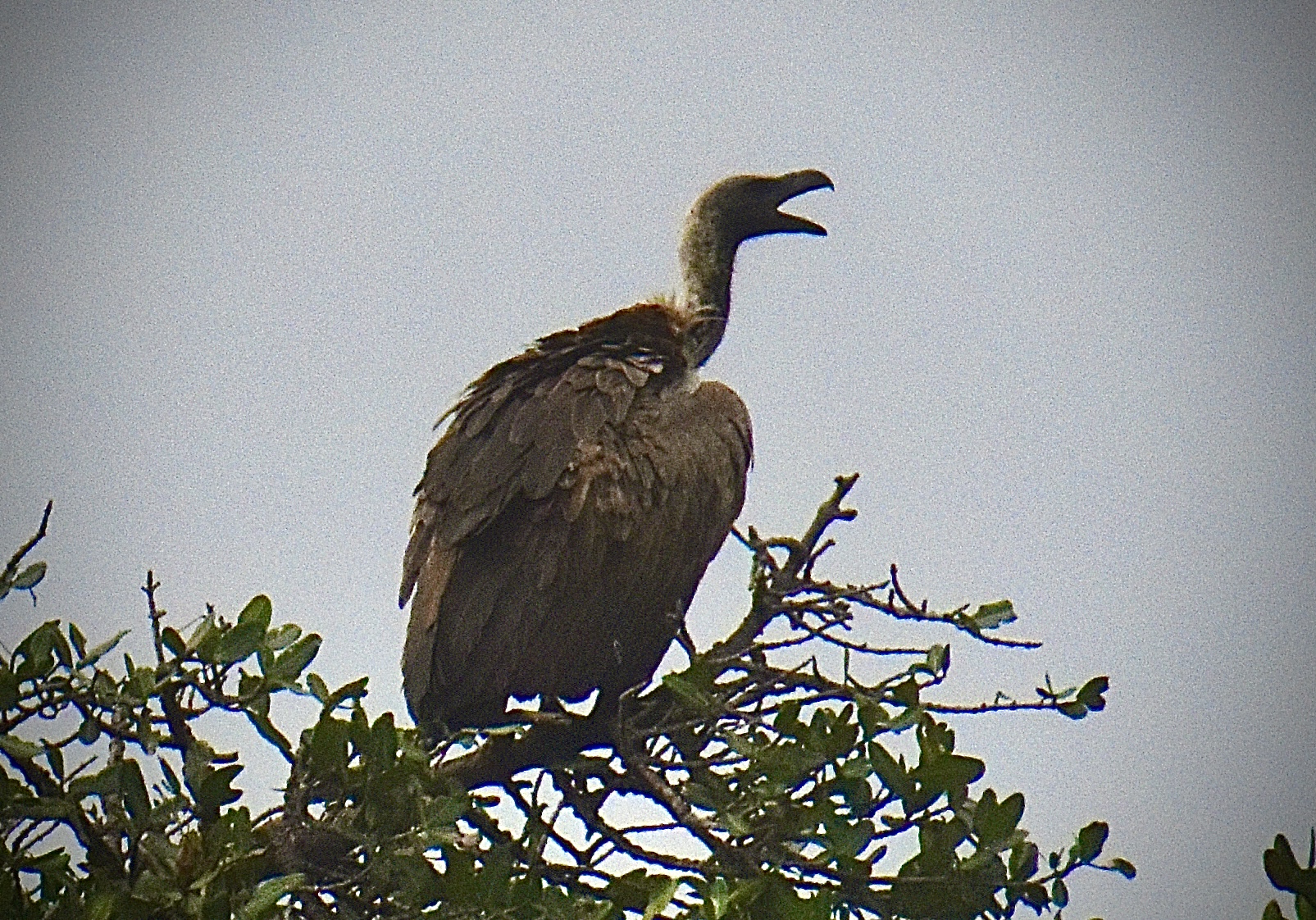
We also saw one white-backed vulture — the “undertaker” of the vulture world. They aren’t strong enough to open carcasses themselves, so they wait for larger vultures to do the heavy lifting. Poachers sometimes kill vultures because circling birds reveal where illegal kills have taken place.
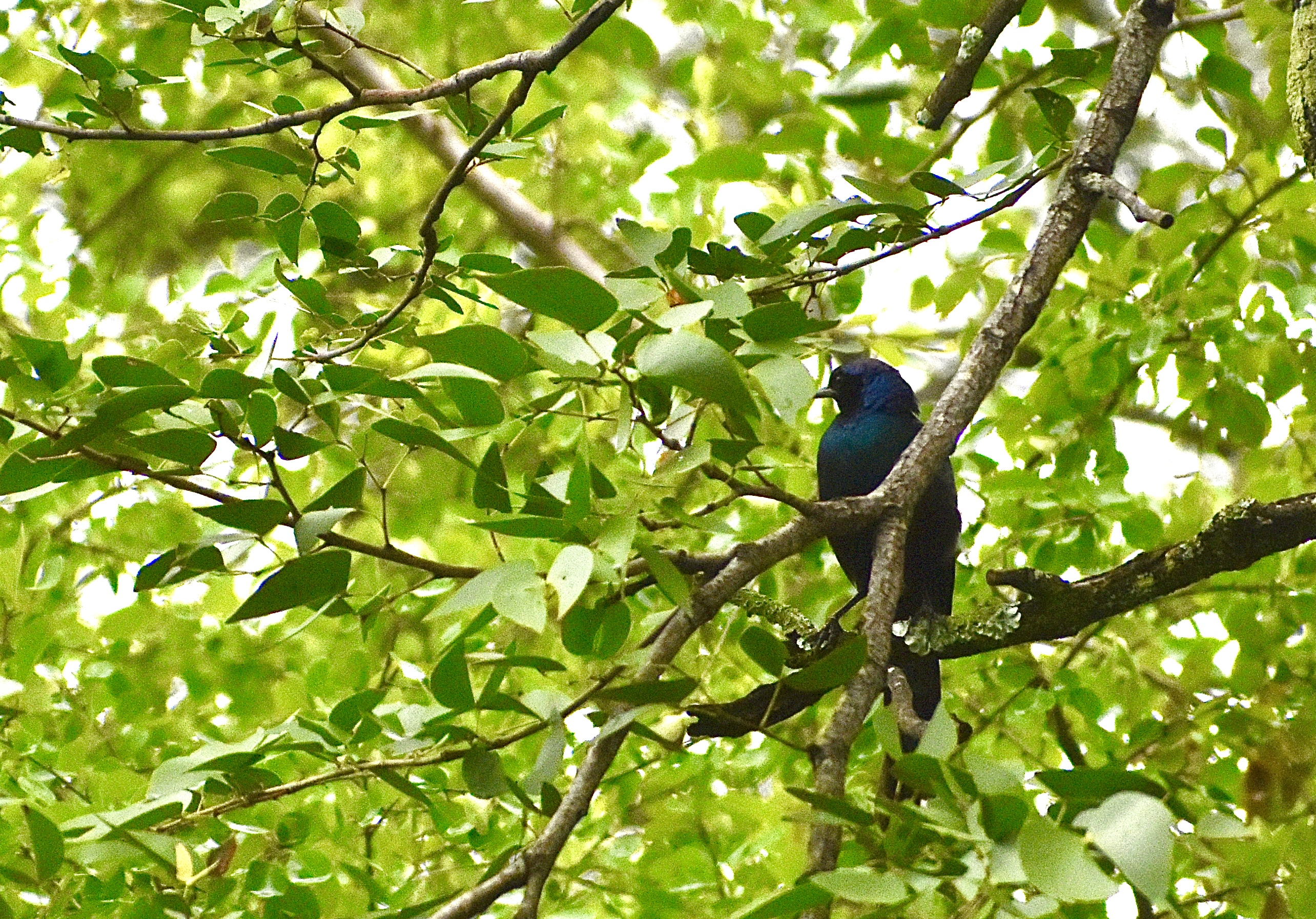
We spotted a Cape glossy starling — otherwise known as a kamikaze picnic bird. They will absolutely bomb you for your food. Ruthless.
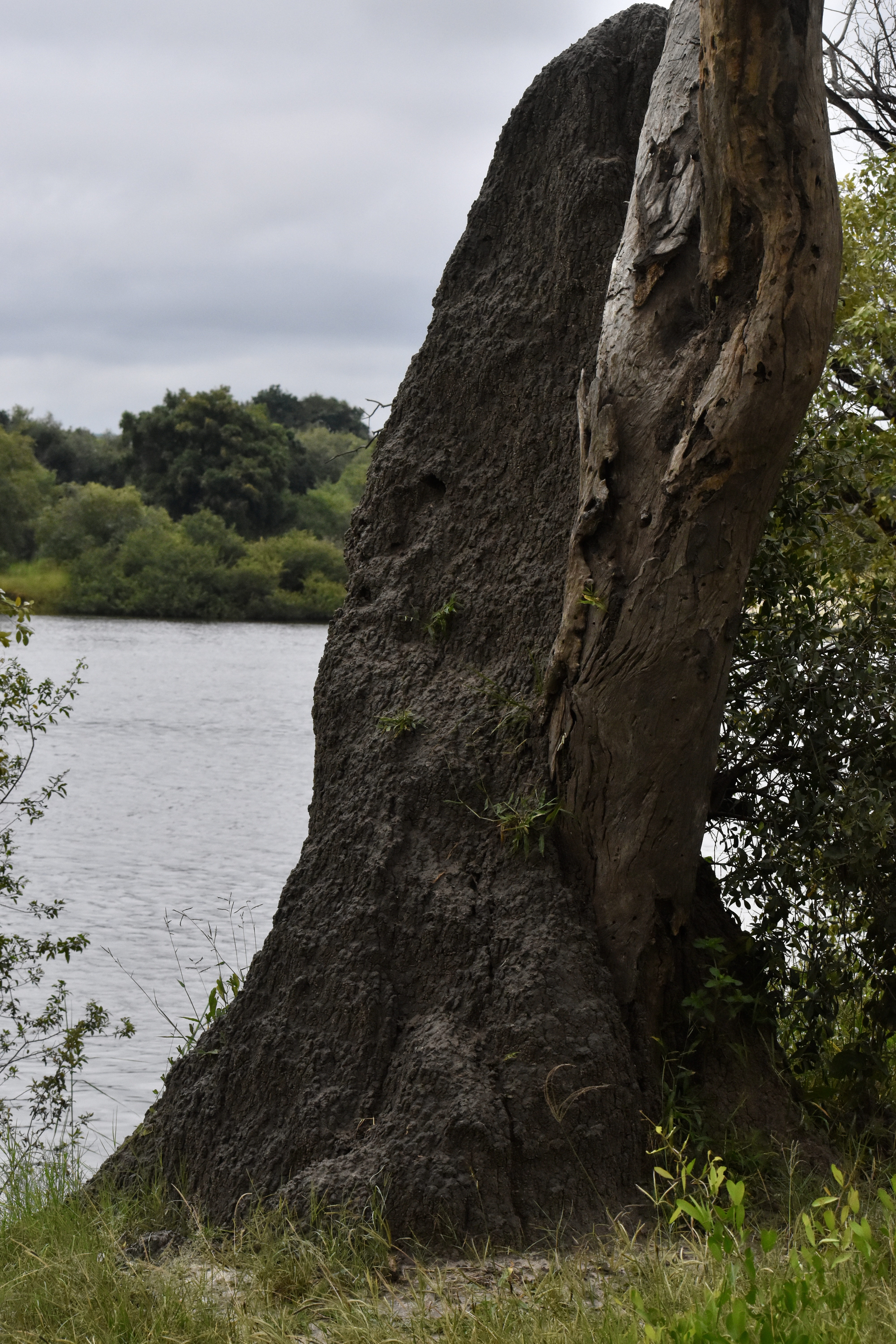
Termite mounds are marvels of architecture. They’re rounded — no corners — because snakes prefer corners to hide in. No corners, fewer snakes. They also lean away from the prevailing east wind, meaning they subtly “point” west.
We had lunch at the David Livingstone Safari Lodge on the Zambezi — quite the place. Polished wood, sweeping river views, and the kind of lodge where you half expect someone to hand you a gin and tonic just for walking in. We were meant to eat outside, but the rain had other ideas.
While there, I broke down and purchased a red, black, and white kente-cloth-style duster. It seemed inevitable.
Before the Lodge, we visited a large local market. In the slideshow, you can see photos of the various wares…including dried maggots which I think I heard Ari tried (not recommended). We were tasked with speaking to someone and learning something interesting. I spoke with two men who were removing worn thread from sandals and re-stitching them.
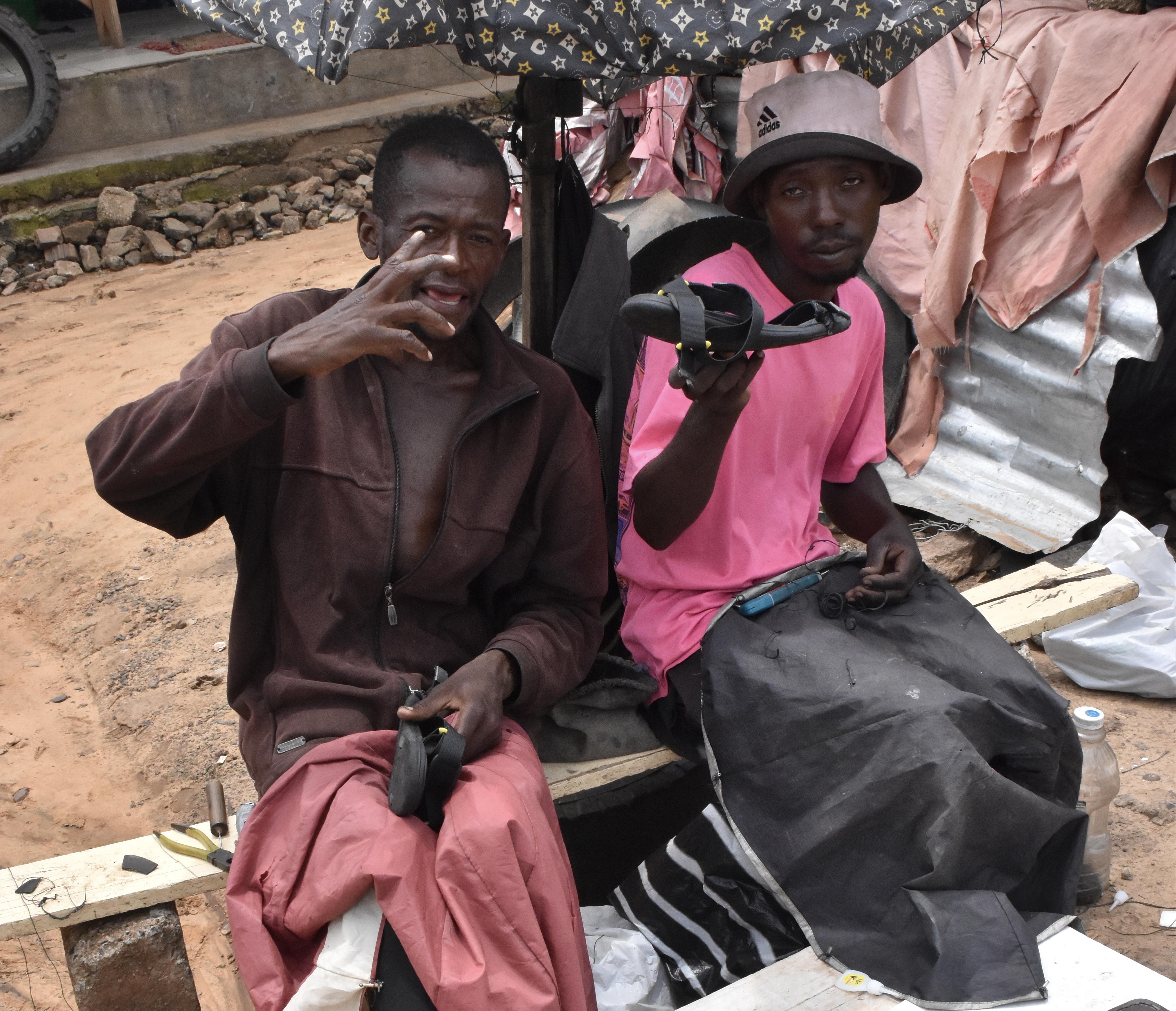
What were they using for thread?
Strips cut from Dunlop tires.
They slice thread-thin bands from old tires and use them as nearly indestructible stitching material. The original thread gives way first — so they replace it with something that won’t.
Ingenious.
As I type this, a serious thunderstorm is rolling overhead.
Tomorrow we leave for Kruger. Bags to pack. Boots to dry. Leopard to locate.
Slideshow HERE.
I never get a percentage from any links I include – but! – if you are curious about Overseas Adventure Travel and want $100 off, call them at 1-800-955-1925 and request their amazing catalog, tell them you were referred by Sandy Shepard, customer number 3087257, and get $100 off your first trip! The catalog is what all good dreams are made of!
A dazzle of zebras is my new favorite trivia knowledge!
ME TOO!!!!